Clavicle Fractures: Causes, Symptoms, and Treatment
Complete guide to understanding clavicle fractures, from diagnosis to recovery and rehabilitation.
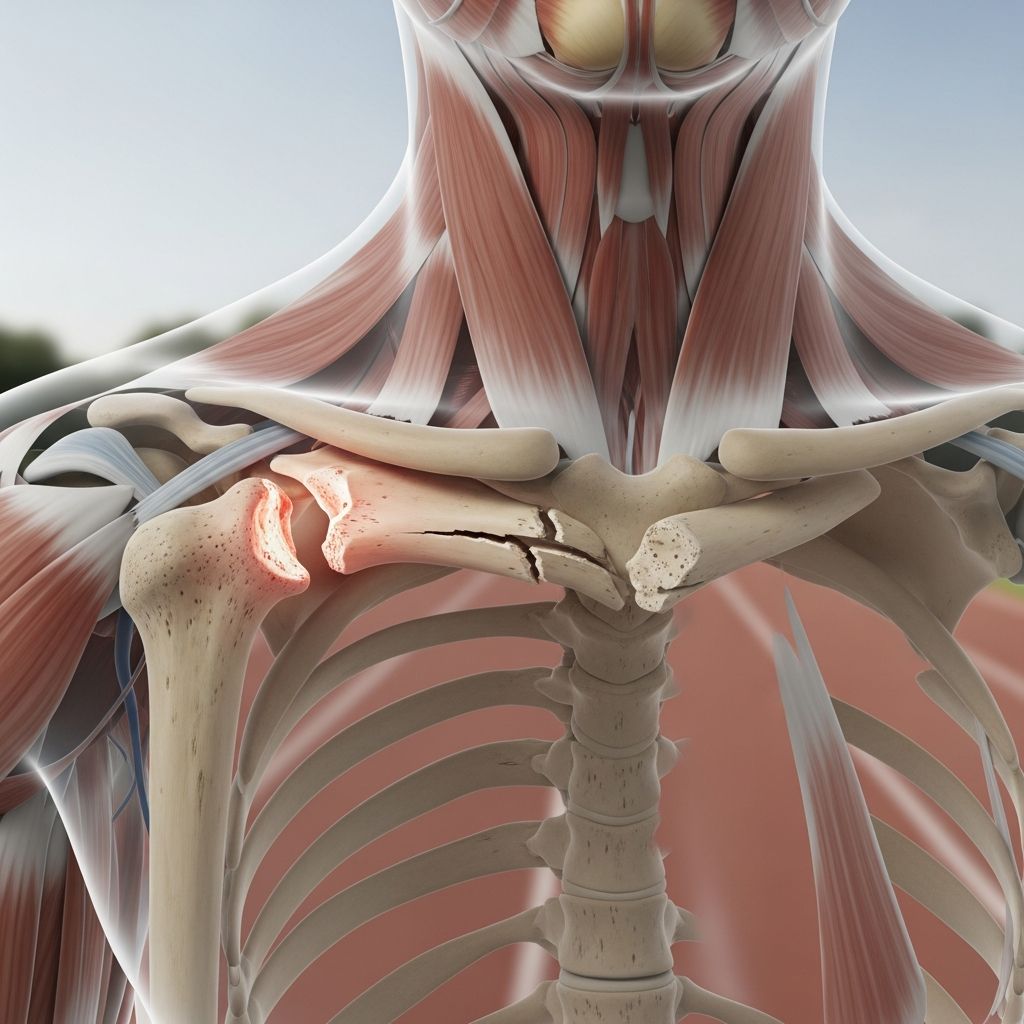
Understanding Clavicle Fractures
A clavicle fracture, commonly known as a broken collarbone, is a significant orthopedic injury that affects the bone connecting the breastbone to the shoulder blade. The clavicle is a slender, elongated bone that plays a crucial role in shoulder function and arm movement. When this bone breaks, it can result in considerable pain, limited mobility, and functional impairment. Understanding the nature of clavicle fractures, their causes, symptoms, and treatment options is essential for anyone experiencing this type of injury.
Clavicle fractures are among the most common bone injuries, accounting for a substantial portion of all fractures. They can range from minor hairline fractures to severe breaks with significant displacement. The severity and location of the fracture determine the appropriate treatment approach, which may vary from conservative management with immobilization to surgical intervention in complex cases.
Causes of Clavicle Fractures
Clavicle fractures typically result from traumatic injuries and direct trauma to the shoulder area. The most common causes include:
- Falls from height or onto the shoulder
- Direct blows to the collarbone
- Motor vehicle accidents
- Contact sports injuries
- Falling onto an outstretched arm
- High-impact activities and recreational injuries
Athletes, particularly those participating in contact sports, experience a higher incidence of clavicle fractures. Additionally, falls in elderly individuals with osteoporosis can lead to clavicle fractures even from relatively minor trauma.
Symptoms of Clavicle Fractures
Clavicle fractures present with a variety of symptoms that can range from mild to severe depending on the fracture’s severity and displacement. Recognizing these symptoms is crucial for prompt diagnosis and treatment.
Common Symptoms Include:
- Pain and tenderness: Localized pain over the collarbone that intensifies with shoulder movement
- Swelling and bruising: Visible swelling and discoloration over the fracture site
- Visible deformity: A bump or prominence at the fracture location
- Reduced arm mobility: Difficulty moving the arm and shoulder due to pain
- Shoulder sagging: The affected shoulder may appear to sag downward and forward
- Grinding sensation: A crepitus or grinding feeling when attempting to move the arm or shoulder
- Numbness or tingling: In some cases, nerve involvement may cause sensations in the arm or fingers
The severity of symptoms often correlates with the extent of the fracture. Severely displaced fractures may cause more pronounced symptoms and functional limitations compared to nondisplaced fractures.
Diagnosis of Clavicle Fractures
Physical Examination
The diagnostic process begins with a comprehensive physical examination. Your healthcare provider will inquire about how the injury occurred and assess your symptoms. During the examination, the physician will carefully palpate the clavicle to identify tenderness, deformity, or abnormal movement. In most clavicle fractures, a visible bump or deformity is apparent at the fracture site. Applying gentle pressure to this area typically elicits pain.
Your doctor will also perform neurovascular assessments to ensure that blood vessels and nerves have not been damaged by the fracture. This evaluation is particularly important for posteriorly displaced fractures that may compromise neurovascular structures.
Related Stories



Imaging Studies
X-rays are the primary imaging modality for diagnosing clavicle fractures. Standard radiographic views clearly visualize the fracture location, type, and degree of displacement, enabling healthcare providers to determine the severity of the injury and appropriate treatment strategy.
In complex cases, particularly with multiple fracture fragments or intra-articular involvement, a computed tomography (CT) scan may be ordered. CT imaging provides detailed three-dimensional views of the fracture site and helps guide treatment decisions. Additionally, if posterior displacement of fracture fragments raises concerns about intrathoracic injuries, chest radiographs may be obtained to evaluate for pneumothorax or rib injuries.
Treatment Options for Clavicle Fractures
Conservative Treatment
The majority of clavicle fractures heal successfully without surgical intervention. Conservative treatment focuses on pain management, immobilization, and restoration of function through rehabilitation.
Immobilization: An arm sling or shoulder immobilizer provides support and prevents movement during the initial healing phase. The sling maintains the arm and shoulder in a stable position, reducing pain and facilitating bone healing. Most patients wear the sling for two to three weeks, though the duration may vary based on fracture severity.
Pain Management: Over-the-counter anti-inflammatory medications such as ibuprofen or naproxen help reduce pain and swelling. These medications should be taken as directed by your healthcare provider. Ice application for 20 to 30 minutes every few hours during the first two to three days can also effectively control pain and minimize swelling.
Rest and Activity Modification: During the acute phase, rest is essential for healing. Avoiding activities that stress the shoulder and collarbone accelerates recovery. Gradually resuming activities as pain subsides is important to prevent stiffness and maintain function.
Surgical Treatment
Surgical intervention becomes necessary in specific circumstances, including severely displaced fractures, fractures with neurovascular compromise, or fractures that fail to heal with conservative treatment.
Open Reduction and Internal Fixation (ORIF): This is the most common surgical procedure for clavicle fractures. The procedure involves realigning the fractured bone fragments and securing them with metal plates and screws or pins and screws. This approach provides stable fixation and allows for early mobilization, potentially reducing healing time and complications.
Post-Surgical Pain Management: Following surgery, pain management typically begins with non-prescription anti-inflammatory medications. For severe postoperative pain, physicians may prescribe stronger analgesics such as opioids for a limited duration. A structured pain management plan ensures comfort during recovery.
Physical Therapy and Rehabilitation
Physical therapy plays a vital role in both conservative and surgical treatment of clavicle fractures. A structured rehabilitation program helps restore arm strength, range of motion, and functional capacity.
Early Phase (0-3 weeks): During the immobilization period, gentle pendulum exercises and passive range of motion exercises help maintain shoulder mobility while protecting the healing fracture.
Progressive Phase (3-8 weeks): As pain decreases and fracture healing progresses, active-assisted exercises transition to active exercises. Strengthening exercises target the shoulder musculature and rotator cuff, gradually increasing in intensity.
Advanced Phase (8-12+ weeks): Advanced strengthening and functional training prepare the patient for return to normal activities and sports participation. A graduated activity program ensures safe progression without reinjury.
Recovery Timeline
Recovery from clavicle fractures varies based on several factors, including age, fracture location and severity, and adherence to treatment protocols.
| Fracture Type | Typical Healing Time | Return to Activities |
|---|---|---|
| Nondisplaced Midshaft Fracture | 6-8 weeks | 8-12 weeks |
| Displaced Midshaft Fracture | 8-12 weeks | 12-16 weeks |
| Proximal or Distal Fracture | 8-12 weeks | 12-16 weeks |
| Surgical Fixation | 8-12 weeks | 12-16 weeks |
Age is a significant factor in healing rates. Younger patients typically experience faster bone healing compared to older individuals. Children may heal even more rapidly, sometimes within four to six weeks. Compliance with immobilization protocols and physical therapy recommendations significantly influences recovery outcomes.
When to Seek Medical Care
Prompt medical attention is essential when a clavicle fracture is suspected. You should seek immediate care if you experience:
- Severe pain in the shoulder or collarbone area
- Significant swelling or deformity
- Numbness, tingling, or weakness in the arm or hand
- Difficulty breathing or chest pain (suggesting possible intrathoracic injury)
- Signs of neurovascular compromise such as cold, pale, or pulseless arm
- Pain that persists or worsens despite conservative treatment
Early intervention optimizes treatment outcomes and reduces the risk of complications including malunion, nonunion, or neurovascular injury.
Potential Complications
While most clavicle fractures heal without complications, certain complications can occur and require management:
Malunion: This is the most common complication, occurring when the fractured bone heals in a misaligned position. While many patients retain full function despite malunion, some may experience persistent pain or limited range of motion. Shortening of more than two centimeters may result in functional or neurologic problems.
Nonunion: In rare cases, the fractured bone fails to heal adequately. This complication may require surgical intervention to promote bone healing.
Neurovascular Injury: Fracture fragments may compress or injure surrounding blood vessels or nerves, requiring careful monitoring and potentially surgical correction.
Preventing Clavicle Fractures
While not all clavicle fractures are preventable, certain measures can reduce injury risk:
- Use proper protective equipment during contact sports
- Maintain bone health through adequate calcium and vitamin D intake
- Practice fall prevention strategies, particularly for elderly individuals
- Ensure appropriate training and technique in athletic activities
- Address osteoporosis through medical management if present
Frequently Asked Questions About Clavicle Fractures
Q: How long does a clavicle fracture take to heal?
A: Most clavicle fractures heal within 6 to 12 weeks, depending on the fracture’s severity and location. Nondisplaced fractures typically heal faster than displaced or comminuted fractures. Age and overall health also influence healing timelines.
Q: Do all clavicle fractures require surgery?
A: No, the majority of clavicle fractures heal successfully with conservative treatment using immobilization and physical therapy. Only a small percentage of severely displaced or complicated fractures require surgical intervention.
Q: Can I drive while wearing a sling?
A: Most physicians recommend against driving while immobilized in a sling, as it restricts arm mobility and impairs reaction time. Once the sling is removed and pain-free motion is restored, driving may be resumed with medical clearance.
Q: What activities should I avoid during recovery?
A: During the immobilization and early rehabilitation phases, avoid heavy lifting, contact sports, and activities that stress the shoulder. Gradually resume activities as directed by your healthcare provider and physical therapist.
Q: Will I have permanent weakness after a clavicle fracture?
A: Most patients regain full strength and function after completing appropriate rehabilitation. However, some patients may experience persistent mild weakness or discomfort, particularly with displaced fractures or malunion.
Q: Is physical therapy necessary after a clavicle fracture?
A: Physical therapy is highly beneficial for optimizing recovery, restoring range of motion, and preventing stiffness. While some patients with simple nondisplaced fractures may recover adequately with basic immobilization, structured therapy significantly improves outcomes.
References
- Clavicle Fractures — American Academy of Orthopaedic Surgeons (AAOS). 2024. https://orthoinfo.aaos.org/en/diseases–conditions/clavicle-fracture-broken-collarbone/
- Clavicle Fractures — National Center for Biotechnology Information (NCBI) StatPearls. 2024. https://www.ncbi.nlm.nih.gov/books/NBK507892/
- Clavicle Fractures — American Academy of Family Physicians (AAFP). 2008. https://www.aafp.org/pubs/afp/issues/2008/0101/p65.html
- Clavicle Fracture (Broken Collarbone): Treatment & Recovery — Cleveland Clinic. 2024. https://my.clevelandclinic.org/health/diseases/16874-broken-collarbone-clavicle-fracture
- Broken Collarbone – Diagnosis and Treatment — Mayo Clinic. 2024. https://www.mayoclinic.org/diseases-conditions/broken-collarbone/diagnosis-treatment/drc-20370316
- Clavicle Fracture: Symptoms, Diagnosis, & Treatment — Hand Surgical Associates. 2024. https://handsurgical.com/common-conditions/clavicle-fractures/
Similar Articles








Read full bio of Sneha Tete