Claw Hand: Causes, Symptoms, Diagnosis & Treatment
Understanding claw hand deformity: causes, symptoms, diagnosis methods, and effective treatment options.
What Is Claw Hand?
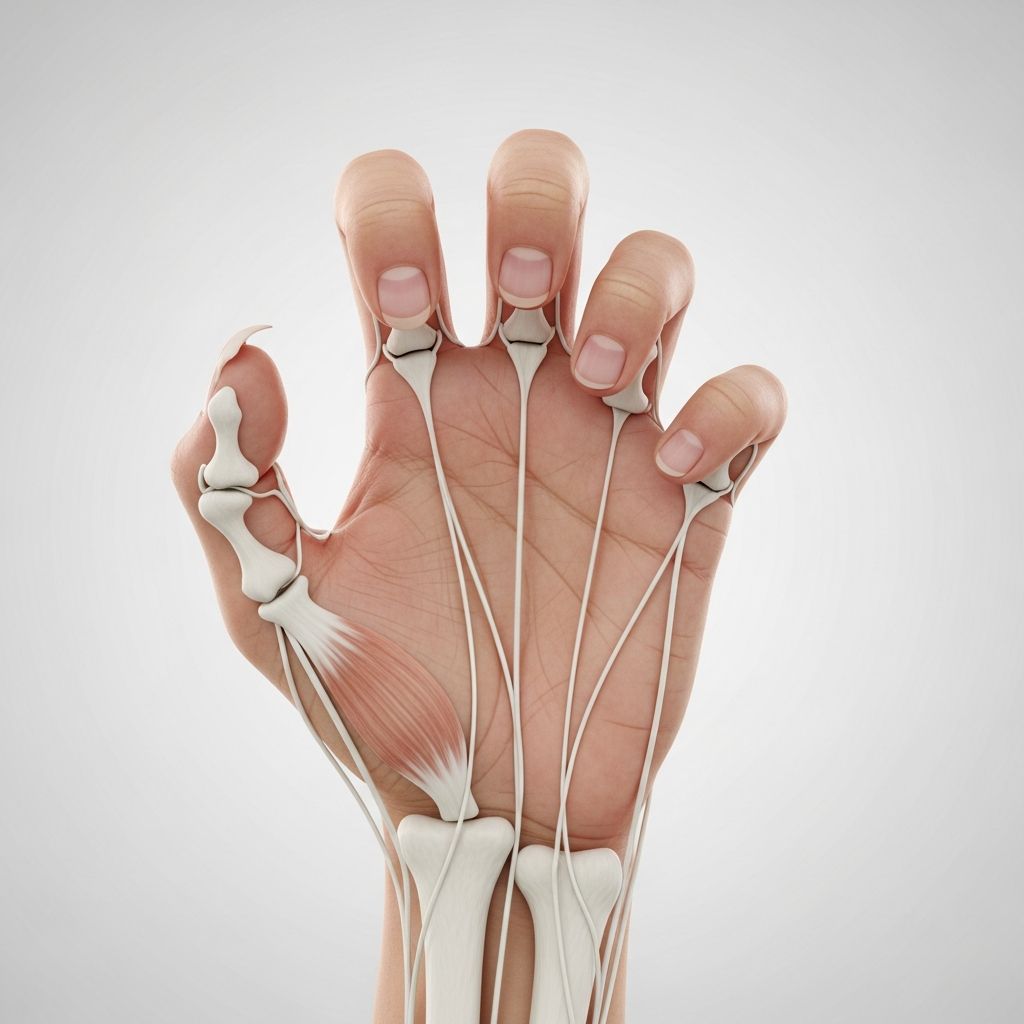
Claw hand is a hand deformity characterized by an abnormal position where the fingers are bent or curved, resembling a claw. This condition occurs due to weakness or paralysis of the intrinsic muscles of the hand, resulting in a distinctive posture where the metacarpophalangeal (MCP) joints become hyperextended while the interphalangeal (IP) joints flex simultaneously. The deformity may affect all fingers or only some of them, and it can develop in one hand or both hands depending on the underlying cause.
The condition typically manifests when patients attempt to extend their fingers. In a claw hand position, the fingers appear curved inward, and patients experience difficulty straightening them completely. This restricted finger extension significantly impacts hand function, making it challenging to grasp objects and perform everyday tasks that require fine motor control.
Understanding the Biomechanics
Claw hand deformity develops through a complex interplay of muscle weakness and biomechanical changes. When the intrinsic muscles that normally control finger extension become weakened or paralyzed due to nerve damage, the balance between opposing muscle groups is disrupted. The extrinsic finger flexor muscles, which are responsible for bending the fingers, operate unopposed and gradually shorten over time, a process known as contracture.
Importantly, claw hand deformity is not immediately apparent after intrinsic muscle paralysis occurs. Rather, the onset is delayed, and the severity progressively worsens over time as the soft tissues adapt to the altered muscle function. Research demonstrates that shortening of the extrinsic finger flexor muscles is the primary factor contributing to claw finger deformity development, with increased joint laxity and decreased extensor mechanical advantage playing secondary roles.
Causes of Claw Hand
Claw hand can result from various underlying conditions and injuries. Understanding these causes is essential for proper diagnosis and treatment planning:
Nerve Injuries and Compression
Nerve damage is the most common cause of claw hand deformity. The following nerve-related conditions can trigger this deformity:
– Ulnar nerve palsy, particularly from lower ulnar nerve lesions below the elbow- Median nerve palsy- Ulnar tunnel syndrome- Cubital tunnel syndrome, where the ulnar nerve is compressed at the elbow
Congenital and Genetic Conditions
Some individuals are born with predispositions to claw hand deformity. Congenital birth defects and genetic diseases such as Charcot-Marie-Tooth Disease can lead to the development of this condition.
Infections and Systemic Conditions
Certain infections can damage the nerves responsible for hand function. Leprosy, a bacterial infection, has historically been associated with claw hand development. Additionally, conditions like diabetic neuropathy can cause nerve damage leading to hand deformities.
Traumatic Injuries
Severe injuries can cause claw hand through multiple mechanisms. Severe hand or forearm burns can result in scarring that prevents normal finger extension. Compartment syndrome of the hand, a serious condition involving increased pressure within muscle compartments, can also lead to this deformity.
Types of Claw Hand Deformity
Claw hand deformities are classified based on the extent of finger involvement:
Related Stories



Complete Claw Hand
Complete claw hand involves all the digits and typically results from both ulnar and median nerve palsy. In this form, all fingers demonstrate the characteristic hyperextension at the MCP joints and flexion at the IP joints. This represents the most severe form of the deformity, affecting hand function across all fingers.
Incomplete or Partial Claw Hand
Incomplete or partial claw hand involves only the ulnar two digits (the ring and little fingers) and is referred to as isolated ulnar nerve palsy. This is the most common type, occurring when only the ulnar nerve is affected, leaving the median nerve-innervated fingers relatively unaffected.
Signs and Symptoms
Recognizing the symptoms of claw hand is important for early diagnosis and intervention. Common signs and symptoms include:
– Muscle wasting of the interosseous and hypothenar muscles- Numbness along the path of the affected nerve- Inability to extend the IP joints during finger extension attempts- Impaired ability to abduct and adduct the fingers (spread fingers apart or bring them together)- Unopposed action of the extensor and flexor digitorum profundus muscles, particularly in the 4th and 5th fingers- Visible clawing position when attempting to extend the fingers- Difficulty grasping objects or performing fine motor tasks
The severity of symptoms can vary depending on whether the nerve injury is acute or chronic, and whether it affects one or both hands. Patients may also experience pain or discomfort in addition to the motor symptoms.
Diagnosis of Claw Hand
Accurate diagnosis of claw hand deformity involves both clinical examination and specialized testing procedures.
Clinical Examination
Healthcare providers begin with a thorough physical examination, observing the hand’s resting position and asking the patient to attempt finger extension. The characteristic inability to straighten the interphalangeal joints while the metacarpophalangeal joints remain hyperextended is a key diagnostic finding.
Electromyography (EMG)
Electromyography is used to evaluate the electrical activity of the intrinsic and extrinsic muscles of the hand. This test helps identify which muscles are weakened or paralyzed and confirms the presence of neural impairment.
Nerve Conduction Studies
Nerve conduction studies measure how quickly electrical signals move through the affected nerve. These tests help localize the site of nerve injury and assess the severity of nerve damage, providing valuable information for treatment planning.
Imaging Studies
In some cases, imaging such as X-rays or ultrasound may be used to evaluate the structural integrity of the bones and soft tissues and to rule out other causes of hand deformity.
Differential Diagnosis
Several other conditions can present similarly to claw hand but require different treatment approaches. It is important to distinguish claw hand from these conditions:
– Cervical radiculopathy, where nerve compression in the neck affects hand function- Dupuytren contracture, a progressive thickening of the palmar fascia causing finger flexion- Klumpke paralysis, involving lower brachial plexus injury- Lower brachial plexopathy affecting multiple nerves- Volkmann’s ischemic contracture from forearm muscle damage- Ape hand, which primarily affects thumb mobility rather than all fingers
Accurate differentiation is crucial because these conditions require distinct treatment strategies and have different prognoses.
Treatment Options for Claw Hand
Treatment for claw hand is multifaceted and may involve non-surgical and surgical approaches, often used in combination for optimal outcomes.
Non-Surgical Interventions
Splinting and Orthotic Devices
Splinting is often the first line of treatment for claw hand deformity. Specialized splints are designed to prevent metacarpophalangeal joint hyperextension while allowing interphalangeal joint extension. These devices help prevent further contracture development and may improve hand function. Dynamic splints can assist with finger extension, while static splints maintain optimal positioning during rest.
Physiotherapy and Rehabilitation
Comprehensive physiotherapy plays a crucial role in managing claw hand. Treatment includes:
– Stretching exercises to maintain or improve finger flexibility and prevent contracture progression- Strengthening exercises targeting the interosseous muscles and lumbricals using tools such as stress balls, pillows, and tennis balls- Range of motion exercises to maintain joint mobility- Functional training to optimize hand use for daily activities- Patient education on proper hand positioning and self-management strategies
Surgical Interventions
Tendon Transfer
Tendon transfer procedures involve redirecting a functioning tendon to replace the function of a paralyzed muscle or nerve. This surgical approach can restore active finger extension by transferring healthy tendons to correct the biomechanical imbalance. Tendon transfer is particularly effective when the underlying nerve injury cannot be repaired.
Nerve Reconstruction
When nerve injury is the underlying cause, surgical nerve repair or reconstruction may be possible if performed within an appropriate timeframe. Successful nerve repair can restore intrinsic muscle function and prevent or reverse claw hand deformity.
Soft Tissue Management
Surgical procedures may include release of shortened flexor muscles or correction of joint laxity to address the biomechanical factors contributing to deformity progression.
Prevention and Management Strategies
While some causes of claw hand cannot be prevented, certain strategies can help reduce the risk or slow progression:
– Prompt treatment of nerve compression syndromes to prevent permanent nerve damage- Appropriate management of infections that could damage nerves- Early intervention following hand or arm injuries- Consistent use of recommended splints and orthotic devices- Regular physiotherapy participation as recommended by healthcare providers- Proper ergonomics and hand positioning during daily activities- Monitoring for early signs of contracture development
Prognosis and Long-Term Outlook
The prognosis for claw hand depends on several factors, including the underlying cause, severity of nerve damage, timeliness of intervention, and patient compliance with treatment. Early recognition and aggressive conservative treatment can often prevent progression and improve outcomes. Successful nerve repair or tendon transfer surgery can significantly improve hand function in many patients.
Frequently Asked Questions
Q: Is claw hand permanent?
A: Claw hand can be permanent if left untreated, but early intervention with splinting, physiotherapy, or surgery can often improve or reverse the deformity. The extent of permanent changes depends on the underlying cause and how quickly treatment begins.
Q: Can claw hand be reversed?
A: Yes, claw hand can often be reversed or significantly improved through appropriate treatment. Non-surgical interventions like splinting and physiotherapy may prevent progression or improve function. Surgical options like tendon transfer or nerve repair can provide more substantial improvements.
Q: What is the difference between claw hand and ape hand?
A: Claw hand involves flexion of the interphalangeal joints with hyperextension of the metacarpophalangeal joints affecting multiple fingers, while ape hand primarily involves limited range of motion and functional impairment of the thumb due to median nerve injury.
Q: How long does recovery take after claw hand surgery?
A: Recovery time varies depending on the type of surgery performed. Tendon transfer procedures typically require 3-6 months for initial healing, with continued improvement over 12 months or longer. Physiotherapy during this period is essential for optimal outcomes.
Q: Can splinting alone treat claw hand?
A: Splinting combined with physiotherapy can effectively manage mild to moderate claw hand and prevent progression. However, severe deformities or those caused by significant nerve damage may require surgical intervention for optimal functional improvement.
References
- Claw Hand — Physiopedia. 2024. https://www.physio-pedia.com/Claw_Hand
- The Biomechanical Basis of the Claw Finger Deformity — National Center for Biotechnology Information (NCBI), PMC6718315. 2019. https://pmc.ncbi.nlm.nih.gov/articles/PMC6718315/
- Cubital Tunnel Syndrome — Merck Manuals Professional Edition. 2024. https://www.merckmanuals.com/professional/musculoskeletal-and-connective-tissue-disorders/hand-disorders/cubital-tunnel-syndrome
- Ape Hand: Median Nerve, Symptoms, Causes, vs. Claw Hand — Healthline. 2024. https://www.healthline.com/health/ape-hand
- Dupuytren Contracture — MSD Manuals Professional Edition. 2024. https://www.msdmanuals.com/professional/musculoskeletal-and-connective-tissue-disorders/hand-disorders/dupuytren-contracture
Similar Articles








Read full bio of Sneha Tete