Clinical Strategies for Identifying Occludable Angles
Expert approaches to detecting narrow-angle glaucoma risk in routine practice
Angle-closure glaucoma represents a significant threat to vision and requires early detection to prevent irreversible damage. Unlike open-angle glaucoma, which develops gradually, angle-closure disease can progress rapidly and cause sudden vision loss if left unidentified. The challenge for clinicians lies in reliably identifying patients with narrow angles before they experience an acute attack. This article explores the practical clinical strategies and diagnostic tools available to ophthalmologists and eye care professionals for accurately assessing angle-closure risk.
Understanding the Clinical Significance of Angle Assessment
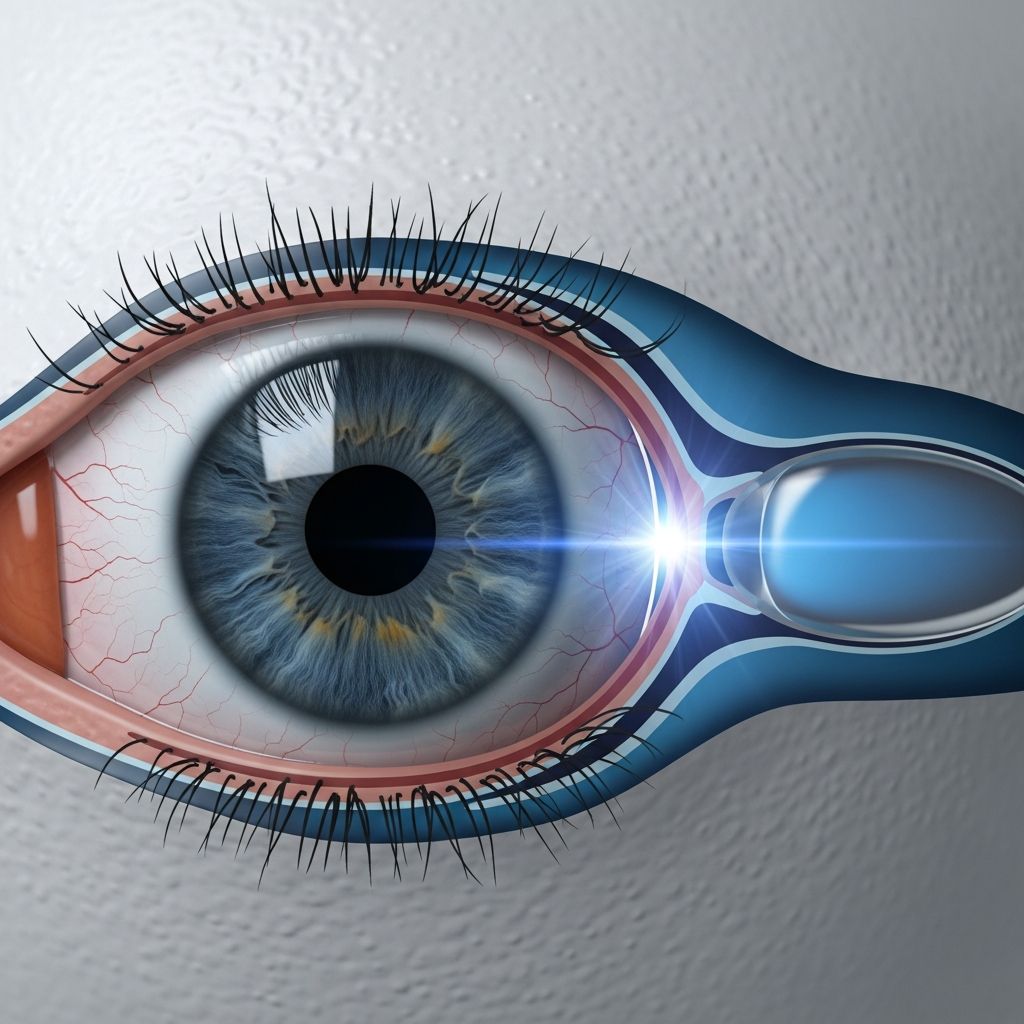
The anterior chamber angle represents the space between the cornea and the iris where aqueous humor drains through the trabecular meshwork. When this space becomes abnormally narrow, the risk of angle closure increases substantially. A significant proportion of patients with undiagnosed angle-closure disease remain undetected during routine eye exams, emphasizing the critical need for systematic evaluation in all patients, particularly those with identifiable risk factors.
Risk stratification should guide clinical decision-making. Patients exceeding age 55, those with significant hyperopia (particularly those with refractive error greater than +3 diopters), individuals with a family history of glaucoma, and patients of Asian descent warrant heightened scrutiny during comprehensive eye examinations. Additionally, any patient with previously diagnosed or suspected glaucoma should undergo formal angle assessment.
The Van Herick Technique: Quick Screening at the Slit Lamp
The Van Herick method provides a rapid, non-contact preliminary assessment of anterior chamber depth at the slit lamp. This screening technique involves offsetting the slit illumination approximately 60 degrees from the observation axis to visualize the peripheral anterior chamber. The examiner compares the apparent depth of the anterior chamber with the adjacent corneal thickness at the periphery.
The grading system categorizes angles as follows:
- Grade 0: No visible space between iris and cornea at the peripheral limbus
- Grade 1: Anterior chamber depth between zero and one-quarter of corneal thickness
- Grade 2: Anterior chamber depth equal to approximately one-quarter of corneal thickness
- Grade 3: Anterior chamber depth between one-quarter and one-half of corneal thickness
- Grade 4: Anterior chamber depth exceeding one-half of corneal thickness
While the Van Herick technique effectively alerts clinicians to potentially narrow angles and can be incorporated into routine slit-lamp examination without additional equipment, it cannot substitute for definitive angle evaluation. Its subjective nature and dependence on peripheral anatomy mean that suspicious findings necessitate more comprehensive assessment with gonioscopy.
Gonioscopy: The Gold Standard for Angle Evaluation
Gonioscopy remains the definitive clinical tool for anterior chamber angle assessment and serves as the reference standard against which all other imaging modalities are compared. Despite its established superiority, significant underutilization persists in clinical practice, with studies demonstrating that gonioscopy is performed in fewer than 50% of glaucoma patients and suspects. This gap in practice represents a critical missed opportunity for identifying occludable angles.
Procedural Considerations and Technical Execution
The gonioscopy procedure begins with instillation of topical anesthetic eye drops, eliminating discomfort and allowing placement of a specialized goniolens on the corneal surface. The lens contains mirrors that permit direct visualization of angle structures not otherwise visible during standard anterior segment examination. The procedure requires minimal time—typically just a few minutes—yet provides unparalleled direct visualization of the trabecular meshwork, ciliary body band, and iris configuration.
Related Stories



Proper technique demands attention to several important details. The examiner should avoid excessive pressure on the globe, as increased anterior chamber pressure may artificially open a narrow or occludable angle, leading to false reassurance. Dynamic gonioscopy, involving gentle manipulation to observe whether the angle widens with external pressure, helps distinguish between appositional closure and permanent peripheral anterior synechiae (PAS). The presence of PAS indicates prior episodes of angle contact and suggests chronic angle-closure disease.
Identifying High-Risk Anatomical Configurations
Beyond simply grading angles as open or narrow, gonioscopy permits identification of anatomical features predictive of angle-closure risk. Plateau iris configuration, wherein the ciliary body is positioned more anteriorly than usual, can cause angle closure despite adequate central anterior chamber depth. This anatomical variant would be missed by techniques that assess only central anterior chamber dimensions.
The ability to visualize both the trabecular meshwork directly and the iris configuration simultaneously makes gonioscopy superior for detecting subtle anatomical predispositions to closure. Combined with assessment of lens position and anterior chamber depth, gonioscopy provides comprehensive information necessary for informed clinical decision-making regarding preventive intervention.
Provocative Testing: Identifying Vulnerability to Angle Closure
When gonioscopic findings suggest marginal angle anatomy or when clinical suspicion remains elevated despite apparently adequate angles, provocative testing can help confirm the presence of true angle-closure risk. The dark-room prone provocative test represents the most conclusive method for demonstrating angle vulnerability. In this test, the patient remains in a darkened environment for approximately 45 minutes while maintaining a prone position with the head down. This combination of conditions—mydriasis from darkness and anterior lens displacement from prone positioning—maximizes the tendency toward angle closure in susceptible individuals.
A positive provocative test (demonstrated by narrowing or closure of angles on repeat gonioscopy following the provocative maneuver) confirms the diagnosis of occludable angles and supports the recommendation for preventive laser peripheral iridotomy. This test remains particularly valuable when noninvasive imaging findings are borderline or when patient factors make interpretation difficult.
Anterior Segment Optical Coherence Tomography: Modern Imaging Adjunct
Anterior segment OCT (AS-OCT) has emerged as a valuable supplementary imaging modality that enhances diagnostic confidence in angle-closure assessment. Unlike gonioscopy, AS-OCT provides non-contact, objective, and reproducible quantitative measurements of anterior segment anatomy. Modern swept-source OCT systems can generate high-resolution cross-sectional images of the angle region in seconds.
Quantitative Parameters and Diagnostic Value
AS-OCT analysis yields several quantitative parameters with proven diagnostic utility:
- Angle Opening Distance (AOD): The perpendicular distance between the trabecular meshwork and iris at specified distances anterior to the scleral spur. AOD values in angle-closure disease are significantly lower than in open-angle anatomy.
- Angle Recess Area (ARA): The triangular area bounded by the angle opening distance and the angle recess, providing a measure of total angle space
- Iris-Trabecular Contact Index (ITC): Quantifies the extent of iris-trabecular contact, with specialized software able to determine areas of appositional or synechial closure
- Trabecular-Iris Circumferential Volume (TICV): A global measure of angle volume showing discriminative ability for detecting narrow angles
Studies have established that certain parameters—particularly AOD measured 750 micrometers anterior to the scleral spur at the inferior angle, along with TICV measurements—demonstrate superior ability to differentiate narrow angles from normal anatomy.
Practical Advantages and Limitations
The primary advantage of AS-OCT over ultrasound biomicroscopy lies in its non-contact nature, eliminating potential patient discomfort and the need for topical anesthesia. The imaging process is rapid and produces high-resolution images suitable for patient education, enhancing understanding and acceptance of recommended interventions such as peripheral iridectomy.
A significant limitation of AS-OCT is its inability to image structures posterior to the iris plane. Shadowing and signal loss prevent visualization of the ciliary body, posterior chamber anatomy, and other posterior segment structures. This limitation proves particularly relevant when evaluating for plateau iris or other posterior angle-closure mechanisms, where information about ciliary body position would inform clinical interpretation.
Ultrasound Biomicroscopy: High-Resolution Posterior Segment Imaging
Ultrasound biomicroscopy (UBM) provides exceptional imaging of anterior segment anatomy including structures beyond the iris plane that remain invisible to conventional OCT. UBM utilizes high-frequency ultrasound (50 MHz) to generate detailed cross-sectional images with resolution exceeding that of conventional ultrasound.
The particular value of UBM emerges when evaluating suspected plateau iris configuration, as it can directly visualize ciliary body position and anatomy. UBM also proves invaluable in cases with opaque ocular media (such as dense cataracts or corneal scarring) that preclude adequate imaging with light-based modalities. Additionally, UBM can identify secondary causes of angle closure such as iridociliary cysts, cyclitic membranes, or masses.
Studies have demonstrated high agreement between UBM findings and gonioscopic assessment of iridotrabecular contact, establishing UBM as a reliable confirmatory tool. The quantitative parameters measured on UBM (including AOD and ARA) correlate with gonioscopic grading and provide objective documentation of angle anatomy for longitudinal comparison.
Clinical Decision-Making: Integrating Multiple Assessment Methods
Optimal angle-closure risk assessment typically incorporates multiple complementary approaches rather than relying on a single test. A practical algorithmic approach begins with risk stratification based on patient demographics and ocular characteristics. Patients with identifiable risk factors for angle closure should undergo Van Herick screening at the slit lamp as part of routine comprehensive examination.
Any patient with grades 0, 1, or 2 Van Herick angles, or any patient with risk factors regardless of Van Herick grading, should proceed to gonioscopy. This fundamental examination provides the clinical reference standard and should be performed before pupil dilation in high-risk patients to prevent angle closure precipitated by pupillary dilation in susceptible individuals.
When gonioscopic findings are clearly consistent with open angles in a patient without risk factors, no further evaluation may be necessary. Conversely, when angles appear narrow, when anatomical features suggest closure risk, or when patient cooperation prevents definitive gonioscopic assessment, supplementary imaging enhances diagnostic confidence. AS-OCT provides rapid, objective documentation suitable for most patients. UBM may be preferred when posterior angle anatomy requires assessment or when media opacity prevents adequate optical imaging.
Special Considerations in Clinical Practice
Several practical scenarios warrant specialized attention. In hyperopic patients exceeding +3 diopters of refractive error, many clinicians recommend gonioscopy prior to pupil dilation, reserving dilation for cases where angles are confirmed to be adequately open. This conservative approach prevents angle-closure attacks potentially precipitated by drug-induced mydriasis.
Patients presenting with symptoms suggestive of intermittent angle closure—such as halos around lights, transient visual blur, or mild eye discomfort—require comprehensive evaluation including both gonioscopy and imaging. Provocative testing may be considered if structural findings are inconclusive but clinical suspicion remains elevated.
Following preventive laser peripheral iridotomy, continued monitoring remains important. While successful peripheral iridectomy eliminates pupillary block as a closure mechanism, some eyes may develop angle closure through alternative mechanisms (lens-induced closure, plateau iris). Periodic gonioscopic assessment helps identify such developments.
Overcoming Barriers to Optimal Practice
Several factors contribute to underutilization of gonioscopy despite its proven value. Time constraints in busy clinical practices, perceived difficulty with the technique, and patient discomfort represent commonly cited barriers. However, experienced practitioners emphasize that gonioscopy requires minimal additional time beyond routine slit-lamp examination—typically only a few minutes for experienced examiners.
Training and technician support enhance efficiency. Many practices employ trained technicians to perform initial angle screening, alerting the physician to borderline or concerning cases requiring more detailed evaluation. Establishing this workflow systematically identifies at-risk patients and ensures that gonioscopy receives appropriate prioritization in clinical scheduling.
Summary of Key Clinical Recommendations
- Perform systematic risk stratification to identify patients requiring formal angle assessment
- Utilize Van Herick screening during routine slit-lamp examination as an efficient preliminary assessment tool
- Perform gonioscopy on all patients with suspicious anatomy or identifiable risk factors, before pupil dilation in high-risk individuals
- Apply dynamic gonioscopy techniques to differentiate appositional closure from permanent synechiae
- Employ supplementary imaging (AS-OCT or UBM) when gonioscopic findings are equivocal or when specific anatomical questions require clarification
- Consider provocative testing when clinical suspicion remains elevated despite seemingly adequate angles
- Document findings systematically to enable longitudinal monitoring and communication with referring providers
Conclusion
Comprehensive assessment of angle-closure risk requires integration of clinical examination techniques and imaging modalities. While gonioscopy remains the reference standard and cornerstone of evaluation, modern imaging provides valuable complementary information that enhances diagnostic confidence and supports patient education. By implementing systematic approaches to angle assessment guided by risk stratification, clinicians can identify occludable angles before vision-threatening acute episodes occur, enabling preventive interventions that preserve long-term visual function.
References
- Contemporary Approach to Narrow Angles — National Institutes of Health, National Center for Biotechnology Information. 2024. https://pmc.ncbi.nlm.nih.gov/articles/PMC11022020/
- Gonioscopy: What It Is, Procedure Details & Results — Cleveland Clinic. 2024. https://my.clevelandclinic.org/health/diagnostics/22421-gonioscopy
- How to Catch Narrow-Angle Glaucoma — Review of Ophthalmology. 2024. https://www.reviewofophthalmology.com/article/how-to-catch-narrowangle-glaucoma
- Assess Narrow Angle Glaucoma with AS-OCT — Ophthalmology Management. 2014. https://ophthalmologymanagement.com/issues/2014/december/assess-narrow-angle-glaucoma-with-as-oct/
- Types of Glaucoma: Narrow Angles Diagnosis — Lexington Eye Associates. 2024. https://www.lexingtoneyeassociates.com/eye-care/glaucoma-care/types-of-glaucoma/
- Angle Closure Glaucoma FAQs — Wills Eye Hospital. 2024. https://www.willseye.org/angle-closure-glaucoma-faqs/
Similar Articles








Read full bio of medha deb