Clitoris: Anatomy, Function, and Sexual Health
Understanding clitoral anatomy, function, and pleasure—a complete medical guide.
Understanding the Clitoris: Anatomy and Function
The clitoris is a remarkable organ that has fascinated medical professionals and researchers for centuries. Often shrouded in mystery or discussed in hushed tones, the clitoris is actually one of the most important sexual organs in the female reproductive system. Containing more than 10,000 nerve endings—more than any other part of the human body—the clitoris is the primary pleasure center of the vulva and vagina. Understanding its anatomy, function, and role in sexual response is essential for sexual health and well-being.
What Is the Clitoris?
The clitoris is a highly sensitive erogenous organ capable of erection under sexual stimulation. It is a female homologue of the male penis, developing from the same embryological structures during fetal development. However, despite these similarities in origin, the clitoris has a distinct and unique purpose: it is designed solely for sexual pleasure and has no other biological function. This singular purpose—to provide sensations that lead to sexual arousal and orgasm—makes the clitoris truly special among human organs.
On the outside of your body, the clitoris appears as a small, button-like area of flesh located at the top of your vulva. However, this visible portion represents only a small fraction of the complete clitoral structure. Approximately 90% of the clitoris extends internally, making it a much larger and more complex organ than most people realize.
Clitoral Anatomy: External and Internal Structures
The clitoris is composed of regular tissue, connective tissue, muscle, and a generous network of erectile tissue similar to that found in the penis. To fully understand clitoral function, it’s important to recognize all of its anatomical components.
The Glans Clitoris
The glans clitoris is the visible external portion of the clitoris, appearing as a small nub of flesh approximately 3/4 to an inch in diameter. This tiny structure is exceptionally sensitive due to its dense concentration of nerve endings—the glans alone contains about 8,000 nerve endings. It is located at the top of the vulva, above the urethral opening (where urine exits) and above the vaginal opening. The glans is responsible for the most intense sexual sensations and is the primary area through which direct clitoral stimulation occurs.
The Clitoral Hood
Covering the glans clitoris is a thin layer of skin called the clitoral hood, which is formed from the upper part of the labia minora (inner vaginal lips). The clitoral hood functions as a protective sheath, similar to the foreskin of a penis, serving to protect the extremely sensitive glans from unwanted or excessive stimulation. This hood varies significantly in size from person to person—in some individuals it may be fleshier and more pronounced, while in others it is thinner and less visible.
When sexual arousal occurs, the clitoris becomes engorged with blood and grows in size, causing the clitoral hood to retract or pull back, exposing more of the glans for direct stimulation. This mechanism is comparable to the erectile response of a penis during arousal.
Internal Clitoral Structures
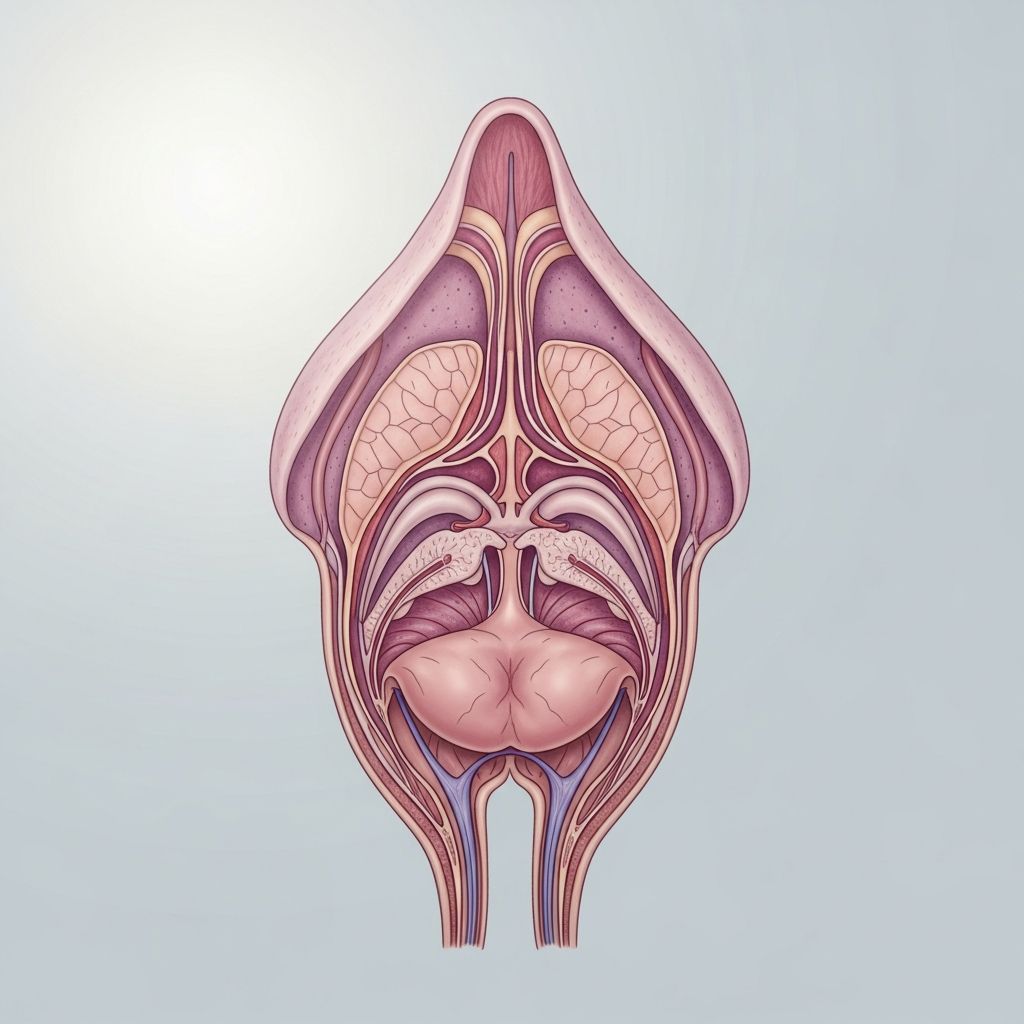
Beneath the visible glans, the clitoris extends deep into the body in a distinctive Y-shaped configuration when viewed internally. The body of the clitoris, also called the corpora, sits behind the glans and forms the single stem of this inverted Y shape. This structure is suspended from the pubic bone by a short ligament.
Related Stories



The two longer branches of the Y are called the crura (singular: crus), which extend downward and outward along both sides of the vagina. The entire clitoris measures approximately 3 1/2 to 4 1/4 inches in total length and about 2 1/2 inches in width. The crura extend down to about the length of the vagina on both sides, with the internal structures being completely hidden beneath the skin and vaginal tissue.
The Clitoral Bulbs
Located between the legs of the clitoris (the crura) and the vaginal walls are the vestibular bulbs, also known as the clitoral bulbs. These structures come in a pair and are composed of erectile tissue similar to the rest of the clitoris. During sexual arousal, these bulbs fill with blood and can double in size, contributing to the overall swelling and engorgement of the external genitalia. This blood engorgement plays an important role in sexual response and can also cause the labia minora to become swollen.
The Clitoral Root
The root of the clitoris refers to the area where the nerve pathways from various parts of the clitoris converge and meet. This junction occurs at the point where the two crura (legs) meet and is an important neurological hub for clitoral sensation and response.
The Role of Nerve Endings in Clitoral Function
The clitoris stands alone among human organs in its extraordinary concentration of nerve endings. While the glans alone contains approximately 8,000 nerve endings, recent research suggests that the entire clitoris contains more than 10,000 nerve endings in total—more than any other part of the human body. These nerve endings are specialized sensory receptors that transmit signals of touch, pressure, temperature, and pleasure to the brain and spinal cord.
This exceptional nerve density explains why the clitoris is so exquisitely sensitive and why it plays such a central role in sexual pleasure and orgasm. The concentration of nerve endings in the glans makes it capable of detecting extremely subtle sensations and transmitting intense pleasure signals. For most people with a clitoris, direct or indirect clitoral stimulation is required to experience orgasm, highlighting the importance of this organ in sexual function.
Sexual Function and Arousal Response
The primary function of the clitoris is to facilitate sexual pleasure and contribute to sexual arousal and orgasm. When sexual stimulation occurs, several physiological changes take place in clitoral tissue.
The Arousal Response
During sexual arousal, the clitoris undergoes significant changes. The erectile tissue within the clitoris fills with blood, causing the entire organ to become engorged and enlarged. This process is remarkably similar to penile erection in males. As the clitoris swells with blood, it may push the clitoral hood backward, exposing more of the sensitive glans to stimulation.
Simultaneously, the clitoral bulbs on either side of the vagina also become engorged with blood, contributing to the overall swelling of the external genitalia. This vascular response increases sensitivity and pleasure sensations throughout the genital region.
Stimulation Preferences and Sensitivity
The clitoris can be stimulated in many different ways, and each person may prefer different types of touch and pressure. Some individuals enjoy direct stimulation of the glans, while others find this too intense and prefer indirect stimulation through the clitoral hood or surrounding tissue. Some people experience pleasure through stimulation of the internal portions of the clitoris via vaginal or internal contact.
It is important to note that the clitoris is so sensitive that too much pressure or even direct touching can feel uncomfortable or painful for some people. Individual variations in sensitivity, preference, and response are completely normal and should be respected and communicated with partners.
Clitoral Variations and Individual Differences
Just as no two faces are identical, no two vulvas or clitorises are exactly alike. The clitoral hood can vary dramatically in size and appearance from person to person. Some individuals have a prominent, fleshier hood that completely covers the glans, while others have a minimal hood that reveals most or all of the glans. The glans itself can vary in size, shape, and coloring.
These natural variations are completely normal and do not affect the clitoris’s ability to provide pleasure or its role in sexual function. Understanding and accepting these individual differences is an important part of sexual health and body positivity.
Comparison: The Clitoris and Penis—Similarities and Differences
The clitoris and penis share a fascinating developmental relationship. Both develop from the same embryological structure—the genital tubercle—during fetal development. Under the influence of different sex hormones, these identical starting tissues differentiate into these two distinct organs. Both are composed primarily of erectile tissue and both are capable of erection during sexual arousal.
However, despite these similarities in origin and structure, there are important differences between these organs. The clitoris does not contain the urethra and does not emit fluid or ejaculate as the penis does. The clitoris serves solely the function of sexual pleasure, whereas the penis serves multiple functions including reproduction and urination. These differences highlight the unique role of the clitoris in female sexual anatomy and function.
Sexual Health and Clitoral Care
Maintaining clitoral health is an important aspect of overall sexual and reproductive health. General practices for genital health include maintaining proper hygiene, avoiding irritants, and seeking medical attention if you experience pain, unusual discharge, or other concerning symptoms.
It is also important to communicate openly with healthcare providers and sexual partners about clitoral sensitivity, preferences, and any concerns. Many people experience changes in clitoral sensitivity or function due to hormonal changes, medications, stress, or medical conditions. Healthcare providers can offer guidance and support for addressing these concerns.
Frequently Asked Questions
Q: How many nerve endings does the clitoris have?
A: The clitoris contains more than 10,000 nerve endings—more than any other part of the human body. The glans alone contains approximately 8,000 of these nerve endings.
Q: What is the clitoral hood and what does it do?
A: The clitoral hood is a fold of skin formed from the upper part of the labia minora that covers and protects the glans clitoris. It helps protect the sensitive glans from unwanted stimulation and retracts during sexual arousal.
Q: Is the clitoris really only for sexual pleasure?
A: Yes, the clitoris is the only part of the human body designed solely for sexual pleasure. It has no other biological function, making it truly unique.
Q: How large is the clitoris?
A: The entire clitoris measures approximately 3 1/2 to 4 1/4 inches long and about 2 1/2 inches wide. However, only the glans (about 3/4 to an inch in diameter) is visible externally; approximately 90% extends internally.
Q: Can clitoral sensitivity vary between individuals?
A: Yes, clitoral sensitivity varies significantly among individuals. Some people find direct stimulation pleasurable, while others find it too intense. These variations are completely normal.
Q: What happens to the clitoris during sexual arousal?
A: During arousal, the clitoris becomes engorged with blood, increasing in size and sensitivity. The clitoral hood may retract, exposing more of the glans for stimulation.
Q: How does the clitoris compare to a penis?
A: Both develop from the same embryological tissue and contain erectile tissue. However, the clitoris serves only pleasure function, while the penis serves reproductive and urination functions. The clitoris does not contain the urethra or emit fluid.
References
- Clitoris anatomy, purpose, and location — Flo Health. 2024. https://flo.health/menstrual-cycle/teens/clitoris-explained
- Clitoroplasty: Purpose, Procedure, Risks & Recovery — Cleveland Clinic. 2024. https://my.clevelandclinic.org/health/treatments/16253-clitoroplasty
- Anatomy, Function, Care and Conditions of the Clitoris — WebMD. 2024. https://www.webmd.com/women/anatomy-function-care-conditions-clitoris
- Clitoris: Definition, Location, & Facts — Britannica. 2024. https://www.britannica.com/science/clitoris
- All you need to know about the Clitoris — AH! YES. 2024. https://www.ahyes.org/blogs/blog-posts/all-to-know-about-the-clitoris
- Vulva: Location, Anatomy, Function, Conditions & Care — Cleveland Clinic. 2024. https://my.clevelandclinic.org/health/body/vulva
Similar Articles








Read full bio of Sneha Tete