Clofazimine FAQs: 5 Essential Insights On Use And Side Effects
Comprehensive guide to clofazimine: uses in leprosy, dermatological conditions, pharmacology, dosing, and side effects.
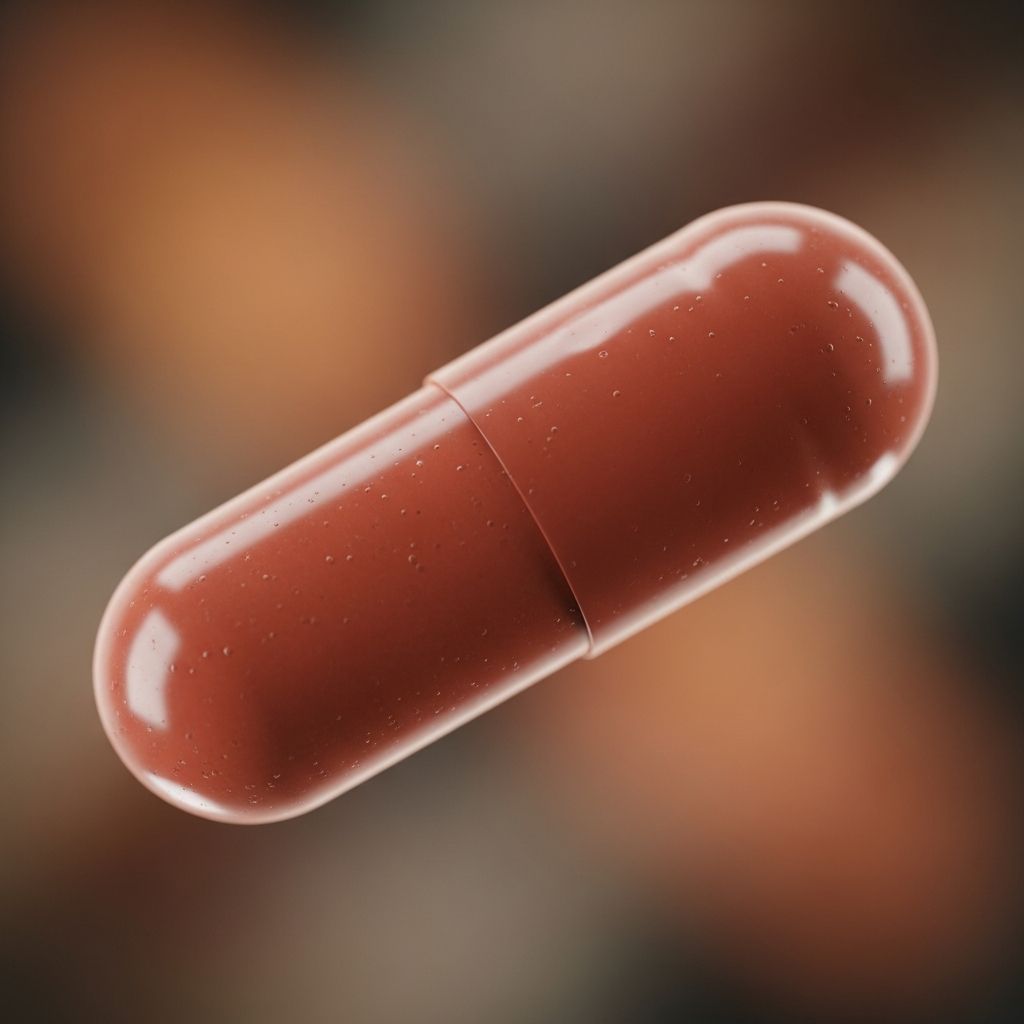
Clofazimine is a riminophenazine dye with antimicrobial and anti-inflammatory properties, primarily used in combination therapy for multibacillary leprosy and erythema nodosum leprosum (ENL). It also serves as a second- or third-line treatment for various refractory dermatological conditions due to its broad-spectrum effects.
What is clofazimine?
Clofazimine, sold under the brand name Lamprene, is a highly lipophilic phenazine dye originally developed in 1957 for tuberculosis but found effective against Mycobacterium leprae, the bacterium causing leprosy (Hansen’s disease). Its bright red color leads to characteristic skin and bodily fluid discoloration during treatment. Clofazimine exhibits weak bactericidal activity against M. leprae by disrupting bacterial DNA and membranes, while its potent anti-inflammatory effects stem from suppressing T-lymphocyte proliferation and promoting neutrophil reactive oxygen species release.
In dermatology, clofazimine’s utility extends beyond leprosy to neutrophilic, granulomatous, and infectious skin diseases, particularly in cases resistant to first-line therapies. It is available as 50 mg or 100 mg soft gelatin capsules, administered orally with meals to enhance absorption and reduce gastrointestinal upset.
Who gets clofazimine?
Clofazimine is indicated for patients with lepromatous (multibacillary) leprosy, including dapsone-resistant cases and those complicated by ENL reactions. Lepromatous leprosy presents with widespread skin lesions, nodules, and potential organ involvement, making multidrug therapy essential to prevent resistance.
- Adults and children with multibacillary leprosy requiring combination with rifampicin and dapsone.
- Patients experiencing type 2 leprosy reactions (ENL), characterized by painful erythematous nodules, fever, and neuritis.
- Individuals intolerant to dapsone or other standard antileprosy drugs.
Off-label, it benefits those with refractory dermatoses such as pyoderma gangrenosum, discoid lupus erythematosus, severe acne, pustular psoriasis, and granulomatous conditions like necrobiosis lipoidica.
What causes the need for clofazimine?
The primary driver is infection with Mycobacterium leprae, a slow-growing intracellular acid-fast bacillus transmitted via respiratory droplets from untreated multibacillary cases. Untreated, it leads to peripheral nerve damage, skin deformities, and systemic complications.
ENL arises as an immune complex-mediated reaction in 50% of lepromatous leprosy patients during treatment, triggered by antigen release from dying bacilli. Clofazimine’s anti-inflammatory action controls these episodes without steroids in mild cases.
In non-leprosy uses, underlying neutrophilic inflammation, autoimmune dysregulation, or resistant infections necessitate clofazimine as salvage therapy.
What are the clinical features of clofazimine-treated conditions?
Lepromatous leprosy
Symmetric skin infiltration with madarosis (loss of eyebrows/lashes), leonine facies, nasal collapse, and palpable nerves. Bacteriological index high; skin smears positive.
Erythema nodosum leprosum (ENL)
Tender red subcutaneous nodules on extremities, trunk; accompanied by fever, malaise, orchitis, iritis, or arthritis. Crops recur episodically.
Dermatological off-label uses
- Pyoderma gangrenosum: Painful ulcers with undermined violaceous borders.
- Discoid lupus erythematosus: Scaly, atrophic plaques on face/scalp.
- Pustular psoriasis: Sterile pustules on erythematous base.
- Severe acne: Nodulocystic lesions unresponsive to isotretinoin.
- Granulomatous cheilitis: Persistent lip swelling.
Diagnosis relies on clinical presentation, histopathology (neutrophilic/granulomatous infiltrates), and microbiology.
How is the diagnosis of conditions treatable by clofazimine made?
For leprosy: Slit-skin smears for acid-fast bacilli, PCR for M. leprae DNA, nerve biopsy if needed. Ridley-Jopling or WHO classification differentiates multibacillary forms.
ENL: Clinical during multidrug therapy (MDT); biopsy shows vasculitis.
Dermatoses: Punch biopsy excluding infection/malignancy; immunofluorescence for lupus.
What is the basic pharmacology of clofazimine?
Related Stories



Clofazimine is lipophilic, poorly water-soluble, with 45-70% oral bioavailability enhanced by fatty meals. Peak plasma levels in 4-12 hours; extensively bound to tissues (liver, spleen, fat, skin), yielding prolonged half-life (2-3 months) due to enterohepatic recirculation.
Metabolized minimally; 50% excreted in feces unchanged, 1-2% in urine. It accumulates in macrophages, binding mycobacterial DNA guanine bases and inhibiting phospholipase A2, disrupting membranes.
Anti-inflammatory via Kv1.3 channel blockade in T-cells, reducing effector memory T-cell proliferation, and neutrophil ROS induction.
What is the pharmacology of clofazimine in dermatology?
In skin, clofazimine concentrates in pilosebaceous units and macrophages, explaining efficacy in acneiform eruptions and granulomas. Its slow release sustains activity weeks post-dose, ideal for chronic conditions.
Dose-dependent crystal formation in tissues causes ichthyosis-like changes; red discoloration from drug deposition in stratum corneum.
What is the evidence for clofazimine in dermatology?
WHO recommends clofazimine in MB-MDT: 300 mg monthly x12 months (adults) with rifampicin/dapsone, bactericidal synergy preventing resistance.
For ENL: 100-200 mg/day up to 3 months controls reactions.
Dermatology: Case series/observational studies show 70-90% response in pyoderma gangrenosum (100 mg 3-4x/week), discoid lupus (100 mg/day), psoriasis vulgaris/pustularis. Limited RCTs due to rarity/orphan status.
What are the alternatives to clofazimine?
| Condition | First-line | Alternatives |
|---|---|---|
| Multibacillary leprosy | Rifampicin + dapsone + clofazimine (MDT) | Minocycline, ofloxacin (fluoroquinolone-resistant areas) |
| ENL | Clofazimine 100-300 mg/day | Prednisolone, thalidomide (teratogenic), azathioprine |
| Pyoderma gangrenosum | Infliximab, mycophenolate | |
| Discoid lupus | Hydroxychloroquine | Methotrexate, retinoids |
| Severe acne | Isotretinoin | Dapsone, tetracyclines |
How effective is clofazimine?
In leprosy MDT, >95% cure rate; clofazimine reduces relapse to <1%. ENL remission in 80% within weeks. Dermatology: Response rates 50-80% in refractory cases, relapse on cessation common, requiring maintenance (100 mg 1-3x/week).
Practical tips: dosage and administration
- Leprosy MDT (adult): 50 mg daily + 300 mg monthly supervised x12 months.
- ENL: 100 mg 1-3x daily (max 300 mg/day) x3 months; taper to 100 mg 2-3x/week.
- Dermatology: 100 mg 3-4x/week; max 400 mg/day short-term.
- Administer with full meal/milk; divide high doses. Children: 1-2 mg/kg/day.
What monitoring is required during clofazimine therapy?
- Baseline: LFTs, FBC, glucose, ophthalmology (rare corneal crystals).
- Ongoing: Monthly LFTs, abdominal exam (splenomegaly), skin color/ichthyosis.
- Depression screen due to discoloration.
Drug interactions with clofazimine
Food enhances absorption; avoid antacids. Additive photosensitivity with tetracyclines; monitor QT with fluoroquinolones. No major CYP interactions.
Are there any food restrictions with clofazimine?
Take with high-fat meal (e.g., peanut butter) to double bioavailability; avoid fasting.
What side effects can clofazimine cause?
Common (>10%): Pink-brown skin/ocular/bodily fluid discoloration (reversible over 6-12 months), dry/ichthyotic skin (8-28%).
Gastrointestinal (dose-related): Nausea, diarrhea, abdominal pain (up to 50% at 300 mg/day); crystalline enteropathy rare chronically.
Less common: Pruritus, rash, photosensitivity, elevated glucose, depression/suicidality from cosmesis.
Side effects of clofazimine — photos
Images typically show diffuse reddish-brown hyperpigmentation, drier scaly skin resembling acquired ichthyosis, and orange-red urine/tears. Discoloration spares mucous membranes initially.
Treatment of clofazimine side effects
- Discoloration/ichthyosis: Emollients (urea 10%, lactic acid), sun protection; patient counseling.
- GI upset: Dose reduction, divided doses with food; discontinue if severe.
- Depression: Psychological support; consider alternatives if intolerable.
Frequently Asked Questions (FAQs)
What is clofazimine used for?
Primarily multibacillary leprosy and ENL in MDT; off-label for refractory pyoderma gangrenosum, lupus, psoriasis.
Does clofazimine permanently discolor skin?
No, pink-brown pigmentation fades 6-12 months post-treatment as drug clears from tissues.
How long does clofazimine take to work for ENL?
Rapid improvement in 1-2 weeks; full control in 4-6 weeks.
Is clofazimine safe in pregnancy?
Limited data; avoid if possible (Category C); benefits may outweigh risks in leprosy.
Can clofazimine be used alone for leprosy?
No, always combine to prevent resistance.
References
- Use of clofazimine in dermatology — PubMed/NCBI. 2009-09-01. https://pubmed.ncbi.nlm.nih.gov/19746677/
- Clofazimine: a review of its medical uses and mechanisms of action — PubMed/NCBI. 1995-02-01. https://pubmed.ncbi.nlm.nih.gov/7829710/
- Clofazimine — DrugBank Online. 2023-01-01. https://go.drugbank.com/drugs/DB00845
- Clofazimine (oral route) — Mayo Clinic. 2024-01-01. https://www.mayoclinic.org/drugs-supplements/clofazimine-oral-route/description/drg-20063096
- Clofazimine Capsules — Cleveland Clinic. 2024-01-01. https://my.clevelandclinic.org/health/drugs/20574-clofazimine-capsules
- Clofazimine – DermNet — DermNet NZ. 2024-01-01. https://dermnetnz.org/topics/clofazimine
Similar Articles








Read full bio of Sneha Tete