Clubbed Nails: Causes, Symptoms, and When to See a Doctor
Learn what clubbed nails reveal about your health and when to seek medical care.
What Are Clubbed Nails?
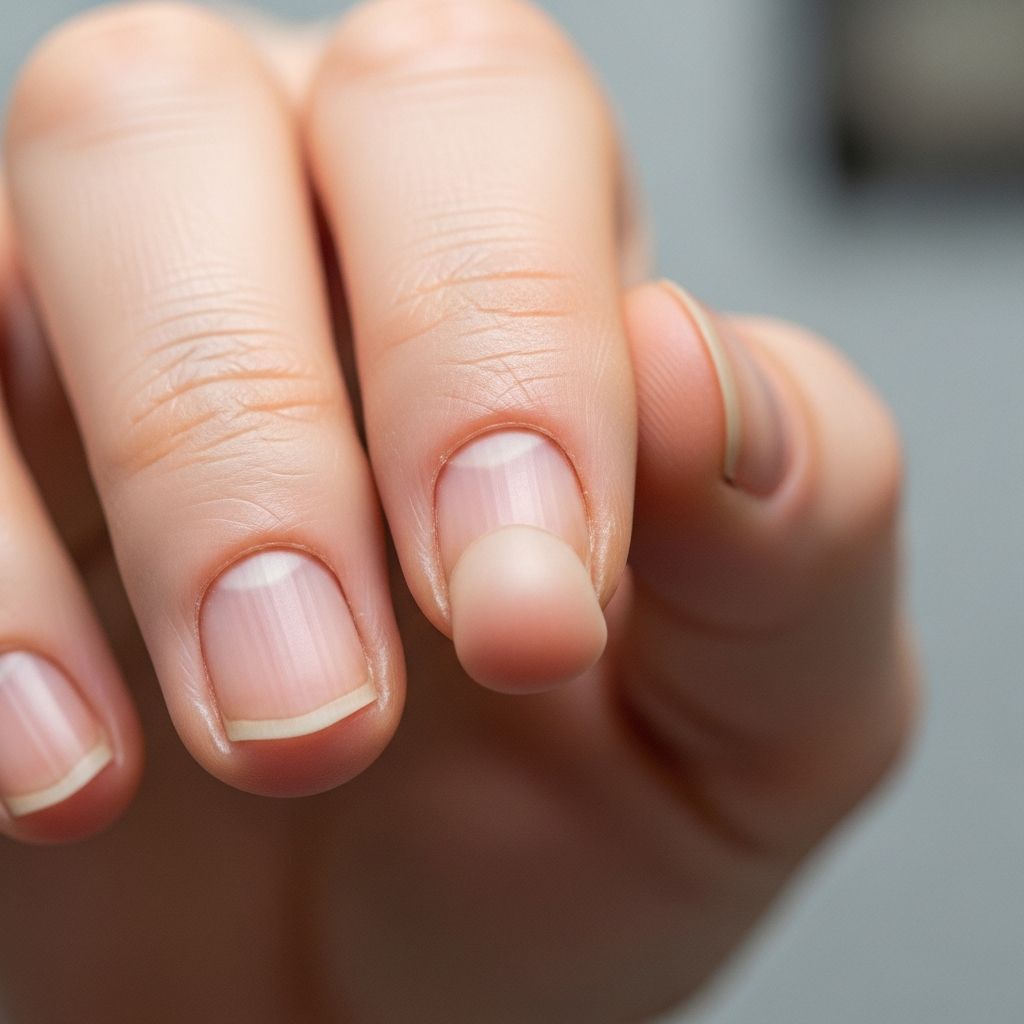
Nail clubbing is a condition in which the tips of your fingers enlarge and your nails curve around the fingertips, making them appear rounder or club-like in shape. According to medical literature, nail clubbing refers to soft tissue swelling of the terminal phalanx (the tip of the finger bone), leading to a flattening or loss of the normal angle between the nail bed and the nail.
This condition is not simply a cosmetic concern—it often serves as a physical sign that something else may be happening within your body. While nail clubbing can develop gradually over years, early recognition and evaluation are important because it may indicate an underlying health condition that requires attention.
How Clubbed Nails Develop: The Stages
Nail clubbing typically progresses through several distinct stages:
- Softening of the nail bed: Nails may feel unusually soft when pressed.
- Increased nail curvature: Nails begin to grow more rounded and curved.
- Fingertip widening: Fingertips enlarge and may resemble drumsticks.
- Shiny appearance: Nails develop a glossier, more reflective look than usual.
The progression from initial softening to full clubbing can span several years, making it important to monitor changes in your nails over time.
What Causes Clubbed Nails?
The underlying causes of nail clubbing are diverse and can range from benign hereditary factors to serious systemic diseases. According to medical research, clubbing develops when increased blood flow to the fingers and toes causes soft tissue to thicken and change shape. This increased blood flow often occurs when the body isn’t receiving enough oxygen, triggering a compensatory response in the circulatory system.
Lung-Related Causes
Because the lungs are responsible for delivering oxygen to the blood, lung problems are frequently linked to nail clubbing. Common lung conditions associated with clubbing include:
- Chronic lung infections
- Lung cancer
- Cystic fibrosis
- Interstitial lung disease
- Pulmonary fibrosis
In fact, pulmonary and cardiovascular diseases are the most common causes of acquired nail clubbing.
Heart-Related Causes
Heart problems that reduce oxygen levels in the blood can also trigger clubbing. These may include:
- Congenital heart defects (heart problems present at birth)
- Infective endocarditis (infection of the heart’s inner lining)
- Cyanotic heart disease (a type of heart disease that reduces blood oxygen)
Other Systemic Causes
Beyond lung and heart conditions, nail clubbing can be associated with:
- Liver cirrhosis
- Gastrointestinal disorders
- Infectious diseases
- Neoplastic (cancer-related) conditions
- Inflammatory diseases
- Vascular diseases
Familial and Idiopathic Clubbing
In some cases, nail clubbing can be a benign hereditary condition passed down through families, requiring no medical intervention. When no underlying cause can be identified, the condition is termed idiopathic clubbing. However, even in these cases, medical evaluation is important to rule out serious underlying conditions.
Related Stories



Understanding the Pathophysiology
Medical researchers have proposed several hypotheses to explain how clubbing develops at the cellular level. One primary hypothesis suggests that clubbing results from peripheral deposition of clumped platelets and megakaryocytes (blood cells) that are normally filtered by the lungs. The main pathologic finding in clubbing is significantly increased capillary density in the nail bed area.
When Should You Contact Your Healthcare Provider?
It’s crucial to talk to your healthcare provider immediately if you notice your nails changing shape, particularly if the changes affect multiple fingers. While clubbing itself is not painful, it serves as a warning sign that warrants professional evaluation.
According to medical experts, “In the majority of people without a family history, it’s something that needs to be checked and evaluated right away to see if there’s any serious underlying causes”. Early diagnosis and intervention can significantly improve outcomes, as the longer clubbing persists, the more challenging it becomes to fully reverse.
How Is Nail Clubbing Diagnosed?
Proper evaluation of nail clubbing begins with a thorough history and physical examination. Your healthcare provider will assess clubbing based on specific physical features and may take measurements to determine severity.
The diagnostic workup typically includes:
- Detailed patient history: Discussion of symptoms and family history to guide diagnosis.
- Physical examination: Assessment of nail clubbing characteristics and other physical findings.
- Chest radiography: Initial imaging to evaluate for pulmonary or cardiovascular abnormalities, as these are the most common causes of acquired clubbing.
- Computed tomography (CT) scan: If chest X-rays show no abnormality, a CT scan may be ordered to detect pulmonary neoplasms or other lesions that may still be localized and potentially curable.
It’s important to note that assessment of clubbing by physical examination alone can be subjective and unreliable, especially in cases of minimal or early-stage clubbing. This underscores the importance of supporting clinical judgment with appropriate imaging and laboratory tests.
Treatment and Management Options
Treatment of nail clubbing is not focused on the clubbing itself but rather on addressing the underlying condition causing it. Once the root cause is identified and treated, clubbing may improve or resolve.
The response to treatment varies significantly depending on the underlying disease process. For example:
- Patients undergoing prostaglandin therapy for liver disease who developed clubbing experienced reversal of the condition when therapy was discontinued.
- Patients treated for cancer have reported nail improvement following successful cancer treatment.
The key to better outcomes is early identification of the underlying cause and prompt initiation of appropriate treatment. As one medical expert notes, “The more severe and longer-standing nail clubbing is, the harder it can be to fully reverse”. However, many cases do show improvement with effective treatment of the underlying condition.
Prognosis and Long-Term Outlook
Like treatment and management, the prognosis for nail clubbing depends heavily on the underlying etiology. If the condition causing clubbing is reversible, then clubbing will typically reverse with successful treatment. However, if the condition is chronic or associated with malignancy, clubbing is likely to be long-term.
This underscores the importance of early recognition and diagnosis, as timely intervention can potentially prevent or minimize the extent of clubbing and improve overall health outcomes.
Important Considerations: Aesthetic and Psychological Impact
While clubbing as a physical finding results in aesthetic changes to the nails and fingertips, its true significance lies in what it may reveal about your internal health. However, the aesthetic changes can have psychological and social implications for some patients, making early diagnosis and successful treatment of the underlying condition even more important.
Frequently Asked Questions About Clubbed Nails
Q: Can clubbed nails be reversed?
A: Yes, in many cases clubbing can be reversed when the underlying cause is identified and treated successfully. However, the longer clubbing has been present, the more difficult reversal becomes. Early intervention offers the best chance for improvement.
Q: Is nail clubbing always a sign of serious illness?
A: Not always. While clubbing is often associated with serious conditions like lung disease and heart problems, it can also be a benign familial trait. However, in people without a family history of clubbing, medical evaluation is recommended to rule out underlying health conditions.
Q: How quickly does nail clubbing develop?
A: Nail clubbing typically develops gradually over several years. This gradual progression makes it important to monitor changes in your nail appearance and seek medical evaluation if you notice significant changes.
Q: What should I do if I notice my nails changing shape?
A: Contact your healthcare provider immediately, especially if changes affect multiple fingers. Early diagnosis and evaluation can help identify any underlying conditions and lead to more effective treatment.
Q: Can medications cause clubbed nails?
A: While nail clubbing is primarily associated with systemic diseases rather than medications, certain conditions requiring medication—such as heart disease or lung disease—may manifest with clubbing as a symptom.
References
- Nail Clubbing – StatPearls — National Center for Biotechnology Information (NCBI) Bookshelf. 2024. https://www.ncbi.nlm.nih.gov/books/NBK539713/
- What Nail Clubbing Can Say About Your Health — Nebraska Medicine, University of Nebraska Medical Center. 2024. https://www.nebraskamed.com/health/conditions-and-services/dermatology/what-nail-clubbing-can-say-about-your-health
- 7 Fingernail Problems Not to Ignore — Mayo Clinic. June 30, 2023. https://www.mayoclinic.org/healthy-lifestyle/adult-health/in-depth/7-fingernail-problems-not-to-ignore/art-20546860
Similar Articles








Read full bio of medha deb