CMV Retinitis: Signs, Diagnosis, And Treatment Guide
Understand cytomegalovirus retinitis, its risks in weakened immune systems, symptoms, diagnosis methods, and latest treatments to safeguard vision.
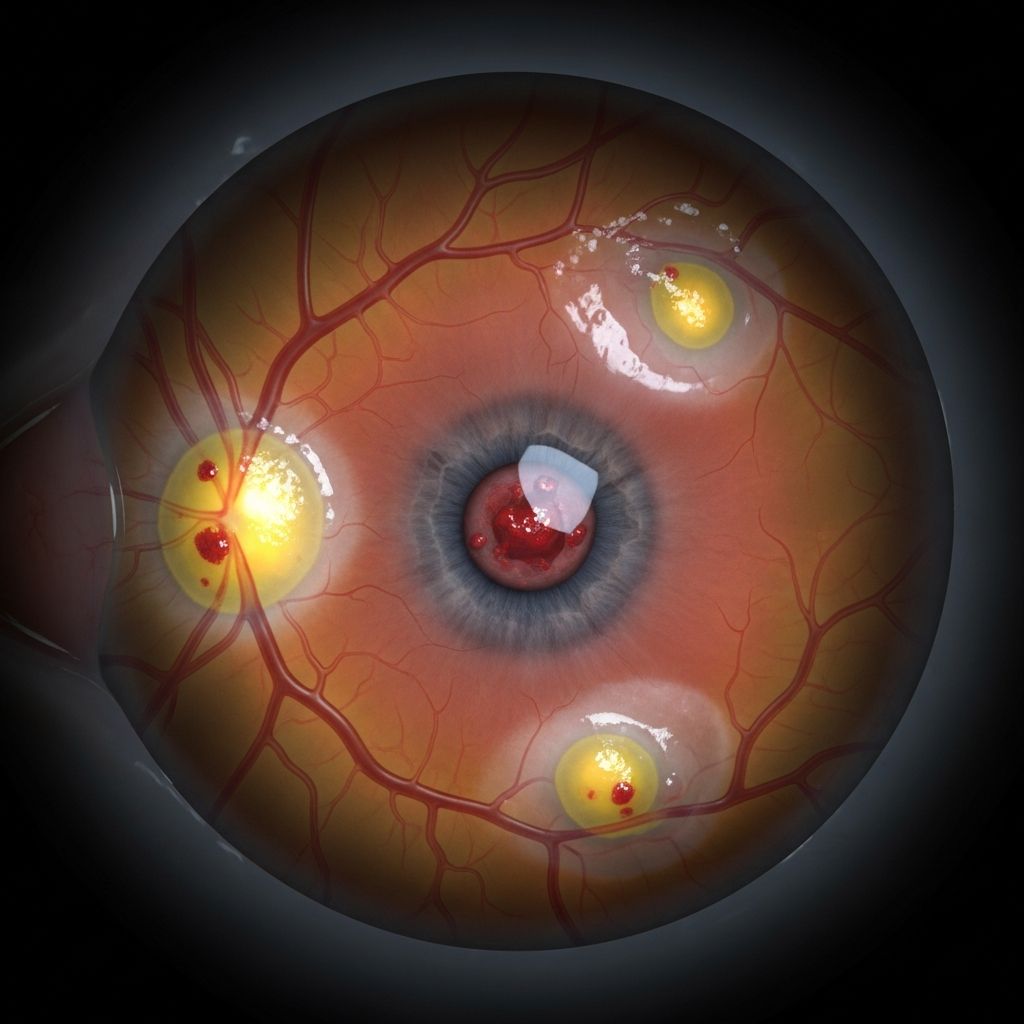
Cytomegalovirus retinitis represents a significant ocular threat, particularly for individuals with weakened immune defenses, where the virus targets the retina and risks irreversible vision impairment if not addressed promptly.
The Nature of Cytomegalovirus and Its Ocular Impact
Cytomegalovirus, a member of the herpesvirus family, infects a large portion of the global population, with seroprevalence reaching up to 80% in adults, yet it remains dormant in healthy individuals. In those with suppressed immunity, such as people living with HIV/AIDS, organ transplant recipients, or chemotherapy patients, the virus reactivates, leading to cytomegalovirus retinitis (CMVR), the most prevalent CMV-related eye condition.
The retina, the light-sensitive tissue lining the eye’s back, becomes inflamed and necrotic under viral assault, starting peripherally and potentially advancing centrally. This progression can manifest as the hallmark ‘pizza pie’ retinopathy, featuring yellowish-white retinal patches amid hemorrhages. Without intervention, CMVR advances rapidly, threatening blindness within months.
High-Risk Groups and Transmission Pathways
- Primary Vulnerabilities: Patients with CD4 counts below 50 cells/μL, especially in untreated HIV, face the highest risk.
- Other Factors: Bone marrow or solid organ transplants, long-term corticosteroids, and certain malignancies also predispose individuals.
- Transmission Dynamics: CMV spreads via bodily fluids like saliva, urine, blood, and semen, often acquired in childhood or through sexual contact, lying latent until immunity falters.
Reactivation, rather than new infection, drives most CMVR cases in adults, underscoring the need for vigilant monitoring in at-risk populations.
Recognizing Early Warning Signs
Initial symptoms may be subtle, with many cases asymptomatic until substantial retinal involvement occurs. Common indicators include:
- Floaters or specks drifting in the visual field.
- Blurred or decreased central/peripheral vision.
- Light flashes or blind spots.
- Progressive vision loss if untreated.
Symptoms often begin unilaterally but can bilateralize, accompanied by mild vitreous haze distinguishing it from other retinopathies. Pain is rare, complicating self-detection.
Diagnostic Approaches for Accurate Identification
Diagnosis hinges on comprehensive ophthalmic evaluation following pupil dilation to visualize retinal changes. Key methods encompass:
- Fundus Examination: Reveals peripheral necrosis, hemorrhages, and vessel sheathing.
- Imaging Tools: Fundus photography, optical coherence tomography (OCT), and fluorescein angiography aid in delineating lesions and monitoring progression.
- Laboratory Confirmation: Low CD4 counts, CMV PCR in vitreous/aqueous humor, or blood viral loads support diagnosis.
- Telemedicine Screening: Valuable in underserved areas for high-risk patient fundus imaging.
Differential diagnosis excludes toxoplasmosis, syphilis, or herpes zoster, often requiring multimodal assessment.
Current Treatment Landscape
Antiviral therapy forms the cornerstone, aiming to halt progression and preserve vision, with early initiation drastically reducing blindness risk. Treatments divide into induction (high-dose initial phase) and maintenance phases.
| Medication | Mechanism | Routes | Benefits | Risks |
|---|---|---|---|---|
| Ganciclovir/Valganciclovir | DNA polymerase inhibitor | IV, oral, intravitreal, implant | Versatile, effective against active disease | Myelosuppression, neutropenia, liver issues |
| Cidofovir | DNA polymerase inhibitor | IV, intravitreal | Cost-effective, suppresses flares | Nephrotoxicity, uveitis, hypotony |
| Foscarnet | Direct polymerase inhibitor | IV, intravitreal | Useful in resistance cases | Renal impairment, electrolytes imbalance |
| Letermovir/Maribavir | Terminase/kinase inhibitor | Oral/IV | Prophylaxis, better tolerability | Limited retinal penetration, resistance |
Related Stories



Intravitreal injections or ganciclovir implants suit posterior pole involvement (Zone 1), offering localized delivery. Laser photocoagulation or vitrectomy addresses complications like detachment. Immune reconstitution via antiretroviral therapy (ART) is pivotal for HIV patients.
Emerging Therapies and Resistance Challenges
Adoptive T-cell therapy and CMV immunoglobulin show promise, enhancing immunity with fewer side effects. Resistance, stemming from UL54/UL97 mutations, affects up to 20% of cases, necessitating switches like foscarnet or leflunomide.
Monitoring viral loads and resistance genotyping guide adjustments, while combination regimens combat refractory disease.
Potential Complications and Prognosis
Untreated CMVR precipitates retinal detachment, optic neuropathy, and blindness in under six months. Even treated, immune recovery uveitis or drug toxicities pose risks. Prognosis optimizes with prompt therapy and immune restoration, though residual vision loss persists in advanced cases.
Prevention Strategies for At-Risk Individuals
- Regular ophthalmic screening for CD4 <100 cells/μL.
- Prophylactic antivirals in high-risk transplant patients.
- ART adherence to boost CD4 counts.
- Hygiene to curb CMV transmission.
Tele-screening expands access in resource-poor settings.
Frequently Asked Questions (FAQs)
What causes CMV retinitis?
It arises from CMV reactivation in immunocompromised hosts, damaging the retina.
Is CMV retinitis painful?
Typically painless, presenting with visual disturbances like floaters.
How quickly does it progress?
Untreated, it can blind within months via retinal destruction.
Can it affect both eyes?
Yes, often starting in one and spreading.
Is there a cure?
No cure, but treatments control it effectively if started early.
What if treatments fail?
Switch antivirals or use adjuncts like T-cell therapy for resistance.
CMV retinitis demands swift recognition and management to avert devastating visual consequences. At-risk individuals should prioritize routine eye care alongside systemic health optimization.
References
- Cytomegalovirus Retinitis: Clinical Manifestations, Diagnosis and … — PMC/NCBI. 2024. https://pmc.ncbi.nlm.nih.gov/articles/PMC11437412/
- Cytomegalovirus (CMV) Retinitis: Symptoms & Causes — Cleveland Clinic. 2023-10-23. https://my.clevelandclinic.org/health/diseases/25224-cytomegalovirus-cmv-retinitis
- Cytomegalovirus (CMV) Retinitis — Dr. McDevitt EyeCare. 2023. https://drmcdevitteyecare.com/articles/default/418087-cytomegalovirus-cmv-retinitis
- Cytomegalovirus Retinitits (CMV) – Treatment — Boston Eye Group. 2024. https://www.bostoneyegroup.com/retina-boston/cmv/
- CMV Retinitis — EyeWiki (AAO). 2025-01-15. https://eyewiki.org/CMV_Retinitis
Similar Articles








Read full bio of Sneha Tete