Coccidioidomycosis: Comprehensive Guide To Valley Fever
Comprehensive guide to Valley fever: causes, symptoms, diagnosis, treatment, and prevention of this fungal infection.
What is coccidioidomycosis?
Coccidioidomycosis, commonly known as Valley fever, is a systemic infection caused by the dimorphic fungi Coccidioides immitis or Coccidioides posadasii. These fungi are endemic to arid regions of the southwestern United States, northern Mexico, and parts of Central and South America. The infection primarily affects the lungs but can disseminate to skin, bones, joints, and meninges in severe cases. Most infections (up to 60%) are asymptomatic, resolving spontaneously without treatment. Symptomatic cases mimic community-acquired pneumonia, appearing 7–21 days post-exposure with fever, cough, fatigue, and chest pain.
The fungi grow as saprophytic mycelia in alkaline soil, producing arthroconidia that become airborne during dust storms or soil disruption. Inhalation of these spores leads to primary pulmonary infection. Risk factors for severe disease include immunosuppression, pregnancy (especially third trimester), diabetes, advanced age, and certain ancestries like African or Filipino.
Who gets coccidioidomycosis?
Anyone inhaling arthroconidia in endemic areas can acquire coccidioidomycosis. Outbreaks occur after earthquakes, dust storms, or construction activities that aerosolize soil. Travellers to endemic regions like Arizona, California’s San Joaquin Valley, or Texas are at risk. Occupational exposure affects construction workers, archaeologists, and military personnel. Up to 60% of exposures are subclinical. High-risk groups for dissemination include immunocompromised patients (e.g., HIV, transplant recipients, TNF inhibitors), pregnant women, diabetics, elderly, and those of African or Filipino descent.
- Endemic areas: Southwestern US (Arizona 60% cases), soil pH >7
- Incidence: >150,000 estimated US infections/year
- Immunocompetent: Usually self-limited
- High-risk: 1–5% disseminate without treatment
What causes coccidioidomycosis?
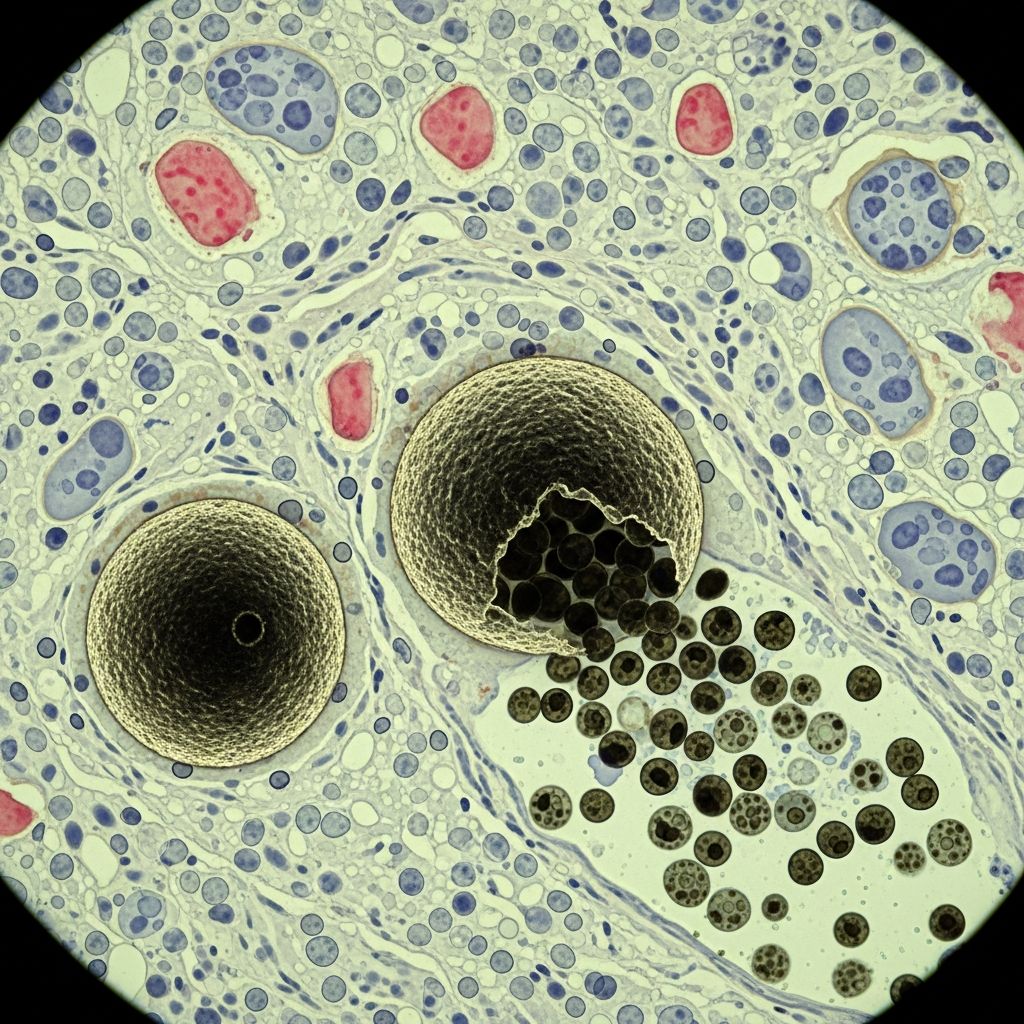
Coccidioides spp. are soil-dwelling fungi thriving in hot, dry climates. Mycelial phase produces barrel-shaped arthroconidia (3–5 μm), easily inhaled. In the host, they convert to spherules (30–60 μm) filled with endospores, releasing thousands more in tissues. C. immitis predominates in California; C. posadasii elsewhere. No human-to-human transmission except rare fomites or organ transplant.
What are the clinical features of coccidioidomycosis?
Primary pulmonary coccidioidomycosis
Most common form (40% symptomatic). Presents 1–3 weeks post-exposure like flu or pneumonia: fatigue, fever, dry cough, pleuritic chest pain, dyspnoea, night sweats, myalgias, arthralgias, headache. Symptoms last weeks to months; fatigue may persist. Chest X-ray shows infiltrates, hilar adenopathy, effusion, or nodules.
Immune response manifestations
Erythema nodosum (painful leg nodules), erythema multiforme (target lesions), or exanthema indicate good prognosis. Reactive arthritis (fever, conjunctivitis, tenosynovitis) resolves in weeks.
Complications
- Chronic fibrocavitary pneumonia: Thin-walled cavities, haemoptysis, weight loss; 5% of symptomatic cases.
- Diffuse pneumonia: Miliary infiltrates in immunocompromised; high mortality.
- Disseminated disease: Skin (verrucous/ulcerative lesions), bones/joints (osteomyelitis), meninges (most fatal).
Coccidioidal meningitis
Insidious: headache, altered mental status, meningismus, hydrocephalus. CSF shows lymphocytic pleocytosis, low glucose, high protein. Poor blood-brain barrier penetration requires intrathecal therapy.
Skin lesions
Primary dissemination: verrucous plaques, abscesses, ulcers. Secondary: nodules from haematogenous spread.
| Manifestation | Frequency | Features |
|---|---|---|
| Pulmonary | 40% symptomatic | Cough, fever, infiltrates |
| Skin | 15–20% disseminated | Verrucous, ulcers |
| Meningitis | 30–50% untreated diss. | Headache, hydrocephalus |
| Bone/joint | 20–30% diss. | Osteomyelitis, arthritis |
Related Stories



Diagnosis of coccidioidomycosis
Suspect in endemic exposure + prolonged pneumonia. Serology (IgM/IgG EIA, immunodiffusion, CF) is primary: sensitivity 70–95%. Culture (sputum, tissue) confirmatory but biohazardous (BSL-3). PCR emerging. Imaging: CXR/CT for infiltrates/cavities. Biopsy shows spherules. CSF analysis for meningitis.
- Serology: Acute IgM, convalescent IgG
- Culture: Gold standard, <50% positive
- Histology: Spherules diagnostic
Treatment of coccidioidomycosis
Most uncomplicated cases self-resolve; observe mild symptoms with education, PT. Antifungals for severe, persistent, or high-risk.
Uncomplicated pulmonary
Fluconazole 400 mg/day or itraconazole 200 mg BID x 3–6 months if symptomatic >2 months or high-risk.
Chronic cavitary
Azoles 12 months or surgery for haemoptysis.
Disseminated/bone/joint
Azoles lifelong; fluconazole 400–1200 mg/day preferred.
Meningitis
Fluconazole 400–1200 mg/day ± intrathecal amphotericin B lifelong.
Immunocompromised
Azoles ± amphotericin B; prophylaxis in high-risk.
| Condition | First-line | Duration |
|---|---|---|
| Uncomplicated pneumonia | Observation | – |
| Severe/disseminated | Fluconazole 400–1200 mg/d | Lifelong if CNS/bone |
| Meningitis | Fluconazole + intrathecal AmB | Lifelong |
Complications and prognosis
Self-limited in 95% immunocompetent. Dissemination (1–5%) fatal without Rx (meningitis 90% mortality). Relapse common post-short Rx; monitor serology/imaging. Long-term: fatigue, cavitation.
Prevention of coccidioidomycosis
Avoid dust: masks in endemic areas, wet soil, stay indoors during storms. No vaccine. Prophylaxis (fluconazole) for high-risk exposed.
Frequently asked questions
What is the incubation period?
7–21 days post-inhalation.
Is treatment always needed?
No, most resolve without; antifungals for severe/risk factors.
Can it spread person-to-person?
Extremely rare.
How long does fatigue last?
Weeks to months; PT helps.
Is lifelong therapy needed for meningitis?
Yes.
References
- Clinical Practice Guidelines for the Management of Coccidioidomycosis — Infectious Diseases Society of America (IDSA). 2022-01-04. https://www.idsociety.org/practice-guideline/coccidioidomycosis/
- Coccidioidomycosis — StatPearls, NCBI Bookshelf, NIH. 2023-07-17. https://www.ncbi.nlm.nih.gov/books/NBK448161/
- Evaluation and Treatment of Coccidioidomycosis Infections — Infectious Disease Advisor. 2024-05-15. https://www.infectiousdiseaseadvisor.com/features/coccidioidomycosis-infections-treatment-and-evaluation/
- Coccidioidomycosis (Valley Fever) in Primary Care — American Academy of Family Physicians (AAFP). 2020-02-15. https://www.aafp.org/pubs/afp/issues/2020/0215/p221.html
- Treating and Managing Valley Fever — American Lung Association. 2023-11-01. https://www.lung.org/lung-health-diseases/lung-disease-lookup/coccidioidomycosis/treating-and-managing
- Valley Fever: Causes, Transmission, Symptoms & Treatment — Cleveland Clinic. 2024-02-20. https://my.clevelandclinic.org/health/diseases/17754-valley-fever
- Treatment of Valley Fever — Centers for Disease Control and Prevention (CDC). 2024-08-12. https://www.cdc.gov/valley-fever/treatment/index.html
Similar Articles








Read full bio of medha deb