Coccyx (Tailbone): Anatomy, Function & Health
Complete guide to your coccyx: anatomy, function, common conditions, and care.
Understanding Your Coccyx (Tailbone)
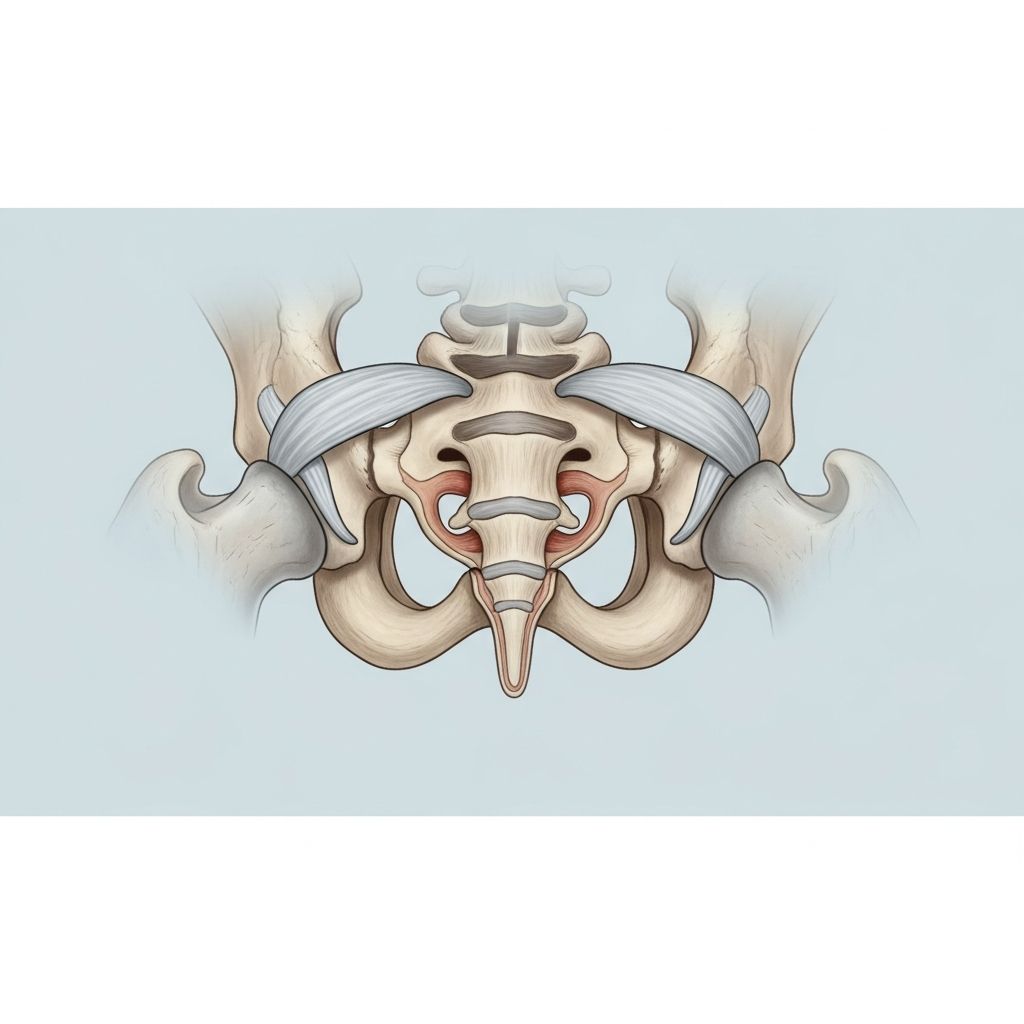
The coccyx, commonly known as the tailbone, is a small triangular bone located at the very bottom of your spinal column. This seemingly insignificant structure plays several important roles in your body’s overall function and stability. Despite its small size, the coccyx is a crucial part of your skeletal system that deserves attention and care.
Your tailbone is composed of three to five fused vertebrae (small bones) that form a unified structure. In early adulthood, these coccygeal vertebrae typically fuse together, and in later life, the coccyx may even fuse with the sacrum above it. This fusion process is a natural part of aging and spinal development.
Anatomical Structure of the Coccyx
The coccyx represents a vestigial tail structure in humans, a evolutionary remnant from our primate ancestors. It is curved and semiflexible, positioned at the end of the vertebral column where the spinal cord terminates above it. The spinal cord does not extend into the coccyx itself, ending at a higher level in the lumbar region.
The coccygeal vertebrae are successively smaller as they progress downward, with the first vertebra being relatively well-defined and connecting directly with the sacrum above it. The last vertebra is represented by a small nodule of bone that forms the very tip of your tailbone. This anatomical arrangement creates a structure that is both flexible enough to move slightly and sturdy enough to support significant forces.
Key Functions of Your Tailbone
Although many people don’t think about their tailbone until it starts hurting, your coccyx serves several important functions:
- Weight Support During Sitting: When you sit down, your coccyx helps steady you and distribute your weight appropriately. It acts as a tripod along with your two ischial tuberosities (sitting bones) to provide stability and comfort.
- Muscle and Ligament Attachment: Your tailbone is where several tendons, ligaments, and muscles attach, making it essential for movement and stability. The pelvic floor muscles and ligaments depend on these attachment points for proper function.
- Spinal Column Support: The coccyx serves as the base of your spinal column, providing structural integrity to your entire spine.
- Movement Facilitation: The slight flexibility of the coccyx allows for minor adjustments during movement, walking, and other physical activities.
Common Coccyx Disorders and Conditions
Coccyx disorders almost always manifest as pain in the coccyx, a condition known as coccydynia or coccygodynia. The term “coccydynia” comes from “coccyx” (tailbone) and “dynia” (pain). Tailbone pain is remarkably common, affecting millions of people worldwide.
Prevalence and Demographics
Tailbone pain is significantly more prevalent in women than men, occurring five times more frequently in females. Adolescents and adults experience this condition more often than children, though it can affect people of any age. The gender difference may be related to anatomical variations in the coccyx and pelvis between males and females.
Common Causes of Tailbone Pain
Related Stories



There are numerous causes of coccygeal area pain, ranging from acute injuries to chronic conditions:
- Direct trauma or falls onto the buttocks
- Prolonged sitting on hard surfaces
- Difficult childbirth or pregnancy-related injuries
- Repetitive strain from activities like cycling
- Fractures or bruising of the coccyx
- Arthropathies (joint diseases)
- Infections in the coccygeal area
- Tumors (very rare)
- Poor posture or muscle imbalances
Most coccygeal disorders involve acute or chronic trauma, though tumors, infections, and arthropathies must also be considered in diagnostic evaluation.
Symptoms of Tailbone Pain
When experiencing coccydynia, you may notice various symptoms that can range from mild discomfort to severe pain:
- Sharp or aching pain at the base of your spine
- Discomfort that worsens when sitting, especially on hard surfaces
- Pain that improves when standing or lying down
- Difficulty with certain movements or positions
- Pain during or after bowel movements
- Discomfort during sexual intercourse
- Related symptoms such as depression or anxiety in cases of chronic pain
Tailbone pain can make sitting, standing, and even uncomplicated daily activities painful and uncomfortable. In severe or chronic cases, it can substantially compromise a patient’s quality of life.
Diagnosis of Coccyx Problems
If you experience persistent tailbone pain, a healthcare provider will conduct a thorough evaluation:
Medical History and Physical Examination
Your healthcare provider will first review your medical history and ask about any past injuries or trauma to your tailbone area, such as falls or difficult childbirth. They will then perform a physical examination to check for fractures, lumps, or abscesses (pockets of infection).
Imaging Studies
To check for fractures, your healthcare provider may recommend:
- X-rays (radiographs) of the coccyx
- CT scans for more detailed imaging
Radiographs typically include anteroposterior (AP) and lateral views, though specific coccygeal views may be ordered to avoid obstruction from the pubic bones. Sitting-versus-standing radiographs can assess whether there is abnormal movement of the coccyx while sitting.
To check for inflammation, abscesses, or tumors, your provider may take:
- MRI scans with T1 sequences (to best show bony anatomy) and T2 or STIR sequences (to show fluid and inflammation)
- Ultrasound imaging
Ideal views of the coccyx should include thin, midline sagittal slices to provide the most accurate diagnostic information.
Treatment Options for Tailbone Pain
Tailbone pain treatment depends on the cause and severity of your discomfort. The good news is that in 90% of cases, people with tailbone pain find relief with home remedies.
Home Remedies and Conservative Care
For most cases of tailbone pain, simple at-home treatments are highly effective:
- Ice Packs: Apply ice to the affected area to reduce inflammation and numb pain
- Pain Medications: Over-the-counter nonsteroidal anti-inflammatory drugs (NSAIDs) can help manage discomfort
- Topical Medications: Creams containing NSAIDs such as diclofenac may be beneficial for localized pain relief
- Cushions and Donut Pillows: Specialized seating cushions with a cutout for the tailbone reduce pressure
- Posture Improvement: Maintaining proper posture when sitting and standing
- Activity Modification: Avoiding prolonged sitting and taking frequent breaks
- Stretching and Gentle Exercise: Low-impact movement to reduce muscle tension
Nonsurgical Medical Treatments
If home remedies don’t work or pain keeps recurring, your provider might recommend:
- Numbing Injections: Coccygeal injections that provide temporary pain relief
- Physical Therapy: Professional guidance on strengthening and stretching exercises
- Intranasal Calcitonin: In a small case series, intranasal calcitonin helped reduce pain in patients who had experienced coccygeal fractures, though this approach requires further study
- Prescription Medications: Stronger pain relief options when needed
Surgical Treatment
In extremely rare instances, your provider may recommend surgical intervention, specifically a coccygectomy (removal of the coccyx). However, this is considered only as a last resort when other treatments haven’t worked. Recovery time from a coccygectomy can take several months, and even after surgical removal, there’s no guarantee that pain will go away.
When to Seek Medical Care
Tailbone pain usually goes away on its own in a few days with home remedies and patience. However, you should make an appointment with a healthcare provider if:
- Tailbone pain lasts longer than a few weeks
- Pain interferes with your daily routines and activities
- Home remedies provide no relief
- Pain is severe or worsening
- You develop additional symptoms like fever or signs of infection
Rare Conditions: Cancer and Serious Disorders
In very rare cases, tailbone pain may be a sign of cancer near your coccyx or metastatic cancer that has spread to the bones. This is very uncommon. Cancers most likely to cause tailbone pain include various types of malignancies that have metastasized to the bone. If a tumor causes tailbone pain, additional cancer symptoms may include systemic signs that warrant immediate medical attention.
Mental Health Considerations
Chronic tailbone pain can have significant psychological impacts. You might experience other symptoms in addition to physical pain, especially with chronic coccydynia, such as depression or anxiety. It’s important to get treatment for these issues as well, as ignoring them can have a negative impact on your overall quality of life.
Prevention of Tailbone Pain
While you can’t always prevent tailbone pain because it often occurs after accidents or as a symptom of underlying conditions, you might be able to reduce your risk:
- Maintaining proper posture when sitting and standing
- Using ergonomic seating and cushions
- Taking frequent breaks from prolonged sitting
- Avoiding direct trauma to the tailbone area
- Strengthening core and pelvic floor muscles
- Managing weight appropriately
- Staying physically active with low-impact exercise
Frequently Asked Questions
Q: How long does it take for tailbone pain to go away?
A: Tailbone pain usually goes away on its own in a few days to a few weeks with home remedies. However, chronic coccydynia may take longer and require professional treatment.
Q: Is tailbone pain more common in women?
A: Yes, tailbone pain is five times more likely to occur in females than males, possibly due to anatomical differences in the pelvis and coccyx.
Q: Can tailbone pain be caused by cancer?
A: While extremely rare, tailbone pain can be a sign of metastatic cancer. However, this is very uncommon, and most cases of coccydynia are caused by trauma or other benign conditions.
Q: What is the best position to sit if I have tailbone pain?
A: Using a donut pillow or specialized coccyx cushion that has a cutout for the tailbone can significantly reduce pressure and discomfort while sitting.
Q: When should I see a doctor about tailbone pain?
A: If tailbone pain lasts longer than a few weeks, interferes with daily activities, or is accompanied by other symptoms, you should schedule an appointment with a healthcare provider.
Q: Can I prevent tailbone pain?
A: While you cannot always prevent tailbone pain, maintaining proper posture, using ergonomic seating, and strengthening your core muscles can help reduce your risk.
Q: Is surgery necessary for tailbone pain?
A: Surgery is extremely rare and only recommended when all other treatments have failed. Most cases of tailbone pain respond well to conservative treatment.
References
- Coccydynia (Tailbone Pain): Causes, Symptoms & Treatment — Cleveland Clinic. 2024. https://my.clevelandclinic.org/health/diseases/10436-coccydynia-tailbone-pain
- Coccyx Disorders – Musculoskeletal and Connective Tissue Disorders — Merck Manual Professional Edition. Updated 2024. https://www.merckmanuals.com/professional/musculoskeletal-and-connective-tissue-disorders/coccyx-disorders/coccyx-disorders
- Coccyx Disorders — MSD Manuals (Professional Version). Updated 2024. https://www.msdmanuals.com/professional/musculoskeletal-and-connective-tissue-disorders/coccyx-disorders/coccyx-disorders
- Coccyx — Encyclopædia Britannica. Updated 2024. https://www.britannica.com/science/coccyx
- Spine: Anatomy, Function, Parts, Segments & Disorders — Cleveland Clinic. 2024. https://my.clevelandclinic.org/health/body/10040-spine-structure-and-function
Similar Articles








Read full bio of medha deb