Cognitive Behavioral Therapy (CBT): What It Is & Techniques
Master CBT: Evidence-based talk therapy for mental health, emotional wellness, and practical coping strategies.
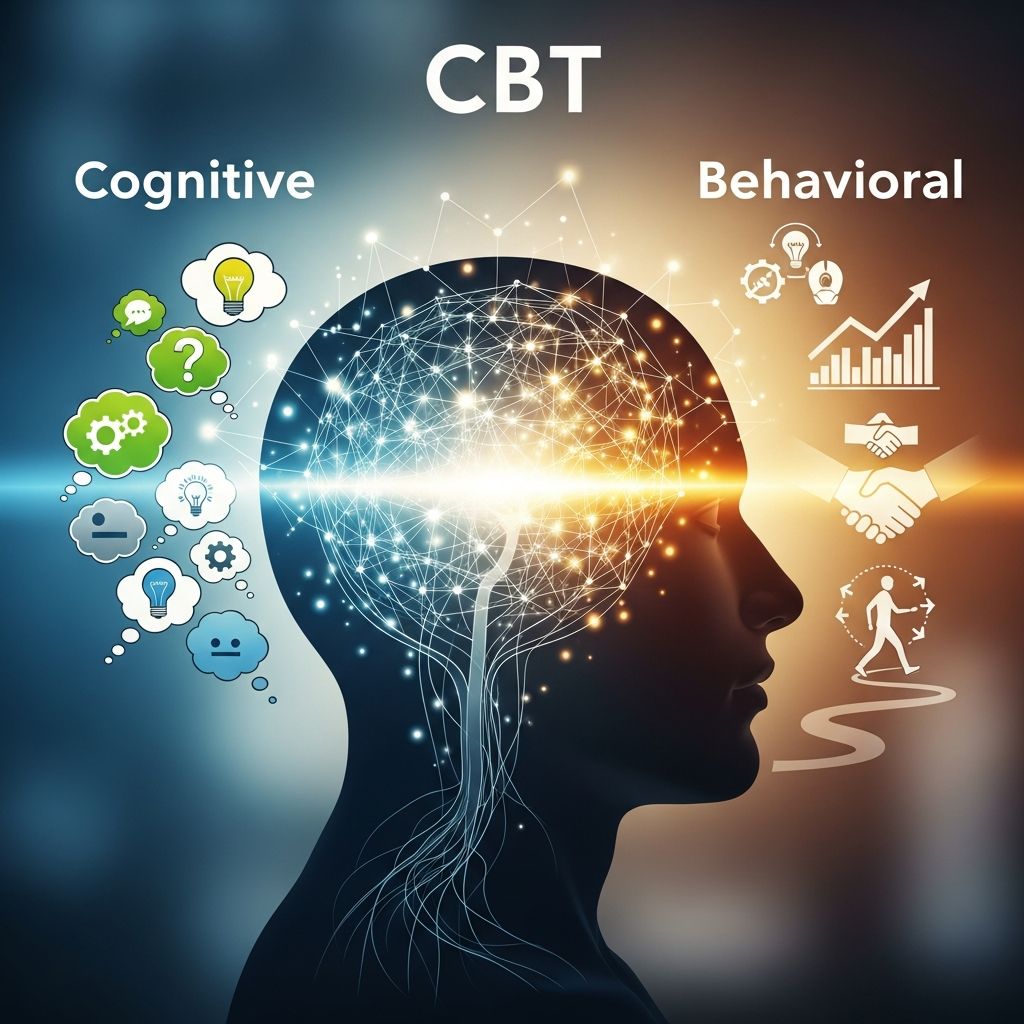
Understanding Cognitive Behavioral Therapy (CBT)
Cognitive Behavioral Therapy (CBT) is a structured, goal-oriented type of talk therapy that has become one of the most widely recognized and scientifically-validated forms of psychotherapy available today. This therapeutic approach is designed to help individuals manage mental health conditions such as depression and anxiety, as well as emotional concerns like coping with grief or stress. Beyond mental health applications, CBT has demonstrated remarkable effectiveness in managing nonpsychological health conditions, including insomnia and chronic pain. Mental health professionals, including psychologists, therapists, and counselors, utilize CBT as a powerful tool to treat and manage a diverse range of psychological and emotional challenges. Its widespread adoption across healthcare settings reflects its proven efficacy and versatility in addressing various patient needs.
Core Principles of CBT
CBT is grounded in several fundamental principles that distinguish it from other therapeutic approaches. At its foundation, CBT recognizes that a person’s thoughts, emotions, and behaviors are interconnected, forming a dynamic system where each component influences the others. The primary principle underlying CBT is the understanding that our thoughts and perceptions directly influence our feelings and behaviors. By addressing unhelpful or distorted thoughts and objectively examining our perceptions, individuals can effectively change the emotions and behaviors that stem from these thought patterns.
Unlike therapeutic approaches that often delve into childhood experiences or unconscious motivations, CBT emphasizes the present moment. This forward-focused approach equips people with practical, actionable tools to reframe distorted thinking, manage emotions effectively, and solve real-world problems. The structured nature of CBT makes it particularly effective because it provides a clear framework for understanding and addressing psychological challenges.
How CBT Works: The Process
During a CBT session, a mental health professional helps you take a close, objective look at your thoughts and emotions. Through guided conversations and a question-and-answer format, your therapist helps you understand how your thoughts directly affect your actions and emotional responses. This process of discovery is crucial because many people are unaware of the automatic thought patterns that influence their behavior and emotional state.
Over the course of CBT treatment, which typically takes place over a limited number of sessions, you learn to unlearn negative thoughts and maladaptive behaviors while simultaneously adopting healthier thinking patterns and more constructive habits. Your therapist will customize your treatment based on the specific issue you’re addressing, ensuring that the therapeutic approach aligns with your unique needs, circumstances, and goals.
The homework component is an essential aspect of CBT. Your therapist may assign activities, readings, or practices that build upon what you learn during regular therapy sessions. This homework encourages you to actively apply what you’re learning in your daily life, reinforcing new skills and promoting lasting behavioral change. As a result of this structured approach, you learn to respond more effectively to stress, pain, and difficult situations.
Key CBT Techniques and Strategies
CBT encompasses several evidence-based techniques that therapists use to help clients identify and change problematic patterns:
Cognitive Restructuring
This technique involves identifying distorted or unhelpful thoughts and systematically challenging their validity. Common cognitive distortions include catastrophizing (assuming the worst outcome), mental filtering (ignoring the positive to focus only on the negative), and black-and-white thinking. By examining these thoughts objectively and questioning their accuracy, individuals can develop more balanced and realistic perspectives.
Behavioral Activation
Behavioral activation focuses on gradually re-engaging in activities that bring pleasure, meaning, or a sense of accomplishment. This is particularly helpful for individuals struggling with depression or anxiety who may have withdrawn from activities they once enjoyed. By systematically increasing engagement in positive activities, individuals often experience improvements in mood and motivation.
Related Stories



Relaxation and Mindfulness Techniques
These practices help individuals turn off the sympathetic nervous system stress response that can amplify pain and anxiety. Relaxation techniques, breathing exercises, and mindfulness meditation are integrated into CBT to help clients manage their physiological responses to stress and emotional challenges.
Exposure Therapy
This technique helps individuals gradually confront situations, thoughts, or stimuli they have been avoiding. Through controlled, progressive exposure, people learn that their feared outcomes are less likely to occur than anticipated, and they develop greater confidence in their ability to handle challenging situations.
Sleep Hygiene and Lifestyle Modifications
CBT addresses lifestyle factors that significantly impact mental health and well-being, including sleep quality, nutrition, and physical exercise. These modifications directly impact brain chemistry and emotional regulation, supporting the goals of therapy.
Conditions CBT Can Treat
CBT has demonstrated effectiveness across a remarkably broad spectrum of mental health conditions and emotional challenges:
Mental Health Conditions
Mental health professionals use CBT to treat numerous conditions including depression, anxiety disorders, panic disorder, phobias, obsessive-compulsive disorder (OCD), post-traumatic stress disorder (PTSD), and eating disorders. When combined with medication, CBT is also useful in treating bipolar disorder and schizophrenia, offering individuals a comprehensive treatment approach that addresses both symptoms and underlying thought patterns.
Emotional and Life Challenges
Beyond diagnosed mental health conditions, CBT effectively helps individuals cope with:
- Grief and loss
- Relationship conflicts and communication difficulties
- Stress management in work and personal life
- Emotional trauma related to abuse or violence
- Adjustment to major life transitions
- Chronic pain and medical conditions
- Insomnia and sleep disturbances
Physical Health Applications
CBT has increasingly been recognized for its effectiveness in managing nonpsychological health conditions. For individuals with chronic pain, CBT helps alter negative cognitions and emotions while teaching coping strategies that reduce the amplification of pain signaling in the brain and spinal cord. Similarly, CBT for insomnia (CBT-I) has become a first-line treatment recommendation, utilizing self-monitoring, behavior modifications, and cognitive restructuring to restore healthy sleep patterns.
CBT for Different Populations
One of the significant strengths of CBT is its adaptability across diverse age groups and populations. Children, adolescents, adults, and older adults can all benefit from CBT, with therapists adapting techniques and language to suit developmental stages and life circumstances. Family-based CBT can be particularly effective for younger individuals, involving parents or guardians in the therapeutic process to support behavior change and reinforce learning at home.
CBT Delivery Methods
CBT can be delivered through various formats to increase accessibility and accommodate different preferences and circumstances:
- Individual one-on-one therapy sessions
- Group therapy with people who have similar issues
- Family-based therapy involving multiple family members
- Online and virtual therapy platforms
- Self-guided CBT programs with minimal therapist contact
The availability of online resources and virtual delivery methods has made CBT more accessible to individuals who live in areas with limited local mental health resources or who prefer the convenience and privacy of remote therapy.
CBT Alone or Combined with Other Treatments
CBT can be effectively used as a standalone treatment or combined with medication and other therapeutic interventions. Many studies demonstrate that CBT is as effective as, or more effective than, other forms of psychological therapy or psychiatric medications alone. The decision to use CBT in combination with medication depends on the specific condition, severity of symptoms, individual preferences, and clinical recommendations from the treating mental health professional.
The Benefits of CBT
After completing CBT, most people adopt healthier habits and demonstrate improved emotional regulation. While CBT cannot make stressful situations disappear entirely, it fundamentally changes how you respond to and interpret challenging circumstances. This shift in perspective and coping capability leads to feeling better overall and developing greater resilience.
The benefits of CBT extend beyond symptom reduction. Individuals often report increased self-awareness regarding their emotions, thoughts, and behavioral patterns. This heightened awareness, coupled with practical skills learned in therapy, empowers people to recognize problematic patterns early and intervene effectively before symptoms escalate.
What to Expect During CBT
When beginning CBT, your therapist will typically start by learning about your mental health condition and the specific concerns bringing you to therapy. Your therapist will work collaboratively with you to establish clear, meaningful treatment goals. Throughout the therapy process, you’ll learn specific techniques such as relaxation, coping strategies, resilience-building, stress management, and assertiveness skills.
Your therapist will encourage you to talk openly about your thoughts, feelings, and what’s troubling you. If you find it difficult to open up initially, don’t worry—your therapist is trained to help you gain confidence and feel increasingly comfortable sharing. The therapeutic relationship itself becomes a source of support and encouragement throughout your treatment.
Finding the Right CBT Therapist
The effectiveness of CBT depends significantly on finding a skilled therapist who can match the specific type of therapy with your individual needs. When searching for a CBT therapist, look for licensed mental health professionals with specific training and credentials in cognitive-behavioral therapy. Many therapists specialize in particular conditions or populations, so identifying a therapist whose expertise aligns with your needs can optimize treatment outcomes.
Frequently Asked Questions About CBT
Q: How long does CBT typically last?
A: CBT typically takes place over a limited number of sessions, ranging from 12 to 20 weeks for many conditions, though duration varies based on individual needs and the complexity of issues being addressed. Some individuals may benefit from shorter-term therapy, while others might require longer treatment to achieve their goals.
Q: Is CBT effective for severe mental illness?
A: Yes, CBT has demonstrated effectiveness even for severe conditions. When combined with medication, CBT is useful in treating bipolar disorder and schizophrenia. Research consistently shows that CBT is as effective as, or more effective than, other forms of psychological therapy or psychiatric medications.
Q: Can I do CBT online?
A: Yes, CBT can be effectively delivered through online and virtual platforms. Online resources and teletherapy have made CBT more accessible, particularly for individuals living in areas with limited mental health resources or those who prefer remote therapy options.
Q: Will my therapist give me homework?
A: Yes, homework is typically part of CBT. These assignments might include activities, readings, or practices that build on what you learn during sessions. Homework helps you apply therapeutic skills in your daily life and supports progress toward your treatment goals.
Q: Is CBT the same as other types of therapy?
A: No, CBT is distinct from other therapeutic approaches. Unlike therapies that focus on childhood experiences or unconscious motivations, CBT emphasizes the present and focuses on the relationship between thoughts, feelings, and behaviors. It’s more structured and goal-oriented than many other therapeutic approaches.
Q: Can children and adolescents benefit from CBT?
A: Absolutely. CBT is effective for people of all ages, including children and adolescents. Therapists adapt CBT techniques and language to suit developmental stages. Family-based CBT can be particularly beneficial for younger individuals, involving parents or guardians in the therapeutic process.
Q: How is CBT different from medication?
A: CBT teaches skills and strategies you can use throughout your life to manage symptoms and challenges, whereas medication addresses symptoms chemically. Many individuals benefit from a combination of both approaches. Research shows CBT can be as effective as medication for many conditions, and the skills learned often provide lasting benefits.
References
- Cognitive Behavioral Therapy (CBT): What It Is & Techniques — Cleveland Clinic. 2024. https://my.clevelandclinic.org/health/treatments/21208-cognitive-behavioral-therapy-cbt
- Cognitive Behavioral Therapy for Chronic Pain — University of California San Francisco Pain Management Education. 2024. https://pain.ucsf.edu/nonpharmacological-pain-management/cognitive-behavioral-therapy-cbt
- Cognitive behavioral therapy — Mayo Clinic. 2024. https://www.mayoclinic.org/tests-procedures/cognitive-behavioral-therapy/about/pac-20384610
- Cognitive Behavioral Therapy (CBT) — MentalHealth.com. 2024. https://www.mentalhealth.com/library/cognitive-behavioral-therapy
- Outcomes of Cognitive-Behavioral Treatment for Insomnia — National Center for Biotechnology Information (NIH). 2015. https://pmc.ncbi.nlm.nih.gov/articles/PMC4673918/
Similar Articles








Read full bio of medha deb