Colestipol – A Lipid-Lowering Medicine (Colestid)
Comprehensive guide to Colestipol (Colestid): uses, dosage, side effects, and key considerations for managing high cholesterol effectively.
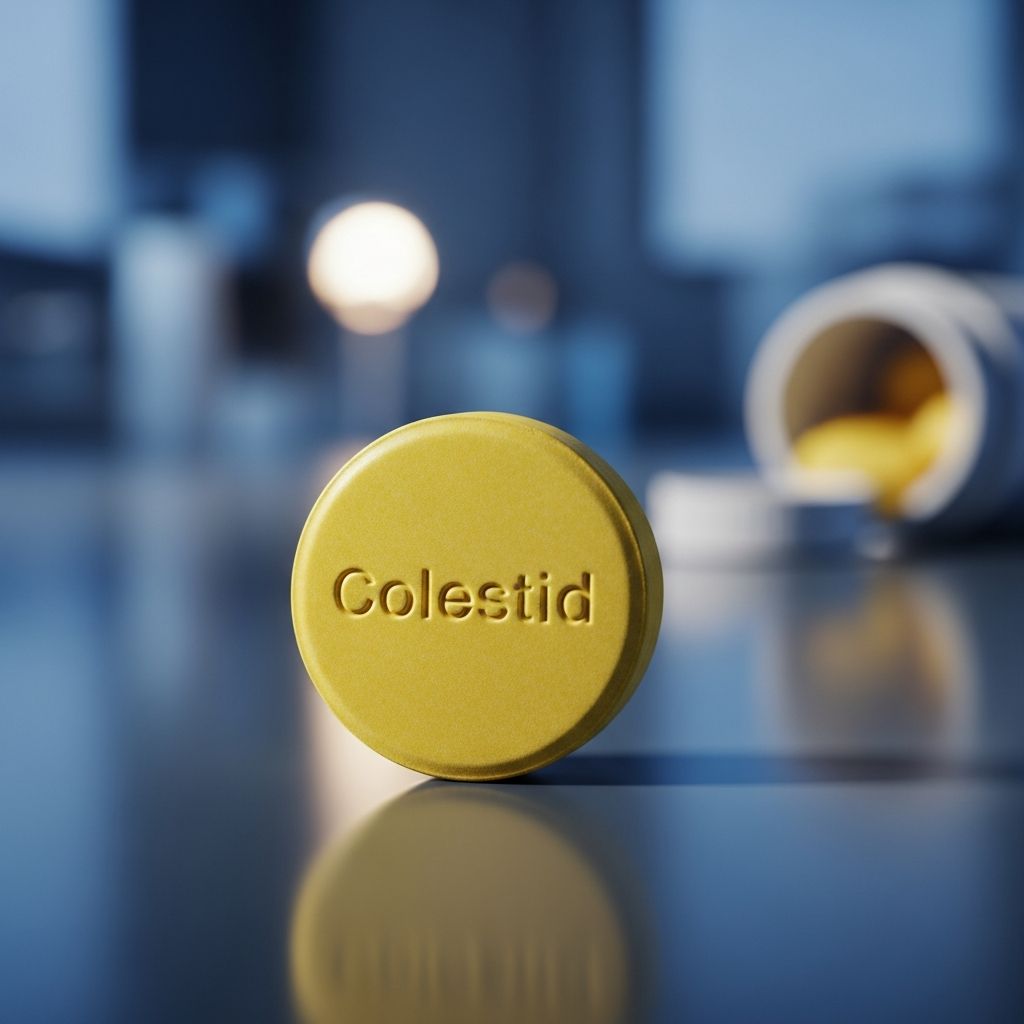
Colestipol (brand name Colestid) is a bile acid sequestrant medication primarily used to lower elevated low-density lipoprotein cholesterol (LDL-C) levels in patients with primary hypercholesterolemia who do not respond adequately to dietary changes alone. It works by binding bile acids in the intestine, promoting their excretion and thereby reducing blood cholesterol levels. This adjunctive therapy to diet and exercise helps decrease the risk of coronary artery disease.
About colestipol tablets and granules
Colestipol is available in two main forms: tablets and granules for oral suspension, both containing colestipol hydrochloride as the active ingredient. The tablets are micronized for better tolerability, while granules must be mixed with liquids or foods like juice, milk, or applesauce for administration. This medication is not absorbed systemically, acting locally in the gastrointestinal tract to bind bile acids. It is prescribed alongside lifestyle modifications, including a low-cholesterol diet and regular exercise, to optimize cholesterol management. Brand name Colestid has been available since FDA approval in 1977, with generic versions also offered.
Key facts about colestipol
- Drug group: Bile acid sequestrants (also known as bile acid-binding resins).
- Medicine status: Available only by prescription.
- Dosage forms: Tablets (1 g each) and granules (1 g or 5 g packets/scoops).
- Common brand: Colestid®.
- LDL reduction: 12-24% with doses of 4-16 g/day.
- Onset: Effects visible within 1-2 weeks, full benefit in 4 weeks.
- Duration: Long-term use as needed for cholesterol control.
When is colestipol prescribed?
Colestipol is FDA-approved as adjunctive therapy to diet for reducing elevated total and LDL-C in primary hypercholesterolemia (Fredrickson type IIa or IIb) unresponsive to diet alone. It is used as monotherapy or combined with statins, niacin, or ezetimibe when additional lowering is required. Off-label, it may treat heterozygous familial hypercholesterolemia in children or adults, showing up to 19.5% LDL-C reduction in pediatric trials. It is not indicated for primary hypertriglyceridemia, as it may increase triglycerides in some patients. According to National Cholesterol Education Program (NCEP) guidelines, LDL-C targets guide therapy initiation and monitoring.
How does colestipol work?
Colestipol is a high-molecular-weight, water-insoluble polymer that binds bile acids in the intestinal lumen, forming an insoluble complex excreted in feces. This interrupts the enterohepatic circulation of bile acids, forcing the liver to convert more cholesterol into bile acids via increased hepatic cholesterol oxidation. Consequently, hepatic LDL receptor expression upregulates, enhancing LDL-C clearance from plasma and lowering serum cholesterol levels. It has minimal impact on triglycerides but effectively targets LDL-C without systemic absorption.
Dosage
The recommended starting dose is 2 g once or twice daily, gradually increasing every 1-2 months to a maintenance of 2-16 g/day based on LDL-C response and tolerability. Tablets are swallowed whole; granules are mixed in at least 90 mL fluid or soft foods. Divide total daily dose for better tolerance. Maximum 30 g/day, but higher doses increase GI side effects. Adjust in renal/hepatic impairment; monitor lipids regularly.
| Dose Level | Daily Dose | Frequency | Expected LDL Reduction |
|---|---|---|---|
| Starting | 2-4 g | 1-2 times/day | ~12% |
| Maintenance | 4-16 g | 2-4 times/day | 12-24% |
| Max | 30 g | Divided doses | Variable |
Note: Individualize based on response; take other drugs 1 hour before or 4-6 hours after colestipol.
How and when to take colestipol
Tablets
Swallow tablets whole with plenty of water; do not crush or chew.
Granules
Mix entire contents in 90+ mL water, juice, milk, or applesauce; stir until suspended and consume immediately. Rinse container with more liquid to ensure full dose.
Timing
Take with meals or anytime; divide doses to minimize GI upset. Separate from other medications by 1 hour before or 4+ hours after.
Related Stories



Missed dose
Take as soon as remembered unless near next dose; do not double up.
Storage
Store at room temperature, away from moisture; granules in tight container.
Side effects of colestipol
The most frequent adverse effects are gastrointestinal: constipation (major complaint, mild/transient in most), bloating, abdominal pain, nausea, flatulence. Rare: hemorrhoids aggravation, fecal impaction, vitamin deficiencies (A, D, E, K) with long-term use—supplement fat-soluble vitamins. Hypertriglyceridemia possible; monitor in combined dyslipidemia. No systemic effects due to non-absorption.
- Common (>10%): Constipation, dyspepsia.
- Less common (1-10%): Nausea, vomiting, diarrhea.
- Rare: Osteoporosis risk (bile acid malabsorption affects calcium), drug interactions.
Report severe constipation, bleeding, or allergic reactions (rash, swelling) immediately.
Who can and cannot take colestipol tablets and granules
Adults
Suitable for adults with primary hypercholesterolemia; use cautiously in elderly due to constipation risk.
Children
Off-label in familial hypercholesterolemia (limited data); not routinely recommended.
Pregnancy/Breastfeeding
Avoid (Category C); potential vitamin malabsorption affects fetus. Minimal excretion in milk, but caution advised.
Contraindications
- Hypersensitivity to colestipol.
- Complete biliary obstruction.
- TG >400 mg/dL (may worsen).
Precautions and warnings
Monitor bowel habits; increase fiber/fluids for constipation. Regular lipid panels essential. May interfere with imaging studies (barium contrast). Phenylketonurics beware: some formulations contain aspartame.
Interactions
Colestipol binds oral drugs; space by 1h before/4-6h after: thyroid hormones, digoxin, warfarin, statins, beta-blockers, antibiotics. Fat-soluble vitamins 4-6h apart. No significant CYP interactions.
| Drug Class | Effect | Recommendation |
|---|---|---|
| Statins (e.g., lovastatin) | Reduced absorption | Give 2h before or 4h after |
| Warfarin | Altered anticoagulation | Monitor INR; time doses |
| Thyroid hormones | Decreased efficacy | Separate by 4-6h |
| Vitamins A/D/E/K | Malabsorption | Supplement separately |
Alternatives to colestipol
- Other bile acid sequestrants: Cholestyramine, colesevelam (better tolerated).
- Statins: First-line (atorvastatin, rosuvastatin).
- Others: Ezetimibe, PCSK9 inhibitors, fibrates for mixed dyslipidemia.
Frequently asked questions (FAQs)
Can colestipol cause constipation?
Yes, constipation is the most common side effect, often managed with fluids, fiber, or stool softeners.
Does colestipol interact with food?
Granules can mix with many foods/juices; avoid hot liquids. No major food restrictions.
How long until colestipol lowers cholesterol?
Partial effect in 1-2 weeks; optimal in 4 weeks with consistent use.
Is colestipol safe long-term?
Yes, with monitoring for vitamins and GI effects; supplement as needed.
Can I drink alcohol on colestipol?
Alcohol worsens hyperlipidemia; limit intake regardless.
References
- Colestipol – StatPearls – NCBI Bookshelf — NCBI. 2023-10-01. https://www.ncbi.nlm.nih.gov/books/NBK587349/
- Colestipol: Uses, Interactions, Mechanism of Action | DrugBank — DrugBank. 2024-01-15. https://go.drugbank.com/drugs/DB00375
- Colestipol (Colestid): Uses, Side Effects, Dosage & More – GoodRx — GoodRx. 2024-05-20. https://www.goodrx.com/colestipol/what-is
- Colestid® colestipol hydrochloride tablets — Pfizer Labeling. 2024-02-10. https://labeling.pfizer.com/ShowLabeling.aspx?id=593
- Colestipol (Colestid): Uses, Side Effects, Interactions – WebMD — WebMD. 2023-11-05. https://www.webmd.com/drugs/2/drug-6728-8111/colestipol-oral/colestipol-tablet-oral/details
- Colestipol (oral route) – Mayo Clinic — Mayo Clinic. 2024-03-01. https://www.mayoclinic.org/drugs-supplements/colestipol-oral-route/description/drg-20068621
Similar Articles








Read full bio of medha deb