Colitis: Symptoms, Causes, Diagnosis & Treatment
Complete guide to colitis: understanding inflammation, symptoms, diagnosis methods, and effective treatment options.
What Is Colitis?
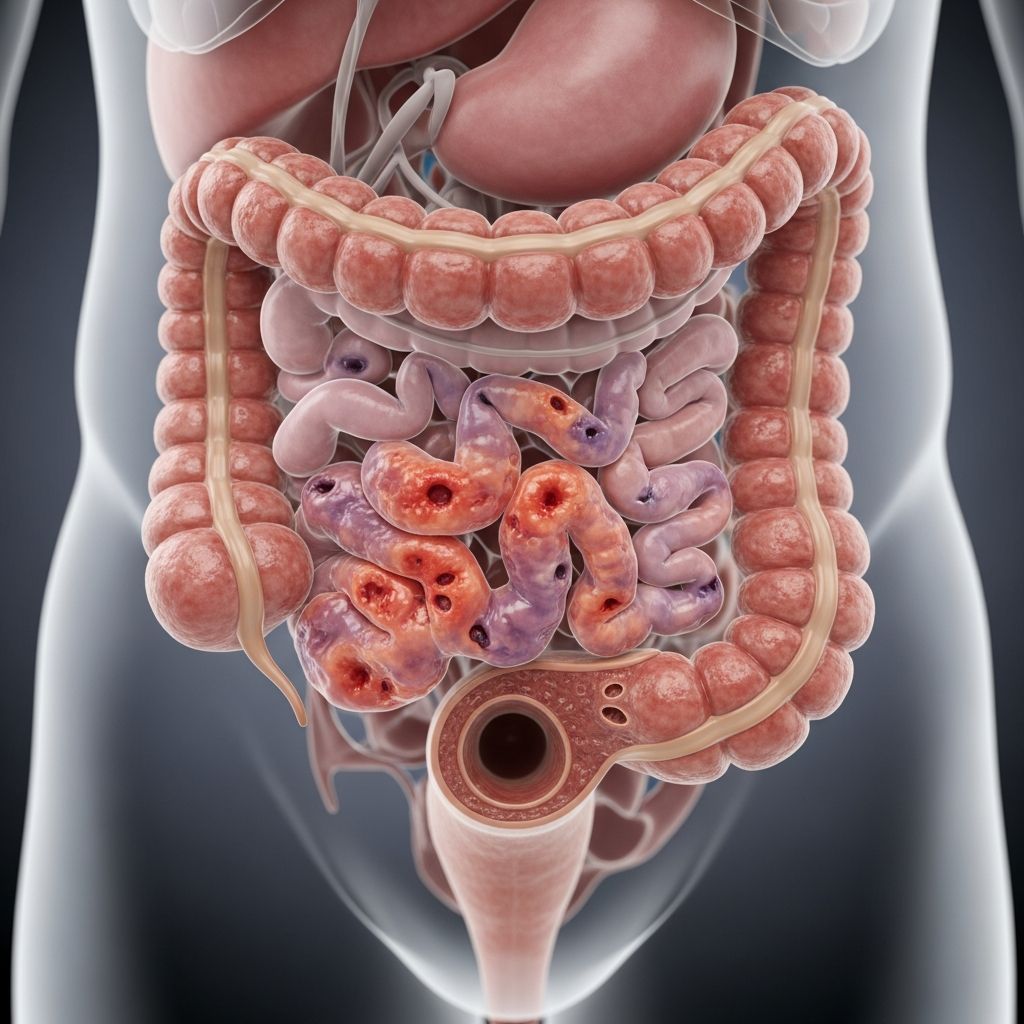
Colitis refers to inflammation in your colon, which is the large intestine where digested food becomes feces. When inflammation develops in the colon, it can significantly alter bowel function and create uncomfortable symptoms. The inflammation can make your stool more urgent, painful, runny, or bloody, affecting your daily quality of life. Understanding what colitis is and how it manifests is the first step toward managing this condition effectively. Colitis can be either acute and temporary or chronic and long-lasting, depending on its underlying cause and type.
Types of Colitis
Colitis encompasses several different types, each with distinct causes and characteristics:
- Ulcerative Colitis: A form of inflammatory bowel disease (IBD) that causes inflammation specifically in the colon and rectum, characterized by periods of flare-ups and symptom-free intervals.
- Crohn’s Disease: Another IBD form that can affect any part of the digestive tract, though it commonly involves the colon.
- Microscopic Colitis: An inflammatory disorder requiring histologic evaluation for diagnosis, characterized by chronic, nonbloody, watery diarrhea.
- Infectious Colitis: Caused by bacterial, viral, or parasitic infections, often resulting in acute inflammation.
- Ischemic Colitis: Results from reduced blood flow to the colon, typically affecting older adults.
- Allergic or Food-Related Colitis: Triggered by specific food sensitivities or allergic reactions.
Common Symptoms of Colitis
The symptoms of colitis can vary depending on the type and severity, but typically include:
- Persistent diarrhea or loose stools
- Urgent need to have bowel movements
- Abdominal pain and cramping
- Bloody or mucoid stools
- Weight loss and decreased appetite
- Fatigue and general weakness
- Fever in some cases
- Nausea and vomiting
For microscopic colitis specifically, the quintessential presentation includes chronic, nonbloody, watery diarrhea with concomitant urgency, abdominal pain, and weight loss. Symptom severity can range from mild to severe, and symptoms may come and go unpredictably in chronic forms of colitis.
Causes of Colitis
The causes of colitis vary significantly depending on the type you have. Understanding the underlying cause is essential for appropriate treatment and management.
Inflammatory Bowel Disease
Conditions like ulcerative colitis and Crohn’s disease are autoimmune disorders where your body’s immune system mistakenly attacks the digestive tract lining, causing chronic inflammation.
Infections
Bacterial, viral, or parasitic infections can trigger acute colitis. Common culprits include Clostridium difficile, Salmonella, Shigella, and various viruses.
Reduced Blood Flow
Ischemic colitis occurs when blood flow to the colon diminishes, depriving tissues of oxygen and causing inflammation.
Medications
Certain medications, particularly nonsteroidal anti-inflammatory drugs (NSAIDs), antibiotics, and immunosuppressants, can trigger or contribute to colitis.
Food Sensitivities
Allergic reactions or sensitivities to specific foods can cause inflammatory responses in susceptible individuals.
Radiation Therapy
Radiation treatment for cancer can damage the colon lining, leading to radiation colitis.
Potential Complications
While many cases of colitis can be managed effectively, severe, long-term colitis may lead to serious complications that require immediate medical attention:
- Toxic Megacolon: A life-threatening condition where the colon becomes severely dilated and can rupture.
- Severe Dehydration: Chronic diarrhea can lead to significant fluid loss and electrolyte imbalances.
- Malnutrition: Impaired nutrient absorption due to inflammation can result in nutritional deficiencies.
- Colorectal Cancer: Chronic ulcerative colitis and Crohn’s disease carry an increased longitudinal risk of colorectal cancer, unlike microscopic colitis.
- Perforation: In severe cases, the inflamed colon may develop holes, allowing contents to leak into the abdominal cavity.
- Anemia: Blood loss from bloody stools combined with poor nutrient absorption can lead to iron-deficiency anemia.
- Extraintestinal Manifestations: Some patients experience complications affecting joints, skin, eyes, and liver.
Related Stories



Diagnosis and Testing
Accurate diagnosis is crucial for developing an effective treatment plan. Your healthcare provider will employ several diagnostic approaches:
Medical History and Physical Examination
Your healthcare provider will begin by asking detailed questions about your symptoms, when they began, and what you were eating and drinking at the time. They’ll inquire about current medications and any existing health conditions. Following this conversation, they’ll perform a thorough physical examination, which may include a rectal exam to assess for abnormalities.
Blood Tests
Blood work can reveal markers of inflammation, check for anemia, assess liver and kidney function, and help rule out infections. Elevated inflammatory markers like C-reactive protein and erythrocyte sedimentation rate often indicate active colitis.
Stool Tests
Stool samples can identify infectious causes, detect blood, and assess for parasites or pathogenic bacteria that might be triggering your symptoms.
Imaging Tests
Imaging studies may include CT scans, X-rays, or ultrasound to visualize your colon and assess the extent of inflammation or complications.
Colonoscopy
This is often considered the gold standard for diagnosis. During a colonoscopy, a thin, flexible tube with a camera is inserted through your rectum to directly visualize the colon lining. If the lining appears inflamed and ulcerated, this confirms colitis. The procedure also allows your physician to take tissue biopsies for microscopic examination, which is particularly important for diagnosing microscopic colitis, where inflammation is only visible under a microscope.
Treatment Options
Treatment for colitis varies significantly depending on the type, severity, and underlying cause. Your healthcare provider will develop a personalized treatment plan tailored to your specific diagnosis and lifestyle.
Dietary Modifications
What you eat can play an important role in managing your symptoms. Reducing foods that trigger your symptoms is usually one of the first recommendations from your provider. Trigger foods are specific to each individual and identifying them requires trial and error. Common food-related suggestions include limiting high-fiber foods during flare-ups, avoiding dairy if lactose intolerant, reducing fatty or spicy foods, minimizing caffeine and alcohol, and staying well-hydrated.
Medications
Healthcare providers use several medications, often in combination, to calm inflammation in your large intestine. Reducing swelling and irritation allows tissue healing and symptom relief. For microscopic colitis, budesonide at 9 mg/day for 8 weeks is the first-line therapy regardless of subtype. If symptom-free after 8 weeks, therapy can be stopped. If symptoms persist or recur, budesonide can be continued at the lowest effective dose, usually 6 mg/day or less, for 6 to 12 months. Other medications may include:
- Aminosalicylates (5-ASA compounds) to reduce inflammation
- Corticosteroids for short-term inflammation control
- Immunosuppressants to modulate immune response
- Biologic therapies targeting specific inflammatory pathways
- Antibiotics for infectious colitis
- Antidiarrheal agents to manage symptoms
Lifestyle Changes
Beyond medication and diet, lifestyle adjustments can help manage colitis symptoms. Stress reduction techniques, adequate sleep, regular gentle exercise, and staying hydrated are all beneficial. Most people manage colitis by avoiding triggers and taking medicines regularly to prevent inflammation, even when not experiencing symptoms.
Surgical Intervention
For severe, treatment-resistant colitis, particularly ulcerative colitis, surgery may become necessary. The only definitive “cure” for ulcerative colitis is surgical removal of the colon and rectum. Because these operations are extensive and patients are often quite sick, they’re typically performed in two or three steps. Surgeons can usually perform these operations laparoscopically using small incisions. The first step involves removing the majority of the colon. Following surgery, patients typically experience significant symptom improvement and are usually able to discontinue their medications entirely.
Disease Course and Remission
The course of colitis depends on its type and severity. Acute colitis may resolve with appropriate treatment, while chronic forms like ulcerative colitis and Crohn’s disease typically follow a relapsing-remitting pattern. With effective treatment for microscopic colitis, symptoms and quality of life improve significantly. While remission occurs for many patients, the typical disease course remains chronic or relapsing.
The goal of treatment is achieving and maintaining remission. This means either eliminating symptoms during a flare-up or helping you maintain your symptom-free state. Working closely with your healthcare team is essential, as you’ll need frequent provider visits to monitor your health. Depending on your risk, you may need regular colonoscopies to screen for complications like colorectal cancer. It’s critical to take your medicines as prescribed, even when you don’t have symptoms, as skipping medication can lead to flare-ups and make your condition harder to manage.
When to Seek Medical Attention
Certain warning signs warrant immediate medical evaluation. Primary warning signs include rectal bleeding, significant weight loss, waking up at night with bowel movements, incontinence or loss of control of bowel movements, severe abdominal pain, fever combined with diarrhea, or signs of dehydration like extreme thirst and dark urine. Don’t delay seeking care if you experience these symptoms, as they may indicate a flare-up requiring aggressive treatment or complications needing urgent intervention.
Patient-Centered Care Approach
Managing colitis successfully requires a collaborative approach between you and your healthcare team. With nurse care coordinators and specialists working together, you won’t have to navigate this journey alone. Your team will help you manage all details of your treatment by explaining how your unique treatment plan works and what to expect as you progress through it. Communication is key—ask questions about your condition, understand your risk factors, and discuss how your care plan will increase your likelihood of staying in remission while promoting your overall health.
Frequently Asked Questions (FAQs)
Q: Is colitis curable?
A: This depends on the type. Infectious colitis can be completely cured once the infection is treated. Ulcerative colitis can be “cured” through surgical removal of the colon and rectum, though most people successfully manage it with medications. Chronic forms like Crohn’s disease and microscopic colitis cannot be permanently cured but can be effectively managed with proper treatment.
Q: How long does colitis last?
A: Acute colitis may resolve within weeks with appropriate treatment. Chronic colitis is a lifelong condition that comes and goes, with patients experiencing flare-ups followed by periods of remission. Some individuals remain symptom-free for extended periods with proper management.
Q: Can I manage colitis without medication?
A: Some mild cases of colitis may be managed with dietary changes and lifestyle modifications alone. However, most chronic cases require medication to control inflammation and symptoms. Always consult your healthcare provider before adjusting your treatment regimen.
Q: What foods should I avoid with colitis?
A: Trigger foods vary by individual. Common recommendations include reducing high-fiber foods during flare-ups, limiting dairy if lactose intolerant, avoiding fatty or spicy foods, and minimizing caffeine and alcohol. Keeping a food diary helps identify your personal triggers.
Q: Can colitis lead to colorectal cancer?
A: Yes, ulcerative colitis and Crohn’s disease carry an increased longitudinal risk of colorectal cancer. Microscopic colitis does not carry this increased risk. Regular colonoscopic screening is recommended for those with IBD-related colitis to detect cancer early.
References
- Colitis: Symptoms, What It Is, Causes & Treatment — Cleveland Clinic. 2024. https://my.clevelandclinic.org/health/diseases/23384-colitis
- Ulcerative Colitis: Symptoms, Causes, Diagnosis & Treatment — Cleveland Clinic. 2024. https://my.clevelandclinic.org/health/diseases/10351-ulcerative-colitis
- Microscopic Colitis: What It Is, Symptoms & Treatment — Cleveland Clinic. 2024. https://my.clevelandclinic.org/health/diseases/17227-microscopic-colitis
- Microscopic colitis: What is it, and what are the treatment options? — Cleveland Clinic Journal of Medicine. 2022. https://www.ccjm.org/content/91/4/215
- Understanding Ulcerative Colitis with Dr Jeremy Lipman — Cleveland Clinic. 2024. https://my.clevelandclinic.org/podcasts/butts-and-guts/understanding-ulcerative-colitis-with-dr-jeremy-lipman
- Surgery for Inflammatory Bowel Disease — Crohn’s & Colitis Foundation. 2024. https://www.crohnscolitisfoundation.org/myibd-learning-demand-video-library/surgery
- Get Ulcerative Colitis Treatment — Cleveland Clinic. 2024. https://my.clevelandclinic.org/services/ulcerative-colitis-treatment
Similar Articles








Read full bio of medha deb