Collodion Baby: Definition, Causes, and Management
Understanding collodion baby: rare congenital condition, causes, symptoms, and neonatal care.
What is a Collodion Baby?
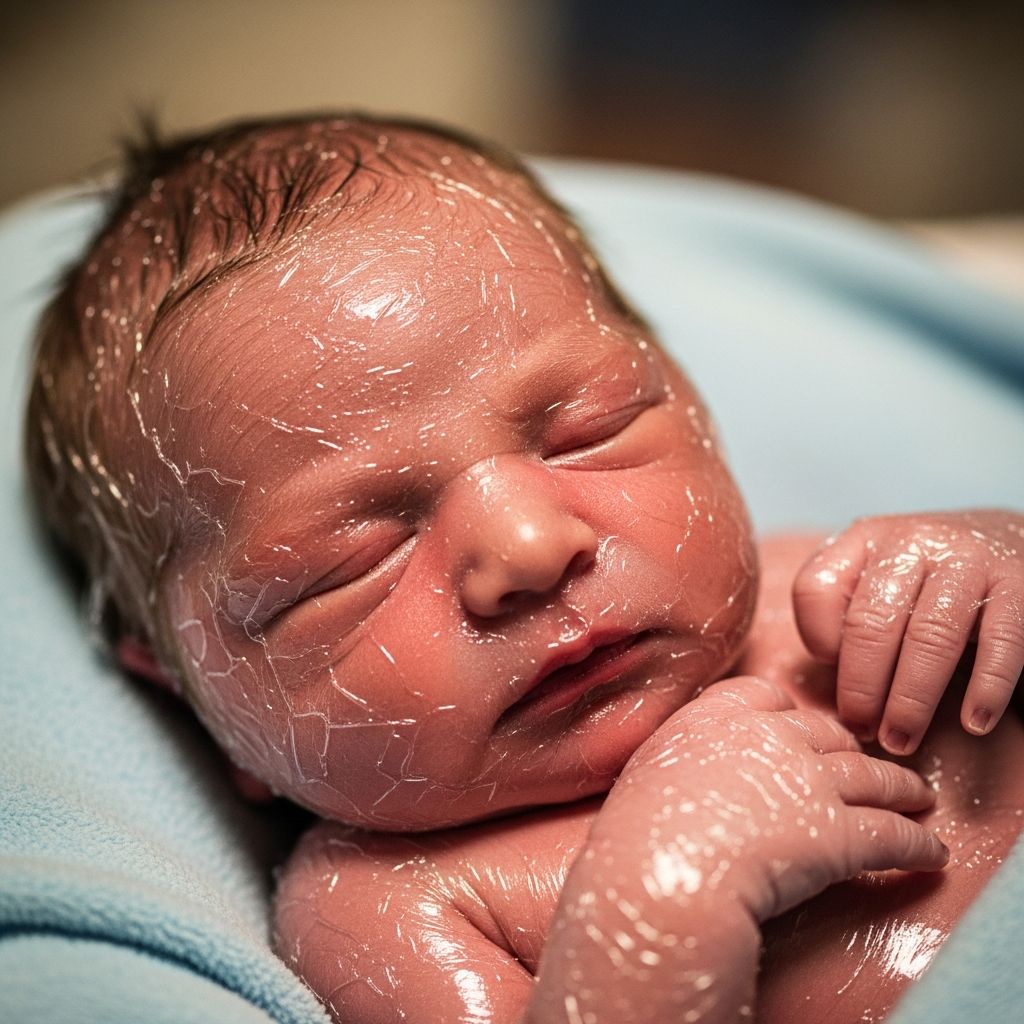
Collodion baby is a descriptive term for a newborn who is born encased in a tight, shiny membrane that resembles plastic wrap or parchment paper. The condition is not a diagnosis itself but rather a clinical presentation that describes the baby’s appearance at birth. This rare congenital condition is characterized by a taut, adherent membrane covering the entire body surface. The membrane is typically supple yet restrictive, and its presence can create multiple immediate and ongoing health challenges for the newborn.
The term “collodion” refers to the appearance of the membrane, which resembles the collodion material once used in photography and film production. The condition occurs in approximately 1 in 300,000 births, making it a genuine rarity in neonatal dermatology. While the collodion membrane itself is temporary and transient, it serves as an important clinical indicator of underlying genetic skin disorders.
Understanding the Collodion Membrane
The collodion membrane is the result of abnormal desquamation (shedding) of the skin, typically caused by mutations in genes responsible for skin barrier function. The membrane is usually present at birth and begins to crack and peel within the first 3 to 16 hours of life. The desquamation process is most evident at areas of high movement and skin folds, including the perioral area (around the mouth), joints of the limbs, abdomen, and chest.
The membrane undergoes progressive peeling and shedding over time. In most cases, the collodion membrane is completely shed by 2 to 3 weeks of life, at which point the underlying skin condition becomes apparent. During this peeling process, fresh red skin is exposed beneath the cracked membrane, often displaying an erythema-like appearance with light-yellow exudate. The process is gradual, with complete new skin formation occurring over approximately 2 to 3 weeks in uncomplicated cases, though infants with concurrent infections may take up to 1 month to completely shed the membrane.
Clinical Signs and Symptoms
Collodion babies present with several characteristic clinical features at birth or shortly thereafter:
- Parchment-like membrane: The entire body is covered with a tight, shiny, plastic wrap–like membrane that is adherent to the skin surface.
- Ectropion: The tightness of the membrane causes the eyelids to turn outward, exposing the pink inner surface of the eyelid. This occurs because the membrane pulls the eyelid tissue downward and outward.
- Eclabium: The lips turn outward (eversion) due to membrane tightness, often resulting in an “O” shaped mouth appearance. This can create significant difficulty with nursing and breastfeeding.
- Flattening of facial features: The nasal structures and ears may appear flattened or compressed due to the restrictive membrane.
- Claw-like hands: The membrane causes the fingers to curl inward, resembling a claw-like appearance, with limited hand movement and restricted joint mobility.
- Joint movement restriction: The taut membrane limits movement at multiple joints, affecting the baby’s ability to move freely.
- Skin erythema: Once the membrane begins to crack and shed, fresh red skin becomes visible at the sites of membrane breakdown.
Related Stories



Underlying Skin Disorders
The collodion membrane is not itself a diagnosis but rather a clinical presentation of underlying genetic ichthyosis disorders. Approximately 75% of collodion babies develop an autosomal recessive congenital ichthyosis as the underlying condition.
The two most commonly associated skin disorders are:
- Non-bullous Congenital Ichthyosiform Erythroderma (NBCIE): An autosomal recessive disorder characterized by erythema and scaling across the entire body, caused by mutations in genes such as ALOX12B, ALOXE3, TGM1, ABCA12, and NIPAL4.
- Lamellar Ichthyosis (ARCI-lamellar ichthyosis): This condition presents with lamellar, armor-like scales at specific sites (abdomen, groin, chest, back, head) in mild cases, progressing to whole-body gray scales with itching in more severe presentations.
Other less common pathologies responsible for collodion presentation include Netherton syndrome, Harlequin ichthyosis, Ectodermal dysplasia, Sjögren-Larsson syndrome, Comel-Netherton syndrome, Gaucher disease type 2, Hay-Well syndrome, Trichothyodystrophy, and Neutral lipid storage disease.
A small but significant percentage of infants shed the collodion membrane and never display any other skin involvement throughout their lives. This rare phenomenon is called “self-healing collodion baby,” accounting for approximately 10% of all collodion baby cases.
Complications and Health Risks
Collodion babies face multiple serious complications due to the loss of skin barrier integrity and the restrictive nature of the membrane:
- Infection and sepsis: Cracking and peeling of the membrane increases susceptibility to bacterial and fungal infections, potentially leading to pneumonia and septicemia. Research has documented neonatal pneumonia in 10 out of 16 cases in one cohort study, with septicemia occurring in 4 cases.
- Fluid and electrolyte imbalances: Loss of skin integrity leads to excessive transepidermal water loss (insensible fluid loss), resulting in dehydration and electrolyte disorders including hypernatremia and hypoproteinemia.
- Temperature instability: Compromised skin barrier function impairs thermoregulation, leading to hypothermia and inability to maintain stable body temperature.
- Corneal damage and conjunctivitis: Ectropion (inability to close eyelids completely) increases the risk of corneal exposure, drying, and injury, as well as bacterial conjunctivitis.
- Respiratory compromise: In severe cases, if chest wall movements are restricted by the tight membrane, hypoventilation and respiratory distress may develop, increasing the risk of pulmonary hemorrhage and myocardial injury.
- Feeding difficulties: Eclabium and ectropion restrict the infant’s ability to latch and nurse effectively, necessitating tube feeding or alternative nutritional support.
- Limited mobility: Restricted joint movement may affect physical development and require physical therapy interventions.
Diagnostic Approach
Diagnosis of collodion baby is primarily clinical, based on the characteristic appearance of the parchment-like membrane covering the entire body at or shortly after birth. The diagnosis is often made immediately upon delivery or within the first few hours of life when the membrane becomes apparent.
Supporting diagnostic findings may include:
- Skin biopsy: Histopathological examination reveals epidermal hyperkeratosis with preservation of the granular layer. This finding helps confirm the diagnosis and may provide clues to the underlying ichthyosis type.
- Laboratory studies: Routine blood and urine analysis are typically normal in uncomplicated cases, though electrolyte panels are essential to monitor for hypernatremia, hypoproteinemia, and other imbalances as the condition progresses.
- Genetic testing: Gene sequencing may be performed to identify specific mutations responsible for the underlying ichthyosis disorder, though this is typically done after the acute neonatal phase.
Management and Treatment
Management of collodion baby requires a multidisciplinary approach involving dermatologists, neonatologists, ophthalmologists, and nursing specialists. The baby is usually transferred to a neonatal intensive care unit (NICU) immediately.
Environmental and supportive care:
- Admission to an incubator that provides a humidified, temperature-neutral environment to maintain optimal thermoregulation and reduce insensible water loss.
- Intravenous fluid replacement to address dehydration and electrolyte losses.
- Tube feeding or nasogastric feeding to ensure adequate nutrition when breastfeeding is not possible due to eclabium and ectropion.
- Frequent monitoring of vital signs, electrolytes, fluid balance, and skin integrity.
Skin care management:
- Application of emollients and moisturizers to keep the skin soft and supple.
- The collodion membrane should never be forcibly debrided (pulled off), as it provides protection and allowing natural shedding reduces infection risk.
- Gentle cleansing with lukewarm water and mild soap formulations.
- Use of topical medications to reduce scaling and promote skin healing as the membrane sheds.
Infection prevention and management:
- Strict aseptic technique and infection control measures.
- Prophylactic and therapeutic antibiotics as indicated for bacterial infections or sepsis.
- Monitoring for signs of respiratory infection, including pneumonia.
Ophthalmologic care:
- Regular eye examinations to assess for ectropion severity and corneal involvement.
- Application of lubricating eye drops to prevent corneal drying and injury.
- In some cases, protective measures such as eye taping or protective eyewear may be necessary.
Prognosis and Long-Term Outcomes
The prognosis for collodion babies depends on the severity of the initial presentation, the presence of complications, and the nature of the underlying ichthyosis disorder. In one series of 16 collodion babies, outcomes included:
- 13 cases with improved skin and resolution of the acute phase.
- 1 case where parents refused treatment.
- 1 case with fatal outcome.
- 2 cases with concurrent pneumonia or sepsis requiring prolonged management, with complete skin formation observed for up to 1 month.
Following complete shedding of the collodion membrane, infants typically develop one of the underlying ichthyosis forms. The underlying skin disorder will influence long-term management, as conditions such as lamellar ichthyosis and congenital ichthyosiform erythroderma require ongoing dermatologic care, frequent application of emollients, and management of seasonal exacerbations.
With appropriate multidisciplinary neonatal care, modern incubator technology, and supportive management, survival rates have improved significantly. However, complications such as infections and electrolyte imbalances remain serious concerns that require vigilant monitoring and prompt intervention.
Frequently Asked Questions
Q: Is collodion baby a permanent condition?
A: No. The collodion membrane is temporary and transient. It naturally sheds and desquamates over 2 to 3 weeks of life, revealing the underlying skin condition. However, approximately 10% of infants may have self-healing collodion baby with no underlying ichthyosis disorder.
Q: What causes collodion baby?
A: Collodion baby results from abnormal skin desquamation caused by genetic mutations affecting genes responsible for skin barrier function. Approximately 75% of cases are associated with autosomal recessive congenital ichthyosis disorders.
Q: Can collodion babies be treated?
A: Yes. Treatment is supportive and multidisciplinary, focusing on maintaining a humidified environment in an incubator, providing fluid and nutritional support, preventing infections, and keeping the skin soft through emollients. The membrane should never be forcibly removed.
Q: What are the main complications of collodion baby?
A: Major complications include infections (pneumonia and sepsis), dehydration, electrolyte imbalances, hypothermia, corneal damage from ectropion, and feeding difficulties from eclabium.
Q: How long does it take for the collodion membrane to shed?
A: The membrane typically sheds completely within 2 to 3 weeks of life in uncomplicated cases. Infants with concurrent infections may require up to 1 month for complete skin formation.
References
- Collodion Baby — National Center for Biotechnology Information (NIH). 2017. https://pmc.ncbi.nlm.nih.gov/articles/PMC5592258/
- Clinical characteristics and prognosis of collodion babies — International Journal of Clinical and Experimental Medicine. 2018. https://e-century.us/files/ijcem/11/10/ijcem0075160.pdf
- Collodion Baby — First Skin Foundation for Ichthyosis & Related Skin Types, Inc. https://www.firstskinfoundation.org/types-of-ichthyosis/collodion-baby
- Management of a collodion baby – Our experience — Journal of Skin and Sexually Transmitted Diseases. https://jsstd.org/management-of-a-collodion-baby-our-experience/
- Collodion baby — DermNet. https://dermnetnz.org/topics/collodion-baby
- Collodion Baby Factsheet — Ichthyosis Support Group. https://www.ichthyosis.org.uk/faqs/collodion-baby-factsheet
Similar Articles








Read full bio of medha deb