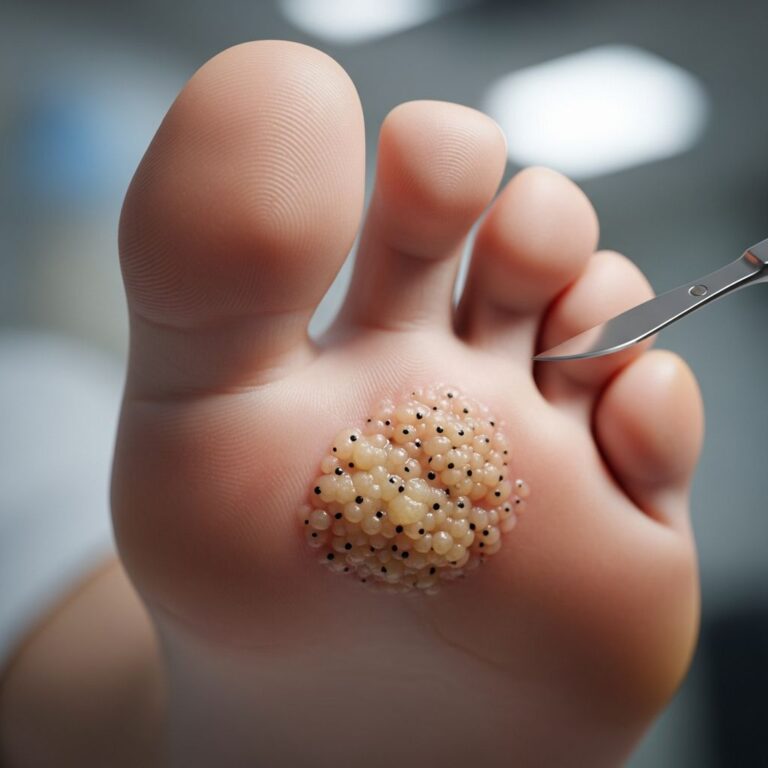
Colloid Milium: Comprehensive Guide To Diagnosis & Treatment
Rare skin disorder with translucent papules on sun-exposed areas: causes, types, diagnosis, and management options.
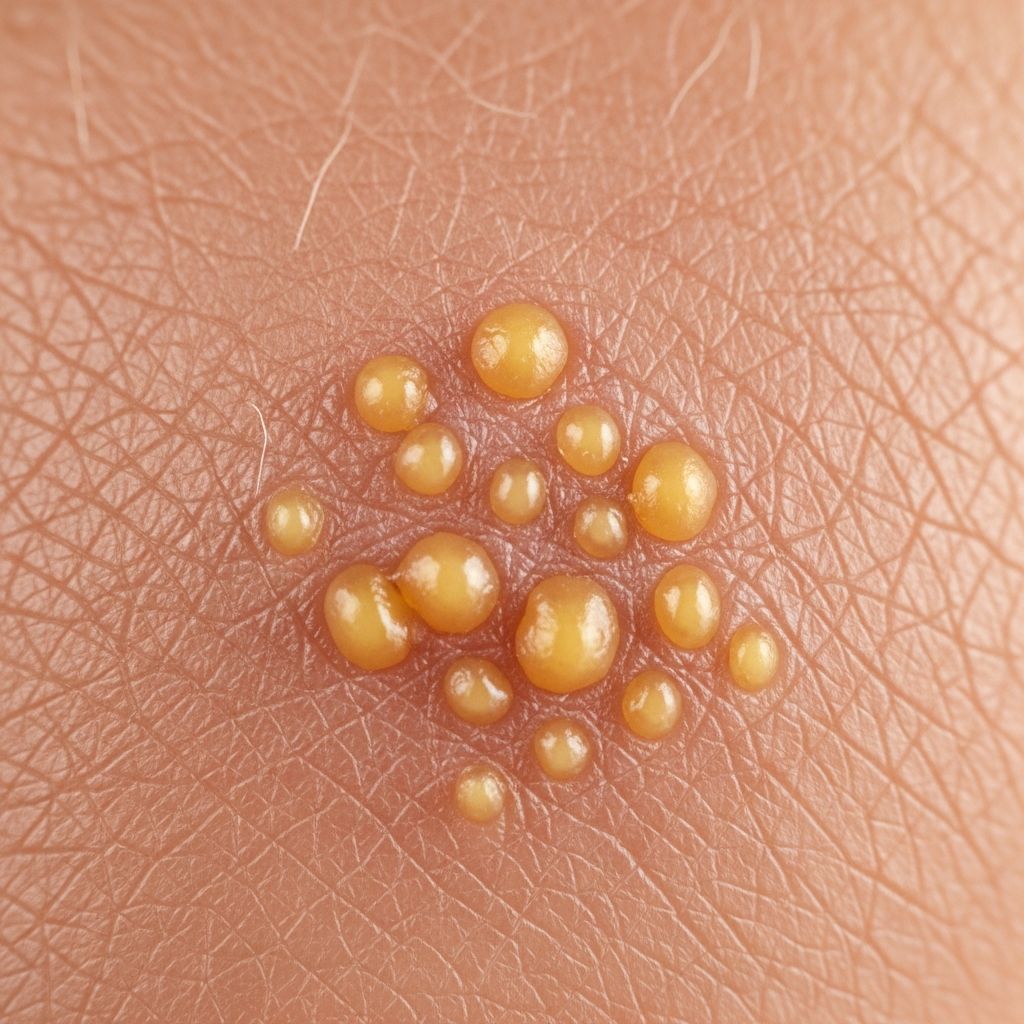
Colloid milium encompasses a group of rare, degenerative cutaneous deposition disorders characterized by the accumulation of amorphous, hyaline-like material in the dermis, presenting as yellow–brown, semi-translucent papules and plaques primarily on sun-exposed skin.
Introduction
Colloid milium represents a spectrum of uncommon skin conditions where colloid—a proteinaceous, gelatinous substance—deposits in the dermal papillae. These disorders are degenerative in nature, often linked to chronic environmental exposures, particularly ultraviolet (UV) radiation. Clinically, they manifest as clusters of small, translucent or yellowish papules that can be cosmetically distressing but are typically benign. The condition’s rarity and distinctive histology make it a notable entity in dermatology.
Understanding colloid milium is crucial for dermatologists, as it mimics other papular disorders and requires biopsy for confirmation. While adult-onset forms predominate, variants like juvenile and nodular types highlight its heterogeneity. This article delves into its classification, demographics, aetiology, clinical presentation, diagnostic approaches, differential diagnoses, treatment strategies, and prognosis.
Classification
Colloid milium is classified into several subtypes based on clinical presentation, age of onset, and associated factors:
- Adult colloid milium (ACM): The most common form, developing in middle-aged adults after prolonged sun exposure. Lesions appear as multiple small papules on the face, neck, and hands.
- Juvenile colloid milium: Rare, onset in childhood or adolescence, potentially linked to UV-altered keratinocytes. May associate with systemic issues like ligneous conjunctivitis.
- Pigmented colloid milium: Features grey–black clustered papules on the face, often due to hydroquinone use causing exogenous ochronosis.
- Nodular colloid degeneration: Presents as solitary or few large nodules (up to 50 mm) on sun-exposed skin, especially the face.
- Acral keratosis with eosinophilic dermal deposits: Hyperkeratotic papules on fingers, with dermal deposits resembling colloid.
These variants share histopathological features but differ in distribution and triggers, with adult and pigmented forms most tied to environmental insults.
Demographics
Adult colloid milium predominantly affects middle-aged individuals, with a male predominance noted in some series. It is more prevalent in fair-skinned people (Fitzpatrick skin types I–III), though cases in darker skin (type III–IV) occur, challenging prior assumptions.
- Age: Typically 30–60 years for ACM; younger for juvenile forms.
- Gender: Slight male bias, possibly due to occupational sun exposure.
- Race: Fair-skinned Caucasians most reported, but documented in darker phototypes with high sun exposure.
- Geography: Higher incidence in sunny regions; rare overall, with prevalence unknown.
Juvenile forms show no strong demographic skew, while pigmented variants link to hydroquinone misuse in skin-lightening practices.
Causes
The precise aetiology remains unclear, but chronic UV exposure is central, causing degeneration of elastic fibers (adult form) or keratinocytes (juvenile).
- UV radiation: Primary trigger; lesions worsen with sun exposure and regress seasonally in some.
- Chemical exposures: Petroleum products, phenols, and hydroquinone implicated, especially in pigmented type via ochronosis.
- Genetic factors: Possible in juvenile forms; familial cases rare.
- Other: Actinic damage, elastic fiber degeneration; no infectious or autoimmune links confirmed.
Histogenesis involves filaggrin degradation or elastic tissue breakdown, forming colloid.
Clinical Features
Related Stories



Lesions develop slowly as 1–2 mm yellowish-brown, translucent papules in sun-exposed sites: periorbital, nose, ears, neck, dorsal hands.
- Symmetry and grouping common; soft, gelatinous content expressible on puncture.
- Asymptomatic usually; occasional pruritus, trauma-induced bleeding.
- Dermoscopy: Yellow–brown clods; pigmented type shows grey-black clusters.
- Progression: Stabilizes after 3 years in most ACM cases.
| Subtype | Age Onset | Sites | Appearance | Associations |
|---|---|---|---|---|
| Adult | Middle age | Face, hands, neck | Translucent papules | Sun exposure |
| Juvenile | Childhood | Face, extremities | Yellow papules | Genetics? |
| Pigmented | Adult | Face | Grey-black papules | Hydroquinone |
| Nodular | Adult | Face, trunk | Large plaques | Sun damage |
Complications
Adult forms cause no systemic issues; cosmetic concerns predominate.
- Juvenile: Rare ligneous conjunctivitis (wood-like eye pseudomembranes), periodontitis.
- Local: Purpura on stroking, minor trauma bleeding; rare irritation.
- Pigmented: Associated ochronosis from topicals.
Diagnosis
Relies on history, exam, and biopsy. Full-thickness punch biopsy shows homogeneous, eosinophilic dermal papillary deposits with clefts; epidermis intact or atrophic. Special stains (Congo red negative, unlike amyloid) confirm.
- Dermoscopy aids non-invasive assessment.
- Electron microscopy: Filamentous material.
Differential Diagnoses
- Milia, xanthelasma, actinic elastosis, amyloidosis, lichen amyloidosis.
- Distinguished by histology: Larger deposits, solar elastosis in colloid milium.
Treatment
No cure; management is symptomatic and cosmetic:
- Sun protection: Broad-spectrum sunscreen, clothing essential.
- Physical: Cryotherapy, laser (CO2, Er:YAG), dermabrasion for small lesions.
- Topical: Retinoids may help early; avoid hydroquinone.
- Other: Curettage, chemical peels; recurrence common.
Juvenile cases may need ophthalmologic evaluation.
Outcome
Lesions stabilize; no malignant potential. Cosmetic improvement varies; prevention via photoprotection key.
Frequently Asked Questions (FAQs)
Q: Is colloid milium contagious?
A: No, it is a degenerative skin disorder, not infectious.
Q: Can colloid milium be prevented?
A: Yes, rigorous sun protection reduces risk, especially in predisposed individuals.
Q: Does colloid milium itch or hurt?
A: Usually asymptomatic; mild pruritus or trauma sensitivity in some.
Q: Is biopsy always needed?
A: Yes, for definitive diagnosis to rule out mimics like amyloidosis.
Q: What triggers pigmented colloid milium?
A: Prolonged hydroquinone use leading to ochronosis.
References
- Colloid milium – PMC – NIH — National Library of Medicine. 2013-08-01. https://pmc.ncbi.nlm.nih.gov/articles/PMC3748639/
- Colloid Milium: Signs, Causes, And Treatment — Medicover Hospitals. Accessed 2026. https://www.medicoverhospitals.in/diseases/colloid-milium/
- Colloid milium – DermNet — DermNet NZ. Accessed 2026. https://dermnetnz.org/topics/colloid-milium
- Pigmented colloid milium associated with exogenous ochronosis — National Library of Medicine. 2015-07-01. https://pmc.ncbi.nlm.nih.gov/articles/PMC4517802/
- Adult Colloid Milium — Consultant360. Accessed 2026. https://www.consultant360.com/article/adult-colloid-milium
- Colloid milium – VisualDx — VisualDx. Accessed 2026. https://www.visualdx.com/visualdx/diagnosis/colloid+milium?diagnosisId=51299&moduleId=101
Similar Articles








Read full bio of Sneha Tete