Colovesical Fistula: Feces Leaking Into Bladder
Understand colovesical fistula: symptoms like pneumaturia, causes from diverticulitis to cancer, diagnosis, and surgical treatments explained.
A
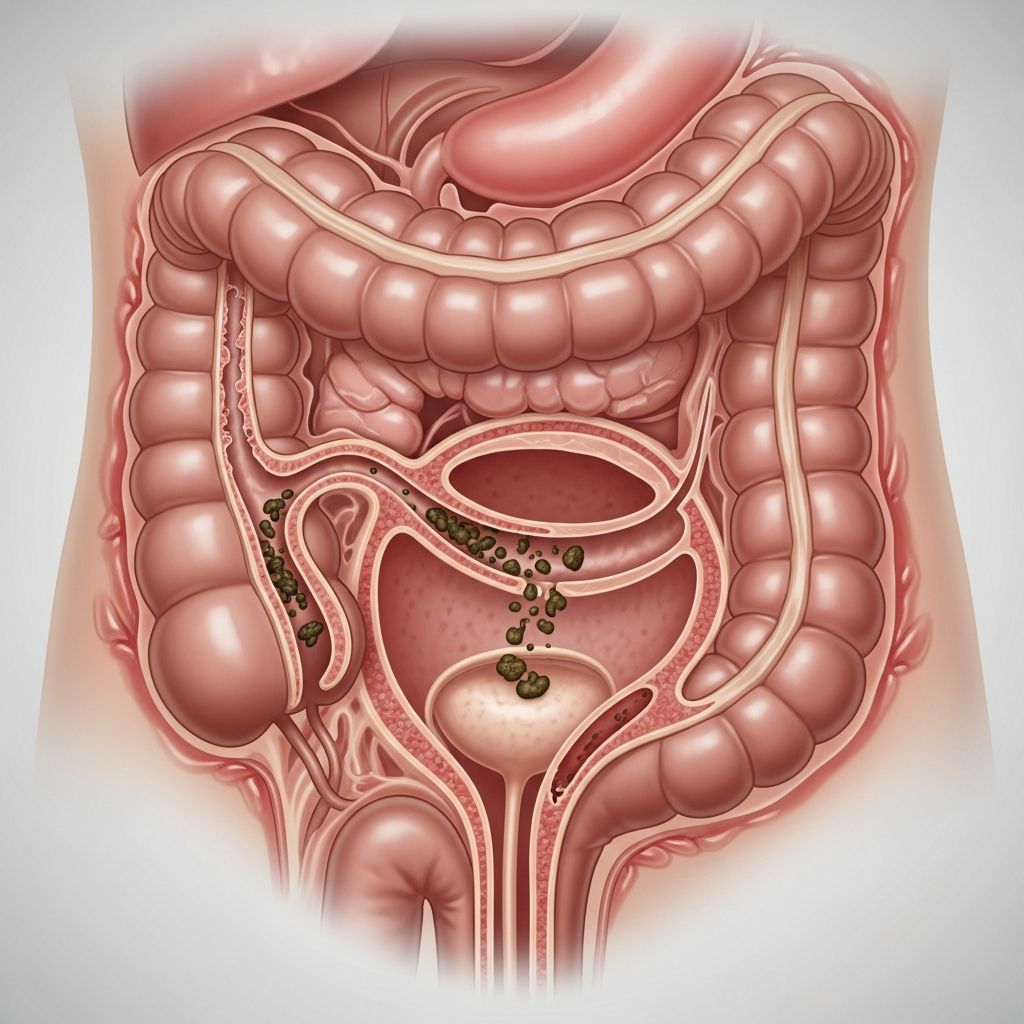
colovesical fistula
is a rare but serious medical condition characterized by an abnormal connection between the colon (typically the sigmoid colon) and the bladder. This fistula allows fecal matter, bacteria, gas, and sometimes undigested food particles to pass directly from the colon into the bladder, leading to severe urinary symptoms and recurrent infections. Most commonly linked to complicated diverticulitis, this condition affects quality of life dramatically and often requires surgical intervention.Patients may experience the alarming sensation of passing gas through urine or noticing foul-smelling, cloudy urine contaminated with fecal residue. Early recognition is crucial to prevent complications like sepsis or chronic kidney issues. This comprehensive guide covers everything from symptoms to recovery, drawing on authoritative medical insights.
What Is a Colovesical Fistula?
A colovesical fistula forms an unnatural passageway between the large intestine’s colic segment and the urinary bladder wall. This breach disrupts normal anatomical barriers, enabling colonic contents to enter the sterile urinary tract. The term ‘colovesical’ derives from ‘colo’ (colon) and ‘vesical’ (bladder), highlighting the involved organs.
Unlike healthy anatomy where the colon and bladder are separated by layers of peritoneum and connective tissue, a fistula erodes these barriers. Over time, persistent inflammation or penetration leads to a mature tract large enough for macroscopic leakage. Men are affected more frequently than women, partly due to anatomical differences and higher rates of prostate-related surgeries that can contribute iatrogenically.
The condition is uncommon overall, with incidence tied to underlying gastrointestinal diseases. In hospitalized patients with diverticular complications, fistulas occur in about 2-4% of severe cases, underscoring its association with advanced pathology.
Symptoms of Colovesical Fistula
Symptoms arise from contamination of the bladder by colonic contents, manifesting primarily in urinary changes. The classic triad—**pneumaturia** (air bubbles in urine),
fecaluria
(feces in urine), andrecurrent UTIs
—is pathognomonic but not always fully present.- Pneumaturia: Bubbles or frothy urine due to intestinal gas entering the bladder; highly sensitive and specific (nearly 100% for diagnosis). Patients describe it as ‘passing gas in urine.’
- Fecaluria: Brownish, cloudy, or malodorous urine with visible fecal particles; confirms colonic-bladder communication.
- Recurrent Urinary Tract Infections (UTIs): Frequent, resistant infections with bacteria like E. coli from the gut flora.
- Dysuria: Painful, burning urination from irritation and inflammation.
- Hematuria: Visible or microscopic blood in urine.
- Abdominal Pain: Cramping or localized discomfort, often suprapubic.
- Diarrhea or Tenesmus: Less common, related to underlying bowel disease.
Systemic signs like fever, chills, or sepsis indicate severe infection. Symptoms can mimic chronic cystitis, delaying diagnosis for months.
Causes and Risk Factors
Over
two-thirds of colovesical fistulas
stem fromcomplicated diverticulitis
, where inflamed diverticula in the sigmoid colon perforate into the adjacent bladder. Diverticula are outpouchings of colonic mucosa at weak points supplied by vasa recta. Increased intraluminal pressure from abnormal motility causes microperforations, abscess formation, and eventual fistulization.Other key causes include:
- Malignancy (10-20%): Primarily colon adenocarcinoma eroding into the bladder.
- Crohn’s Disease (5-7%): Chronic transmural inflammation in long-standing cases.
- Iatrogenic Injury: Post-surgical complications from colorectal, urologic, or gynecologic procedures.
- Radiation Therapy: Pelvic irradiation for cancers causing tissue necrosis.
- Trauma: Penetrating abdominal injuries.
- Infection: Rare cases from tuberculosis or actinomycosis.
Related Stories



Risk factors encompass age over 60, male gender, low-fiber diet (promoting diverticulosis), smoking, obesity, and immunosuppression.
Diagnosis of Colovesical Fistula
Diagnosis combines clinical suspicion with imaging and endoscopy.
Pneumaturia
prompts investigation.Key Diagnostic Tools:
- CT Abdomen/Pelvis with Contrast: Gold standard; shows fistula tract, air in bladder, bowel wall thickening, or abscess (sensitivity >95%).
- Cystoscopy: Visualizes bladder mucosa inflammation, bullous edema, or fecal residue; identifies opening.
- Colonoscopy: Evaluates colonic pathology like diverticula or tumors.
- Barium Enema: Demonstrates fistula if CT inconclusive.
- Urine Analysis: Detects fecal flora (e.g., Enterococcus), bacteria, or crystals.
Bezoars (undigigested food in bladder) or positive urine cytology for colonic cells support diagnosis. MRI or fistulography aids complex cases.
Treatment Options
Treatment prioritizes source control, infection management, and fistula repair. Surgery is definitive for fit patients.
Conservative Management
Suitable for unfit patients or palliation:
- IV antibiotics (e.g., broad-spectrum for polymicrobial infection).
- Total Parenteral Nutrition (TPN): Rests bowel.
- Foley catheter: Bladder drainage.
- Steroids for inflammatory causes like Crohn’s.
Success rate low (~10-20%); most progress to surgery.
Surgical Treatment
Preferred:
Single-stage sigmoid colectomy, primary anastomosis, and bladder repair
(laparoscopic/robotic preferred).| Approach | Pros | Cons | Success Rate |
|---|---|---|---|
| Laparoscopic | Minimally invasive, faster recovery | Technical difficulty in inflammation | 85-95% |
| Open | Best visualization | Larger incision, longer hospital stay | 90% |
| Two-stage (with colostomy) | For contaminated fields | Stoma management | 95% |
Procedure: Mobilize colon, resect diseased segment, close cystotomy, anastomose bowel. Omentopexy reinforces repair.
Complications and Prognosis
Untreated: Sepsis, renal failure, colovesical fistula-related mortality ~5-10%. Post-op: Anastomotic leak (5%), recurrence (2-5%), hernia.
Prognosis excellent post-resection: Symptom resolution in 90%. Follow-up includes colonoscopy surveillance if neoplastic etiology.
Recovery After Colovesical Fistula Surgery
Hospital stay: 3-7 days (laparoscopic). Early ambulation, clear liquids advancing to diet. Pain management, monitor for ileus/leak. Full recovery 4-6 weeks; avoid heavy lifting 6 weeks.
Long-term: High-fiber diet prevents diverticulitis recurrence. Probiotics may aid gut flora. Annual imaging if high-risk.
Prevention Strategies
- High-fiber diet (>25g/day) reduces diverticulosis risk by 40%.
- Treat diverticulitis promptly with antibiotics/fiber.
- Smoking cessation, weight management.
- Crohn’s management with biologics.
Frequently Asked Questions (FAQs)
What does it mean if I have bubbles in my urine?
Bubbles (pneumaturia) strongly suggest colovesical fistula, especially with recurrent UTIs. Seek gastroenterology/urology evaluation promptly.
Is colovesical fistula curable?
Yes, surgical resection cures >90% of cases. Conservative measures rarely suffice long-term.
Can colovesical fistula heal without surgery?
Rarely (<20%); attempted in poor surgical candidates but often fails.
How long does recovery take after surgery?
4-6 weeks for normal activities; laparoscopic approaches shorten this.
Does diverticulitis always lead to fistula?
No, only in complicated cases (2-4% of diverticulitis episodes).
References
- Colovesical Fistula – StatPearls — NCBI Bookshelf / NIH. 2023-10-01. https://www.ncbi.nlm.nih.gov/books/NBK518990/
- Colovesical fistula: What occurs, symptoms, and causes — Medical News Today. 2023-08-15. https://www.medicalnewstoday.com/articles/colovesical-fistula
- Colovesical Fistula — Somerset Surgical Associates. 2024-01-10. https://somersetsurgicalassociates.com/colovesical-fistula/
- Colovesical Fistula Treatment — CSAKC. 2023-11-20. https://csakc.com/conditions/diverticular-disease/colovesical-fistula/
- Colovesical Fistula: Symptoms, Surgery, Recovery & More — Healthline. 2023-09-05. https://www.healthline.com/health/colovesical-fistula
- Colovesical Fistula — WakeMed. 2024-02-12. https://www.wakemed.org/care-and-services/gastroenterology/conditions-we-treat/colovesical-fistula
- Colovesical fistula in men with chronic urinary tract infection — Cleveland Clinic Journal of Medicine. 2023-03-01. https://www.ccjm.org/content/90/3/165
Similar Articles








Read full bio of Sneha Tete