Comedo Naevus: Causes, Features, and Treatment Options
Understanding comedo naevus: A rare benign skin condition with grouped follicular openings containing dark keratin.
Comedo Naevus: Understanding a Rare Benign Skin Anomaly
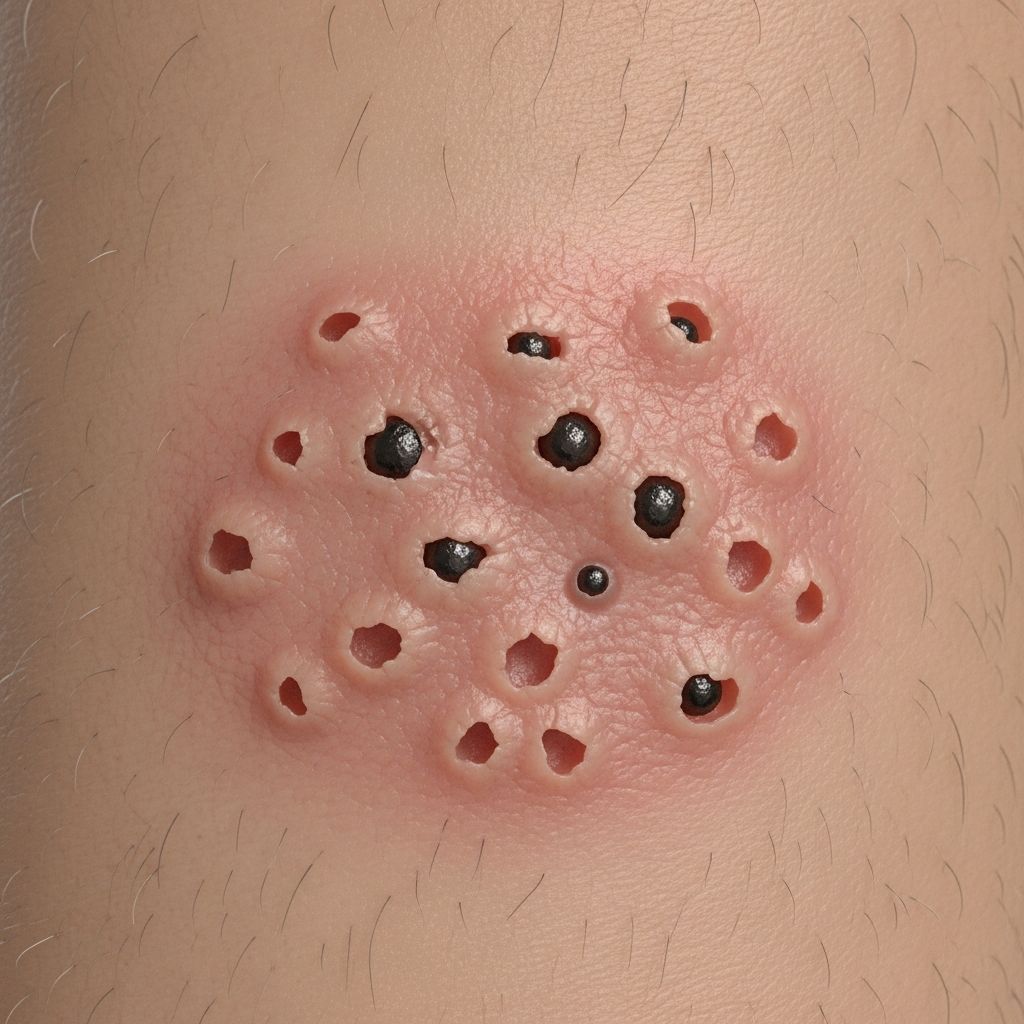
Comedo naevus, also known as nevus comedonicus or comedo nevus, is a rare, benign cutaneous anomaly consisting of grouped, dilated follicular openings containing soft, dark keratin that resemble comedones. This distinctive skin condition presents as a collection of dark, hyperkeratotic papules with a characteristic honeycomb appearance. While generally asymptomatic and benign, comedo naevus may occasionally require treatment for cosmetic reasons or when complications arise.
Defining Comedo Naevus
Comedo naevus is characterized by widened open hair follicles with dark keratin plugs that resemble comedones, though they are not actually true comedones. The condition consists of grouped, dilated follicular openings that typically appear as a solitary lesion. Some authorities consider comedo naevus to be a hamartoma arising from pilosebaceous follicles, while others view it as an epidermal naevus specifically involving hair follicles.
The term “comedo” derives from the Latin word “comedere,” meaning “to eat up,” historically used to describe parasitic worms due to the worm-like appearance of expressed material. However, true comedones differ from comedo naevus lesions in their underlying pathology and formation.
Demographics and Epidemiology
Comedo naevus is an epidermal naevus that remains rare in the general population. The true incidence is unknown, but there are no documented sex or ethnic differences in its presentation. Approximately 50% of cases present at birth, with the remainder usually manifesting before 10 years of age. However, adult onset is also described in medical literature, with cases reported as late as the seventh decade of life, often following trauma or preceding dermatosis such as herpes zoster, lichen planus, and pyoderma.
Etiology and Genetic Basis
Comedo naevus results from a mosaic disorder in which some cells carry an abnormal gene while others do not, stemming from somatic mutations occurring during embryonic development. This genetic mechanism explains why the condition may manifest sporadically or as part of a hereditary pattern.
Molecular Mutations and Pathogenesis
Several genetic mutations have been implicated in comedo naevus development:
- FGFR2 mutations: Thought to be important in comedo naevus pathogenesis, associated with increased expression of IL-1 alpha
- NEK9 gene mutations: Recently described somatic mutations in the NEK9 gene lead to activation of NEK9 kinase and disruption of normal follicular differentiation
- ABCA12 upregulation: More recent findings have identified upregulation of ABCA12 in comedo naevus lesions
While these DNA changes have been found in both follicular and non-follicular tissue, research suggests a follicle-specific effect of NEK9 in the pathogenesis of comedo nevi. Additionally, germline mosaicism has been postulated, where earlier errors occurring during development correlate with increased numbers of comedo naevi in an individual.
Clinical Presentation and Features
Comedo naevi typically present as a single group of dark hyperkeratotic papules and horny plugs with a distinctive honeycomb appearance. The lesions are usually solitary but may present as multiple lesions in certain cases.
Common Sites of Involvement
Comedo naevi are found most commonly on:
- Face
- Trunk
- Neck
- Upper extremities
Related Stories



However, comedo naevi can affect any part of the body depending on the distribution pattern and individual variation.
Distribution Patterns
When multiple comedo naevi are present, the distribution pattern may vary significantly between individuals, reflecting the underlying genetic mosaicism and developmental timing of the mutations.
Variation in Skin Types
There are no documented differences in clinical features observed amongst different ethnic groups, suggesting that comedo naevus presents consistently across all skin types and ethnicities.
Comedo Naevus Syndrome
While usually solitary, comedo naevi may be part of comedo naevus syndrome, a more complex condition associated with skeletal, central nervous system, ocular, and other cutaneous abnormalities.
Systemic Abnormalities in Comedo Naevus Syndrome
Additional abnormalities associated with comedo naevus syndrome may affect:
- Skeletal system
- Central nervous system
- Ocular structures
- Other cutaneous areas
The presence of these systemic findings distinguishes comedo naevus syndrome from isolated comedo naevus and warrants comprehensive clinical evaluation.
Complications
Although comedo naevus is benign, various complications can manifest, particularly during adolescence. These complications include:
- Cyst formation
- Abscess development
- Infection of follicular structures
- Inflammatory responses
- Secondary scarring
Understanding these potential complications is important for monitoring affected individuals and planning appropriate management strategies.
Diagnosis and Clinical Evaluation
Comedo naevus is usually diagnosed clinically based on its characteristic appearance of grouped dark hyperkeratotic papules with a honeycomb pattern.
Diagnostic Methods
Dermoscopy: Dermoscopic evaluation may be helpful to highlight the typical appearance and confirm the diagnosis by revealing the characteristic follicular pattern and keratin content.
Histopathological Evaluation: While rarely required, histopathological examination can be performed when diagnosis is uncertain. Histology reveals epidermal invaginations with moderate atrophy resembling enlarged hair follicles. The invaginations contain lobes of sebaceous glands and demonstrate associated acanthosis and concentric laminae due to keratin production.
Differential Diagnoses
Several conditions should be considered when evaluating grouped dark follicular lesions, including:
- Acne comedones (blackheads and whiteheads)
- Other epidermal naevi variants
- Solar comedones (senile comedones)
- Favre-Racouchot syndrome in sun-damaged skin
- Familial dyskeratotic comedones
- Dowling-Degos disease
Accurate differentiation is essential for appropriate management and prognostication, as treatment approaches differ significantly among these conditions.
Treatment Options
Comedo naevus is benign and asymptomatic, so treatment is often unnecessary. However, treatment may be considered for cosmetic reasons or for complications such as cysts and abscesses.
Topical Therapies
Topical treatments may show modest benefit in managing comedo naevus:
- Retinoid creams for follicular regulation
- Keratolytic agents to promote exfoliation
- Antimicrobial preparations for secondary infection prevention
Oral Therapies
Systemic oral medications may be considered in specific circumstances:
- Oral antibiotics for secondary infections or cyst management
- Isotretinoin for severe or extensive cases (with careful monitoring)
Procedural Therapies
More aggressive interventions may be necessary for lesions causing significant cosmetic concern or recurrent complications:
- Laser ablation
- Dermabrasion
- Surgical excision for solitary, well-defined lesions
- Chemical peels for superficial lesions
- Cryotherapy for individual papules
The choice of procedural therapy should be individualized based on lesion size, location, distribution, and patient preferences.
Long-term Outcome and Prognosis
Comedo naevi remain unchanged over a person’s lifetime unless treated. The condition does not spontaneously regress or improve with age. As previously described, comedo naevi may be subject to complications such as cyst and abscess formation, particularly during adolescence.
With appropriate monitoring and management of complications, the prognosis for individuals with comedo naevus is excellent. The benign nature of the condition means that aggressive treatment is rarely necessary unless cosmetic concerns or complications arise.
Frequently Asked Questions
Q: Is comedo naevus dangerous or likely to become malignant?
A: No, comedo naevus is a benign condition that does not have malignant potential. It poses no health risk and requires treatment only for cosmetic reasons or management of complications.
Q: Can comedo naevus be cured completely?
A: While procedural therapies can significantly improve appearance, complete permanent cure is variable. The condition may recur in some cases, particularly if not all affected tissue is completely removed or ablated.
Q: Will my child outgrow comedo naevus?
A: No, comedo naevus does not spontaneously resolve with age. Approximately 50% of cases are present at birth, and lesions typically persist unchanged throughout life unless specifically treated.
Q: Is comedo naevus inherited or hereditary?
A: Comedo naevus results from somatic mutations during development and is typically sporadic. However, germline mosaicism has been postulated in some cases, meaning affected parents may have increased recurrence risk in offspring.
Q: What is the difference between comedo naevus and regular acne comedones?
A: Regular comedones are clogged hair follicles caused by excess keratin and sebum accumulation, often associated with acne. Comedo naevus consists of structurally abnormal follicles with dilated openings and is a developmental anomaly unrelated to acne pathophysiology.
Q: Should comedo naevus always be treated?
A: No, treatment is optional and depends on individual preferences and complications. Many individuals leave comedo naevus untreated throughout their lives without adverse effects.
References
- Comedo naevus (comedone nevus): Causes, Images, and More — DermNet NZ. February 2022. https://dermnetnz.org/topics/comedo-naevus
- Nevus comedonicus — PubMed/National Center for Biotechnology Information. https://pubmed.ncbi.nlm.nih.gov/10592398
- Comedo — Wikipedia. https://en.wikipedia.org/wiki/Comedo
Similar Articles








Read full bio of Sneha Tete