Comedonal Cyst Pathology: Complete Histology & Diagnosis Guide
Detailed histopathological analysis of comedonal cysts, including open and closed variants, clinical correlations, and differential diagnoses.
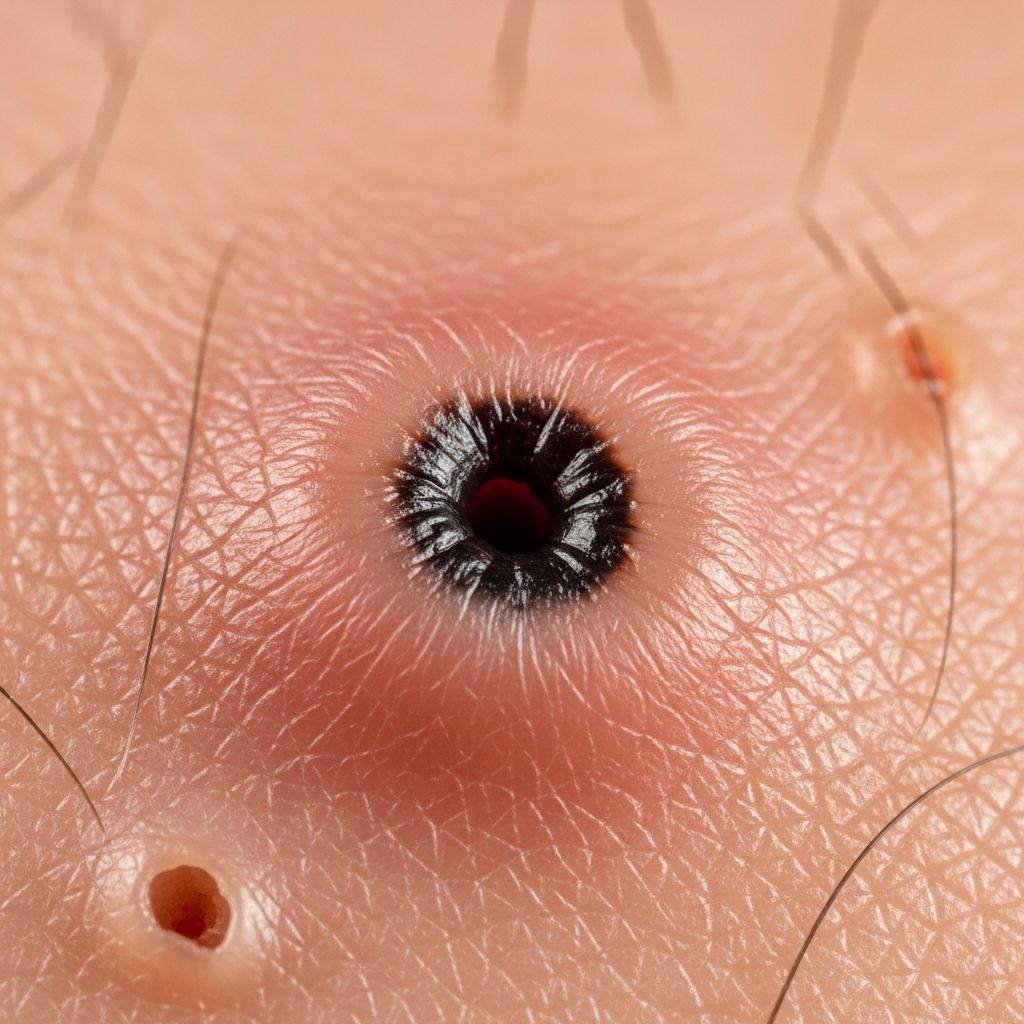
Comedones are follicular retention cysts which may open directly to the surface (open comedone or “blackhead”) or have a blocked surface (closed comedone or “whitehead”). These lesions represent a core feature in acne-related conditions and other dermatological disorders, characterized by obstruction of the pilosebaceous unit leading to accumulation of keratin and sebum.
Introduction
Comedonal cysts arise from the infundibulum of the hair follicle, where abnormal keratinization and hyperproliferation of epidermal cells block the follicular opening. This results in retention of desquamated keratinocytes, sebum, and sometimes inflammatory components. Clinically, open comedones appear dark due to oxidation of contents exposed to air, while closed comedones present as whitish papules. Understanding their pathology is crucial for distinguishing them from true cysts, neoplasms, or other pseudocysts in dermatopathology practice.
These structures are pseudocysts rather than true encapsulated cysts, lacking a complete epithelial lining in many cases. They commonly occur in acne-prone areas like the face, especially forehead and chin in comedonal acne variants. Pathogenesis involves multifactorial elements: increased sebaceous activity, follicular hyperkeratosis, Propionibacterium acnes proliferation, and inflammation.
Histology
Histopathological examination reveals distinct features depending on the comedo type. Sections of open comedones demonstrate massive follicular dilation, forming a broad cystic space connected to the surface via a patent channel (Figure 1 equivalent description: low-power view shows dilated infundibulum). The dilated follicle is filled with lamellated keratin, often compact and basket-woven in pattern (Figure 2: keratin plug with possible cellular debris). Inflammatory cells, such as neutrophils or lymphocytes, may infiltrate if secondarily infected.
Closed comedones lack a visible connection to the epidermal surface, presenting as blind-ending dilated follicles packed with keratinous debris (Figure 3: no patent channel). The surrounding epithelium shows infundibular differentiation with orthokeratotic hyperkeratosis. No granular layer disruption is typically seen, distinguishing from other keratin-filled lesions.
- Key histological features:
- Massive dilatation of the follicular infundibulum.
- Contents: compact keratin, sebum, cellular debris, inflammatory cells.
- Epithelial lining: stratified squamous with infundibular features.
- Absence of hair shaft or significant dermal changes in uncomplicated cases.
Histological Variants
Several variants exhibit modified histology, often linked to environmental or chronic factors.
Solar Comedones and Favre-Racouchot Syndrome
Solar comedones and Favre-Racouchot syndrome feature comedones superimposed on marked dermal elastosis. Low-power views show multiple dilated, plugged follicular infundibula and cyst formation amid nodular solar elastosis in the superficial dermis. Comedones contain compact keratin, while associated cysts hold loosely laminated keratin. This syndrome correlates with chronic sun exposure, age, and smoking, though cases without heavy solar damage exist.
Histologically, the backdrop is actinic damage: homogenized, clumped elastic fibers in the dermis, epidermal atrophy, and basophilic degeneration. Cyst walls may show epidermal cyst lining, differentiating from pure comedones.
Other Variants
- Nodulocystic acne: Comedones evolve into inflammatory nodules/cysts with scarring; histology adds rupture, granulomatous inflammation.
- Chloracne: Similar plugged follicles but with halogen exposure history; less cyst prominence.
- Dilated pore of Winer: Hyperplastic infundibular epithelium with radiating strands, keratin plug; mimics but distinct from comedo.
Differential Diagnoses
Accurate diagnosis requires clinicopathological correlation to exclude mimics.
| Entity | Key Histological Features | Distinguishing Points |
|---|---|---|
| Epidermoid cyst | Laminated keratin in thin epithelial sac | True cyst wall; no follicular connection. |
| Dilated pore of Winer | Hyperplastic radiating epithelial strands | Solitary, acanthotic base. |
| Pilar sheath acanthoma | Isthmus-derived nodules | Red-pink corneocytes, tumorous. |
| Hair cortex comedo | Matrical epithelium in plug | Attempts at hair shaft formation. |
| Trichofolliculoma | Radiating immature follicles | Central cystic structure with hairs. |
| Acne conglobata | Interconnecting sinuses, abscesses | Severe inflammation, scarring. |
Solar damage extent aids in Favre-Racouchot diagnosis; clinical history (e.g., sun exposure, acne severity) is essential. Immunohistochemistry rarely needed but CD34 may highlight trichilemmal variants if considered.
Clinical Features and Associations
Comedonal cysts predominantly affect adolescents and young adults, more in males for severe forms. Locations: face (forehead, chin), upper trunk. Open comedones oxidize to black; closed are dome-shaped. In nodulocystic acne, they progress to deep nodules causing scars. Solar variants cluster on sun-exposed cheeks of elderly.
Complications include inflammation, rupture, postinflammatory hyperpigmentation (especially skin of color), and keloids.
Pathogenesis
Multifactorial:
- Abnormal keratinization: Follicular hypercornification blocks outflow.
- Sebaceous hyperplasia: Excess sebum.
- Microbial: Cutibacterium acnes triggers inflammation.
- External: Sun, smoking for solar types.
Diagnosis
Primarily clinical, confirmed by biopsy showing dilated keratin-filled follicles. Dermoscopy reveals central plug in open types. Hormone assays if endocrine suspicion.
Treatment Implications
Histology guides management: uncomplicated comedones respond to topicals (retinoids, benzoyl peroxide). Inflammatory/nodulocystic require isotretinoin. Extraction for persistent lesions; excision risks recurrence.
Frequently Asked Questions (FAQs)
Q: What causes comedonal cysts?
A: Blockage of pilosebaceous follicles by keratin and sebum, driven by hyperkeratosis, excess oil, and bacteria.
Q: How do open and closed comedones differ histologically?
A: Open have a surface connection; closed do not. Both show keratin-filled dilation.
Q: Is Favre-Racouchot always solar-related?
A: Typically yes, but cases without marked elastosis reported.
Q: Can comedonal cysts scar?
A: Yes, especially if inflamed or in nodulocystic acne.
Q: When is biopsy needed for comedones?
A: Atypical presentation, treatment failure, or to rule out neoplasms.
References
- Comedonal cyst pathology — DermNet NZ / Assoc Prof Patrick Emanuel. 2013 (updated). https://dermnetnz.org/topics/comedonal-cyst-pathology
- Favre-Racouchot syndrome pathology — DermNet NZ / Dr Ben Tallon. 2011 (updated). https://dermnetnz.org/topics/favre-racouchot-syndrome-pathology
- Cutaneous cysts and pseudocysts — DermNet NZ / Dr Amanda Oakley. 2016-02 (updated). https://dermnetnz.org/topics/cutaneous-cysts-and-pseudocysts
- Nodulocystic acne — DermNet NZ. Recent (2020s update). https://dermnetnz.org/topics/nodulocystic-acne
- Comedonal acne — DermNet NZ. Recent (2020s update). https://dermnetnz.org/topics/comedonal-acne
Similar Articles








Read full bio of medha deb