Postoperative Complications: Timing, Causes & Prevention
Understand the most frequent complications after surgery, their symptoms, treatments, and prevention strategies for safer recovery.
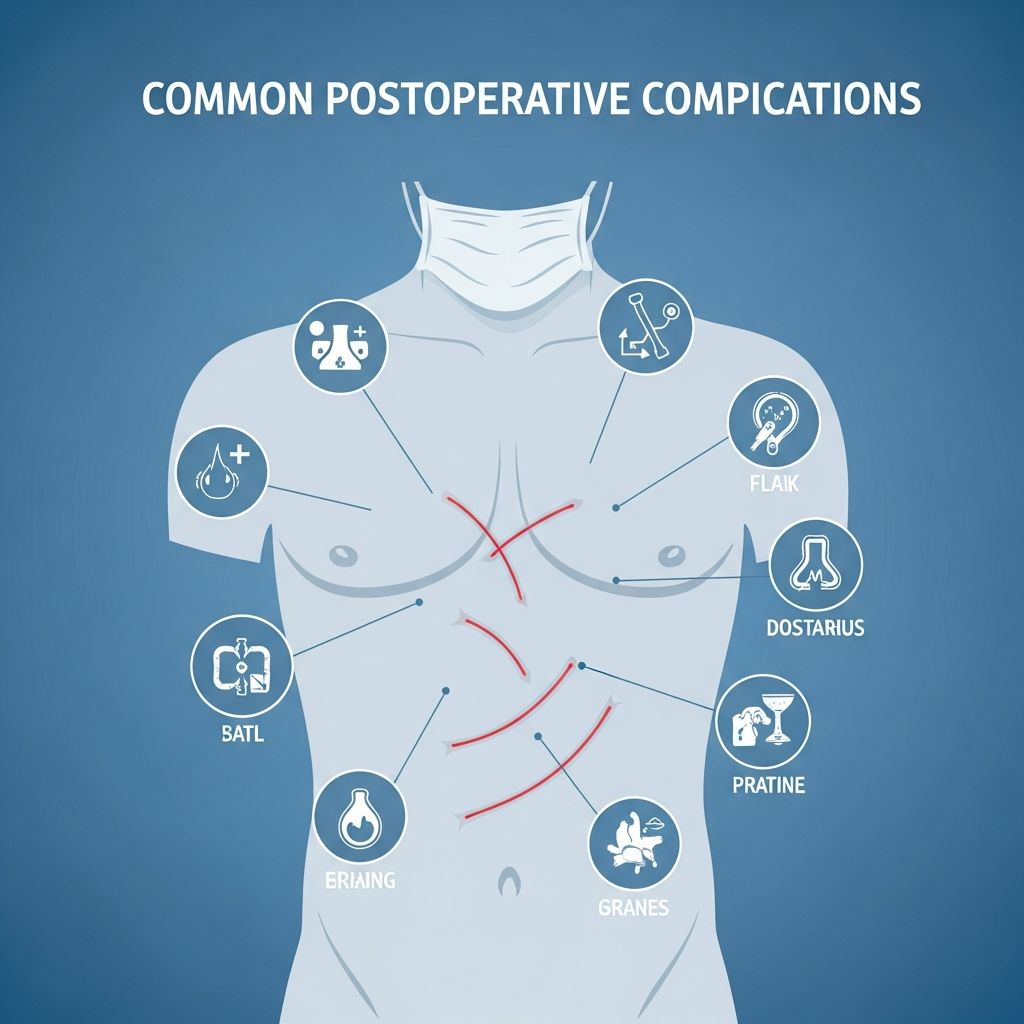
Postoperative complications are unwanted side effects or issues that can occur after surgery. Most surgeries are safe, especially planned (elective) ones, where risks can be minimized through preparation like stopping certain medications, fasting, and quitting smoking. However, complications range from minor to life-threatening. The most common include fever, atelectasis (lung collapse), wound infections, pulmonary embolism (PE), and deep vein thrombosis (DVT). Incidence peaks 1-3 days post-surgery, but some appear later.
This article details general complications by timing—immediate (up to 3 days), early (weeks after), and late (months to years)—plus urinary and wound issues, prevention strategies, and FAQs. Understanding these helps patients recover faster and recognize when to seek help.
What are Postoperative Complications?
Postoperative complications are either general (affecting any surgery) or specific to the procedure, influenced by patient history, comorbidities like diabetes or age, and surgery type. General ones include fever, atelectasis, infections, embolism, and DVT. They arise from anesthesia, immobility, surgical trauma, or immune response. Elective surgery lowers risks via pre-op optimization.
Complications follow patterns: immediate (e.g., bleeding), early (e.g., infections 4-7 days post-op), or late (e.g., hernias months later). Risk factors include obesity, smoking, poor nutrition, and prolonged surgery. Multidisciplinary care—surgeons, nurses, physiotherapists—reduces incidence.
General Postoperative Complications
Immediate Complications
These occur within 24-72 hours, often from anesthesia or surgical stress.
- Bleeding (Haemorrhage): Primary (during surgery) or reactionary (post-op from blood pressure rise). Symptoms: wound swelling, tachycardia, hypotension. Management: fluid replacement, blood transfusion, return to theatre if uncontrolled. Prevention: pre-op clotting screens, haemostatic agents.
- Atelectasis: Basal lung collapse from shallow breathing under anesthesia. Symptoms: hypoxia, raised respiratory rate. Treatment: analgesia, physiotherapy, incentive spirometry. Severe cases need ventilation. Prevention: pre/post-op physio.
- Pneumonia/Aspiration Pneumonitis: Infection or chemical injury from aspirated stomach contents (1 in 2-3,000 anesthetics). Symptoms: fever, cough, dyspnea. Up to 50% develop lung injury; mortality ~50% for severe cases. Urgent treatment: suction, ventilation, antibiotics, steroids.
- Shock: From blood loss, infection, or anaphylaxis. Signs: low BP, confusion. Stabilize with fluids, vasopressors.
- Heart Problems: Arrhythmias, myocardial infarction in at-risk patients (e.g., elderly). Monitor ECG, troponins.
- Severe Infection (Septicaemia): Higher risk in bowel surgery, trauma, immunosuppression. Symptoms: collapse, confusion. Treat with IV antibiotics, ICU care.
Early Complications
These emerge 3 days to weeks post-op, often from immobility or poor wound healing.
- Deep Vein Thrombosis (DVT) and Pulmonary Embolism (PE): Clots in leg/pelvis veins dislodge to lungs. Risk highest days 2-3; fatal if untreated. Symptoms: leg swelling/pain (DVT), sudden dyspnea/chest pain (PE). Diagnosis: ultrasound, CT pulmonary angiogram. Treatment: anticoagulants (heparin), thrombolysis if massive. Prevention: compression stockings, low-molecular-weight heparin (LMWH), early mobilization.
- Wound Infection: Surgical site infection (SSI) peaks day 5. Symptoms: redness, pus, fever. Treat with antibiotics, drainage. Risk factors: contamination, diabetes.
- Acute Respiratory Distress Syndrome (ARDS): 24-48 hours post-op. Rapid breathing, hypoxemia, crepitations. Supportive care: ventilation.
Late Complications
Occur weeks to years later, from scarring or adhesions.
- Wound Dehiscence: Wound reopening, often day 7-10. Risk: poor nutrition, infection. Surgical repair needed.
- Incisional Hernia: Weakness at incision site. Repair surgically.
- Adhesions: Scar tissue causing bowel obstruction. Symptoms: crampy pain, vomiting. Laparoscopic division if needed.
Common Urinary Problems
Urinary issues affect 20-50% post-op due to anesthesia, opioids, immobility.
- Urinary Retention: Inability to void despite full bladder. Treat: analgesia, alpha-blockers, catheterization if persistent. Remove catheters early to avoid UTI.
- Urinary Tract Infection (UTI): Common in women, catheterized patients. Atypical symptoms: confusion in elderly. Antibiotics, fluids.
Monitor output; straight cath if no urine in 6-8 hours.
Other Common Problems
- Postoperative Fever: Causes: ‘Wind’ (atelectasis/pneumonia), ‘Water’ (UTI), ‘Wound’ (infection), ‘Walking’ (DVT/PE), ‘Wonder drugs’ (reactions). Investigate per timing.
- Postoperative Anemia: From blood loss. Transfuse if symptomatic/Hb <7g/dL. Iron supplementation.
- Delirium: Confusion, common in elderly. Causes: pain, infection, meds. Haloperidol, reorientation.
- Constipation/Nausea: Opioids, immobility. Laxatives, antiemetics.
- Nerve Damage: Rare from anesthesia; numbness/weakness resolves mostly.
Related Stories



Prevention of Postoperative Complications
Prevention is multifaceted, reducing incidence by 30-50%.
| Strategy | Details | Target Complications |
|---|---|---|
| Pre-op Optimization | Correct anemia (IV iron), stop smoking/alcohol 4-6 weeks prior, manage diabetes, screen coagulopathies | Bleeding, infection, poor healing |
| Intra-op Measures | Antibiotic prophylaxis per local guidelines, minimally invasive techniques, drains judiciously | SSI, bleeding |
| Post-op Care | Early mobilization, physio, LMWH for VTE, multimodal analgesia (avoid opioid excess), glycemic control | DVT/PE, pneumonia, retention |
| Patient Education | Incentivize deep breathing, hydration, leg exercises | Atelectasis, DVT |
Bowel prep only for specific cases (e.g., ileostomy). Lifestyle: exercise, weight loss for electives.
Patient Monitoring and Follow-Up
Post-op recovery plans include vital signs monitoring, wound checks, labs. Regular follow-ups detect issues early. Report fever >38°C, worsening pain, leg swelling immediately. Intensive care for high-risk cases.
Frequently Asked Questions (FAQs)
Q: How common are postoperative complications?
A: Vary by surgery; general ones affect 10-30% of patients, higher in emergency cases. Most are mild.
Q: When is the highest risk period for DVT/PE?
A: Days 2-3 post-op, until fully mobile.
Q: What should I do if I have fever after surgery?
A: Contact your doctor; could indicate infection. Use the ‘5 Ws’ mnemonic.
Q: Can I prevent chest infections?
A: Yes, with deep breathing exercises, early walking, no smoking.
Q: How long does recovery from complications take?
A: Minor: days; severe (e.g., PE): weeks. Most recover fully with prompt care.
(Word count: 1678)
References
- Common Postoperative Complications | Doctor — Patient.info. 2023. https://patient.info/doctor/general-surgery/common-postoperative-complications-pro
- Common Postoperative Complications – Patient.info — Patient.info. 2023. https://patient.info/treatment-medication/common-postoperative-complications-leaflet
- Preventing Post-operative Complications — WoundSource. 2024-10-15. https://www.woundsource.com/blog/preventing-post-operative-complications
- Management of Common Postoperative Complications — PubMed (StatPearls). 2020-11-06. https://pubmed.ncbi.nlm.nih.gov/33153639/
- Postoperative Care — Merck Manuals Professional. 2025. https://www.merckmanuals.com/professional/special-subjects/care-of-the-surgical-patient/postoperative-care
Similar Articles








Read full bio of medha deb