Community Gardens: 5 Steps To Start A Neighborhood Garden
Discover how community gardens boost food security, nutrition, health, and social bonds in neighborhoods nationwide.
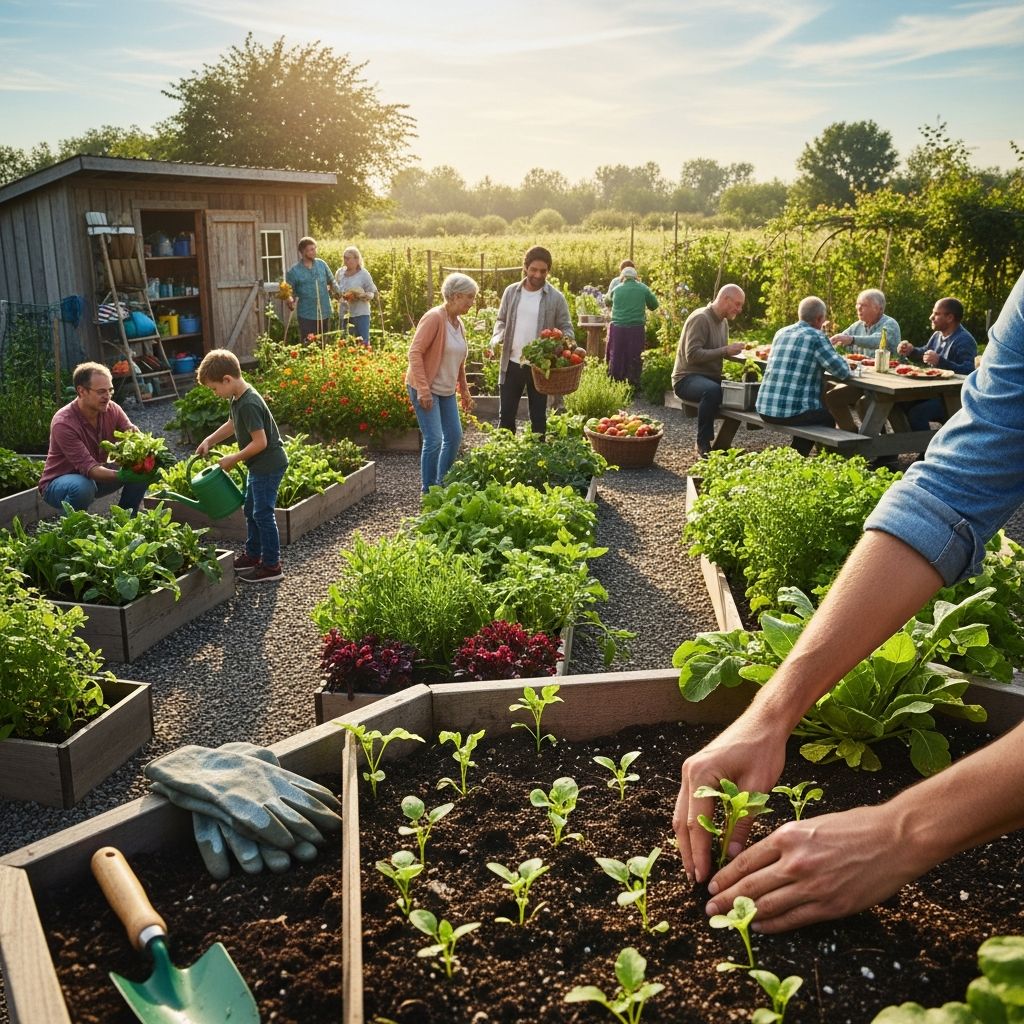
Community gardens provide shared spaces where individuals and families grow fresh fruits, vegetables, and herbs, addressing food insecurity while building stronger neighborhoods.
What Are Community Gardens?
Community gardens are plots of land gardened or cultivated by groups of people for communal benefit, often in urban or underserved areas. These gardens can take various forms, including individual plots within a larger shared space, plots tended collectively, or even rooftop and vertical gardens in cities. They serve as vital resources in food deserts—areas with limited access to affordable, nutritious food—offering fresh produce directly to participants.
Originating from necessity during economic hardships, community gardens have evolved into multifaceted hubs for nutrition education, physical activity, and social interaction. According to surveys, a significant portion of U.S. households engage in gardening, with 80% participating in projects in recent years, highlighting their widespread appeal.
Benefits of Community Gardens
Participation in community gardens yields numerous advantages, spanning health, social, economic, and environmental domains. Gardeners report higher vegetable consumption, reduced food insecurity, and improved mental well-being.
- Improved Nutrition and Food Security: Gardeners consume more fresh produce, supplementing diets and lowering reliance on processed foods. Studies show community gardening reduces food insecurity and boosts vegetable intake.
- Physical Health: Gardening involves moderate exercise, promoting fitness and helping manage chronic conditions through outdoor activity.
- Mental Health and Stress Reduction: Tending plants reduces stress, enhances mood, and provides therapeutic benefits, particularly for isolated individuals.
- Social Connections: Gardens foster community bonds, knowledge sharing, and intergenerational interactions, strengthening family and neighborhood ties.
- Economic Savings: Homegrown food cuts grocery costs; one urban garden saved $10,000 in food expenses in a single season.
- Environmental Impact: Gardens enhance soil health, support pollinators, reduce flooding, and promote sustainable practices like regenerative agriculture.
Research confirms these impacts: a study found gardening improved dietary habits and family relationships without significantly altering meal-skipping due to finances, but qualitative benefits like health improvements were prominent.
Health and Nutrition Advantages
Community gardens directly tackle nutritional gaps by providing access to fresh, pesticide-free produce. Participants in urban gardens ate more vegetables from their harvests, leading to healthier diets overall. Programs like California’s La Mesa Verde enable low-income families to grow their own food, with SNAP benefits now covering seeds and plants.
Every $1 invested in a community garden can yield $6 in produce value, making it a cost-effective nutrition strategy. Additionally, gardens encourage outdoor time, increasing physical activity essential for preventing obesity and related diseases.
| Benefit | Impact | Example |
|---|---|---|
| Increased Vegetable Intake | Higher nutrient consumption | Gardeners ate more homegrown veggies |
| Reduced Food Insecurity | Up to 90% household improvement | Produce donation to pantries |
| Physical Activity | Exercise through labor | Daily tending boosts fitness |
Social and Community Impact
Beyond individual gains, community gardens build social capital. They create inclusive spaces for diverse groups, facilitating knowledge exchange and conflict resolution skills. Extension programs across states demonstrate this: Michigan’s kits for refugees included culturally relevant plants, aiding integration.
In Colorado’s Grow & Give, gardeners donated over 175,000 pounds of produce, enhancing local food pantries. North Carolina’s seed libraries distributed 20,000+ seeds via Master Gardeners, empowering communities.
Related Stories



Environmental Sustainability
Community gardens support eco-friendly practices. Climate Victory Gardens emphasize regenerative methods to restore soil and sequester carbon. They reduce food miles, minimizing transport emissions, and improve urban biodiversity by aiding pollinators and absorbing stormwater.
Green roofs, incentivized in cities like New York and Toronto, extend these benefits to vertical spaces.
Examples Across the U.S.
Land-grant universities lead many initiatives. Missouri’s 173 school and community gardens supply pantries and schools. Georgia’s urban garden harvested 3,000 pounds, saving significant costs. Kansas webinars reached 13,794 participants, with 62% reporting better nutrition access.
- Montana: 225+ Master Gardeners teach vegetable growing and conservation.
- South Dakota: Conferences provided 4,529 education hours.
- West Virginia: Volunteers contribute over $500,000 in value.
- Oklahoma: Tribal partnership supplied 67 raised beds and 4,200 transplants.
Ohio reports gardens lower food security concerns by 90%. Tennessee highlights gardens’ role in chronic disease prevention.
Starting a Community Garden
Launching a garden requires planning. Secure land via leases from cities, churches, or schools. Form a core group, draft rules, and budget for tools, soil, and water.
- Assess Needs: Survey community for interest and site suitability.
- Secure Resources: Apply for grants; partner with extensions or nonprofits.
- Design Layout: Allocate plots, communal areas, and paths.
- Educate: Offer workshops on planting, pest control, and harvesting.
- Sustain: Establish fees, volunteer rotations, and maintenance plans.
Programs like Green America’s Climate Victory Gardens register over 30,000 sites, providing models.
Challenges and Solutions
Common hurdles include land access, funding, and maintenance. Solutions: partner with universities for expertise, seek grants, and build volunteer buy-in. Well-planned gardens with sustainability strategies endure.
Frequently Asked Questions (FAQs)
What is a community garden?
A shared plot where people grow food collectively or in individual beds, promoting access and community.
Do community gardens really improve food security?
Yes, they reduce insecurity by providing fresh produce and can cut costs significantly.
Who can participate in a community garden?
Anyone—families, refugees, schools, tribes—often prioritizing underserved groups.
How do I start one in my neighborhood?
Assess interest, find land, form a group, and seek extension support or grants.
What are the health benefits?
Increased veggie intake, exercise, mental health boosts, and social ties.
Conclusion
Community gardens transform vacant lots into vibrant sources of food, health, and unity, proving essential for sustainable communities.
References
- Community gardens increase food security and community well-being — Land-grant Impacts. 2023. https://landgrantimpacts.org/community-gardens-increase-food-security-and-community-well-being/
- Community Gardens and Food Security Go Hand-in-Hand — Green America. 2026. https://greenamerica.org/your-green-life-2026/community-gardens-and-food-security-go-hand-hand
- Impact of a Community Gardening Project on Vegetable Intake — PMC (PubMed Central). 2013-05-29. https://pmc.ncbi.nlm.nih.gov/articles/PMC3661291/
- Urban gardens improve food security — University of California. N/A. https://www.universityofcalifornia.edu/news/urban-gardens-improve-food-security
- Community Gardens Plant Seeds for Healthy Nutrition, Healthy Life — Ohio Department of Health. N/A. https://odh.ohio.gov/media-center/feature-stories/march-is-national-nutrition-month
- Addressing Food Insecurity: Expanding Access through Community Gardens — University of Tennessee Institute of Agriculture. 2023-10. https://utia.tennessee.edu/publications/wp-content/uploads/sites/269/2023/10/W1021D.pdf
- Growing Community Health through Gardens — University of Wisconsin Extension. N/A. https://fyi.extension.wisc.edu/impacts/articles/growing-community-health-through-gardens/
Similar Articles








Read full bio of Sneha Tete