CT Scan: What It Is, How It Works, and Why You Need One
Complete guide to CT scans: understanding this essential diagnostic imaging technology.
Understanding Computed Tomography (CT) Scans
A computed tomography (CT) scan, also known as a CAT scan, is an advanced diagnostic imaging procedure that uses X-rays and computer technology to create detailed cross-sectional images of the body. This non-invasive imaging technique has revolutionized medical diagnosis by allowing healthcare providers to visualize internal structures with exceptional clarity and precision. CT scans can examine virtually any part of the body, including the head, chest, abdomen, pelvis, spine, and extremities, making them invaluable tools in modern medicine.
The technology behind CT scanning combines multiple X-ray images taken from different angles around the body. A computer then processes these images to create detailed, three-dimensional representations of organs, tissues, and bones. This capability makes CT scans significantly more detailed than traditional X-ray imaging, allowing doctors to identify conditions that might be missed by other diagnostic methods.
How CT Scans Work
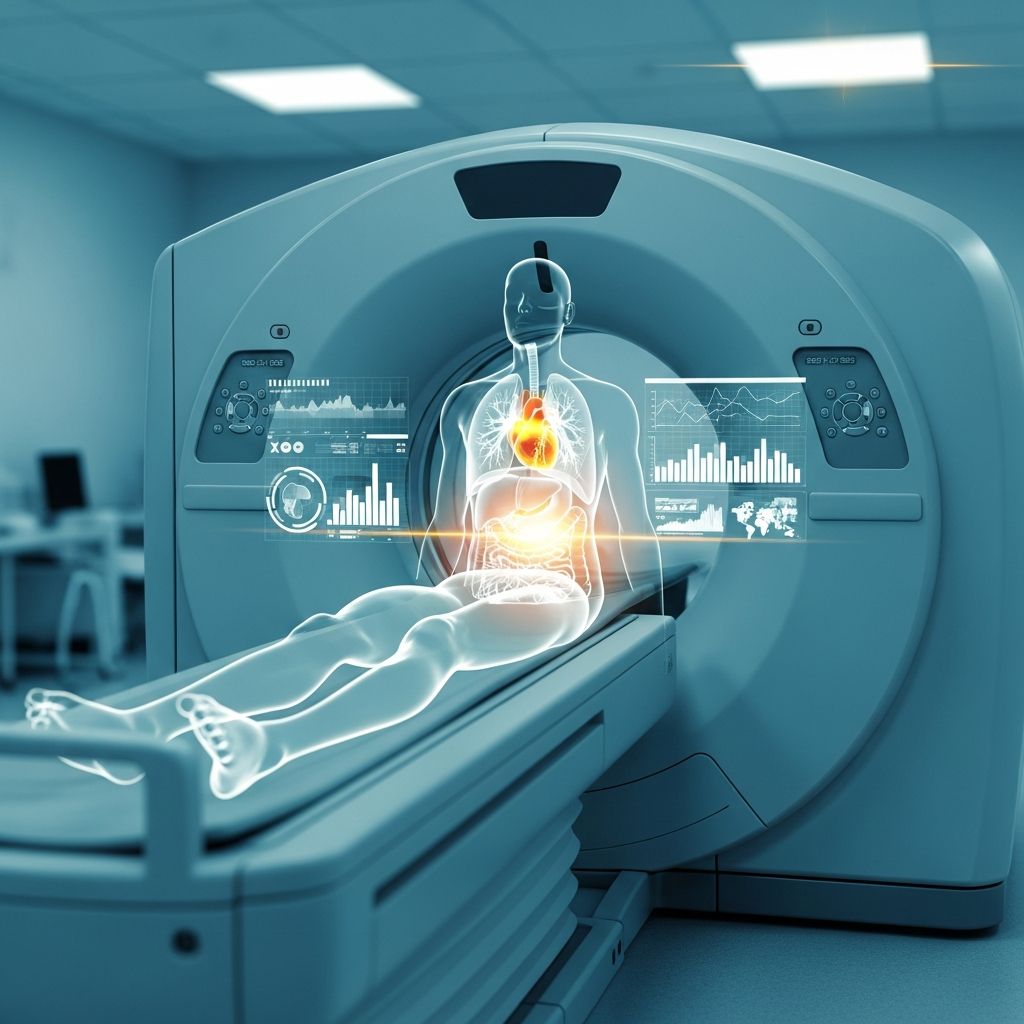
The CT scanner consists of a large, doughnut-shaped device with an opening in the center where the patient lies on a movable examination table. During the procedure, the X-ray tube rotates around the patient while the table gradually moves through the scanner’s opening. As the tube rotates, it captures multiple X-ray images from hundreds of different angles around the patient’s body.
These raw images are transmitted to a sophisticated computer system that reconstructs them into detailed cross-sectional images, or “slices,” of the scanned area. Modern multidetector CT (MDCT) scanners can acquire hundreds of images in just seconds, allowing for rapid scanning of large body areas. The computer can then manipulate these images to show structures from different perspectives and create three-dimensional models of complex anatomical regions.
Key Components of a CT Scanner
- X-ray tube that produces radiation from multiple angles
- Detector array that captures the X-rays after they pass through the body
- Gantry, the rotating circular component that houses the X-ray tube and detectors
- Patient table that moves incrementally through the scanner opening
- Computer workstation that processes raw data into diagnostic images
- Control room where technologists monitor the procedure
Common Uses of CT Scans
CT scans have become essential diagnostic tools for numerous medical conditions and situations. Healthcare providers order CT scans to diagnose diseases, guide treatment planning, monitor disease progression, and assess treatment response. The versatility of CT imaging makes it applicable across virtually every medical specialty.
In emergency medicine, CT scans help rapidly identify life-threatening conditions such as internal bleeding, traumatic injuries, and acute abdominal diseases. Oncologists use CT scans to detect cancers, determine tumor size and location, and assess whether cancer has spread to distant organs. Pulmonologists rely on CT imaging to diagnose lung diseases including pneumonia, pulmonary embolism, and interstitial lung disease.
Cardiovascular specialists use specialized cardiac CT protocols to evaluate heart function, detect coronary artery disease, and assess valve abnormalities. Gastroenterologists use CT to investigate abdominal pain, detect inflammatory bowel disease, and identify masses in the gastrointestinal tract. Neurologists and neurosurgeons use CT to evaluate stroke, traumatic brain injury, and identify space-occupying lesions in the brain.
Related Stories



Types of CT Scans
Several variations of CT scanning technology exist, each optimized for specific diagnostic purposes and anatomical regions.
High-Resolution CT (HRCT)
High-resolution CT uses thin-section imaging with specialized reconstruction algorithms to provide exceptional detail of fine anatomical structures. HRCT is particularly valuable for evaluating lung parenchyma, detecting subtle interstitial abnormalities, and assessing the extent of lung fibrosis and other chronic pulmonary diseases.
Cardiac CT
Cardiac CT is specialized imaging designed to evaluate the heart and coronary arteries with temporal resolution matched to cardiac motion. This technique can detect coronary artery stenosis, assess myocardial viability, evaluate cardiac function, and detect structural abnormalities. Cardiac CT has become increasingly important for evaluating patients with chest pain and suspected coronary artery disease.
CT Angiography (CTA)
CT angiography involves rapid image acquisition synchronized with intravenous contrast bolus to visualize blood vessels. CTA can evaluate for pulmonary embolism, aortic dissection, peripheral vascular disease, and cerebrovascular disease. The rapid image acquisition and high spatial resolution make CTA superior to conventional angiography for many vascular conditions.
Perfusion CT
Perfusion CT imaging measures tissue blood flow and blood volume by tracking contrast material passage through tissue. This technique helps assess tissue viability, evaluate tumor vascularity, and detect areas of compromised perfusion in stroke and other conditions.
Contrast-Enhanced versus Non-Contrast CT
CT scans can be performed with or without intravenous contrast material. Non-contrast CT uses no medications and relies on the inherent density differences between anatomical structures to create images. This approach is quick, safe for patients with contrast allergies, and effective for detecting acute bleeding, bone fractures, and kidney stones.
Contrast-enhanced CT involves administering iodinated contrast material intravenously to enhance visualization of blood vessels, organs, and pathologic tissue. The contrast material increases the X-ray attenuation of tissues it perfuses, creating improved differentiation between normal and abnormal structures. Contrast-enhanced CT is superior for detecting and characterizing tumors, evaluating organ perfusion, and assessing vascular anatomy and pathology.
Benefits of CT Scanning
CT scanning offers numerous advantages as a diagnostic imaging modality. The procedure is non-invasive, requiring no surgical incisions or insertion of instruments into the body. Scan acquisition is extremely rapid, taking only seconds to minutes depending on the anatomical region and protocol used. This speed is particularly valuable in emergency situations where quick diagnosis can be lifesaving.
CT provides superior soft tissue contrast resolution compared to conventional X-rays, revealing details of organs and subtle abnormalities that might be invisible to radiography. The three-dimensional nature of CT data allows detailed evaluation of complex anatomical relationships, essential for surgical planning and guidance. CT can visualize structures obscured by bone on conventional radiography and can detect very small lesions not visible on other imaging modalities.
The images can be reformatted in multiple planes and three-dimensional reconstructions can be created to better understand complex pathology. CT is more sensitive than ultrasound for many conditions and does not require special acoustic windows like ultrasound does, making it more universally applicable across different patient body habitus.
Risks and Side Effects
While CT scanning is generally safe, it does involve exposure to ionizing radiation. The radiation dose from a CT scan is higher than from conventional X-rays but remains relatively low in absolute terms. The risk of developing radiation-induced cancer from a single CT scan is extremely small and must be weighed against the diagnostic benefit.
Patients who are pregnant or potentially pregnant should inform their healthcare provider, as the radiation may pose risks to the developing fetus. In such cases, alternative imaging modalities like ultrasound or MRI are often preferred when appropriate.
Intravenous contrast material can cause allergic reactions ranging from mild (itching, rash) to severe (anaphylaxis), though severe reactions are rare. Patients with severe renal impairment have increased risk of contrast-induced nephropathy. Some patients experience temporary heating sensation or metallic taste from contrast injection, and contrast material can occasionally cause nephrotoxicity in patients with diabetes or renal disease.
Rarely, patients may experience claustrophobia during the procedure, though CT scanners are more open than MRI machines. Some patients may have mild discomfort from lying still on the hard scanner table.
Preparation for a CT Scan
Preparation requirements depend on the type of CT scan and whether contrast material will be used. For most non-contrast CT scans, minimal preparation is needed. Patients should wear comfortable, loose-fitting clothing without metal objects, as metal can interfere with image quality.
If contrast material will be used, patients may need to fast for a few hours beforehand. Patients should inform their healthcare provider about any allergies, especially to iodine or shellfish (since iodinated contrast contains iodine). Patients with renal impairment may need baseline laboratory work before contrast administration.
Patients should remove all metal objects including jewelry, watches, dentures, hearing aids, and body piercings, as these can create artifacts in the images. Women should inform technologists if there is any possibility of pregnancy. Patients taking metformin for diabetes may need to discontinue it briefly after contrast injection due to risk of contrast-induced nephropathy.
What to Expect During the Procedure
Upon arrival, patients will be asked to change into a hospital gown and remove all metal objects. An intravenous line may be placed if contrast material will be used. The technologist will explain the procedure and answer questions.
The patient lies on the scanner table, which is positioned at the entrance of the scanner opening. The technologist moves to the control room where they can communicate with the patient through an intercom system and observe via monitor. The table gradually advances through the scanner opening while the X-ray tube and detectors rotate around the patient.
During scanning, the patient hears mechanical whirring and clicking sounds as the scanner rotates. The patient must hold still during imaging, as movement causes blurring. Breath-hold instructions may be given for certain scans. The entire procedure typically lasts 10-30 minutes depending on what is being scanned.
If contrast was used, the patient may experience a warm sensation throughout the body, metallic taste in the mouth, and mild urge to urinate. These sensations typically pass quickly. After the scan, an IV catheter is removed and the patient can usually return to normal activities immediately.
Image Interpretation
A radiologist, a physician specially trained in interpreting medical images, reviews the CT images and creates a detailed report describing findings. The radiologist looks for abnormalities in size, shape, density, and enhancement pattern of structures. The report is sent to the referring physician who discusses results with the patient and explains next steps in evaluation or treatment.
CT Scan Limitations
While highly useful, CT scanning has certain limitations. Radiation exposure, though generally safe, involves risk that must be justified by diagnostic benefit. Metallic implants including pacemakers and certain aneurysm clips can cause image artifacts or present safety concerns with the strong magnetic fields used in some newer scanners.
Some anatomical regions, particularly the posterior fossa of the brain and areas adjacent to metal hardware, may have compromised image quality. CT is less sensitive than MRI for detecting bone marrow abnormalities and soft tissue pathology in certain situations. Allergic reactions to contrast material, while rare, can occur. The procedure is not suitable for pregnant patients due to radiation exposure to the fetus.
Cost Considerations
The cost of CT scans varies depending on the facility, the anatomical region scanned, whether contrast is used, and geographic location. Most insurance plans cover CT scans when medically justified. Patients without insurance should inquire about payment plans or financial assistance programs. The radiation dose justification and appropriate use criteria have been developed to optimize use of this resource while managing costs.
Frequently Asked Questions
Q: Is a CT scan painful?
A: No, CT scanning is painless. The only discomfort may be from lying still on a hard table or from the intravenous needle if contrast is used. Some patients experience anxiety from the confined space, though CT scanners are relatively open compared to MRI machines.
Q: How long does a CT scan take?
A: The actual scanning time is very brief, usually only 10-30 seconds for most studies. However, the entire appointment including preparation and positioning typically takes 30 minutes to an hour.
Q: Is the radiation from a CT scan dangerous?
A: The radiation dose from a single CT scan is low and the risk of developing cancer is extremely small. However, radiation exposure should be minimized when possible, particularly in children and pregnant patients. CT should only be performed when clinically justified.
Q: Can I eat or drink before a CT scan?
A: This depends on whether contrast will be used and which anatomical region is being scanned. If contrast is used, fasting for several hours is typically recommended. Your physician will provide specific instructions.
Q: What should I do if I have a contrast allergy?
A: Inform your physician and the CT technologist immediately. Alternative imaging modalities may be used, or premedication protocols may allow safe contrast administration in patients with mild allergies.
Q: Can pregnant women have CT scans?
A: CT should generally be avoided during pregnancy unless absolutely necessary due to potential radiation exposure to the fetus. Ultrasound or MRI are preferred when possible. If CT is necessary, the risk-benefit analysis should be carefully considered.
References
- Computed Tomography (CT) Scan Overview — Johns Hopkins Medicine. 2025. https://www.hopkinsmedicine.org/health/treatment-tests-and-therapies/computed-tomography-ct-scan
- The Division of Diagnostic Imaging & Body CT — Johns Hopkins Medicine Department of Radiology. 2017. https://www.hopkinsmedicine.org/radiology/specialties/body-imaging/index.html
- CT Technologist Training Program — Johns Hopkins Schools of Medical Sciences. 2025. https://somi.jh.edu/computed-tomography-ct/
- Multidetector CT Technology and Clinical Applications — American College of Radiology. 2024. https://www.acr.org
- CTisus: CT Education and Training Resource — Johns Hopkins Medicine. 2025. https://www.ctisus.com
Similar Articles








Read full bio of Sneha Tete