Cherry Angioma: Causes, Treatment, Removal
Discover everything about cherry angiomas: common benign red skin spots, their causes, symptoms, safe removal options, and when to see a doctor.
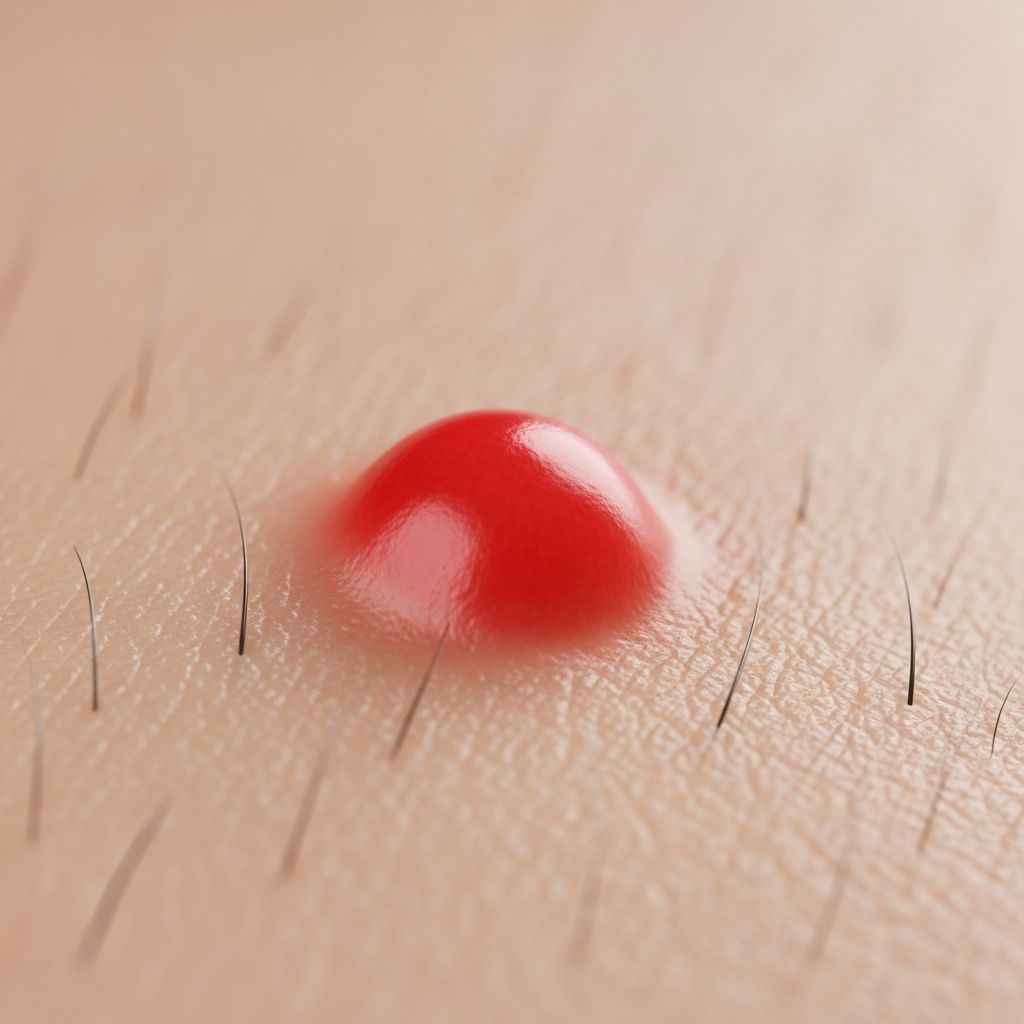
Cherry angiomas, also known as cherry hemangiomas, senile angiomas, or Campbell de Morgan spots, are common benign skin growths composed of small clusters of blood vessels near the skin’s surface. These
bright red spots
typically appear as people age and are harmless in most cases, requiring no treatment unless for cosmetic reasons or if they bleed frequently.What Is a Cherry Angioma?
A cherry angioma is a type of vascular lesion formed by an overgrowth of capillaries, the tiny blood vessels just beneath the skin. They are the most common acquired benign vascular proliferations in adults, presenting as small, dome-shaped papules with a vivid ruby-red color due to dilated capillary loops. Unlike malignant growths, cherry angiomas do not spread or invade surrounding tissues and are almost always noncancerous.
These growths can emerge at any age but become increasingly prevalent after 30, with over 75% of individuals over 75 having at least one. They often multiply over time, especially on the trunk, arms, legs, and shoulders, though they can appear anywhere except mucous membranes.
What Does a Cherry Angioma Look Like?
Cherry angiomas start as flat, bright red macules measuring 1-2 mm but can grow to 5 mm or larger, becoming slightly raised, smooth papules. Their color ranges from cherry-red to purple or blue, varying by skin tone and depth—lighter skin makes them more visible, but they occur across all tones without blanching under pressure.
- Size: Pinhead (1 mm) to 6 mm (about 1/4 inch).
- Shape: Circular, oval, or dome-shaped.
- Texture: Smooth or slightly protruding.
- Color: Bright red (classic), purplish, or bluish; color may shift with hypoxia (turning bluer temporarily).
- Location: Trunk (most common), arms, legs, shoulders; rare on face or scalp.
They resemble red moles but are vascular. Images from reliable sources show clusters of pinpoint red dots or isolated raised spots, often multiple on the torso.
Cherry Angioma Causes and Risk Factors
The exact cause of cherry angiomas remains unknown, but several factors contribute to their development:
- Aging: Strongly linked to natural aging; prevalence rises sharply after 30-40 years.
- Genetics: Familial patterns suggest hereditary predisposition; somatic mutations in GNAQ and GNA11 genes (e.g., Q209H) identified in lesions.
- Pregnancy: Hormonal changes may trigger appearance or multiplication.
- Eruptive forms: Sudden outbreaks (eruptive cherry angiomas) associated with medications (e.g., cyclosporine, ramucirumab), infections (HHV8), or conditions like graft-versus-host disease, lymphoproliferative disorders, or multicentric Castleman disease.
Pathologically, they involve dilated, tortuous capillaries in the dermal papillae with thin lumens, prominent endothelial cells, and edematous collagen. No sun exposure link, unlike some lesions.
Are Cherry Angiomas Dangerous?
Cherry angiomas are benign and pose no health risk for most people. They are asymptomatic unless traumatized, causing bleeding due to fragile vessels. Rarely, rapid multiplication or changes may signal underlying issues like liver disease (if resembling spider angiomas) or, very rarely, malignancies—but cherry angiomas themselves do not become cancerous.
When to worry:
- Bleeding without injury.
- Rapid growth, color/shape change (ABCDE rule: Asymmetry, Border irregularity, Color variation, Diameter >6mm, Evolving).
- Sudden eruption of many lesions.
- Itching, pain, or ulceration.
Related Stories



Consult a dermatologist for biopsy if suspicious; most are diagnosed visually.
Cherry Angioma vs. Similar Skin Growths
| Feature | Cherry Angioma | Spider Angioma | Pyogenic Granuloma | Melanoma (Risky Mimic) |
|---|---|---|---|---|
| Appearance | Uniform red/purple dome, 1-5mm | Red center with spider-like legs | Red, pedunculated, friable | Irregular, multicolored, >6mm |
| Blanching | No | Yes (central pulse) | Partial | No |
| Cause | Aging/genetics | Liver disease/hormones | Trauma | Cancerous |
| Risk | Benign | May indicate disease | Benign but bleeds | Malignant |
Spider angiomas blanch and have radiating extensions; pyogenic granulomas bleed easily post-trauma. Always differentiate via exam.
How to Remove Cherry Angiomas
Removal is optional, for cosmetics or bleeding-prone sites. Performed by dermatologists under local anesthesia; no home remedies recommended due to scarring/bleeding risks.
Electrocauterization
A probe delivers electric current to cauterize vessels; quick for small lesions (<2mm). Grounding pad prevents shocks. Minimal scarring.
Laser Therapy
Targets hemoglobin: Pulsed dye laser (PDL), KTP, Nd:YAG, IPL, or CO2. Lesion absorbs heat, coagulates, fades over sessions. Effective for various sizes/skin tones; 1-3 treatments.
Other Methods
- Shave Excision: Scalpel removes raised portion; base cauterized. For larger ones.
- Cryotherapy: Liquid nitrogen freezes; good for superficial.
- Electrodesiccation: Similar to cautery post-shave.
Post-care: Avoid sun, use ointment; side effects include temporary redness, crusting, rare scarring.
Frequently Asked Questions (FAQs)
Do cherry angiomas go away on their own?
No, they persist once formed but rarely cause issues unless irritated.
Should I worry about cherry angiomas?
Not usually, but monitor for changes and see a doctor if bleeding, growing, or multiplying suddenly.
Are cherry angiomas cancerous?
No, they are benign, but changes warrant evaluation to rule out skin cancer.
Why am I suddenly getting many cherry angiomas?
Eruptive angiomas may link to medications, infections, or conditions; consult a doctor.
Can cherry angiomas be prevented?
No known prevention; aging/genetics primary factors.
Diagnosis and When to See a Doctor
Diagnosis is clinical via dermoscopy; biopsy rare but confirms via vascular proliferation histology. Seek care for new/changing lesions, especially post-30.
References
- Cherry Angioma: Causes, Treatment, and Removal — Healthline. 2023-10-15. https://www.healthline.com/health/cherry-angioma
- Cherry angioma: Symptoms, causes, and removal — Medical News Today. 2023-05-20. https://www.medicalnewstoday.com/articles/312594
- Cherry Hemangioma – StatPearls — NCBI Bookshelf / NIH. 2023-11-03. https://www.ncbi.nlm.nih.gov/books/NBK563207/
- Cherry angioma — MedlinePlus / NIH. 2024-01-10. https://medlineplus.gov/ency/article/001441.htm
- Cherry Angiomas: Causes, Symptoms, and Removal (With Images) — GoodRx. 2023-08-12. https://www.goodrx.com/health-topic/dermatology/cherry-angiomas
Similar Articles








Read full bio of Sneha Tete