Conditions Affecting The Tongue: Essential Guide
Comprehensive guide to tongue disorders: symptoms, causes, diagnosis, and treatments for common glossitis conditions.
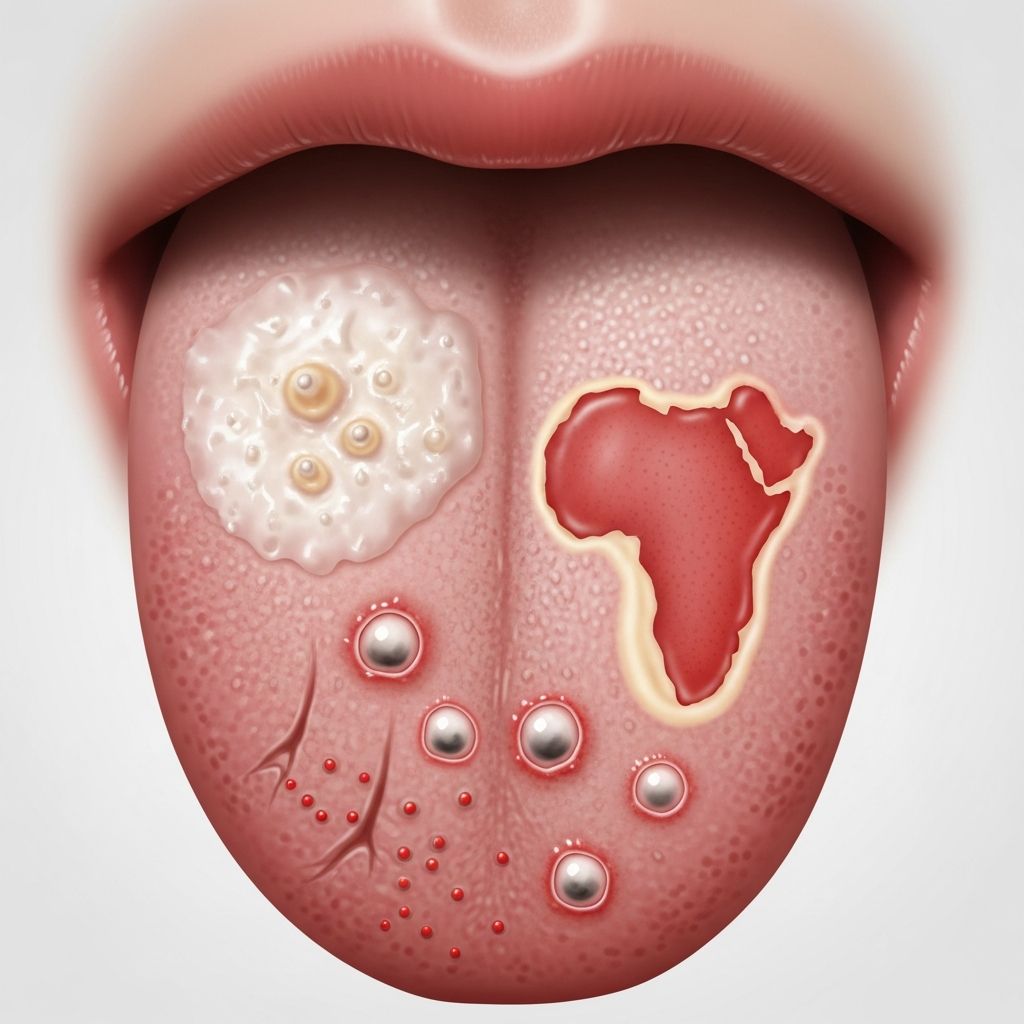
The tongue is a vital muscle in the mouth essential for speech, taste, and swallowing. Various conditions can affect it, leading to discomfort, changes in appearance, or functional issues. These range from benign inflammatory states to infections and systemic disease manifestations. Understanding these
tongue conditions
is crucial for timely diagnosis and management.What is Glossitis?
**Glossitis** refers to inflammation of the tongue, causing it to swell, change color, or develop a smooth texture due to loss of papillae. It can result from nutritional deficiencies, infections, allergies, or irritants. Symptoms include pain, burning sensation, and difficulty eating or speaking. Acute glossitis develops suddenly, while chronic forms persist longer.
Non-infectious Conditions
Aphthous Ulcers
Aphthous ulcers, or canker sores, are painful, round lesions with a white or yellow center and red border on the tongue or oral mucosa. They affect 20-40% of the population, often triggered by stress, trauma, hormonal changes, or food sensitivities. Ulcers typically heal in 7-14 days without scarring. Severe recurrent cases (Sutton’s disease) may require topical corticosteroids or systemic therapy.
Behçet’s Disease
Behçet’s disease is a multisystem vasculitis featuring recurrent oral ulcers similar to aphthous ones on the tongue, alongside genital ulcers, eye inflammation, and skin lesions. Tongue involvement causes painful erosions. Diagnosis relies on clinical criteria; treatment includes colchicine, corticosteroids, and immunosuppressants.
Black Hairy Tongue
Black hairy tongue occurs when filiform papillae elongate and trap bacteria, food debris, or tobacco, giving a black, hairy appearance. Risk factors include poor oral hygiene, smoking, antibiotics, and coffee/tea consumption. It is asymptomatic but may cause bad breath or taste changes. Treatment involves brushing the tongue, avoiding irritants, and using keratolytics like hydrogen peroxide rinses.
Chronic Ulcerative Stomatitis
This rare autoimmune condition mimics oral lichen planus with painful tongue ulcers and white plaques. It is associated with specific autoantibodies. Biopsy confirms diagnosis; treatment uses hydroxychloroquine.
Cicatricial Pemphigoid
Cicatricial pemphigoid is a chronic blistering disease affecting mucous membranes, causing tongue blisters that rupture into ulcers and lead to scarring. It can impair tongue mobility. Management includes topical or systemic corticosteroids and dapsone.
Denture Stomatitis
Common in denture wearers, this presents as erythematous tongue patches under the denture due to Candida overgrowth. Improve denture hygiene, use antifungals like nystatin, and ensure proper denture fit.
Geographic Tongue (Benign Migratory Glossitis)
**Geographic tongue** features map-like red patches with white borders on the tongue dorsum due to filiform papillae loss. It affects 1-3% of adults, more women, and is linked to psoriasis, allergies, asthma, and family history. Lesions migrate over days/weeks. Most are asymptomatic, but spicy/acidic foods may cause burning. No cure; avoid triggers, use topical steroids or antihistamine rinses if symptomatic.
- Irregular, red, smooth patches surrounded by white lines
- Migratory pattern
- Burning with irritants
Related Stories



Fissured Tongue (Scrotal Tongue)
Fissured tongue involves grooves on the tongue surface, deepening with age. Associated with Melkersson-Rosenthal syndrome, Down syndrome, and psoriasis. Food trapping causes irritation. No treatment needed beyond tongue brushing to prevent debris accumulation.
Infectious Conditions
Acute Bacterial Glossitis
Bacterial infections cause swollen, painful tongue with white coating, often from streptococci or staphylococci post-trauma or in immunocompromised patients. Antibiotics like penicillin are effective.
Candidiasis (Oral Thrush)
Candida albicans overgrowth leads to white patches on the tongue that scrape off, revealing red areas. Common in infants, elderly, diabetics, or antibiotic users. Treat with antifungals (nystatin, fluconazole).
Herpes Simplex
HSV-1 causes painful vesicles on the tongue that ulcerate. Antivirals like acyclovir shorten duration.
Herpangina
Caused by coxsackievirus, it features small ulcers on the tongue and soft palate in children, with fever.
Syphilis
Secondary syphilis shows grayish-white patches (condyloma latum) on the tongue. Dark-field microscopy or serology diagnoses; penicillin treats.
Systemic Disease-Related Tongue Changes
Tongue appearance reflects systemic health:
- Vitamin B12/folate/iron deficiency: Smooth, sore tongue (atrophic glossitis)
- Anaemia: Pale tongue
- Jaundice: Yellow tongue
- Cyanosis: Blue tongue in hypoxia
- Pernicious anaemia: Beefy red tongue
Median rhomboid glossitis, a Candida-associated red patch at tongue midline, may link to diabetes.
Traumatic and Reactive Conditions
Lie Bumps (Transient Lingual Papillitis)
Inflammatory papillae swelling causes painful white/red bumps on tongue edges. Triggers: stress, foods, hormones. Self-resolves in days.
Allergic Reactions
Food allergies or contact dermatitis cause tongue swelling or ulcers. Avoidance and antihistamines help.
Burns and Injuries
Hot foods, bites cause localized swelling/bumps healing in days.
Neoplastic Conditions
Squamous Cell Carcinoma
Tongue cancer presents as persistent ulcers, red/white plaques, or lumps, often from tobacco/alcohol. Biopsy essential; surgery, radiation, chemo treat.
Leukoplakia
White patches with dysplasia risk, especially lateral tongue. Biopsy and cessation of irritants.
Diagnosis of Tongue Conditions
Clinical exam suffices for most; biopsy for suspicious lesions. History includes symptoms, diet, medications, systemic diseases. Blood tests check deficiencies; cultures/swabs for infections.
| Condition | Key Features | Differential |
|---|---|---|
| Geographic Tongue | Map-like red/white patches, migratory | Candidiasis, lichen planus |
| Fissured Tongue | Deep grooves, asymptomatic | Normal variant |
| Black Hairy Tongue | Elongated black papillae | Poor hygiene |
| Glossitis | Smooth, painful, swollen | Deficiency, infection |
Treatment Approaches
Treat underlying cause: antifungals for infections, vitamins for deficiencies, symptom relief with analgesics, mouthwashes. Reassurance for benign conditions like geographic/fissured tongue.
Frequently Asked Questions (FAQs)
What causes geographic tongue?
Unknown, but linked to psoriasis, allergies, stress. Benign and migratory.
Is fissured tongue dangerous?
No, benign; brush to prevent irritation.
How to treat black hairy tongue?
Tongue brushing, avoid tobacco/coffee, keratolytics.
When to see a doctor for tongue bumps?
If persistent >2 weeks, painful, or with systemic symptoms.
Can tongue conditions indicate cancer?
Yes, persistent ulcers/leukoplakia need biopsy.
References
- Geographic tongue (Benign migratory glossitis) — DermNet NZ. 2023. https://dermnetnz.org/topics/geographic-tongue
- Green Tongue: Causes, Syndromes, and Treatment — Healthline. 2023. https://www.healthline.com/health/green-tongue
- Fissured tongue — DermNet NZ. 2023. https://dermnetnz.org/topics/fissured-tongue
- Geographic tongue — DFTB Skin Deep. 2023. https://dftbskindeep.com/all-diagnoses/geographic-tongue/
- Tongue bumps: 8 Causes, when to see a doctor, and treatment — Medical News Today. 2023. https://www.medicalnewstoday.com/articles/321891
- Conditions affecting the tongue — DermNet NZ. 2023. https://dermnetnz.org/topics/conditions-affecting-the-tongue
- 17 Mouth & Tongue Problems — WebMD. 2023. https://www.webmd.com/oral-health/anatomy-of-the-mouth
Similar Articles








Read full bio of Sneha Tete