Potassium: 5 Conditions It Helps Prevent And Manage
Discover how potassium supports heart health, bone density, kidney function, and more through diet and evidence-based benefits.
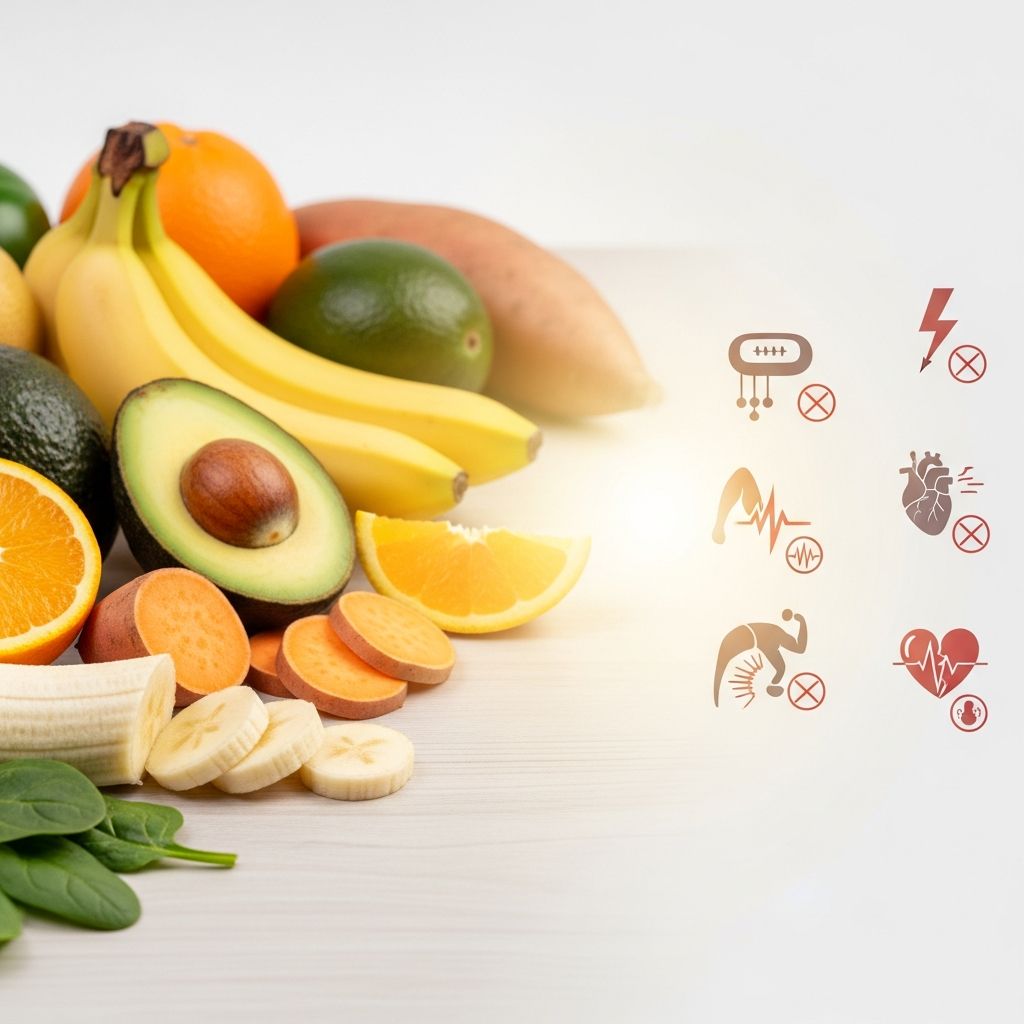
An essential mineral found in many foods,
potassium
plays a critical role in maintaining fluid balance, nerve function, muscle contractions, and blood pressure regulation. Adequate intake is linked to reduced risks of several chronic conditions, particularly those involving cardiovascular health, bone density, and kidney function. Health authorities recommend 2,600–3,400 mg daily for adults, with benefits observed at 3,500–4,700 mg from food sources.What Is Potassium?
Potassium is a vital electrolyte that carries an electrical charge to activate cell and nerve functions, helping maintain intracellular fluid levels while sodium manages extracellular fluids. It supports muscle contractions, including the heart, and helps counteract sodium’s blood pressure-raising effects. Low intake is common in Western diets high in processed foods, contributing to health risks.
- Natural sources: Fruits (bananas, oranges), vegetables (potatoes, spinach), legumes, dairy, and nuts.
- Daily needs: Women 2,600 mg, men 3,400 mg (U.S. Adequate Intake); WHO suggests at least 3,500 mg for cardiovascular benefits.
1. High Blood Pressure
**Potassium** effectively lowers blood pressure, especially in people with hypertension. Meta-analyses show intakes of 3,500–4,700 mg/day reduce systolic and diastolic pressure by countering sodium retention. The effect is strongest in hypertensives not on medications, with moderate evidence from RCTs supporting both food and supplement sources.
High sodium-to-potassium ratios double heart attack death risk and raise overall mortality by 50%. Diets like DASH, rich in potassium from fruits and vegetables, amplify these benefits by also limiting sodium.
- Evidence: 90–120 mmol (3,500–4,700 mg) daily lowers BP in hypertensives; normotensives see milder effects.
- Tip: Pair with low-sodium foods for optimal results.
2. Stroke
Higher potassium intake correlates with a 24% lower stroke risk. Observational data and RCTs link it to blood pressure reduction, the primary stroke mechanism. WHO strongly recommends increased potassium for stroke prevention, with conditional guidance at 3,500 mg/day.
EFSA confirms strong evidence for stroke risk reduction via BP lowering, particularly at 3,500–4,700 mg/day. Potassium-rich diets improve vascular health by reducing salt sensitivity.
| Population | Risk Reduction | Source |
|---|---|---|
| Hypertensives | Consistent BP drop, lower stroke | |
| General | 24% lower stroke incidence |
3. Osteoporosis
Potassium from fruits and vegetables buffers body acids, reducing bone calcium loss. Higher intakes associate with greater bone mineral density (BMD) in adolescents, pre- and postmenopausal women, and elderly adults. RCTs show 60 mmol (2,300 mg) potassium citrate daily improves spine BMD by 1.6% and trabecular bone metrics over 24 months.
Studies link potassium to lower urinary calcium excretion and better calcium balance. The DASH diet lowers bone turnover markers, partly due to its potassium content.
- Key mechanism: Alkalinizing effect from bicarbonate precursors in produce neutralizes acids, preserving bone.
- Evidence strength: Observational consistency; RCTs support supplementation in elderly.
Related Stories



4. Kidney Stones
Potassium increases urinary citrate and volume, inhibiting crystal formation. Cohort studies (Health Professionals, Nurses’ Health) show higher intake lowers stone risk via elevated citrate from fruits/vegetables.
RCTs confirm potassium citrate supplements reduce recurrence in stone formers when paired with fluids. Recommended intake prevents calcium excretion in urine.
- Protective factors: Higher urine citrate, volume from potassium-rich hydration.
5. Muscle Cramps
Potassium regulates muscle contractions and nerve signals. Deficiencies, often from diuretics or low intake, cause cramps, fatigue, and weakness. While direct RCTs are limited, electrolyte balance restoration via potassium-rich foods alleviates symptoms in clinical practice.
High-potassium diets support overall muscle function, especially during exercise or in older adults prone to imbalances.
Other Conditions
Cardiovascular Disease (CVD) and Coronary Heart Disease (CHD)
Increased potassium modestly reduces CVD/CHD incidence, primarily through BP effects. High sodium/low-potassium diets raise CVD death risk; optimal ratios halve heart attack risk.
Salt Sensitivity
Potassium blunts sodium’s BP-raising impact, especially in salt-sensitive groups like Black populations, where 4,700 mg/day shows superior benefits.
Best Food Sources of Potassium
Prioritize whole foods over supplements for synergistic nutrients. Aim for variety to meet daily goals.
| Food | Serving | Potassium (mg) |
|---|---|---|
| Sweet potato, baked | 1 medium | 542 |
| Spinach, cooked | 1 cup | 839 |
| Banana | 1 medium | 422 |
| White beans | 1/2 cup | 595 |
| Salmon | 3 oz | 383 |
| Yogurt, low-fat | 8 oz | 573 |
Source: Adapted from dietary guidelines; combine for 4,700 mg target.
Daily Potassium Needs and Supplements
Adequate Intake (AI): 2,600 mg women, 3,400 mg men; 4,700 mg for cardiovascular optima.
- Pregnant/lactating: Higher needs.
- Supplements: Use cautiously; 60 mmol doses raise plasma briefly before excretion. Prefer food unless deficient.
Who Might Need More Potassium?
- People with hypertension or salt sensitivity.
- Athletes losing electrolytes via sweat.
- Older adults on diuretics.
- Those with low fruit/vegetable intake.
Consult doctors before supplements, especially with kidney issues.
Frequently Asked Questions (FAQs)
Can too much potassium be harmful?
Healthy kidneys excrete excess efficiently. Hyperkalemia risks occur in kidney disease or with certain meds; monitor intake.
Are bananas the best potassium source?
Good but not top; leafy greens, potatoes, beans offer more per serving with fiber benefits.
Does cooking affect potassium?
Minimal loss in boiling if liquid consumed; baking/microwaving preserves most.
Can potassium lower cholesterol?
Indirectly via BP/heart health; no direct evidence.
Word count: 1,678 (excluding HTML tags/metadata)
References
- What Is the Evidence Base for a Potassium Requirement? — National Center for Biotechnology Information (PMC). 2018-09-25. https://pmc.ncbi.nlm.nih.gov/articles/PMC6181280/
- Potassium – The Nutrition Source — Harvard T.H. Chan School of Public Health. Accessed 2026. https://nutritionsource.hsph.harvard.edu/potassium/
Similar Articles








Read full bio of medha deb