Congenital Adrenal Hyperplasia: Essential Guide For Patients
Inherited disorder of adrenal steroidogenesis causing hormone imbalances, virilisation, and salt-wasting crises in affected individuals.
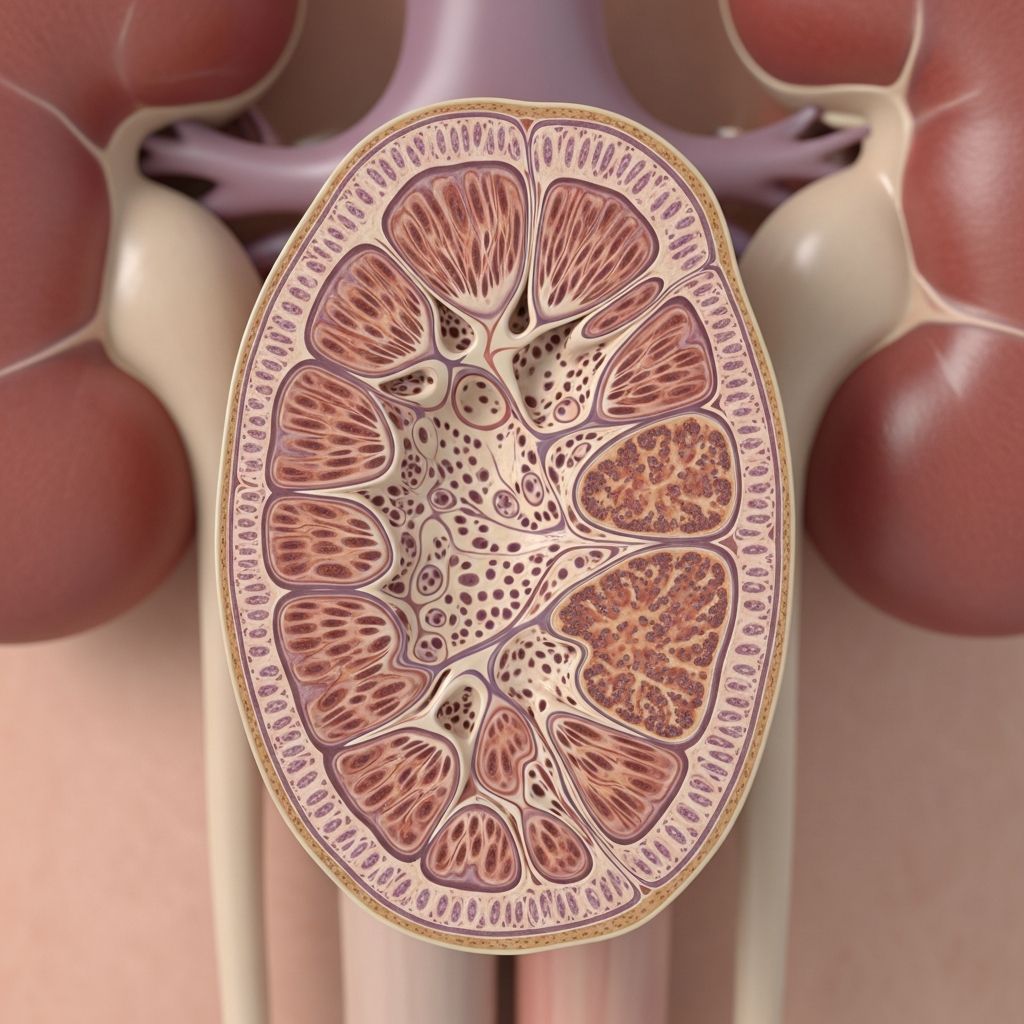
Congenital adrenal hyperplasia (CAH) refers to a group of inherited disorders that impair normal steroid hormone synthesis by the adrenal cortex. The most common form, 21-hydroxylase deficiency, accounts for over 90% of cases and disrupts cortisol and aldosterone production, leading to androgen excess. This results in a spectrum of clinical manifestations from life-threatening salt-wasting crises in neonates to milder virilisation and infertility in adults.
What is congenital adrenal hyperplasia?
CAH encompasses autosomal recessive disorders affecting enzymes in the adrenal steroidogenesis pathway. The adrenal glands, located atop the kidneys, produce glucocorticoids (cortisol), mineralocorticoids (aldosterone), and androgens. Deficient enzyme activity shunts precursors toward androgen production, causing hyperandrogenism.
The classic pathway involves cholesterol conversion to pregnenolone, then via side-chain cleavage to progesterone, and further hydroxylation steps. 21-Hydroxylase (CYP21A2 gene) deficiency blocks cortisol and aldosterone synthesis, elevating 17-hydroxyprogesterone (17-OHP). Other rare forms include 11β-hydroxylase, 17α-hydroxylase, and 3β-hydroxysteroid dehydrogenase deficiencies.
Who gets congenital adrenal hyperplasia (epidemiology)?
CAH affects approximately 1 in 10,000–18,000 live births worldwide, with higher incidence in consanguineous populations. Classical 21-hydroxylase deficiency has an incidence of 1:14,000–1:18,000, while non-classical forms are more common at 1:1,000. Newborn screening has improved detection rates, identifying 75–90% of cases.
Both sexes are equally affected genetically, but phenotypic presentation differs markedly between females (virilisation) and males (salt-wasting crises).
What causes congenital adrenal hyperplasia?
CAH results from biallelic mutations in steroidogenic enzyme genes, primarily CYP21A2 on chromosome 6p21.3. The gene’s proximity to a non-functional pseudogene (CYP21A1P) leads to unequal crossing-over, gene deletions, or conversions causing 70–80% of mutations.
Severity correlates with residual enzyme activity: null mutations cause salt-wasting (SW) CAH (<1% activity), group B mutations simple virilizing (SV) (2% activity), and milder group C mutations non-classical (NC) CAH (>20% activity). Rare forms involve mutations in CYP11B1 (11β-hydroxylase), CYP17A1 (17α-hydroxylase), HSD3B2 (3β-HSD), or STAR (lipoid CAH).
What are the clinical features of congenital adrenal hyperplasia?
Classical CAH
- Salt-wasting (SW) form (75% of classical cases): Presents in first 1–4 weeks with vomiting, dehydration, hyponatremia, hyperkalemia, and shock due to aldosterone deficiency.
- Females: 46,XX with ambiguous genitalia (Prader III–V), clitoromegaly, labial fusion, urogenital sinus.
- Males: Normal genitalia at birth; failure to thrive, adrenal crisis.
Simple virilizing (SV) form (25%)
- Adequate aldosterone but cortisol deficiency; females show virilisation without salt loss.
- Precocious pubarche, rapid growth, advanced bone age.
Non-classical CAH (NCCAH)
- Milder, presents postnatally: hirsutism, oligomenorrhea, acne, infertility in females; subclinical in males.
- Often diagnosed in adolescence/adulthood.
Rare CAH forms
- 11β-hydroxylase deficiency: Hypertension, hypokalemia, virilisation.
- 17α-hydroxylase: Hypertension, hypogonadism, lack of puberty.
- 3β-HSD: Salt-wasting, incomplete virilisation in males.
Diagnosis of congenital adrenal hyperplasia
Newborn screening (NBS) measures 17-OHP on dried blood spots at 24–72 hours. Elevated levels prompt confirmatory testing: repeat 17-OHP, electrolytes, ACTH stimulation test. Preterm infants require adjusted cutoffs (e.g., 27.7–53.5 ng/mL).
ACTH stimulation confirms diagnosis: exaggerated 17-OHP >1,000 ng/dL in classical CAH. Genetic testing identifies CYP21A2 mutations.
Related Stories



| Type of CAH | Biochemical Profile |
|---|---|
| Classical 21-OHD, SW | Elevated 17-OHP, DHEA, androstenedione; high K+, low Na+, low CO2 |
| Classical 21-OHD, SV | Elevated 17-OHP, DHEA, androstenedione; normal electrolytes |
| Non-classical 21-OHD | Elevated 17-OHP, DHEA on ACTH stim |
| 11β-OHD, classical | Elevated DOC, 11-deoxycortisol, androgens; low K+, high Na+, CO2 |
| 3β-HSD deficiency | Elevated DHEA, pregnenolone; low androgens, high K+, low Na+ |
Treatment of congenital adrenal hyperplasia
Glucocorticoid replacement (hydrocortisone 10–20 mg/m²/day in 3 doses) suppresses ACTH, reducing androgens. Fludrocortisone (0.05–0.2 mg/day) and salt supplements for SW cases.
- Neonates: IV hydrocortisone, fluids for crisis.
- Stress dosing: Triple glucocorticoids during illness.
- Adults: Longer-acting agents like dexamethasone; monitor for iatrogenic Cushing.
Female genital reconstruction (if needed) typically at 3–6 months. NCCAH: Low-dose glucocorticoids for symptoms.
Complications of congenital adrenal hyperplasia
- Undertreated: Short stature, metabolic syndrome, infertility.
- Overtreated: Obesity, osteoporosis, hypertension.
- Females: Persistent virilisation, menstrual irregularities.
- Males: Testicular adrenal rest tumors (TART).
Prevention and prognosis
NBS prevents mortality from SW crises. Prenatal dexamethasone (experimental) may reduce virilisation but risks fetal exposure. With treatment, normal lifespan, fertility possible.
Frequently asked questions about congenital adrenal hyperplasia
Q: Is CAH curable?
A: No, but lifelong hormone replacement allows normal growth and development.
Q: Can CAH be detected prenatally?
A: Yes, via genetic testing in at-risk families or elevated maternal 17-OHP.
Q: Does CAH affect intelligence?
A: No direct impact; outcomes depend on metabolic control.
Q: What is the carrier risk?
A: 1 in 50–100; genetic counseling recommended.
Q: Can affected individuals have children?
A: Yes, with treatment; fertility rates near normal.
Related topics
- Adrenal crisis
- Ambiguous genitalia
- Hirsutism
- Polycystic ovary syndrome
- Precocious puberty
References
- Congenital Adrenal Hyperplasia – A Comprehensive Review — National Institutes of Health (NIH), PMC. 2024. https://pmc.ncbi.nlm.nih.gov/articles/PMC11189293/
- Congenital Adrenal Hyperplasia: A Guide for Families — Pediatric Endocrine Society. 2020-06. https://pedsendo.org/wp-content/uploads/2020/06/E-Congenital-adrenal-hyperplasia.pdf
- Congenital Adrenal Hyperplasia Guideline Resources — Endocrine Society. 2018 (updated). https://www.endocrine.org/clinical-practice-guidelines/congenital-adrenal-hyperplasia-guideline-resources
Similar Articles








Read full bio of Sneha Tete