Congenital Disorders of Glycosylation Overview
Understanding CDG: Rare genetic disorders affecting glycosylation, symptoms, diagnosis, and emerging treatments for better management.
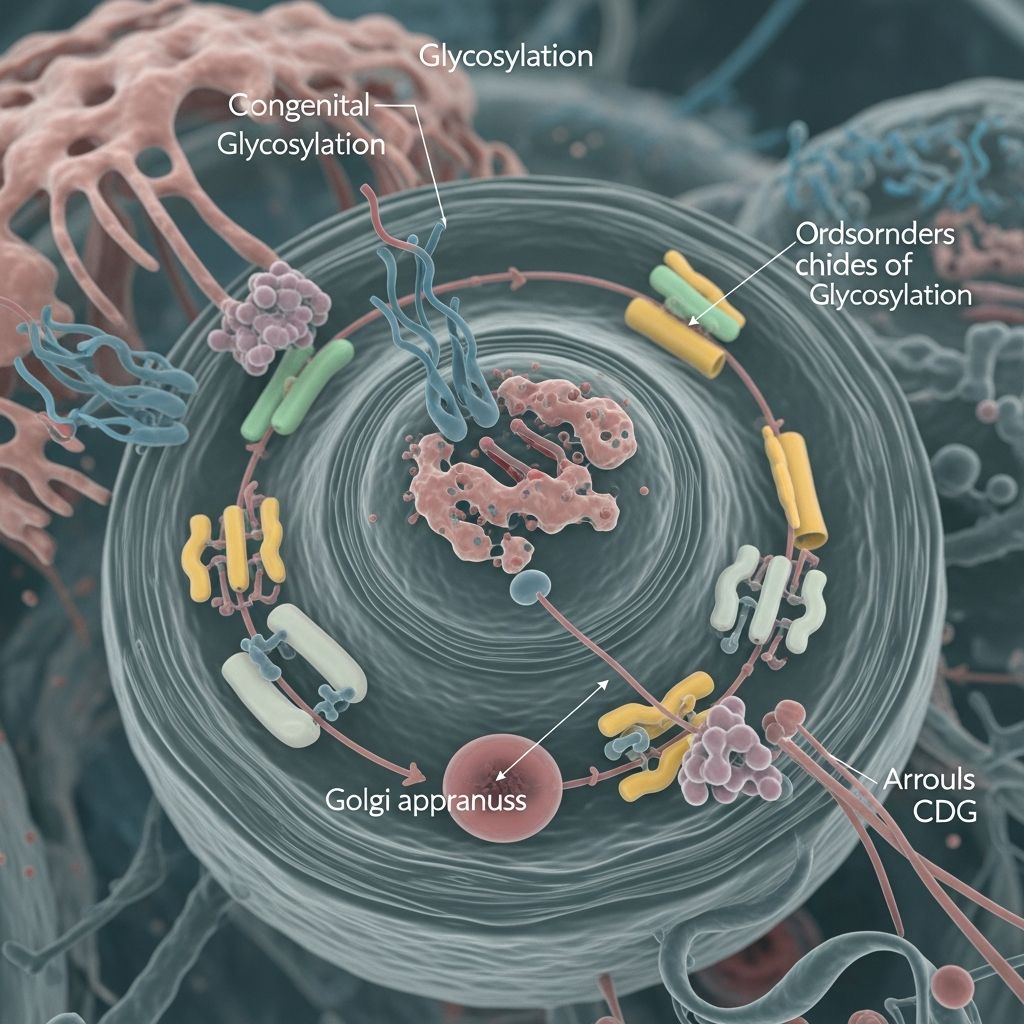
Congenital disorders of glycosylation (CDG) represent a diverse group of more than 170 rare genetic metabolic disorders caused by defects in the glycosylation process, which attaches sugar molecules to proteins and lipids essential for cellular function.
What Are Congenital Disorders of Glycosylation?
Glycosylation is a critical post-translational modification where carbohydrates (glycans) are added to proteins or lipids, enabling proper folding, stability, trafficking, and signaling in cells throughout the body. CDG arise from genetic mutations disrupting this process, leading to abnormal glycan structures and multisystem dysfunction.
These disorders are classified into types based on the affected pathway: N-linked (affecting asparagine residues on proteins), O-linked (affecting serine/threonine), glycosphingolipid (GSL), and glycosylphosphatidylinositol (GPI) anchor defects. Over 130 subtypes exist, with PMM2-CDG being the most common.
CDG typically manifest in infancy with broad symptoms, though severity varies from neonatal lethal forms to milder adult-onset cases. The heterogeneity stems from the ubiquitous role of glycosylation in organ systems.
Symptoms and Signs of CDG
CDG present with multisystem involvement, most frequently neurological, gastrointestinal, hepatic, and coagulation issues. Common symptoms include:
- Developmental delay and intellectual disability
- Hypotonia (low muscle tone) and ataxia (poor coordination)
- Failure to thrive and poor growth
- Strabismus (crossed eyes) and vision problems like retinitis pigmentosa
- Hepatic dysfunction with elevated liver enzymes
- Coagulopathy (bleeding or clotting defects)
- Seizures, stroke-like episodes, and peripheral neuropathy
- Abnormal fat distribution, inverted nipples, and facial dysmorphisms
In PMM2-CDG, the most prevalent type, infants often show hypotonia, strabismus, failure to thrive, and cerebellar hypoplasia. Up to 20% succumb in the first year due to multi-organ failure, including cardiomyopathy and pericardial effusion.
Childhood features include speech/motor delays, retinitis pigmentosa, and GI issues causing feeding difficulties. Adolescents may develop scoliosis, joint contractures, and absent puberty in females.
Other types like PGM1-CDG feature hypoglycemia, cleft palate, bifid uvula, and hormonal issues.
Causes and Types of CDG
CDG result from autosomal recessive or X-linked mutations in over 170 genes encoding enzymes in glycosylation pathways. N-glycosylation defects, the largest group, occur in synthesis, assembly, or processing of lipid-linked oligosaccharides (LLO) in the endoplasmic reticulum and Golgi.
N-Linked Glycosylation Defects
PMM2-CDG (type Ia), caused by mutations in the PMM2 gene, impairs phosphomannomutase enzyme activity, leading to defective LLO assembly. Symptoms range from hydrops fetalis (often fatal) to milder forms with moderate disability.
ALG6-CDG (type Ib), the second most common, involves milder features like seizures, ataxia, hypotonia, and dysmorphic features (e.g., low-set ears).
O-Linked and Combined Defects
O-glycosylation affects mucin-type proteins and glycosaminoglycans (GAGs), causing skeletal dysplasias, joint laxity, and connective tissue issues alongside neurological symptoms.
Lipid Glycosylation and GPI Anchor Defects
GSL defects like ST3GAL5-CDG cause severe neurodegeneration due to impaired ganglioside synthesis in neurons. GPI anchor disorders, such as PIGA deficiency (X-linked), present with infantile spasms, hypotonia, brain anomalies, and multi-organ involvement.
| Type | Key Gene | Main Features |
|---|---|---|
| PMM2-CDG | PMM2 | Hypotonia, strabismus, failure to thrive, liver disease, seizures |
| ALG6-CDG | ALG6 | Milder: developmental delay, ataxia, coagulopathy |
| PGM1-CDG | PGM1 | Hypoglycemia, cleft palate, myopathy |
| PIGA-CDG | PIGA | Infantile spasms, dysmorphism, organ anomalies |
Related Stories



Diagnosis of Congenital Disorders of Glycosylation
Diagnosis requires high clinical suspicion in multisystem pediatric cases, followed by biochemical testing. Key initial tests include serum transferrin isoelectric focusing (IEF) or mass spectrometry to detect abnormal glycosylation patterns (e.g., hyposialylation in N-linked defects).
Additional biomarkers: abnormal API (asialo-agalacto-transferrin), fibronectin, and thyroglobulin levels. For O-linked, mucin-type core 1/2 analysis; for GPI, flow cytometry on granulocytes.
Genetic confirmation via targeted panels or whole-exome sequencing identifies causative variants. Mayo Clinic’s CDG Clinic emphasizes multidisciplinary evaluation for developmental delays, hypotonia, and organ issues.
Challenges include phenotypic overlap with other metabolic disorders and normal biomarkers in some types (e.g., certain GPI defects).
Treatment and Management
No cure exists; management is supportive and subtype-specific. Common approaches:
- Nutritional support for failure to thrive (e.g., gastrostomy feeds)
- Physical/occupational/speech therapy for motor delays
- Anticoagulants or fresh frozen plasma for coagulopathy
- Seizure control and stroke episode management
- Supplements like mannose for MPI-CDG or acetazolamide/salicylate for some types
CHOP and Mayo Clinic centers provide specialized care, monitoring liver function, growth, and neurological status.
Emerging therapies target pathway defects, such as gene therapy research and enzyme replacement trials.
Living with CDG
Families face challenges from unpredictable progression and limited awareness. Support includes multidisciplinary clinics, genetic counseling, and organizations like NORD and CDG Family Network for resources and advocacy.
Prognosis varies: severe types have high infantile mortality, while milder forms allow independent adulthood with interventions.
Frequently Asked Questions (FAQs)
What is the most common type of CDG?
PMM2-CDG (type Ia) is the most frequent, affecting N-glycosylation and causing hypotonia, developmental delays, and multi-organ issues in infancy.
Can CDG be diagnosed prenatally?
Yes, in families with known mutations, amniocentesis or CVS with genetic testing can detect CDG, though not routine due to vast subtypes.
Is there a cure for CDG?
No curative treatment exists, but supportive care improves quality of life. Subtype-specific therapies like mannose show promise in select cases.
How many types of CDG are there?
Over 170 types, expanding rapidly with genetic discoveries, grouped by pathway defects.
What specialists treat CDG?
Metabolic geneticists, neurologists, gastroenterologists, and therapists in specialized clinics like Mayo or CHOP.
References
- Congenital disorders of glycosylation – Chang — Annals of Translational Medicine. 2019-01-01. https://atm.amegroups.org/article/view/22302/html
- Congenital Disorders of Glycosylation — NORD (rarediseases.org). 2023-01-01. https://rarediseases.org/rare-diseases/congenital-disorders-of-glycosylation/
- Congenital Disorders of Glycosylation (CDG) Clinic – Overview — Mayo Clinic. 2024-01-01. https://www.mayoclinic.org/departments-centers/congenital-disorders-glycosylation-clinic/overview/ovc-20567759
- PMM2-congenital disorder of glycosylation — MedlinePlus Genetics. 2024-01-01. https://medlineplus.gov/genetics/condition/pmm2-congenital-disorder-of-glycosylation/
- Congenital Disorders of Glycosylation (CDG) — Children’s Hospital of Philadelphia (CHOP). 2024-01-01. https://www.chop.edu/conditions-diseases/congenital-disorders-glycosylation-cdg
- Perspectives on Glycosylation and its Congenital Disorders — PMC (NCBI). 2018-01-01. https://pmc.ncbi.nlm.nih.gov/articles/PMC5959770/
Similar Articles








Read full bio of medha deb