Congenital Heart Disease: Types, Symptoms & Treatment
Comprehensive guide to congenital heart disease: Understanding causes, symptoms, diagnosis, and treatment options.
Understanding Congenital Heart Disease
Congenital heart disease (CHD) is the most common birth defect in the United States, occurring in approximately one of every 110 births. This condition involves structural abnormalities of the heart that develop before birth, affecting how blood flows through the heart and to the rest of the body. While many infants with CHD require immediate medical attention, advances in medical technology and surgical techniques have significantly improved outcomes, allowing patients with CHD to reach adulthood and live longer, more fulfilling lives.
Currently, more than one million adults in the United States are living with congenital heart disease, with this population increasing by approximately 5 percent each year. This growing number reflects both improved survival rates and the reality that at least 10 percent of all congenital heart defects are first detected in adulthood. For patients treated in childhood, long-term monitoring throughout adulthood is essential, as many experience lasting complications that require ongoing medical management.
Types of Congenital Heart Defects
Congenital heart defects vary widely in severity and type. Understanding the different categories of heart defects helps patients and families recognize their condition and what to expect from treatment. The main types of CHD include defects affecting blood vessel structure, valve function, and overall cardiac chamber development.
Septal Defects
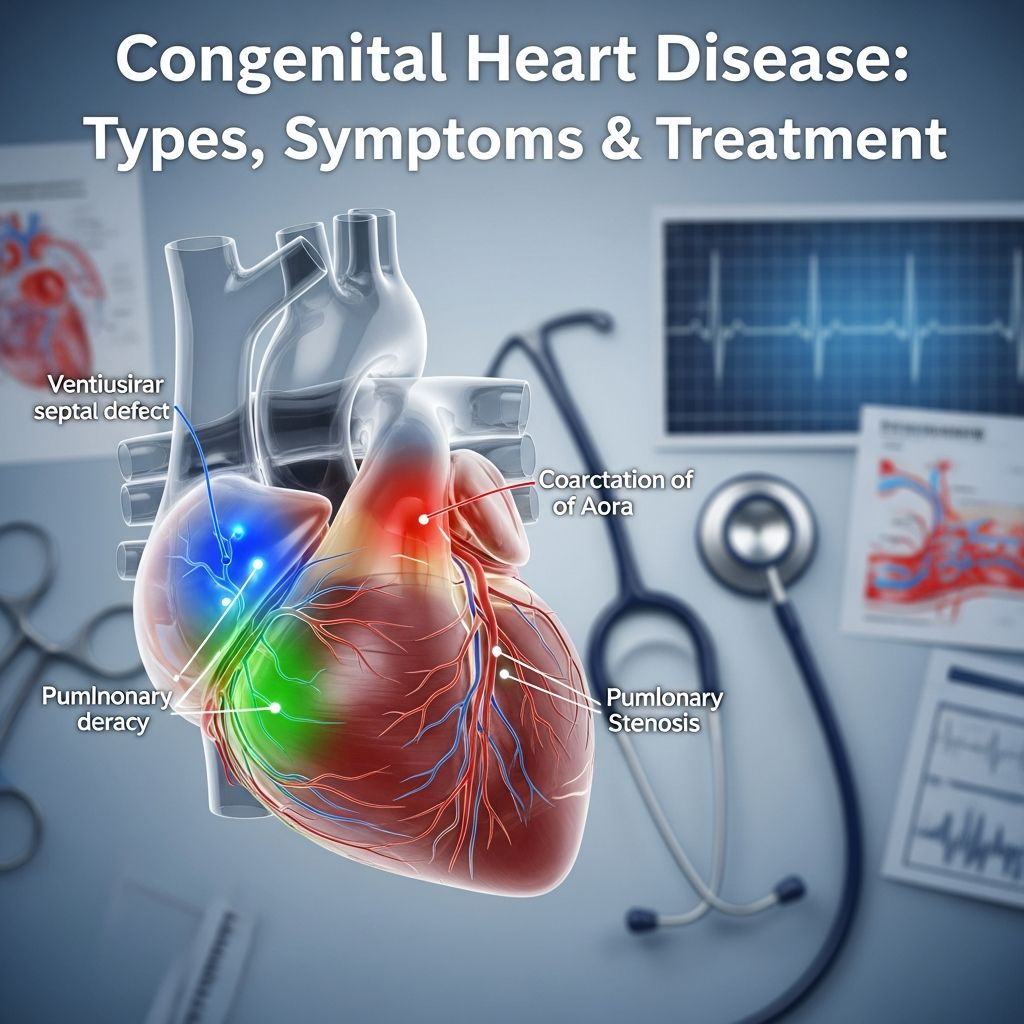
Septal defects occur when the walls (septa) that divide the heart chambers do not close completely. The most common types include:
- Atrial septal defects (ASD): An opening in the wall between the two upper chambers of the heart
- Ventricular septal defects (VSD): An opening in the wall between the two lower chambers of the heart
These defects allow blood to flow between chambers abnormally, increasing the workload on the heart and potentially affecting how oxygen-rich blood reaches the body.
Obstructive Defects
Obstructive defects narrow blood vessels or heart valves, forcing the heart to work harder to pump blood efficiently. Common obstructive conditions include:
- Coarctation of the aorta (CoA): A narrowing of the main artery that carries blood from the heart to the body
- Pulmonary stenosis (PS): Narrowing of the valve controlling blood flow to the lungs
- Aortic stenosis: Narrowing of the aortic valve opening
Cyanotic Heart Defects
Cyanotic heart disease affects approximately 25 percent of infants with CHD and involves defects that reduce the amount of oxygen delivered to the body. Characteristic signs include a bluish tint to the skin, lips, and fingernails. Major cyanotic defects include:
- Tetralogy of Fallot (TOF): A combination of four heart defects that reduce blood oxygenation
- Transposition of the great arteries (TGA): The two major blood vessels leaving the heart are reversed
- Tricuspid atresia: The tricuspid valve is completely closed, blocking blood flow to the lungs
- Hypoplastic left heart syndrome: The left side of the heart is underdeveloped
Other Congenital Heart Conditions
Related Stories



Additional types of CHD include:
- Patent ductus arteriosus (PDA): An artery that should close after birth remains open
- Patent foramen ovale (PFO): A small opening between the upper heart chambers that fails to close after birth
- Anomalous coronary arteries: Coronary arteries arise from abnormal locations
- Bicuspid aortic valve disease: The aortic valve has two leaflets instead of three
- Ebstein’s anomaly: The tricuspid valve is malformed, causing improper blood flow
Causes and Risk Factors
Researchers are not entirely certain about the exact causes of congenital heart disease. However, several factors have been identified that may increase the risk of CHD development during pregnancy.
Genetic factors play a significant role, as some congenital heart defects run in families and are inherited. Additionally, certain genetic syndromes are associated with increased CHD risk, including Down syndrome and Turner syndrome. Environmental factors during pregnancy, such as maternal infections, certain medications, maternal diabetes, and maternal alcohol or drug use, may also contribute to heart defect development.
Gender differences exist in CHD prevalence. Women have higher incidences of conditions like atrial septal defect, mitral valve prolapse, and patent ductus arteriosus, while men experience higher rates of aortic coarctation, tetralogy of Fallot, and transposition of the great arteries.
Symptoms and Diagnosis
Symptoms of congenital heart disease vary depending on the type and severity of the defect. In infants, signs may appear shortly after birth or develop gradually over time.
Common Symptoms
- Blue-tinged skin, lips, or fingernails (cyanosis)
- Shortness of breath or rapid breathing
- Poor feeding or failure to gain weight
- Unusual tiredness or fatigue
- Swelling in the legs, abdomen, or around the eyes
- Heart murmurs detected during physical examination
Diagnostic Methods
Cleveland Clinic’s multidisciplinary team employs a full range of imaging techniques and diagnostic studies to identify congenital heart defects. Diagnostic procedures include:
- Echocardiography: Ultrasound imaging to visualize heart structure and function
- Cardiac MRI: Advanced imaging to provide detailed heart and blood vessel images
- CT imaging: Cross-sectional imaging for detailed anatomical assessment
- Electrocardiography (ECG): Electrical activity recording to assess heart rhythm
- Cardiac catheterization: Specialized procedure to measure pressures and oxygen levels
- Chest X-ray: Initial imaging to evaluate heart size and lung blood flow
Treatment Options
Treatment for congenital heart disease depends on the type and severity of the defect. Some mild defects may require only monitoring, while others necessitate intervention through medical management, catheter-based procedures, or surgery.
Interventional Catheter-Based Procedures
Cleveland Clinic offers catheter-based treatments for various adult congenital heart defects including atrial and ventricular septal defects, heart valve replacements, and arrhythmias. These minimally invasive procedures include:
- Septal defect closure devices
- Valve repair or replacement
- Electrophysiology procedures for arrhythmia management
Surgical Interventions
Many congenital heart defects require surgical repair or correction. Surgical options include:
- Open-heart surgery to repair structural defects
- Valve replacement or repair procedures
- Arterial or venous redirection surgeries
- Cardiac transplantation for complex, inoperable conditions
Cleveland Clinic’s cardiothoracic surgeons perform more than 350 congenital heart surgeries annually with outcomes among the best in the nation.
Medical Management
Some patients benefit from medical management alone or as adjunctive therapy. Medications may include:
- Diuretics to reduce fluid buildup
- Medications to strengthen heart contractions
- Blood pressure-controlling medications
- Anticoagulants to prevent blood clots
Device-Based Therapies
For patients with heart rhythm problems related to CHD, implantable cardiac devices may be necessary, including pacemakers and implantable cardioverter defibrillators (ICDs) that use electrical impulses to help regulate heart function.
Complications and Long-Term Management
Adults with congenital heart disease face unique challenges that differ from those in childhood. Common problems among adults include valvular dysfunction, ventricular dysfunction, and arrhythmias. Additionally, research indicates that adults with CHD who have undergone surgery face a significantly elevated risk of sudden cardiac death—25 to 100 times greater compared with typical adults.
About 75 percent of babies with critical congenital heart disease survive one year, and approximately 69 percent survive to age 18. However, ongoing medical supervision throughout adulthood is essential to manage long-term complications and optimize quality of life.
Comprehensive Care Approach
Cleveland Clinic’s Adult Congenital Heart Disease Center uses a multidisciplinary team approach to address the complex needs of adolescent and adult patients with CHD. The team includes:
- Pediatric and adult cardiologists
- Cardiothoracic surgeons
- Anesthesiologists
- Nurse practitioners and internists
- Geneticists and genetic counselors
- Obstetricians and gynecologists
- Psychiatrists and mental health professionals
- Radiologists and cardiac imaging specialists
- Cardiac rehabilitation and physical therapists
This comprehensive approach combines cutting-edge technology with compassionate, family-centered care to address the medical, emotional, and lifestyle needs of patients throughout their lives.
Pregnancy and Family Planning
Women with congenital heart disease who are considering pregnancy require specialized evaluation and management. The multidisciplinary team, including obstetricians and cardiologists, works together to assess risks and develop appropriate care plans. Some women with severe CHD may face significant pregnancy risks and require close monitoring throughout gestation and delivery.
Frequently Asked Questions
Q: Can congenital heart disease be prevented?
A: Currently, no proven strategies exist to prevent congenital heart disease. However, maintaining a healthy pregnancy through good prenatal care, avoiding certain medications, limiting alcohol use, and managing chronic conditions like diabetes may reduce risk factors.
Q: Will my child need surgery?
A: Whether surgery is necessary depends on the type and severity of the heart defect. Mild defects may only require monitoring, while others require surgical intervention. Your cardiologist will discuss the best treatment approach for your child’s specific condition.
Q: Can adults with CHD participate in sports?
A: Activity restrictions depend on the specific heart defect and individual cardiac function. Your cardiologist will provide personalized recommendations regarding exercise and sports participation.
Q: Is congenital heart disease hereditary?
A: Some forms of CHD can run in families, and genetic factors play a role. Genetic counseling may be recommended for families with a history of congenital heart disease.
Q: How often should adults with CHD see a cardiologist?
A: Regular follow-up is essential for adults with congenital heart disease. The frequency of visits depends on the specific condition and any complications, but annual evaluations are typically recommended at minimum.
References
- Adult Congenital Heart Disease Center – Cleveland Clinic — Cleveland Clinic. Accessed December 1, 2025. https://my.clevelandclinic.org/departments/heart/depts/adult-congenital-heart-disease
- CHD Clinic – Cleveland Clinic Adult Congenital Heart Clinic (CCACH) — American College of Cardiology – Adult Congenital Heart Association. Accessed December 1, 2025. https://www.achaheart.org/your-heart/resources/clinic-directory/a-e/cleveland-clinic-adult-congenital-heart-clinic-ccach/
- Adult Congenital Heart Disease: Symptoms & Treatment — Cleveland Clinic. Accessed December 1, 2025. https://my.clevelandclinic.org/health/diseases/16891-heart-disease-adult-congenital-heart-disease
- Cyanotic Heart Disease (CCHD): Causes, Symptoms and Treatment — Cleveland Clinic. Accessed December 1, 2025. https://my.clevelandclinic.org/health/diseases/22441-cyanotic-heart-disease
- Get Adult Congenital Heart Disease Treatment | Cleveland Clinic — Cleveland Clinic. Accessed December 1, 2025. https://my.clevelandclinic.org/services/adult-congenital-heart-disease-treatment
- Congenital Heart Disease Treatment Guide | Cleveland Clinic — Cleveland Clinic. Accessed December 1, 2025. https://pages.clevelandclinic.org/congenital-heart-disease-index.html
Similar Articles








Read full bio of Sneha Tete