Congenital Heart Disease: Complete Guide To Symptoms & Care
Understanding congenital heart disease: causes, symptoms, diagnosis, treatment, and living with this common birth defect.
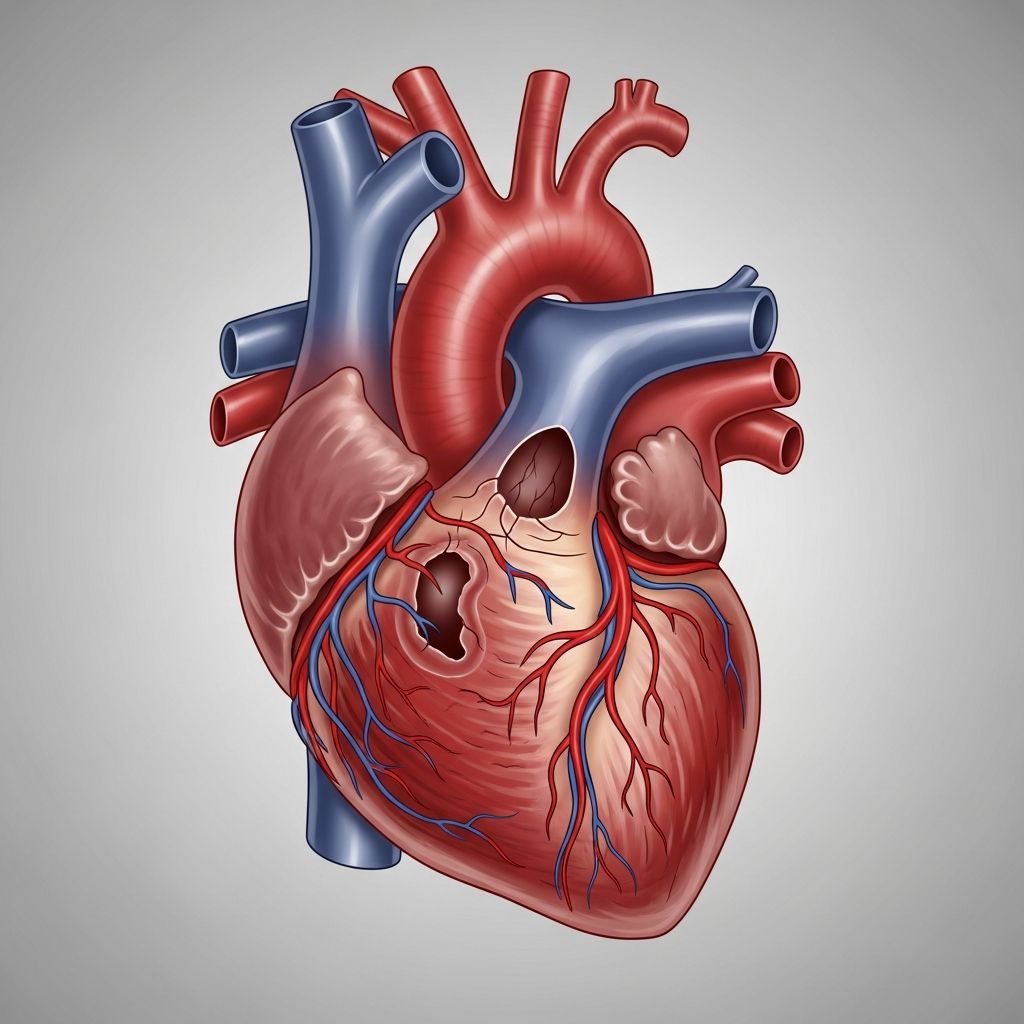
Congenital heart disease (CHD), also known as congenital heart defects, refers to structural abnormalities in the heart or major blood vessels present at birth. These defects occur when the heart does not develop properly during the first weeks of pregnancy, affecting blood flow, oxygenation, and heart function. CHD is the most common birth defect, occurring in approximately 1% of live births, or about 40,000 infants annually in the United States.
What Is Congenital Heart Disease?
CHD encompasses a wide spectrum of heart malformations, from mild defects that may resolve without intervention to critical conditions requiring immediate surgery. These abnormalities can involve the heart walls (septa), valves, chambers, or great vessels, altering how blood circulates through the heart, lungs, and body. Mild cases, such as small septal holes, often cause few symptoms, while severe ones, like pulmonary atresia or transposition of the great arteries, can be life-threatening.
The heart forms during the first six weeks of fetal development, a critical period when disruptions can lead to CHD. Blood may flow too slowly, in the wrong direction, or be blocked entirely, leading to reduced oxygen delivery (cyanosis) or heart strain.
Symptoms of Congenital Heart Disease
Symptoms vary by defect type and severity. In newborns, signs often appear shortly after birth, but milder cases may go undetected until childhood or adulthood. Common symptoms include:
- Cyanosis: Bluish tint to skin, lips, or nails due to low oxygen levels.
- Rapid or difficult breathing: Especially during feeding, with gasping.
- Poor feeding and growth: Fatigue during feeds, poor weight gain.
- Heart murmur: Abnormal sound heard between heartbeats via stethoscope.
- Fatigue or irritability: Unusual sleepiness or tiring easily.
In older children or adults, undiagnosed CHD may present as exercise intolerance, arrhythmias, or heart failure symptoms. Critical CHD often requires intervention in the first year of life.
Causes and Risk Factors
The exact cause of most CHD cases remains unknown, but it involves a complex interplay of genetic, environmental, and lifestyle factors during early pregnancy. Gene changes, maternal health conditions, and exposures play roles.
Known risk factors include:
- Genetics: Family history increases risk; chromosomal anomalies (e.g., Down syndrome) account for 10-15% of cases. Single-gene mutations and genomic disorders also contribute.
- Maternal factors: Diabetes, obesity, or infections like rubella during pregnancy.
- Lifestyle: Smoking or alcohol use elevates risk.
- Medications: Certain drugs, like isotretinoin, linked to defects.
- Prior CHD: Parents or siblings with CHD raise recurrence odds.
Primary prevention focuses on avoiding modifiable risks, though many cases are unpreventable.
Types of Congenital Heart Disease
CHD is categorized by affected structures. Common types include:
- Septal defects: Holes in the wall (septum) between heart chambers, e.g., atrial septal defect (ASD) or ventricular septal defect (VSD), allowing blood mixing.
- Valve defects: Malformed valves impeding flow, like pulmonary or tricuspid atresia where valves are absent or blocked.
- Great vessel defects: Issues with aorta or pulmonary artery, e.g., transposition of the great arteries (TGA), where arteries are switched.
- Other: Tetralogy of Fallot (four defects causing cyanosis), coarctation of the aorta (narrowed aorta).
Related Stories



Critical CHD includes severe forms like hypoplastic left heart syndrome, needing urgent care.
Diagnosis
Diagnosis often begins prenatally via ultrasound but is confirmed postnatally. Key methods:
- Echocardiogram: Ultrasound imaging of heart structure and function, gold standard.
- Chest X-ray: Assesses heart size and lung blood flow.
- ECG (EKG): Detects rhythm issues.
- Pulse oximetry: Screens for low oxygen in newborns.
- Cardiac catheterization: Invasive test for detailed vessel imaging.
Genetic testing is recommended for syndromic cases.
Treatment Options
Treatment depends on severity: monitoring for mild defects, medications, catheter procedures, or surgery.
- Medications: Diuretics, ACE inhibitors for heart failure; prostaglandins to keep vessels open in newborns.
- Catheter-based interventions: Balloon valvuloplasty or device closure for holes.
- Surgery: Repairs like patch for VSD, artery switch for TGA. Staged surgeries for complex cases like single ventricle.
- Heart transplant: Rare, for end-stage failure.
Many achieve good outcomes with timely intervention, though lifelong follow-up is needed.
Complications
Even after treatment, risks persist:
- Heart failure: Heart works harder, causing poor growth.
- Arrhythmias and endocarditis: Infection risk; antibiotic prophylaxis for procedures.
- Pulmonary hypertension: High lung pressure.
- Stroke: Clots via shunts.
- Neurodevelopmental issues: Delays, anxiety from chronic illness.
- Multi-organ problems: Kidney, liver strain.
Adults with repaired CHD face reinterventions, pregnancy risks.
Prevention and Management
While not fully preventable, strategies include preconception care: folic acid, avoiding alcohol/smoking, managing diabetes. Genetic counseling for high-risk families.
Long-term management involves specialized adult congenital heart disease (ACHD) programs, monitoring for complications, healthy lifestyle, and mental health support.
Living with Congenital Heart Disease
With advances, 90% of CHD patients survive to adulthood. Subspecialty care, exercise guidelines, infection prevention, and family education are key. Disparities exist due to social determinants.
Patients should track symptoms, adhere to meds, and plan for transitions to adult care.
Frequently Asked Questions (FAQs)
What is the most common congenital heart defect?
Ventricular septal defect (VSD), a hole between heart ventricles, often closing spontaneously.
Can CHD be detected before birth?
Yes, fetal echocardiography around 18-22 weeks identifies many cases.
Do all CHD babies need surgery?
No, mild defects like small ASDs may need only monitoring.
What is the prognosis for CHD?
Excellent for many; survival to adulthood exceeds 90%, but lifelong care required.
Is CHD hereditary?
Not always, but genetic factors increase risk in families.
References
- Congenital heart defects in children – Symptoms and causes — Mayo Clinic. 2023-10-12. https://www.mayoclinic.org/diseases-conditions/congenital-heart-defects-children/symptoms-causes/syc-20350074
- Congenital Heart Defects — MedlinePlus, U.S. National Library of Medicine. 2024-05-15. https://medlineplus.gov/congenitalheartdefects.html
- Public Health Approach to Improve Outcomes for Congenital Heart Disease — Journal of the American Heart Association (AHA). 2018-10-30. https://www.ahajournals.org/doi/10.1161/JAHA.118.009450
Similar Articles








Read full bio of Sneha Tete