Congenital Malalignment of the Great Toenails
Exploring the causes, symptoms, diagnosis, and management of this common yet underrecognized nail disorder in children and adults.
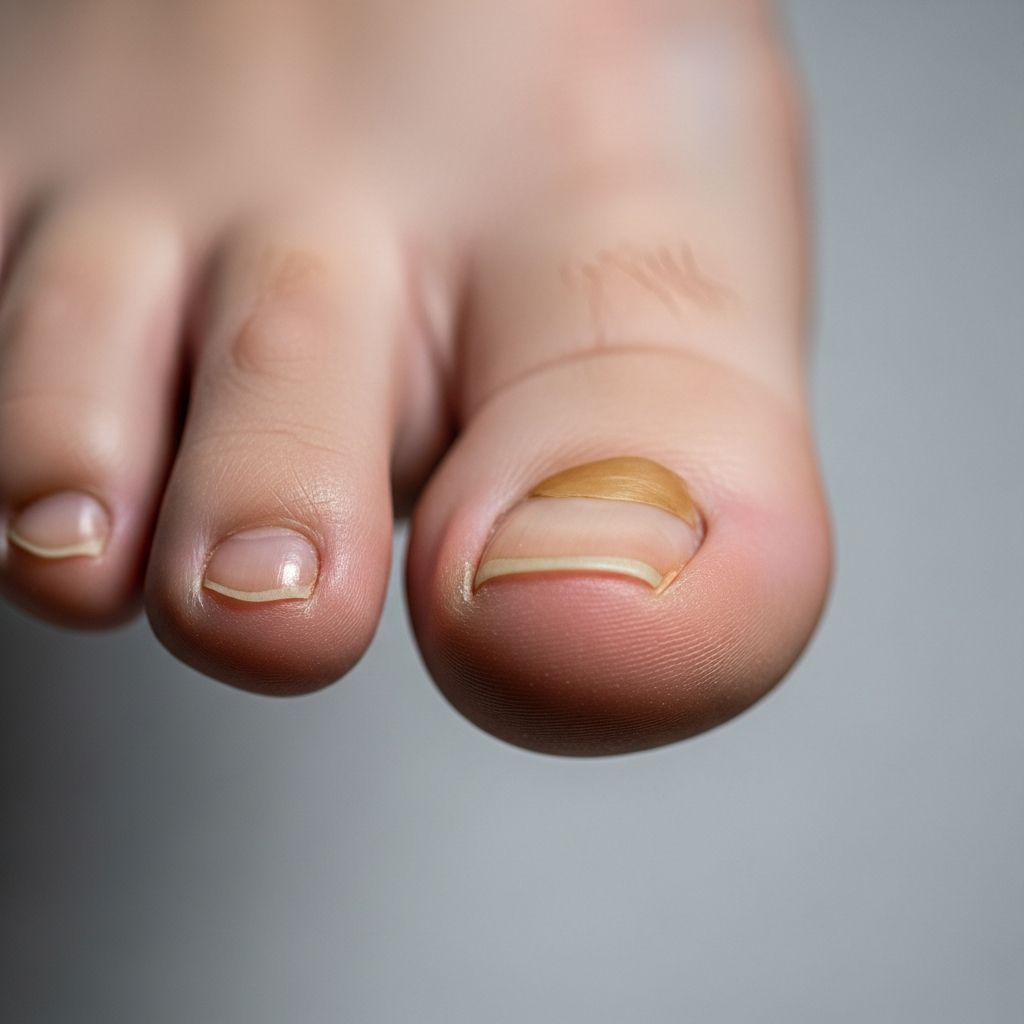
Congenital malalignment of the great toenails, also known as congenital malalignment syndrome, is a dystrophic nail disorder characterized by the lateral rotation of the nail matrix, leading to deviation of the nail plate away from the major axis of the distal phalanx. This condition alters the normal linear growth of the nail, often resulting in cosmetic concerns and functional issues. It predominantly affects the great toenails (halluces) and is typically bilateral, though unilateral cases are reported rarely.
Introduction
Congenital malalignment of the great toenails (CMGT) is an underrecognized condition that manifests as a lateral displacement of the nail apparatus. The nail plate grows in a rotated direction relative to the distal phalanx, which can lead to progressive dystrophy if untreated. First described in detail in medical literature, CMGT is estimated to have a prevalence of 1-2% in the general population, though mild cases may go unnoticed until later in childhood due to minimal symptoms initially. The disorder is congenital, present at birth or evident in infancy, but mechanical trauma from activities like running or tight footwear can exacerbate it during growth. Understanding CMGT is crucial for dermatologists, podiatrists, and pediatricians to differentiate it from acquired nail pathologies and provide timely intervention.
Demographics
CMGT affects individuals across all ages but is typically identified at birth or in early childhood. It shows no strong gender predilection, occurring equally in males and females. Familial cases, including occurrences in monozygotic and dizygotic twins and multiple generations within families, suggest a genetic component, possibly autosomal dominant with variable expressivity. Prevalence may be underestimated, as subtle deviations become apparent only with repetitive trauma in active children or adolescents. Rare reports exist of involvement in other ethnic groups, but data on darker Fitzpatrick skin types are limited, warranting further research. Late-onset presentations, mimicking acquired onychodystrophy, have been documented in adulthood.
Causes
The exact etiology of CMGT remains unknown, but multiple theories have been proposed based on clinical observations and histopathological findings. Key hypothesized causes include:
- Genetic factors: Familial clustering and twin studies indicate a hereditary basis, potentially autosomal dominant transmission.
- Intrauterine extrinsic factors: Amniotic band constriction, elevated intrauterine pressure, or fetal vascular abnormalities may contribute to nail matrix malposition.
- Mechanical tension: Increased pull from the extensor hallucis longus tendon on the lateral nail matrix causes rotation.
- Growth desynchronization: Mismatch between nail plate and distal phalanx growth leads to lateral expansion of the nail to fit the bony space.
- Postnatal trauma superposition: Genetically predisposed malalignment worsens with cumulative microtrauma from shoes or sports.
These factors likely interact, with genetics providing susceptibility and environmental influences triggering progression.
Clinical Features
The hallmark of CMGT is the lateral deviation of the nail plate along the longitudinal axis of the distal phalanx, often bilateral and involving both great toenails. Common clinical features, reported in order of prevalence from reviewed cases, include:
- Nail plate thickening: Occurs in approximately 36% of cases, due to chronic trauma and poor nail bed adhesion.
- Transverse grooves or ridges: Seen in 33% of patients, resulting from recurrent microtrauma to the matrix.
- Paronychia: Inflammation of the nail folds from ingrown edges.
- Onychocryptosis (ingrown toenail): Frequent due to the rotated nail embedding into lateral folds.
- Onycholysis: Separation of the nail plate from the bed.
- Trapezoidal or spoon-shaped distal edge: Characteristic tapering or broadening.
- Discoloration: Gray-brown hues from hemorrhage or secondary infection.
Related Stories



The nail may appear rotated laterally (most common) or medially (rare). In mild cases, features are subtle at birth but progress with weight-bearing activities.
Variation in Skin Types
Limited data exist on CMGT manifestations across skin types, with most descriptions from lighter Fitzpatrick types. In darker skin, pigmentation changes may be less apparent, but structural deviations remain similar. Nail plate discoloration might appear hyperpigmented rather than gray-brown. Further epidemiological studies are needed to characterize features in diverse ethnicities, as current literature underrepresents non-Caucasian populations.
Complications
Untreated CMGT can lead to several complications due to mechanical instability and trauma:
- Chronic paronychia and infections: Bacterial superinfection from embedded nail edges.
- Onychocryptosis with granulation tissue: Hypertrophy of lateral nail folds.
- Nail shedding or avulsion: Recurrent loss due to dystrophy.
- Pain and walking difficulty: Especially in severe deviations.
- Secondary onychomycosis or hemorrhage: Thickened nails prone to fungal invasion.
- Cosmetic distress and psychological impact: Particularly in adolescents.
Progression to stage III onychocryptosis involves chronic inflammation and tissue overgrowth.
Diagnosis
CMGT is a clinical diagnosis based on the characteristic lateral nail deviation and associated dystrophic changes. No specific laboratory tests are required, though fungal cultures and histology may rule out differentials. Key diagnostic clues include:
- Bilateral great toenail involvement from infancy.
- Absence of skin or other nail abnormalities.
- Histology showing no atypia or inflammation, confirming dystrophy.
Radiographs of the distal phalanx are occasionally used to exclude bony abnormalities.
Differential Diagnoses
CMGT must be distinguished from other causes of toenail dystrophy. The following table summarizes key differentials:
| Aetiology | Key Features | Differentiating from CMGT |
|---|---|---|
| Infective (e.g., Onychomycosis) | Dermatophytes, positive KOH/culture | Unilateral, responds to antifungals; CMGT cultures negative |
| Inflammatory (e.g., Psoriasis) | Onycholysis, pitting, skin involvement | Other nails/skin affected; biopsy shows spongiosis |
| Traumatic | History of injury, subungual hematoma | Acute onset, resolves with time; not congenital |
| Genetic (e.g., Pachyonychia congenita) | All nails thick, palmoplantar keratoderma | Systemic features; genetic testing |
| Endocrine (e.g., Thyroid disease) | Brittle nails, systemic symptoms | Lab abnormalities (TSH); reversible |
Twenty-nail dystrophy or lichen planus may mimic but involve multiple nails.
Treatment
Treatment is tailored to severity: conservative for mild cases, surgical for severe or complicated ones.
- Conservative management: Observation, proper footwear, nail trimming to prevent ingrown edges, topical antiseptics for paronychia. Spontaneous correction occurs in ~50% by age 10.
- Operative options: Nail matrix rotation, partial avulsion, or realignment surgery for >30° deviation or complications.
Avoid tight shoes and monitor for progression.
Prevention
Prevention focuses on minimizing trauma:
- Wear wide-toed shoes from infancy.
- Regular podiatric care and hygiene.
- Avoid sports with high toe impact until corrected.
- Early intervention for paronychia.
Genetic counseling for familial cases.
Outcome
Outcomes vary: mild cases often improve spontaneously, while severe ones may require surgery with good cosmetic results. Long-term follow-up is limited, but early management prevents complications. In familial adolescent cases, progression can occur without intervention.
Frequently Asked Questions (FAQs)
Q: Is congenital malalignment of the great toenails painful?
A: Mild cases are often asymptomatic, but complications like ingrown nails cause pain, erythema, and swelling.
Q: Does CMGT affect only children?
A: Present at birth, but late-onset recognition occurs in adulthood due to trauma.
Q: Can CMGT resolve on its own?
A: Yes, approximately half of cases realign spontaneously before age 10.
Q: Is surgery always necessary?
A: No, reserved for severe deviations (>30°) or complications; conservative care suffices for most.
Q: Is CMGT hereditary?
A: Familial patterns suggest genetic predisposition, possibly autosomal dominant.
References
- Congenital Malalignment of the Great Toenails: A Review — Baran R, et al. PMC – NIH. 2018-11-15. https://pmc.ncbi.nlm.nih.gov/articles/PMC6219217/
- Congenital Malalignment of the Great Toenails — DermNet NZ. Recent update. https://dermnetnz.org/topics/congenital-malalignment-of-the-great-toenails
- Onychodystrophy From Late-Onset Congenital Malalignment — AAFP. 2023-02-01. https://www.aafp.org/pubs/afp/issues/2023/0200/letter-onychodystrophy.html
- A child with dystrophic changes of the great toenails — Medicine Today. Recent. https://medicinetoday.com.au/dermatology-quiz/child-dystrophic-changes-great-toenails
Similar Articles








Read full bio of medha deb