Congenital Naevi: Types, Causes, and Management
Understanding congenital naevi: birthmarks, risk factors, and treatment options for melanocytic lesions.
Congenital Naevi: Understanding Birthmarks and Melanocytic Lesions
Congenital naevi, commonly known as birthmarks, are benign proliferations of melanocytes present at birth or developing shortly after birth. These pigmented skin lesions represent a localized collection of melanin-producing cells and are among the most common congenital skin conditions encountered in dermatology. Also referred to as congenital melanocytic naevi or brown birthmarks, these lesions occur across all races and ethnic groups with equal prevalence in males and females.
What Are Congenital Naevi?
Congenital naevi are benign skin markings characterized by the abnormal proliferation of melanocytes within the dermis and epidermis. Unlike acquired naevi that develop after two years of age, congenital naevi are present from birth or emerge during infancy. The term “congenital” refers to their presence at or near the time of birth, distinguishing them from other melanocytic lesions that develop later in life due to sun exposure or other environmental factors.
Classification and Types of Congenital Naevi
Congenital naevi are classified both clinically and histologically based on their size, appearance, and microscopic characteristics. Understanding these classifications helps clinicians assess risk and guide management decisions.
Clinical Classification by Size
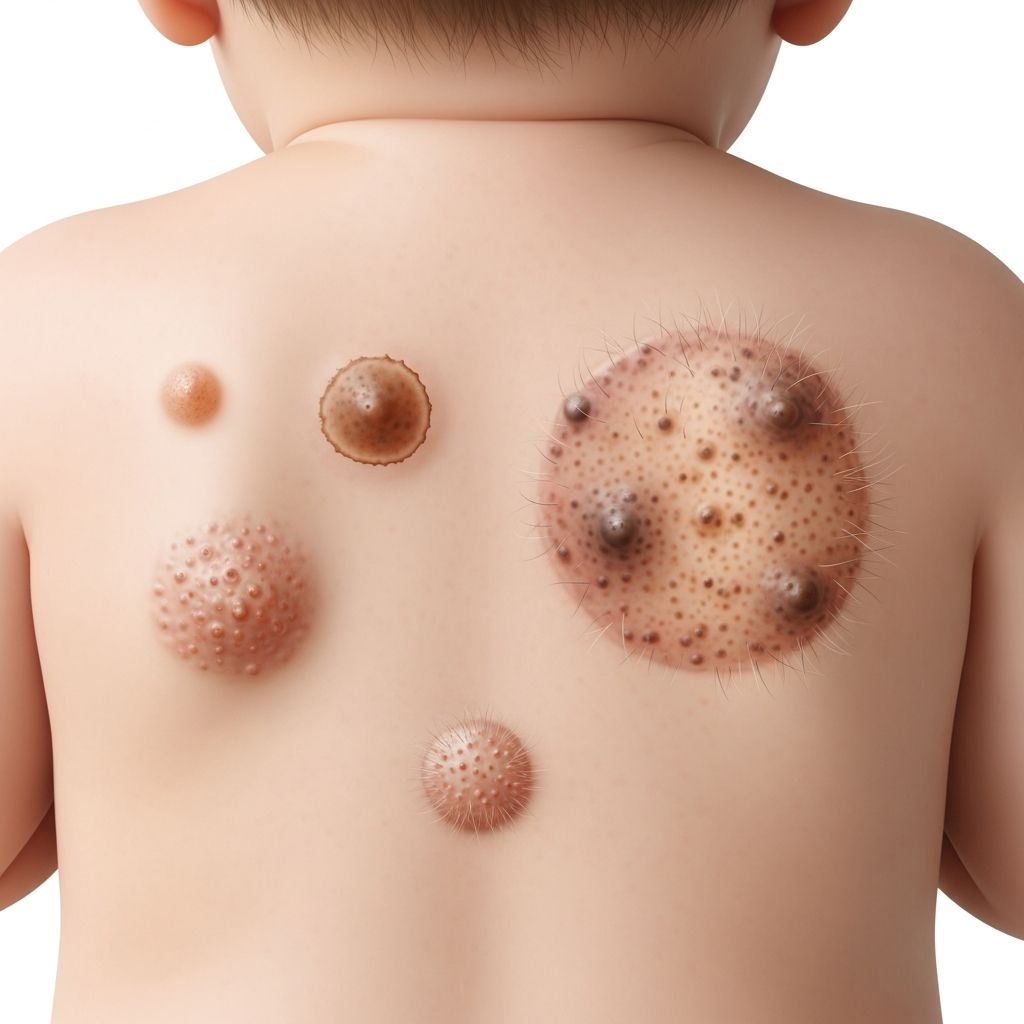
Congenital naevi are typically classified into three categories based on their dimensions:
- Small congenital naevi: Lesions less than 1.5 centimeters in diameter, representing the most common presentation
- Medium congenital naevi: Lesions ranging from 1.5 to 20 centimeters in diameter
- Giant congenital naevi: Lesions exceeding 20 centimeters in diameter, often covering extensive body areas such as the back, trunk, or face
Histological Classification
Microscopically, congenital naevi may be classified as junctional, compound, or dermal based on the location of melanocyte nests. Congenital naevi differ significantly from acquired naevi in their histological features. The naevus cells characteristically extend deeper into the dermis, fat layer, and deeper structures, with involvement of collagen bundles being more prominent than in acquired naevi. Extension of naevus cells around nerves, vessels, and adnexae is characteristic, as is a diffusely infiltrative pattern between collagen bundles.
Special Descriptive Types
Several congenital naevi are given specific descriptive names based on their unique clinical presentations:
- Speckled lentiginous naevi (naevus spilus): Composed of small darkly pigmented macules or papules with a tan-brown macular background. Histologically, background pigmentation resembles lentigo simplex whereas darker areas show junctional, compound, or intradermal nesting of melanocytes
- Satellite lesions: Smaller congenital naevi that develop adjacent to a larger primary lesion, classified by number in the first year of life (none, 1–20, 20–50, or more than 50 satellites)
- Tardive naevi: Congenital naevi that appear after birth but within the first two years of life
- Garment naevi: Very large congenital naevi covering extensive areas of the body, resembling a garment or bathing suit
Clinical Features and Appearance
Congenital naevi present with diverse clinical characteristics that may evolve over time.
Initial Presentation
Congenital naevi typically present as single or multi-shaded, round or oval-shaped pigmented patches at birth or during early infancy. The coloration ranges from light tan to dark brown, often with variations in pigmentation intensity within the same lesion. The surface may be flat and smooth or slightly rough and bumpy. Many congenital naevi exhibit hypertrichosis, characterized by increased hair growth over the lesion, which becomes more prominent with age.
Evolution and Changes Over Time
Congenital naevi typically enlarge proportionally as children grow; however, some may paradoxically become smaller and less obvious with time. In rare instances, lesions may even disappear completely. Conversely, some naevi may become darker, raised, more bumpy, and increasingly hairy, particularly around puberty when hormonal changes may influence their appearance. Additional descriptors that develop over time include surface rugosity and presence of dermal or subcutaneous nodules.
Related Stories



Symptoms and Associated Symptoms
Most congenital naevi are asymptomatic and discovered incidentally during routine examinations. However, certain symptoms may occur, particularly with larger lesions:
- Pruritus: Itching, particularly in larger lesions, may develop intermittently or persistently
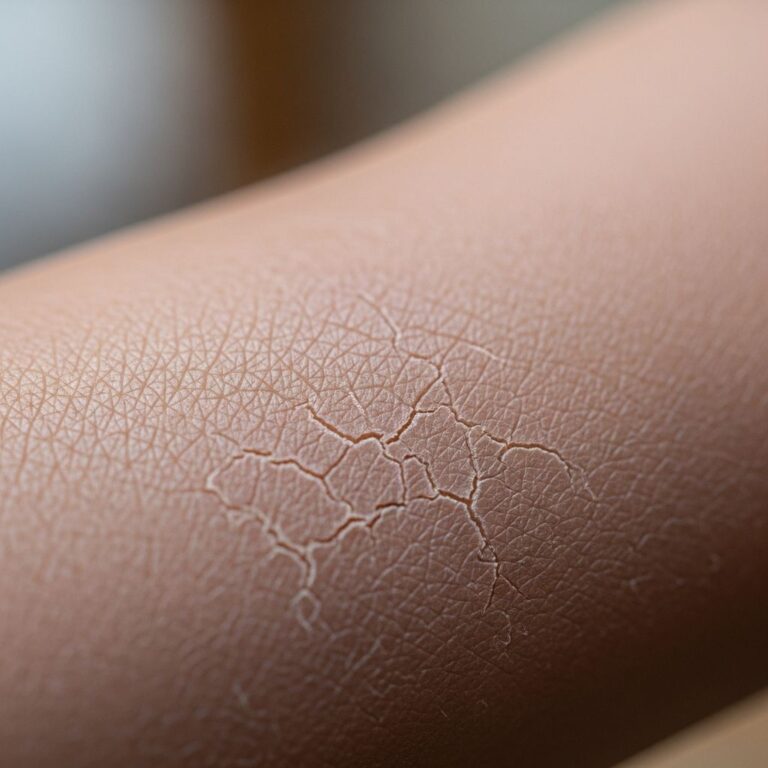
- Xerosis: Dry skin commonly occurs due to decreased function of sebaceous (oil) and eccrine (sweat) producing glands within the lesion
- Skin fragility: The overlying skin may become fragile and prone to erosion or ulceration. Deep nests of melanocytes in the dermis may weaken the bonds between the epidermis and the dermis, accounting for this increased fragility
- Psychological impact: Large or extensive congenital naevi may result in anxiety and impaired self-image, especially when located on visible areas such as the face or neck
Etiology and Genetic Basis
Congenital naevi result from localized genetic abnormalities that drive the abnormal proliferation of melanocytes.
Developmental Origin
Rather than representing UV-induced mutation, as occurs with most acquired naevi, congenital naevi are thought to arise from rests of melanocytes being left behind during their ascent from the neural crest to the epidermis. This developmental error occurs between the 5th and 24th weeks of gestation. If proliferation begins early in development, giant and medium-sized congenital naevi are formed. Smaller naevi form later in development after melanoblasts (immature melanocytes) have completed their migration from the neural crest to the skin.
Genetic Mutations
NRAS mutations are common in congenital naevi and play a significant role in their development. Proto-oncogenes c-met and c-kit have important roles in melanocyte development. Hepatocyte growth factor, a cytokine (messenger protein) that regulates the proliferation and migration of melanocytes, may also be important in the development of congenital naevi.
Epidemiology
True congenital naevi affect approximately 1% of neonates. They occur in all races and ethnic groups, with males and females at equal risk.
Diagnosis and Diagnostic Techniques
Diagnosis of congenital naevi is primarily clinical; however, several investigative techniques may be employed to assess suspicious features and exclude malignancy.
Clinical Diagnosis
Typical small and medium lesions with no suspicious features usually require no investigation beyond clinical examination. The characteristic appearance at birth or early infancy and the typical morphology usually suffice for diagnosis.
Dermoscopy
Dermoscopy is useful in assessing lesions and determining the degree of suspicion regarding malignant melanoma. Evaluation by dermoscopy reveals the pattern of pigmentation and its symmetry or lack of symmetry. The most common global pattern of congenital or tardive melanocytic naevus is globular; however, reticular, structureless, and mixed patterns may occur. The naevus may have differing structures across the lesion, sometimes leading to overall asymmetry of the structure.
Biopsy
Biopsy of the lesion may be used for suspicious lesions; smaller lesions can be subjected to excision biopsy, while larger lesions require partial biopsy, possibly with dermatological or plastic surgical advice.
Neuroimaging
Congenital naevi, particularly giant or multiple lesions, can be associated with neurocutaneous melanosis (a rare syndrome involving melanocyte proliferation in the central nervous system). If neurocutaneous melanosis is suspected, neuroimaging is advisable to seek evidence of leptomeningeal melanotic lesions.
Complications and Risk Factors
While most congenital naevi remain benign throughout life, certain complications warrant careful monitoring and management.
Malignant Transformation
The primary clinical concern with congenital naevi is the potential development of malignant melanoma. The risk of melanoma is mainly related to the size of the congenital naevus. Melanoma is more likely to develop in giant congenital naevi, with lifetime estimates of 5–10% risk, particularly in lesions that lie across the spine or where there are multiple satellite lesions. In contrast, the actual risk of malignant transformation in small lesions appears to be less than 1%.
Proliferative Nodules
Proliferative nodules represent problematic lesions that develop as nodules or plaques within a congenital naevus. These usually arise in large congenital naevi but are increasingly being reported in smaller naevi, where they may be overdiagnosed as melanoma. The proliferative nodules usually develop slowly then remain stable. Histologically, there is stark contrast with surrounding cells due to high cellular density. Though some mitoses may be seen in these lesions, numerous mitoses or necrosis would suggest melanoma rather than a proliferative nodule.
Neurocutaneous Melanosis
Neurocutaneous melanosis is a rare syndrome defined by the proliferation of melanocytes in the central nervous system (brain and spinal cord) and the presence of a congenital naevus. The majority of cases are associated with a giant congenital naevus and satellite lesions. This condition may cause a variety of neurological problems, particularly hydrocephalus. Individuals with CMN covering large areas of skin are at higher risk for neurocutaneous melanosis, a condition where melanocytes overproliferate in the brain and spinal cord leading to neurological manifestations like seizures and developmental delays.
Treatment and Management Options
Management of congenital naevi varies depending on the clinical presentation, size of the lesion, and patient or parental concerns regarding cosmetic appearance or malignancy risk.
Observation and Reassurance
If there is a classical history, no features to suggest melanoma, and no desire for cosmetic intervention, reassurance about the benign nature of the lesion is often all that is needed.
Surgical Management
Surgical removal may be considered for cosmetic reasons or if there are features suspicious for malignancy. However, there is no evidence that surgical removal alters melanoma risk. Lesions that can technically be removed completely are at very low risk, but those at highest risk are not feasible to remove. Surgical options include:
- Serial excision for complete removal of smaller to medium lesions
- Split-thickness grafting for larger lesions
- Balloon expansion to facilitate closure of excised areas
Congenital naevi, particularly giant lesions covering extensive areas such as the entire bathing trunk region, may be practically impossible to remove completely.
Non-Surgical Treatment Approaches
Superficial removal techniques such as laser, dermabrasion, and curettage do not alter the final color, and any color change is temporary. The congenital naevus will gradually resume the color related to the skin tone of the individual. These techniques can be painful with a risk of scarring and are therefore not recommended as primary treatment modalities.
Frequently Asked Questions
Q: What percentage of newborns have congenital naevi?
A: True congenital naevi affect approximately 1% of neonates, occurring equally across all racial and ethnic groups.
Q: Can congenital naevi disappear on their own?
A: While most congenital naevi enlarge as children grow, some may become smaller and less obvious over time, and rarely, some may disappear completely. However, others may become darker, more raised, and hairier, particularly during puberty.
Q: What is the risk of melanoma developing in a small congenital naevus?
A: The actual risk of malignant transformation in small lesions is less than 1%. Giant congenital naevi carry a higher lifetime risk of 5–10%, particularly if located across the spine or associated with multiple satellite lesions.
Q: Should all congenital naevi be surgically removed?
A: No. There is no evidence that surgical removal alters melanoma risk. Surgical intervention is typically reserved for cosmetic concerns or suspicious lesions, particularly on visible areas such as the face.
Q: What is neurocutaneous melanosis?
A: Neurocutaneous melanosis is a rare syndrome characterized by proliferation of melanocytes in the central nervous system (brain and spinal cord) in association with a congenital naevus, most commonly giant naevi with satellite lesions. It may cause neurological manifestations including seizures and developmental delays.
Q: Can congenital naevi become itchy or cause symptoms?
A: Most congenital naevi are asymptomatic; however, larger lesions may become itchy. Dry skin (xerosis) commonly occurs due to reduced function of oil and sweat glands within the lesion. In some cases, the overlying skin may become fragile and prone to erosion or ulceration.
Q: How are congenital naevi different from acquired naevi?
A: Congenital naevi are present at birth or develop in early infancy, while acquired naevi appear after 2 years of age due to sun exposure. Congenital naevi are typically larger and extend deeper into the dermis, with naevus cells clustering around blood vessels, hair follicles, and other skin structures.
References
- Congenital melanocytic naevi pathology — DermNet NZ. 2024. https://dermnetnz.org/topics/congenital-melanocytic-naevus-pathology
- Congenital melanocytic naevi — DermNet NZ. 2024. https://dermnetnz.org/topics/congenital-melanocytic-naevi
- Congenital Pigmented Naevus — Patient.info. 2024. https://patient.info/doctor/dermatology/congenital-pigmented-naevus
- Congenital melanocytic naevus — DFTB Skin Deep. 2024. https://dftbskindeep.com/all-diagnoses/congenital-melanocytic-naevus/
- Management of Congenital Melanocytic Naevi in Children — National Center for Biotechnology Information (NCBI). 2022. https://pmc.ncbi.nlm.nih.gov/articles/PMC9309711/
- Congenital melanocytic naevus — Primary Care Dermatology Society. 2024. https://www.pcds.org.uk/clinical-guidance/congenital-melanocytic-naevus
- Congenital Nevi — BC Cancer. 2024. https://www.bccancer.bc.ca/books/skin-cancer-prevention-early-diagnosis-courses/course-readings/skin-cancer-early-diagnosis-readings/congenital-nevi
Similar Articles








Read full bio of medha deb