Congestive Heart Failure: Causes and Risk Factors
Understanding the causes and risk factors of congestive heart failure for better prevention and management.
Understanding Congestive Heart Failure: Causes and Risk Factors
Congestive heart failure (CHF) is a serious medical condition that affects millions of people worldwide. It occurs when the heart becomes weakened or stiff and cannot pump blood efficiently to meet the body’s needs for oxygen and nutrients. Understanding the underlying causes of CHF is essential for prevention, early intervention, and effective management. While the term “heart failure” may sound alarming, it does not mean the heart has stopped working entirely—rather, it means the heart is not functioning as effectively as it should.
When the heart fails to pump blood adequately, fluid can accumulate in the lungs, legs, abdomen, and other tissues, a phenomenon known as “congestion.” This fluid buildup is what gives congestive heart failure its distinctive name. The condition typically develops gradually as a result of long-term damage or strain on the heart muscle, though it can occasionally develop suddenly following a significant medical event.
What is Congestive Heart Failure?
Congestive heart failure is characterized by the heart’s inability to pump blood effectively throughout the body. This can occur when the heart muscle becomes too weak (systolic heart failure) or too stiff (diastolic heart failure) to function properly. The weakened pumping action leads to inadequate blood circulation, which deprives organs and tissues of necessary oxygen and nutrients.
The condition often develops as a complication of other heart diseases or medical conditions that damage the heart over time. It can affect the left side of the heart, the right side, or both. Left-sided heart failure is the most common type and can eventually lead to right-sided heart failure if left untreated.
Major Causes of Congestive Heart Failure
Coronary Artery Disease (CAD)
Coronary artery disease is the most common cause of heart failure. CAD occurs when cholesterol and fatty deposits accumulate inside the arteries that supply blood to the heart muscle, a process called atherosclerosis. This buildup narrows the arteries, reducing blood flow to the heart and limiting the oxygen supply to the heart muscle. When the heart does not receive adequate blood flow for an extended period, the muscle becomes weakened and damaged, eventually leading to heart failure.
In severe cases, a coronary artery can become completely blocked, triggering a heart attack. Even if the blockage is not total, chronic reduced blood flow weakens the heart muscle gradually over months and years.
High Blood Pressure (Hypertension)
High blood pressure is another leading cause of congestive heart failure. When blood pressure is elevated, the heart must work harder to pump blood against this increased resistance. Over time, this excessive workload causes the heart muscle to thicken and become stiff, a condition called left ventricular hypertrophy. As the heart walls thicken, the chambers can become smaller, reducing the heart’s ability to fill with blood and pump it out efficiently.
The relationship between hypertension and heart failure is particularly concerning because high blood pressure often goes undiagnosed and untreated, allowing damage to accumulate silently over years.
Related Stories



Heart Attack
A heart attack (myocardial infarction) can directly cause or significantly increase the risk of developing heart failure. When a coronary artery becomes completely blocked, a portion of the heart muscle is deprived of blood and oxygen, causing tissue death. The resulting scar tissue cannot contract or pump blood effectively. If a large area of the heart is affected, the remaining healthy muscle may not be able to maintain adequate circulation, leading to heart failure.
Even after surviving a heart attack, patients face an elevated lifetime risk of developing CHF as the scar tissue weakens the overall pumping function of the heart.
Cardiomyopathy
Cardiomyopathy is a disease of the heart muscle itself that can weaken the heart’s ability to pump blood. This condition can be caused by genetic factors inherited from family members, viral infections, excessive alcohol consumption, drug abuse, or other underlying conditions. There are several types of cardiomyopathy, including dilated cardiomyopathy (where the heart chambers enlarge and weaken) and hypertrophic cardiomyopathy (where the heart muscle becomes abnormally thick).
Some cases of cardiomyopathy have no identifiable cause, making them particularly challenging to prevent or treat.
Valvular Heart Disease
Heart valve problems, including aortic stenosis (narrowing of the aortic valve) and mitral valve regurgitation (leaking of the mitral valve), can contribute to heart failure. When valves do not open or close properly during each heartbeat, the heart must work harder to move blood through the heart and into circulation. Over time, this increased workload can lead to weakening and enlargement of the heart chambers, ultimately resulting in heart failure.
Valve problems can develop from infection (endocarditis), birth defects, or degenerative changes associated with aging.
Diabetes
People with diabetes have significantly higher risk for developing heart failure. High blood sugar levels associated with diabetes can damage blood vessels and the heart muscle itself, accelerating the development of coronary artery disease and other forms of heart disease. Additionally, people with diabetes often develop high blood pressure and atherosclerosis from elevated cholesterol levels, both of which further increase heart failure risk.
Type 2 diabetes is particularly associated with heart failure development, and managing blood sugar levels is crucial for cardiovascular health.
Other Heart-Related Conditions
Several additional cardiac conditions can lead to or increase the risk of congestive heart failure:
- Arrhythmias (irregular heartbeats) that disrupt normal heart rhythm and pumping function
- Congenital heart defects or other types of heart disease present from birth
- Endocarditis (infection of the heart’s inner lining)
- Myocarditis (inflammation of the heart muscle)
- Anemia (low red blood cell count), which forces the heart to pump faster
- Thyroid problems, which affect heart rate and function
Lifestyle and Behavioral Risk Factors
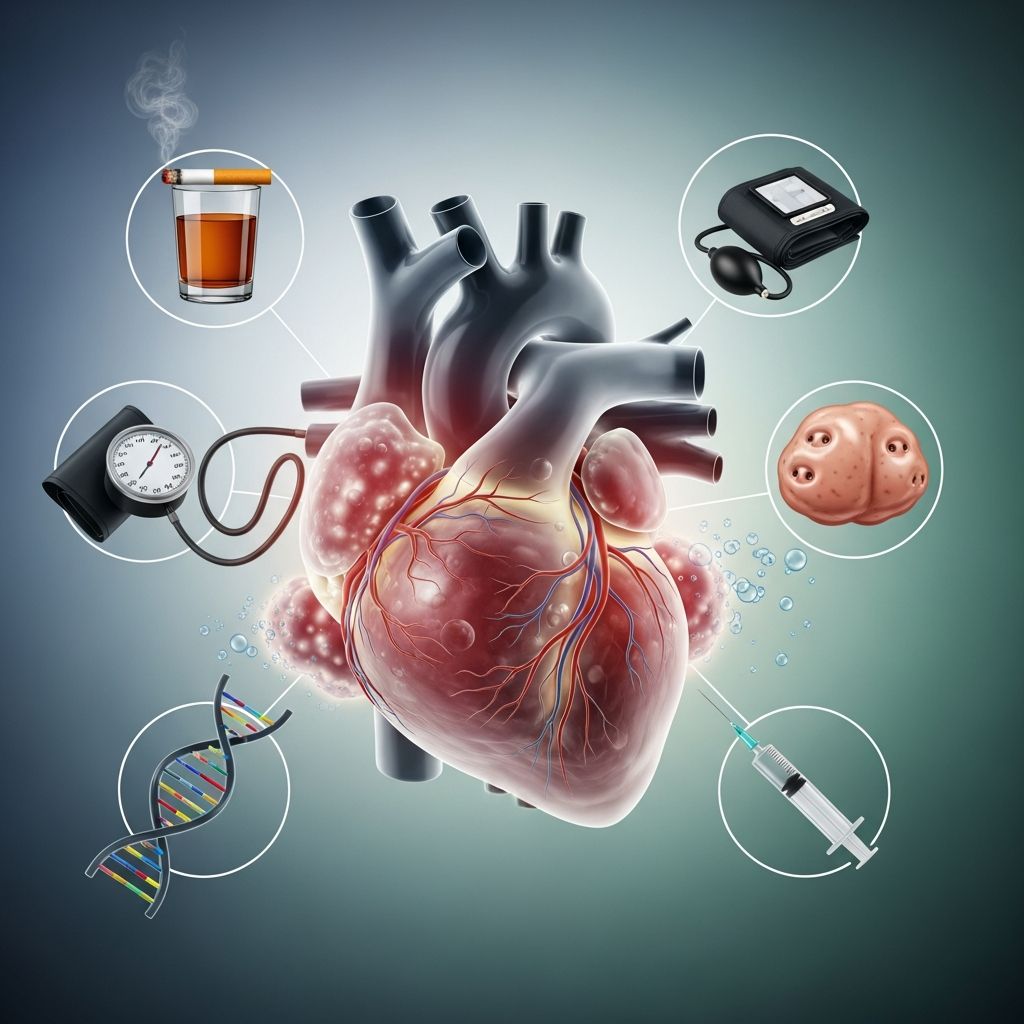
Numerous lifestyle choices and habits can increase the risk of developing congestive heart failure by either damaging the heart directly or promoting conditions like hypertension and diabetes:
- Smoking: Tobacco use damages blood vessels and increases blood pressure, accelerating heart disease development
- Obesity and being overweight: Extra weight forces the heart to work harder and increases blood pressure
- Lack of physical activity: Sedentary lifestyle weakens the heart muscle and contributes to weight gain
- Poor diet: Eating foods high in saturated fats, cholesterol, and sodium increases blood pressure and promotes atherosclerosis
- Excessive alcohol consumption: Alcohol can directly damage the heart muscle and weaken cardiac function
- Illegal drug use: Certain drugs can cause cardiomyopathy and directly damage the heart
Other Medical Conditions That Increase Risk
Beyond the primary causes, several other health conditions can increase the likelihood of developing heart failure:
- Chronic obstructive pulmonary disease (COPD) and other severe lung diseases
- Sleep apnea, which stresses the heart during sleep
- Chronic kidney disease, which affects fluid balance and blood pressure
- HIV infection and other serious infections
- Cancer treatments involving radiation or chemotherapy, which can damage heart muscle
- Iron overload disease (hemochromatosis)
- Metabolic syndrome (a cluster of conditions including obesity, high blood pressure, and high blood sugar)
Age and Demographic Risk Factors
Age is an important risk factor for heart failure development. As people age, the heart naturally becomes weaker and stiffer, losing some of its pumping ability. People over 65 years old have substantially higher rates of congestive heart failure compared to younger adults.
Research also indicates that race and ethnicity play a role in heart failure risk. Black individuals have approximately 19% higher risk of developing heart failure than white individuals, and the condition often develops at a younger age and may be more serious. Hispanic populations have multiple heart failure risk factors and face health care disparities that increase their vulnerability to CHF.
How These Causes Develop Into Heart Failure
Most cases of congestive heart failure develop gradually over months or years as the heart is progressively stressed by underlying conditions. The process typically follows a pattern: an initial injury or chronic strain affects the heart muscle, leading to weakening or stiffening. As the heart tries to compensate for reduced pumping efficiency, it enlarges and works harder. Eventually, these compensatory mechanisms fail, and the heart can no longer meet the body’s circulatory demands, resulting in heart failure.
In contrast, some cases of heart failure develop suddenly following a major cardiac event, such as a massive heart attack or acute myocarditis. However, these sudden presentations often occur in individuals who had underlying cardiac damage that went undiagnosed or unmanaged.
Prevention and Risk Reduction
Understanding the causes of congestive heart failure enables individuals to take proactive steps to reduce their risk. Managing chronic conditions like high blood pressure, diabetes, and high cholesterol through medication and lifestyle changes is crucial. Regular physical activity, maintaining a healthy weight, eating a heart-healthy diet low in sodium and saturated fats, avoiding smoking and excessive alcohol, and getting regular medical check-ups can all significantly reduce heart failure risk.
Early detection and treatment of conditions that lead to heart failure—such as controlling blood pressure and managing diabetes—can prevent or delay the onset of CHF and improve long-term health outcomes.
Frequently Asked Questions (FAQs)
Q: What is the difference between heart failure and a heart attack?
A: A heart attack is a sudden event where blood flow to the heart muscle is blocked, causing tissue death. Heart failure develops when the heart cannot pump blood efficiently, often as a result of previous damage from a heart attack or other conditions. A heart attack can cause heart failure, but they are distinct conditions.
Q: Can congestive heart failure be prevented?
A: While some risk factors like age and genetics cannot be changed, many can be controlled through lifestyle modifications and proper management of chronic conditions. Controlling blood pressure, maintaining a healthy weight, not smoking, exercising regularly, and managing diabetes and cholesterol significantly reduce heart failure risk.
Q: Is heart failure always fatal?
A: No. While heart failure is a serious condition that requires ongoing management, many people live for years or decades with proper treatment. Modern medications, devices, and lifestyle changes can improve symptoms and extend survival.
Q: What are the early warning signs of congestive heart failure?
A: Early signs include shortness of breath, fatigue, swelling in the legs and ankles, rapid or irregular heartbeat, and reduced ability to exercise. If you experience these symptoms, consult a healthcare provider for evaluation.
Q: Who is at highest risk for developing congestive heart failure?
A: People with coronary artery disease, high blood pressure, diabetes, a history of heart attacks, obesity, and those over 65 years old are at elevated risk. Black individuals and those with family histories of heart disease also have higher risk.
References
- Congestive Heart Failure: Symptoms, Causes, and Treatment — Heart and Health. 2025. https://heartandhealth.com/congestive-heart-failure-symptoms-causes-and-treatment/
- Heart Failure — MedlinePlus, National Library of Medicine. 2024. https://medlineplus.gov/heartfailure.html
- Risks for and Causes of Heart Failure — American Heart Association. 2025. https://www.heart.org/en/health-topics/heart-failure/causes-and-risks-for-heart-failure
Similar Articles








Read full bio of medha deb