Conjunctiva: Anatomy, Function & Common Conditions
Complete guide to conjunctiva anatomy, protective functions, and common eye conditions affecting this vital membrane.
Understanding the Conjunctiva: Your Eye’s Protective Shield
The conjunctiva is a thin, clear membrane that plays one of the most important roles in maintaining your eye health and comfort. Often overlooked, this delicate tissue works tirelessly to protect your eyes, keep them moist, and maintain clear vision. Whether you experience dry eyes, redness, or irritation, understanding the conjunctiva and how it functions can help you better appreciate the complexity of your eye’s anatomy and recognize when something might need attention.
What Is the Conjunctiva?
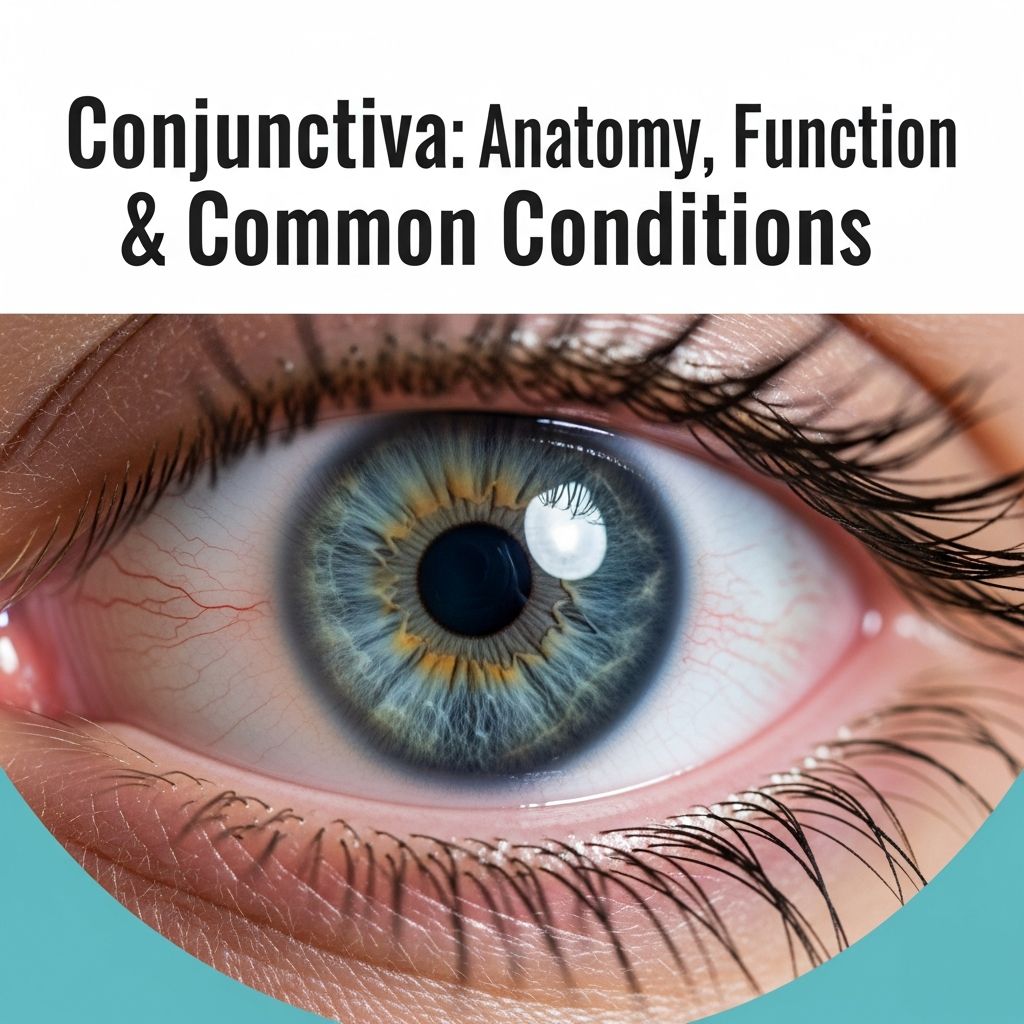
The conjunctiva is a mucous membrane—a specialized tissue that produces protective secretions. It covers the inside of your eyelid and extends across the white part of your eye, known as the sclera. Think of the conjunctiva like a thin, clear sheet of protective material that covers the whites of your eyes. It acts as a combination raincoat and plastic wrap, blocking irritants such as allergens from entering your eye while simultaneously keeping moisture and lubrication sealed in.
This membrane is remarkably thin, with an average thickness of just 33 microns (micrometers), yet it is incredibly resilient and serves multiple critical functions. The conjunctiva is highly vascularized, meaning it contains numerous blood vessels that supply oxygen and nutrients to the tissue. It is also home to extensive lymphatic vessels that play a role in immune surveillance and protection.
Anatomy and Structure of the Conjunctiva
To fully understand how the conjunctiva protects and maintains your eyes, it is important to examine its detailed anatomical structure. The conjunctiva is not a simple, uniform layer but rather a complex tissue composed of multiple regions and layers working in harmony.
The Three Main Regions
The conjunctiva is divided into three distinct regions, each with specialized functions:
| Region | Location | Function |
|---|---|---|
| Bulbar Conjunctiva | Covers the eyeball over the anterior sclera | Protects the white of the eye and maintains moisture |
| Palpebral Conjunctiva | Lines the inside of the upper and lower eyelids | Allows eyelids to move smoothly and protects the eye surface |
| Conjunctival Fornix | The junction between bulbar and palpebral conjunctiva | Joins the two regions and allows lid and eyeball movement |
Detailed Structural Layers
The conjunctiva consists of multiple tissue layers that work together to provide protection and maintain eye health. The outermost layer is the conjunctival epithelium, which serves as a physical barrier against environmental contaminants and pathogens. This epithelium contains specialized cells called goblet cells, which are concentrated in the area closest to the fornix. These unicellular mucous glands are especially abundant in the inferior and medial conjunctiva, near the medial canthus, and their number decreases as you move away from the fornix.
Beneath the epithelium lies the substantia propria, also called the conjunctival submucosa. This is a unique tissue layer that exists only in the conjunctiva and not in other eye tissues. The substantia propria contains numerous lymphocytes, mast cells, plasma cells, and neutrophils—specialized immune cells that defend against infection and foreign invaders. This layer also contains patches of immune cells that form conjunctiva-associated lymphoid tissue (CALT), which provides localized immune surveillance.
The deepest fibrous layer of the conjunctiva contains the nerves and blood vessels that provide innervation and nutrient supply to the tissue. Within this layer, you will also find the glands of Krause, which contribute to tear production and ocular lubrication.
Related Stories



How the Conjunctiva Works: Tear Production and Lubrication
One of the most vital functions of the conjunctiva is its role in tear production and eye lubrication. The conjunctiva does not work alone in this process but rather collaborates with other structures in your eye to create and maintain the tear film.
The tear film is composed of three distinct layers, each created by different ocular structures. The lacrimal glands produce the watery component of tears. Your meibomian glands, located in the eyelids, secrete an oily layer that helps prevent tear evaporation. The conjunctiva contributes the mucus component, which helps the tears spread evenly across the eye surface and keeps it moist. When these three components combine—water from the lacrimal glands, mucus from the conjunctiva, and oil from the meibomian glands—they create a protective tear film that maintains ocular health.
The goblet cells in the conjunctiva secrete mucin, a key component that helps form and maintain this protective tear film. This allows the ocular surface to maintain its healthy moisture layer, preventing dryness and discomfort. Without adequate mucin production by the conjunctiva, your eyes would become dry, uncomfortable, and more susceptible to infection.
Protective Functions of the Conjunctiva
The conjunctiva serves as your eye’s first line of defense against the outside world. Its protective functions are multifaceted and essential for maintaining clear vision and eye comfort.
Microbial Defense: The conjunctiva prevents microbial entrance into the eye and plays a critical role in immune surveillance. The presence of lymphocytes, mast cells, and other immune cells in the substantia propria enables the conjunctiva to detect and neutralize harmful bacteria, viruses, and other pathogens before they can cause infection.
Barrier Protection: The conjunctival epithelium acts as a physical barrier, blocking irritants such as dust, pollen, smoke, and other allergens from reaching the more sensitive structures of the eye, including the cornea and lens.
Foreign Body Prevention: The conjunctiva ensures that no foreign body or object slips behind the eye, such as contact lenses, providing an additional layer of safety and preventing mechanical injury.
Lubrication and Moisture Retention: By secreting mucus and contributing to tear production, the conjunctiva keeps your eyes moist, comfortable, and protected from dryness-related damage.
Blood Supply and Nerve Innervation
The conjunctiva receives its blood supply from multiple sources, ensuring adequate oxygen and nutrient delivery to this vital tissue. The marginal tarsal arcades and peripheral tarsal arcades provide blood supply to the palpebral conjunctiva and fornices, while the anterior ciliary arteries supply the bulbar conjunctiva. These arterial systems are interconnected, providing overlap in blood supply and creating a robust vascular network.
Sensory innervation to the conjunctiva comes from several cranial nerves, including the supraorbital nerve, supratrochlear nerve, infratrochlear nerve, infraorbital nerve, lacrimal nerve, and long ciliary nerves. The superior portion receives sensation from the supraorbital, supratrochlear, and infratrochlear nerves, while the inferior portion is supplied by the infraorbital nerve. The lateral portion receives innervation from the lacrimal nerve, and the circumcorneal portion is supplied by the long ciliary nerves.
Conjunctiva vs. Other Eye Structures
Conjunctiva and the Cornea
While the cornea and conjunctiva are adjacent structures, they have very different functions. The cornea is directly involved in vision and is transparent, allowing light to enter the eye. The cornea’s primary function is to focus light onto the retina for clear vision. In contrast, the conjunctiva’s main function is to protect the eyes from infections and keep them lubricated. The cornea covers the pupil, iris, and anterior chamber, while the conjunctiva covers the sclera and the inside of the eyelids.
Conjunctiva and the Sclera
The sclera, often called the white of the eye, is the tough, fibrous outer layer of the eye that maintains the eyeball’s shape and structure. The conjunctiva, by contrast, is a thin, clear membrane that covers the sclera and helps protect it. The sclera provides structural support, while the conjunctiva provides lubrication and immune protection.
Common Conditions Affecting the Conjunctiva
Because of its exposed location and protective role, the conjunctiva is susceptible to various conditions and disorders. Understanding these conditions can help you recognize symptoms early and seek appropriate treatment.
Conjunctivitis (Pink Eye): Inflammation of the conjunctiva, commonly caused by viral, bacterial, or allergic factors, results in redness, itching, and discharge.
Dry Eye Syndrome: Reduced tear production or poor tear quality can affect the conjunctiva’s ability to maintain adequate lubrication, leading to discomfort and blurred vision.
Allergic Reactions: Environmental allergens can trigger conjunctival inflammation, causing itching, redness, and tearing.
Subconjunctival Hemorrhage: Bleeding underneath the conjunctiva can cause a bright red appearance on the eye’s surface, though it is often harmless.
Pterygium: Abnormal growth of conjunctival tissue onto the cornea can affect vision and require surgical intervention.
Frequently Asked Questions
Q: Can the conjunctiva regenerate if damaged?
A: Yes, the conjunctiva has excellent regenerative properties and can repair minor damage relatively quickly. However, significant injuries or chronic damage may require medical intervention to prevent scarring and vision problems.
Q: Why does my conjunctiva become red?
A: Redness of the conjunctiva occurs when the blood vessels within the tissue become dilated and inflamed. This can result from infection, allergies, irritation, or inflammation. If redness persists, consult an eye care professional.
Q: How is the conjunctiva examined by an eye doctor?
A: Eye care professionals use a slit lamp microscope to examine the conjunctiva. They may have you look in different directions to assess different regions, or use a small cotton swab to gently invert the eyelid to examine the palpebral conjunctiva and fornices.
Q: Can contact lenses damage the conjunctiva?
A: Proper contact lens use, including correct insertion and removal techniques and regular cleaning, should not damage the conjunctiva. However, improper lens care, overwearing, or poor hygiene can cause conjunctival irritation or infection.
Q: What role does the conjunctiva play in allergic eye reactions?
A: The conjunctiva contains mast cells that release histamine when exposed to allergens, causing itching, redness, and swelling. This is the immune system’s response to perceived threats.
Maintaining Conjunctival Health
Protecting your conjunctiva is essential for maintaining overall eye health and comfort. Practice good eye hygiene, avoid touching your eyes with dirty hands, remove contact lenses as directed, and use protective eyewear in hazardous environments. If you experience persistent eye discomfort, redness, or discharge, consult an eye care professional promptly.
References
- Anatomy, Head and Neck, Eye Conjunctiva — National Center for Biotechnology Information (NCBI), National Library of Medicine. 2024. https://www.ncbi.nlm.nih.gov/books/NBK519502/
- Conjunctiva: Anatomy, Function & Common Conditions — Cleveland Clinic. 2024. https://my.clevelandclinic.org/health/body/24329-conjunctiva
- Conjunctiva: Anatomy, Function, and Associated Eye Conditions — Oscar Wylee. 2024. https://www.oscarwylee.com.au/glasses/eye/anatomy/conjunctiva
- Conjunctiva: Anatomy and Function — Kenhub. 2024. https://www.kenhub.com/en/library/anatomy/conjunctiva
- Red Eye for the Internist: When to Treat, When to Refer — Cleveland Clinic Journal of Medicine. 2008. https://www.ccjm.org/content/ccjom/75/2/137.full.pdf
Similar Articles








Read full bio of Sneha Tete