Conjunctival Papilloma: Eye Growth Guide
Discover causes, symptoms, treatments, and prevention for conjunctival papilloma, the common HPV-linked benign eye tumor.
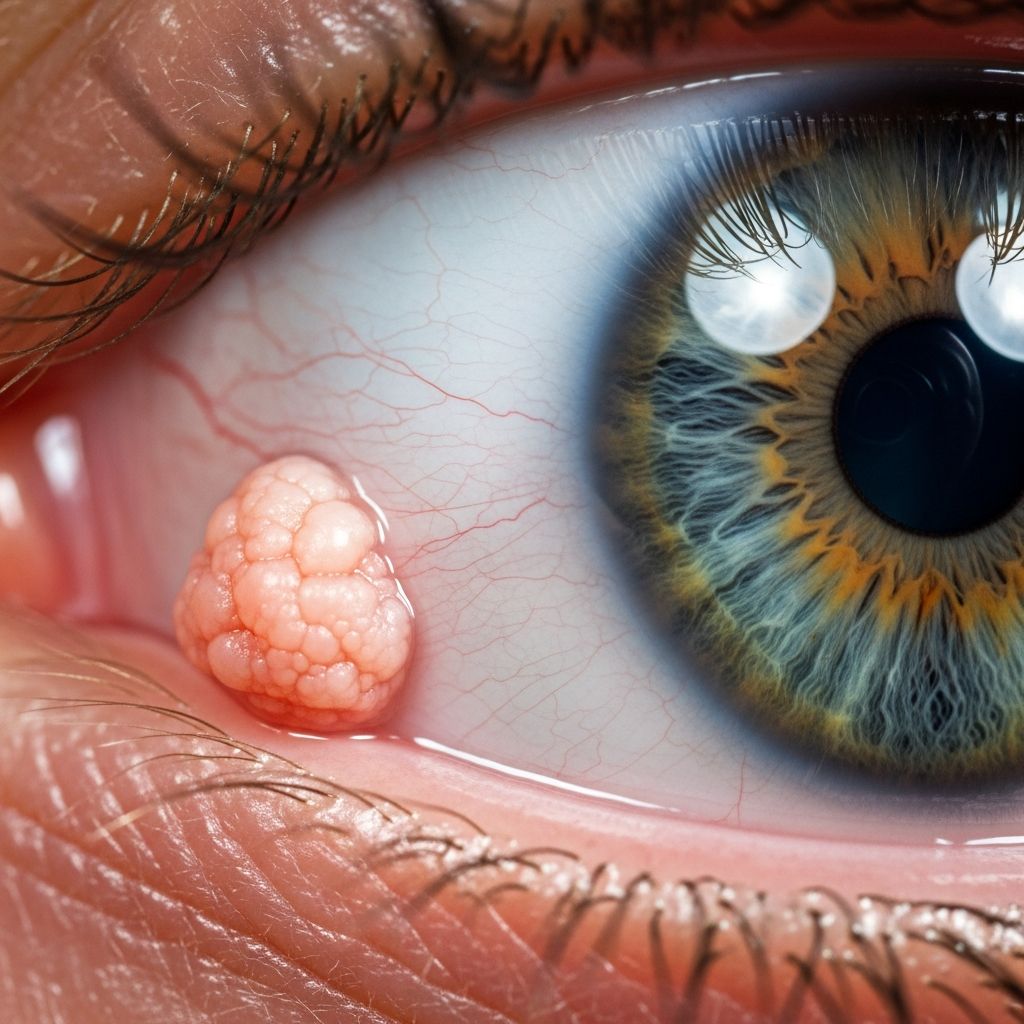
Conjunctival papilloma refers to a non-cancerous tumor that develops on the conjunctiva, the thin, transparent membrane covering the white part of the eye and inner eyelids. These growths are typically linked to human papillomavirus (HPV) infection and can affect people across age groups, though they peak in young adults.
What Causes Conjunctival Papilloma?
The primary driver of most conjunctival papillomas is HPV, especially low-risk strains like types 6 and 11, which prompt abnormal cell growth in the conjunctival tissue. Viral papillomas are often pedunculated, meaning they grow on a stalk, and are more prevalent in children and individuals aged 21-40.
Non-infectious types exist, arising from chronic irritation or unknown factors, presenting as sessile (flat-based) lesions. Risk factors include direct contact with infected skin or surfaces, weakened immunity, and possibly environmental exposures, though not everyone exposed to HPV develops these growths.
- HPV Transmission: Spread via skin-to-eye contact or contaminated objects.
- Age Distribution: Common in young adults but seen in kids and seniors.
- Other Contributors: Immune suppression or repeated eye rubbing.
Identifying Symptoms of Conjunctival Papilloma
Early detection hinges on recognizing subtle signs. Patients often report a foreign body sensation, as if something is lodged in the eye, alongside redness and mild itching.
Larger lesions may obstruct vision, disrupt tear flow leading to excessive watering or dryness, or even produce blood-tinged tears if irritated. Cosmetic appearance troubles many, particularly when growths are visible on the eye’s surface.
| Symptom | Description | Severity Level |
|---|---|---|
| Irritation | Feeling of grit or sand in eye | Mild to moderate |
| Redness | Localized inflammation around growth | Mild |
| Vision Impact | Blurring if growth blocks field | Moderate for large lesions |
| Tearing Issues | Excessive or insufficient tears | Variable |
| Pain on Blinking | Mild discomfort during movement | Mild |
Seek immediate care if symptoms worsen, include severe pain, pus, or sudden vision loss, signaling possible infection or complications.
Types and Classifications of Conjunctival Papillomas
Papillomas classify by etiology and morphology. Viral (infectious) types dominate, tied to HPV, and tend to recur post-treatment. Non-viral forms are flatter and less prone to spreading.
- Pedunculated: Stalk-like, often viral, mobile with blinking.
- Sessile: Broad-based, firmer attachment.
- Inverted: Rare, grow inward, mimicking malignancy.
Children frequently present with viral pedunculated variants, while adults see a mix. Rare malignant transformation occurs with signs like keratinization or symblepharon (adhesions).
Diagnosis Process for Eye Surface Growths
Eye specialists diagnose via slit-lamp biomicroscopy, revealing the growth’s size, shape, and vascularity. HPV typing through biopsy confirms viral cause, guiding therapy.
Fluorescein staining assesses surface integrity, while impression cytology samples cells for pathology. Differential diagnosis rules out pterygium, carcinoma, or melanoma.
Comprehensive Treatment Approaches
Treatment balances removal, viral eradication, and recurrence prevention. Observation suits tiny, asymptomatic lesions; intervention is standard for symptomatic cases.
Surgical and Cryotherapy Methods
“No-touch” excision followed by double freeze-thaw cryotherapy is gold standard, destroying residual viral particles with low recurrence. Cryotherapy uses a probe to freeze tissue at -196°C, causing cell death.
Related Stories



- Pros: Precise, outpatient, quick recovery.
- Cons: Temporary redness, blistering.
Medical and Topical Therapies
Topical mitomycin-C (0.3 mg/mL) post-excision inhibits regrowth but risks corneal issues like edema or perforation. Interferon alfa-2b, injected or topical, boosts immunity against HPV.
Oral cimetidine enhances immune response, effective for small lesions. Dinitrochlorobenzene (DNCB) sensitizes for hypersensitivity reaction in refractory cases.
Laser and Emerging Options
CO2 laser ablates precisely with minimal bleeding, ideal for awkward locations. Photodynamic therapy and electrodesiccation offer alternatives for recurrences.
| Treatment | Effectiveness | Recurrence Risk | Recovery Time |
|---|---|---|---|
| Excision + Cryotherapy | High | Low (10-22%) | 1-2 weeks |
| Interferon Alfa-2b | Moderate | Moderate | Variable |
| Mitomycin-C | High adjunct | Low | 1 week |
| Laser Ablation | High | Low | Few days |
| Oral Cimetidine | Moderate | Higher | Ongoing |
Potential Complications and Recurrence Risks
Untreated papillomas risk growth, vision block, tear duct obstruction, or chronic dry eye. Recurrence hits 22% without adjuncts, higher in viral types.
Complications from treatments include symblepharon, iritis, or cataract with mitomycin. Long-term monitoring every 3-6 months prevents progression.
Preventive Strategies and Lifestyle Tips
HPV vaccination (Gardasil) targets types 6/11, reducing risk. Practice hygiene: avoid eye touching, clean contacts rigorously, and manage immunity via diet and sleep.
- Use artificial tears for dryness.
- Avoid irritants like smoke.
- Regular eye exams for early spotting.
Post-treatment, gentamicin ointment aids healing; abstain from rubbing eyes.
Patient Recovery and Long-Term Outlook
Most heal in 1-2 weeks with mild discomfort managed by analgesics. Vision normalizes quickly unless scarring occurs. Success rates exceed 80% with combined therapies; recurrences respond to repeat interventions.
Chronic cases may need ongoing drops or monitoring, but prognosis is excellent as benign lesions rarely malign.
Frequently Asked Questions (FAQs)
Is conjunctival papilloma cancerous?
No, it’s benign, but rare transformation requires vigilant follow-up.
Can HPV vaccines prevent it?
Yes, vaccines against types 6/11 lower incidence.
How painful is treatment?
Minimal; local anesthesia ensures comfort.
Will it recur after removal?
Possible (up to 22%), but adjunct therapies reduce odds.
When should I see a doctor?
At onset of irritation, redness, or vision changes.
Choosing the Right Eye Specialist
Consult ophthalmologists specializing in ocular surface diseases. They offer comprehensive evaluation and tailored plans. Insurance often covers medically indicated treatments.
References
- Comprehensive Guide to Conjunctival Papilloma: Symptoms, Risks, and Treatment — Insight Vision Center Optometry. 2023. https://www.insightvisionoc.com/primary-eye-care/eye-emergencies/comprehensive-guide-to-conjunctival-papilloma-symptoms-risks-and-treatment-at-insight-vision-center-optometry/
- Conjunctival Papilloma: Features and Outcomes Based on Age at Initial Treatment — JAMA Ophthalmology. 2014-10-09. https://jamanetwork.com/journals/jamaophthalmology/fullarticle/1673484
- Conjunctival Papilloma — EyeWiki (AAO). 2024. https://eyewiki.org/Conjunctival_Papilloma
- Understanding Conjunctival Papilloma — Refocus Eye Doctors. 2023. https://hamden.refocuseyedoctors.com/article/understanding-conjunctival-papilloma/
- Conjunctival papilloma: Clinical features, outcome, and factors predictive of recurrence — PMC (NCBI). 2018. https://pmc.ncbi.nlm.nih.gov/articles/PMC5890578/
- Conjunctival Papilloma — Dr. Greg Cox. 2023. https://drgregcox.com/article/conjunctival-papilloma/
Similar Articles








Read full bio of Sneha Tete