Connective Tissue: Definition, Function, and Types
Understanding connective tissue: The vital support system that holds your body together.
What Is Connective Tissue?
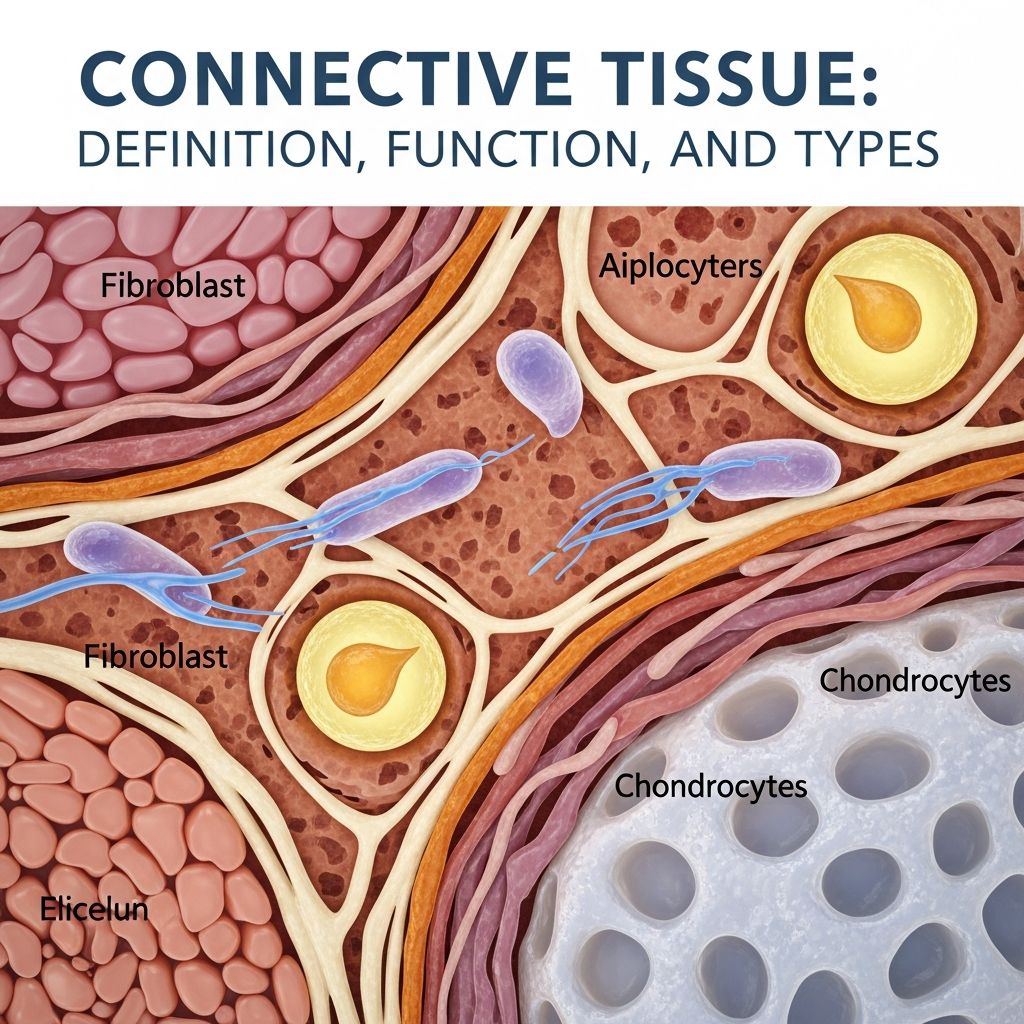
Connective tissue literally holds your body together, and you have it nearly everywhere. These vital structures form the essential connections, supports, and links that allow your body systems to work together seamlessly. Connective tissue is responsible for some of the most critical functions that keep you alive. While it’s easy not to think about connective tissue unless you have a symptom or suspect an issue that could affect it, understanding what this tissue does is fundamental to appreciating how your body maintains its structure and function.
Connective tissue serves to connect, support, and help bind other tissues in the body. It’s composed primarily of two key proteins: collagen and elastin. These proteins give connective tissue its characteristic properties, allowing it to be both strong and flexible. Collagen provides strength and structure, while elastin allows tissues to stretch and return to their original shape. Together, these components create a matrix that supports your organs and body structure, holds your muscle fibers together, and covers and protects your nerves.
The Critical Functions of Connective Tissue
Connective tissue performs multiple essential roles throughout your body that are vital for survival and optimal health:
– Providing structural support to organs and body systems- Holding muscle fibers together and organizing them into functional groups- Covering and protecting your nervous system- Supporting blood vessels throughout your body- Maintaining the integrity of your skeletal system- Facilitating communication between different body systems- Storing energy through adipose (fat) tissue- Providing cushioning and shock absorption in joints
Types of Connective Tissue
Connective tissue comes in various forms, each adapted for specific functions within your body. Understanding these different types helps explain why connective tissue disorders can affect so many different body systems:
Bone Tissue
Bone tissue is technically classified as connective tissue. It includes both harder, mineralized bone tissue and the soft, spongy bone marrow inside. This dual composition allows bones to be both strong enough to support your body weight and flexible enough to move. Bone tissue constantly remodels itself throughout your life, removing old bone and forming new bone to maintain strength and integrity.
Cartilage
Cartilage is a flexible connective tissue found throughout your body, particularly in your joints, ears, and nose. It provides smooth surfaces for joint movement and acts as a shock absorber. Unlike bone, cartilage doesn’t contain blood vessels, which makes it heal more slowly when injured.
Ligaments and Tendons
Both ligaments and tendons are soft connective tissues. Ligaments connect bone to bone and provide stability to joints, while tendons connect muscle to bone and transmit the force generated by muscle contractions to move your skeleton. There’s significant overlap between these tissues since both ligaments and tendons are soft and connective in nature.
Related Stories



Fascia
Fascia is a sheath of stringy connective tissue that surrounds every part of your body. It provides support to your muscles, tendons, ligaments, tissues, and organs. Fascia acts like a sophisticated web that organizes and supports all your body’s structures, allowing them to move smoothly and function optimally.
Adipose Tissue
Adipose tissue is connective tissue composed of fat-storing cells. It serves multiple functions including energy storage, insulation, and organ protection. Adipose tissue also plays important roles in hormone regulation and metabolism.
Blood and Blood Vessels
Blood itself is classified as a connective tissue, as it connects and transports substances throughout your body. Blood vessels, made of connective tissue components, run through most of your connective tissues and form the network that delivers oxygen and nutrients to all body parts.
Connective Tissue Diseases and Disorders
“Connective tissue disease” is an umbrella term for a wide range of diseases that can affect your connective tissues. These conditions negatively impact the connecting structures that hold your body together. Understanding the different categories of connective tissue diseases helps explain their diverse presentations and treatment approaches.
Genetic Connective Tissue Disorders
Genetic disorders of the connective tissue result from gene mutations that you inherit at birth. The mutation affects how your connective tissues develop and usually impacts one of the two primary building blocks in all connective tissues: collagen or elastin. This causes various defects in your tissues. People born with these conditions can have a wide variety of symptoms and complications, ranging from mild to severe.
Examples of hereditary connective tissue diseases include:
– Marfan syndrome- Ehlers-Danlos syndrome (EDS)- Loeys-Dietz syndrome- Osteogenesis imperfecta- Bicuspid aortic valve disease- Polycystic kidney disease- Turner syndrome
Autoimmune Connective Tissue Diseases
Autoimmune connective tissue diseases occur when your immune system mistakenly attacks your own connective tissues. These conditions include:
– Rheumatoid arthritis- Scleroderma- Lupus (systemic lupus erythematosus)- Sjögren’s syndrome- Polymyositis and dermatomyositis
Inflammatory Aortic Disease
Inflammatory and autoimmune diseases can affect the aorta, the body’s main artery that carries blood from the heart to the rest of the body. These conditions, such as aortitis, can damage and weaken the aorta, causing it to become wider (aneurysm) or torn (dissection).
Tissue-Specific Conditions
Many diseases depend partly on the specific type of connective tissue affected. Examples include various bone conditions, blood conditions, and cartilage diseases. These tissue-specific conditions may not affect all connective tissues but can have significant impacts on health and function.
How Connective Tissue Diseases Affect Multiple Body Systems
Many connective tissue disorders can affect your lungs and cardiovascular system simultaneously. Your lungs contain a lot of connective tissues and rely heavily on them for proper function and gas exchange. Blood vessels run through most of your connective tissues, and because they’re made of similar components, inflammation spreads easily between them.
As a result, many connective tissue diseases can cause musculoskeletal symptoms together with cardiopulmonary symptoms, including:
– Shortness of breath- Changes to blood pressure- Changes to heartbeat- Joint pain and swelling- Muscle weakness- Skin changes- Vision problems
When blood vessels become inflamed due to connective tissue disease, they can swell and break, causing unexplained bleeding and other complications. This systemic nature of connective tissue diseases makes diagnosis challenging and necessitates comprehensive medical evaluation.
Understanding Ehlers-Danlos Syndrome
Ehlers-Danlos syndrome (EDS) is a genetic condition that weakens your connective tissue. It’s one of the most well-known genetic connective tissue disorders. EDS makes your body produce weak collagen, which means your connective tissue can’t support you like it should. This condition can affect organs and tissue throughout your body, including your skin, joints, muscles, blood vessels, and organs. The severity and specific symptoms vary depending on the type of EDS, as there are multiple genetic variants of this condition.
Treatment Approaches for Connective Tissue Disorders
Most connective tissue disorders are lifelong conditions. Healthcare providers do what they can to reduce their severity and treat the symptoms and complications individually. However, the specific treatment approach depends on the type of connective tissue disorder:
Autoimmune Disease Treatment
Autoimmune diseases and sarcomas can go into remission—periods without any signs or symptoms—but they can also recur or return. Healthcare providers treat autoimmune diseases with a combination of anti-inflammatory drugs (corticosteroids) and immune system-repressing drugs (immunosuppressants) to stop the automatic inflammation response.
Genetic Disorder Management
As healthcare providers can’t treat the genetic defect itself, they treat the symptoms and complications individually as much as they can. They’ll monitor your condition throughout your life to manage complications and optimize function.
Sarcoma Treatment
Treatments for sarcomas include surgery, chemotherapy, and radiation therapy. These multimodal approaches aim to eliminate cancer cells and prevent recurrence.
Recognizing Symptoms and Seeking Care
Connective tissue disease affects the tissues that hold things together in your body. In normal circumstances, you probably wouldn’t notice these tissues doing their jobs. But when they’re diseased, you feel it—often all over your body. These diseases can cause a vast array of symptoms and complications.
It can be hard to recognize the signs and symptoms of a connective tissue disease because symptoms can seem unrelated or mimic other conditions. However, getting a diagnosis and beginning treatment sooner puts you in a better position to manage your condition. Don’t ignore your symptoms, even if they seem unrelated. They could be different effects of the same disease.
Preventive Care and Ongoing Management
Seeing a primary care provider at least yearly can help catch conditions that affect connective tissue earlier. You can also talk to your primary care provider if you have questions or concerns about a possible connective tissue problem. The better you take care of yourself through regular exercise, proper nutrition, stress management, and adherence to medical recommendations, the easier it usually is for you and your connective tissue to hold things together.
For patients with known connective tissue disorders, comprehensive multidisciplinary care is essential. This may involve cardiologists, rheumatologists, orthopedic specialists, ophthalmologists, and other specialists working together to provide coordinated care addressing all aspects of the disease.
Frequently Asked Questions
Q: What are the main components of connective tissue?
A: The primary building blocks of connective tissue are collagen and elastin proteins. Collagen provides strength and structure, while elastin allows tissues to stretch and return to their original shape. These components work together to create a matrix that supports your organs and body structure.
Q: Can connective tissue diseases be cured?
A: Most connective tissue disorders are lifelong conditions that cannot be cured, but symptoms and complications can be managed effectively. Autoimmune connective tissue diseases may go into remission, though they can recur. Healthcare providers focus on reducing severity, treating symptoms, and monitoring your condition throughout your life.
Q: Why do connective tissue diseases affect multiple body systems?
A: Connective tissue is found throughout your entire body supporting organs, blood vessels, muscles, and nerves. Because inflammation spreads easily between tissues made of similar components, connective tissue diseases often cause symptoms in multiple systems simultaneously, including musculoskeletal, cardiovascular, and respiratory effects.
Q: What should I do if I suspect I have a connective tissue disorder?
A: Contact your primary care provider and describe your symptoms. Early diagnosis and treatment can help you better manage your condition. Don’t dismiss symptoms that seem unrelated, as they could be different manifestations of the same underlying connective tissue disease.
Q: How often should I see my doctor if I have a connective tissue disorder?
A: At minimum, you should have yearly check-ups with your primary care provider. If you have a diagnosed connective tissue disorder, your specialist will recommend follow-up appointments based on your specific condition, treatment plan, and disease severity. Regular monitoring helps catch complications early.
References
- What Is Connective Tissue? Definition, Function, Types — Cleveland Clinic. 2025-02-26. https://my.clevelandclinic.org/health/body/connective-tissue
- Connective Tissue Disease: Types, Symptoms & Treatments — Cleveland Clinic. https://my.clevelandclinic.org/health/diseases/14803-connective-tissue-diseases
- Ehlers-Danlos Syndrome (EDS): Symptoms, Treatment & Tests — Cleveland Clinic. https://my.clevelandclinic.org/health/diseases/17813-ehlers-danlos-syndrome
- Body Tissue Types, Structure & Function — Cleveland Clinic. https://my.clevelandclinic.org/health/body/body-tissue
- Fascia Tissue Function — Cleveland Clinic. https://my.clevelandclinic.org/health/body/23251-fascia
- Cardiovascular Marfan & Connective Tissue Clinic — Cleveland Clinic. https://my.clevelandclinic.org/departments/heart/depts/cardiovascular-marfan-connective-tissue
Similar Articles








Read full bio of Sneha Tete