Conn’s Syndrome: Causes, Symptoms, Diagnosis & Treatment
Understanding primary hyperaldosteronism: comprehensive guide to diagnosis and management.
What is Conn’s Syndrome?
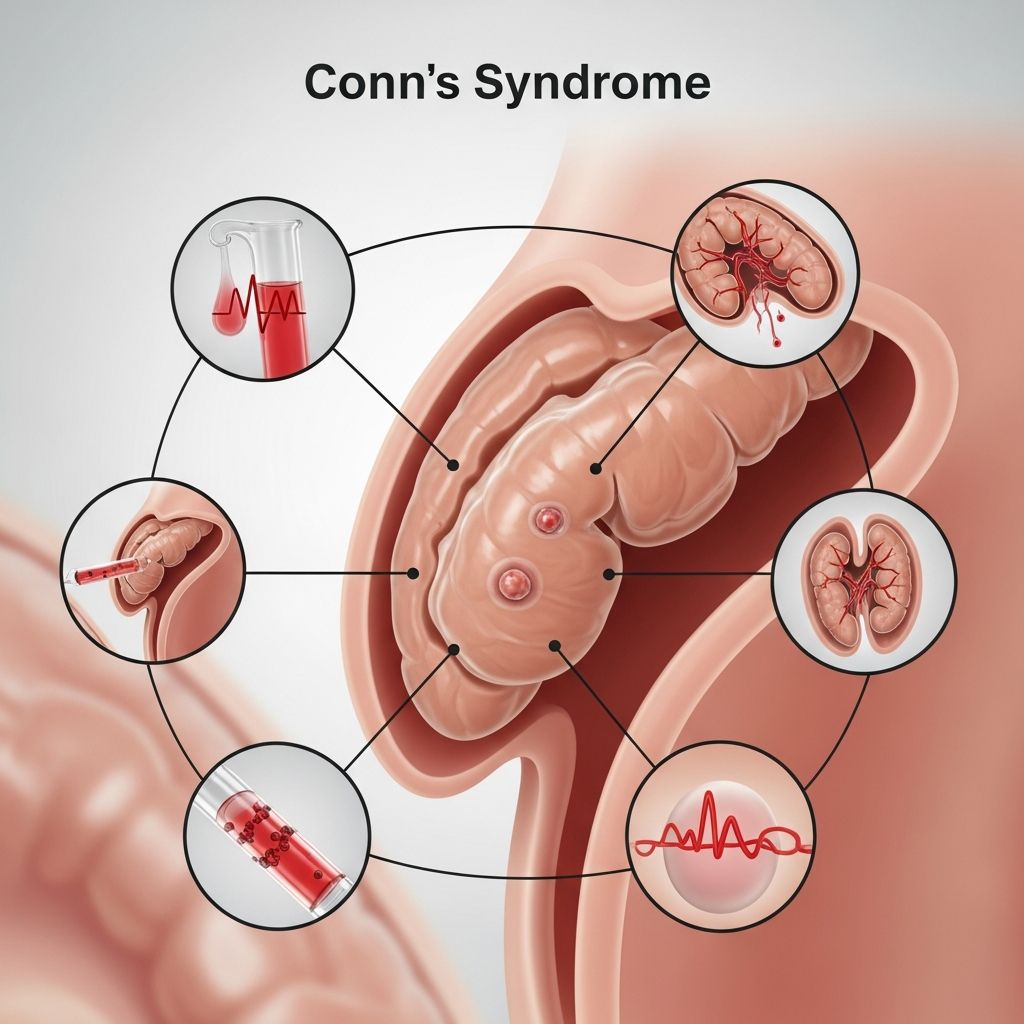
Conn’s syndrome, medically known as primary hyperaldosteronism, is an endocrine disorder characterized by excessive production of aldosterone from one or both adrenal glands. Aldosterone is a hormone that plays a crucial role in regulating blood pressure and electrolyte balance by controlling sodium retention and potassium excretion. When aldosterone levels become abnormally elevated, the body retains excess sodium while losing potassium, leading to high blood pressure and electrolyte imbalances. Named after Dr. Jerome W. Conn, who first identified the condition in 1955, this syndrome represents one of the most common secondary causes of hypertension that is potentially curable with appropriate treatment.
The condition was initially described in association with aldosterone-producing adenomas—benign tumors of the adrenal cortex—but the diagnosis now encompasses various forms of primary hyperaldosteronism, including bilateral adrenal hyperplasia and other rare genetic syndromes. Recognition and proper management of Conn’s syndrome is essential because it can lead to significant cardiovascular complications if left untreated, yet many cases remain underdiagnosed due to the nonspecific nature of symptoms.
Understanding the Causes
Primary hyperaldosteronism can result from several different pathological processes affecting the adrenal glands:
Unilateral Disease
Aldosterone-producing adenomas (APAs) represent the most common cause of unilateral primary hyperaldosteronism, accounting for approximately 30-40% of all cases. These benign tumors develop in one adrenal gland and produce excessive amounts of aldosterone independently of the body’s regulatory mechanisms. In rare cases, unilateral disease may be caused by adrenocortical carcinoma or adrenal hyperplasia affecting only one gland. The key characteristic of unilateral disease is that surgical removal of the affected gland often provides complete cure or significant improvement in hypertension.
Bilateral Disease
Bilateral adrenal hyperplasia (BAH) accounts for approximately 60-70% of primary hyperaldosteronism cases and involves inappropriate aldosterone production by both adrenal glands. Unlike adenomas, which are discrete tumors, hyperplasia involves the proliferation of aldosterone-producing cells throughout the adrenal cortex. Bilateral disease is more challenging to treat surgically and typically requires long-term medical management.
Genetic Forms
Rare familial forms of primary hyperaldosteronism have been identified, including familial hyperaldosteronism type I and type II. These genetic conditions cause bilateral overproduction of aldosterone and often present earlier in life with severe hypertension. Additionally, aldosterone-producing renin-responsive adenomas and ectopic aldosterone secretion from other tissues such as the kidneys or ovaries represent uncommon but important variants of the disease.
Clinical Presentation and Symptoms
While many patients with Conn’s syndrome may be asymptomatic and discovered incidentally during workup for resistant hypertension, others present with characteristic clinical manifestations related to sodium retention and potassium wasting.
Primary Features
The hallmark finding in Conn’s syndrome is resistant hypertension, defined as elevated blood pressure that remains uncontrolled despite treatment with three or more antihypertensive medications, or requires four or more medications for control. The hypertension in primary hyperaldosteronism tends to be more severe and difficult to manage than essential hypertension, often presenting in younger patients without obvious risk factors.
Potassium-Related Symptoms
Hypokalemia—low potassium levels in the blood—affects many patients with Conn’s syndrome and produces characteristic symptoms including muscle weakness, muscle cramping, fatigue, palpitations, and numbness. Some patients may develop hypokalemia-induced nephrogenic diabetes insipidus, leading to excessive urination (polyuria) and thirst (polydipsia). In severe cases, hypokalemia can cause dangerous cardiac arrhythmias, particularly in patients initiated on diuretic therapy without potassium supplementation.
Related Stories



Metabolic Complications
Beyond electrolyte disturbances, patients often develop metabolic alkalosis due to loss of hydrogen ions alongside potassium excretion. Approximately 20% of patients with Conn’s syndrome exhibit impaired glucose tolerance or diabetes mellitus, partly due to hypokalemia-induced inhibition of insulin secretion. The chronic elevation of aldosterone and sodium retention may induce inflammation and increased sympathetic nervous system activity, promoting fibrosis in vital organs.
Associated Complications
Without proper recognition and treatment, Conn’s syndrome significantly increases cardiovascular and renal complications beyond what would be expected from hypertension alone. Patients face increased risk for chronic kidney disease, atrial fibrillation, stroke, myocardial infarction, and congestive heart failure. These complications underscore the importance of early diagnosis and appropriate management.
Diagnostic Approach
Diagnosis of Conn’s syndrome requires a systematic approach combining clinical suspicion, biochemical testing, and confirmatory studies.
Initial Screening
Patients with resistant hypertension, spontaneous hypokalemia, family history of early-onset hypertension, or hypertension diagnosed before age 40 should be screened for primary hyperaldosteronism. The initial diagnostic test involves measuring the plasma aldosterone concentration (PAC) and plasma renin activity (PRA), expressed as the aldosterone-to-renin ratio (ARR). An elevated ARR (typically ≥20-30 ng/dL per ng/mL/hr) suggests possible primary hyperaldosteronism and warrants further investigation.
Confirmatory Testing
Because the ARR can be falsely elevated in certain conditions and medications can affect results, confirmatory tests are essential to establish the diagnosis definitively. Several approaches are available:
Saline Suppression Test: Patients receive a sodium-chloride solution intravenously or orally, and blood samples are obtained to measure aldosterone and renin levels. In primary hyperaldosteronism, aldosterone remains elevated despite sodium loading while renin remains suppressed, confirming the diagnosis.
Fludrocortisone Suppression Test: This test involves administering fludrocortisone, a synthetic mineralocorticoid, along with oral sodium supplementation. In normal individuals, this suppresses aldosterone production, whereas in primary hyperaldosteronism, aldosterone levels remain inappropriately elevated.
Captopril Suppression Test: An ACE inhibitor is administered, and aldosterone levels are measured. Normally, renin-angiotensin system suppression would reduce aldosterone; failure of this suppression supports the diagnosis of primary hyperaldosteronism.
Subtype Classification
After confirming primary hyperaldosteronism, imaging studies are crucial for distinguishing between unilateral and bilateral disease, as treatment approaches differ significantly. Computed tomography (CT) or magnetic resonance imaging (MRI) of the adrenal glands can identify nodules or hyperplasia. However, adrenal imaging has limited sensitivity and specificity, as nonfunctional adenomas are common incidental findings.
Selective adrenal venous sampling (AVS) is the gold standard test for lateralization when imaging findings are ambiguous. This invasive procedure involves catheterizing the adrenal veins and measuring aldosterone and cortisol levels from each gland separately. AVS helps determine whether disease is unilateral or bilateral, guiding treatment decisions. Patients under 40 years old with a single adenoma on imaging may proceed directly to surgery without AVS, while older patients or those with unclear imaging typically require AVS before surgical decision-making.
Treatment Options
Treatment strategies for Conn’s syndrome depend on the underlying cause and whether disease is unilateral or bilateral.
Surgical Treatment for Unilateral Disease
Unilateral adrenalectomy is the definitive treatment for confirmed unilateral aldosterone-producing adenomas and represents the most effective approach for achieving cure. The procedure is typically performed using minimally invasive laparoscopic techniques through several small incisions, reducing recovery time and complications compared to open surgery. After successful adrenalectomy, approximately 95% of patients experience significant improvement in hypertension, with one-third achieving complete cure and the remainder requiring fewer medications or lower doses.
The mean overall cure rate for hypertension after adrenalectomy is approximately 30-60% for adenomas and 19% for bilateral disease, reflecting differences in underlying pathophysiology and the duration of hypertension before treatment. Early intervention, before hypertension has caused irreversible organ damage, generally yields better outcomes.
Medical Management
For patients with bilateral hyperplasia, medical therapy is the primary treatment approach. Aldosterone antagonists block the effects of excess aldosterone and represent the cornerstone of pharmacologic management. Spironolactone and eplerenone are the primary agents in this class, with eplerenone offering the advantage of greater selectivity for mineralocorticoid receptors and fewer hormonal side effects than spironolactone.
Potassium-sparing diuretics such as amiloride may be used as alternatives or adjuncts to aldosterone antagonists. These medications block sodium reabsorption in the collecting duct while conserving potassium, helping to normalize electrolytes and reduce blood pressure.
Dietary sodium restriction is an important component of medical management, as excessive salt intake exacerbates sodium retention and hypertension. Patients should maintain a diet with less than 2 grams of sodium daily to optimize medication effectiveness.
Long-Term Management and Prognosis
With appropriate diagnosis and treatment, Conn’s syndrome carries an excellent prognosis. Treatment goals focus on normalizing blood pressure, correcting electrolyte abnormalities (particularly potassium levels), and reducing aldosterone excess.
Patients undergoing successful adrenalectomy often experience rapid improvements in blood pressure control and resolution of symptoms within weeks to months. Those managed medically require regular monitoring of blood pressure, potassium levels, and renal function. Follow-up imaging and biochemical testing may be performed periodically to assess disease stability and medication effectiveness.
Without appropriate treatment, the prognosis is poor, with patients remaining at high risk for poorly controlled hypertension, cardiovascular events, progressive kidney disease, and premature mortality. Recognition of primary hyperaldosteronism in patients with difficult-to-control hypertension is therefore critical for improving outcomes and potentially offering a cure.
Frequently Asked Questions
Q: Is Conn’s syndrome curable?
A: Yes, Conn’s syndrome caused by a single adrenal adenoma is often curable with surgical removal of the affected gland. Approximately one-third of patients achieve complete cure of hypertension after adrenalectomy, while others require fewer medications for control. Bilateral disease is managed medically with excellent long-term outcomes using aldosterone antagonists.
Q: What percentage of hypertension is caused by Conn’s syndrome?
A: Primary hyperaldosteronism accounts for approximately 5-10% of all hypertension cases and represents the most common secondary cause of high blood pressure. The prevalence is higher in patients with resistant hypertension, affecting 5-15% of this population.
Q: Can Conn’s syndrome be diagnosed with blood tests alone?
A: Initial screening uses blood tests measuring aldosterone and renin levels; however, confirmatory testing with sodium loading, fludrocortisone suppression, or captopril suppression is necessary to establish diagnosis definitively. Additionally, imaging studies and sometimes selective venous sampling are needed to determine disease location and guide treatment.
Q: What medications are used to treat Conn’s syndrome?
A: Aldosterone antagonists such as spironolactone and eplerenone are the primary medications used for managing primary hyperaldosteronism. Potassium-sparing diuretics like amiloride may also be used. These medications are combined with dietary sodium restriction and other antihypertensive agents as needed.
Q: Are there lifestyle modifications that help manage Conn’s syndrome?
A: Yes, reducing dietary sodium intake to less than 2 grams daily is essential for medical management. Additionally, limiting potassium supplementation from foods and supplements, avoiding NSAIDs that can worsen fluid retention, and regular physical activity all contribute to better disease control and overall cardiovascular health.
References
- Conn Syndrome — National Center for Biotechnology Information (NCBI) Bookshelf. 2024. https://www.ncbi.nlm.nih.gov/books/NBK459197/
- Primary Hyperaldosteronism (Conn’s Syndrome) — Columbia University Department of Surgery. 2024. https://columbiasurgery.org/conditions-and-treatments/primary-hyperaldosteronism-conns-syndrome
- Hyperaldosteronism: What It Is, Causes, Symptoms & Treatment — Cleveland Clinic. 2024. https://my.clevelandclinic.org/health/diseases/16448-hyperaldosteronism
- Primary Aldosteronism: Causes, Symptoms & Treatment — The Adrenal Center. 2024. https://www.adrenal.com/primary-aldosteronism
- Conn’s Syndrome: Symptoms, Diagnosis & Treatment — Urology Health. 2024. https://www.urologyhealth.org/urology-a-z/c/conns-syndrome
Similar Articles








Read full bio of Sneha Tete