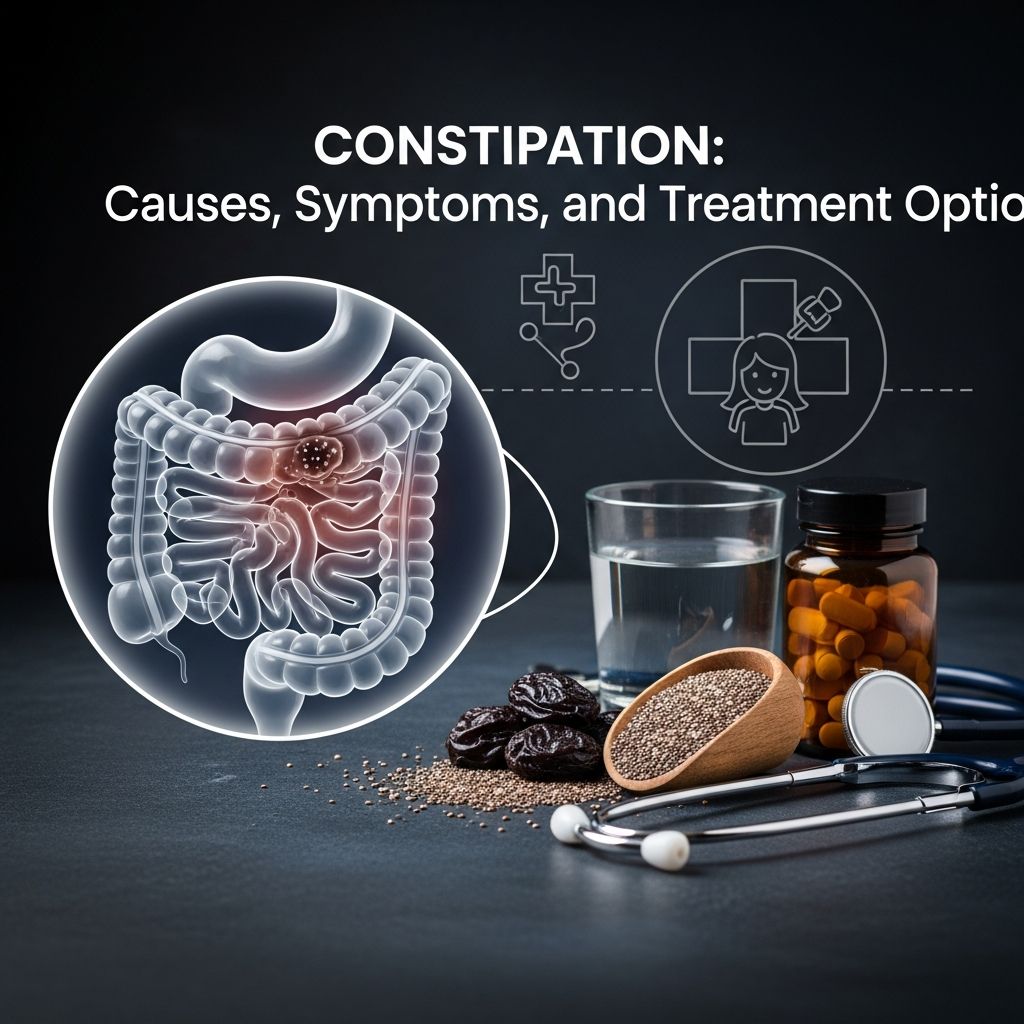
Constipation: Causes, Symptoms, and Treatment Options
Comprehensive guide to understanding, managing, and treating constipation effectively.
Understanding Constipation
Constipation is a common digestive condition that affects millions of people worldwide. It is defined as having fewer than three bowel movements per week or experiencing difficulty passing stools. While constipation is typically not a serious condition, it can cause significant discomfort and impact quality of life. Understanding the underlying causes and available treatment options is essential for managing this condition effectively.
Constipation is fundamentally a symptom rather than a disease itself. It can result from various underlying conditions, lifestyle factors, or medical treatments. The severity and duration of constipation vary widely among individuals, and what constitutes normal bowel function differs from person to person.
What Causes Constipation?
Multiple factors can contribute to the development of constipation. Understanding these causes is crucial for determining the most appropriate treatment approach.
Dietary Factors
One of the most common causes of constipation is an inadequate intake of dietary fiber. Fiber plays a vital role in promoting regular bowel movements by adding bulk to stool and facilitating its passage through the digestive tract. A diet low in fruits, vegetables, whole grains, and legumes can significantly increase the risk of constipation. Additionally, insufficient water intake can lead to dehydration, which causes stools to become hard and difficult to pass.
Physical Inactivity
Lack of physical activity is another significant contributing factor to constipation. Regular exercise stimulates muscle contractions in the digestive tract, promoting the movement of stool through the intestines. Sedentary lifestyles, prolonged bed rest, or reduced mobility can all contribute to slower bowel transit times and constipation development.
Medications and Medical Conditions
Certain medications can cause constipation as a side effect. These include pain relievers containing opioids, antacids containing aluminum or calcium, antihistamines, and antidepressants. Additionally, medical conditions such as irritable bowel syndrome, hypothyroidism, diabetes, and neurological disorders can lead to constipation. Anatomical obstruction, including tumors or strictures in the colon, can also impede normal bowel function.
Age-Related Factors
Constipation becomes increasingly prevalent with age. Studies indicate that constipation affects as many as 26 percent of elderly men and 34 percent of elderly women, making it a particularly common concern in older populations. Age-related changes in muscle function, metabolism, and medication use all contribute to this increased prevalence.
Lifestyle and Behavioral Factors
Ignoring the urge to have a bowel movement, stress, significant life changes, travel, and changes in daily routine can all trigger constipation. Toilet training issues in children and inconsistent bowel habits can also contribute to chronic constipation.
Recognizing the Symptoms
The symptoms of constipation can vary in severity and duration. Common symptoms include:
Related Stories



– Fewer than three bowel movements per week- Stools that are hard, dry, or lumpy- Difficulty or pain during bowel movements- Feeling incomplete evacuation after bowel movements- Abdominal discomfort, bloating, or cramping- Lower back pain- Loss of appetite- General fatigue or lethargy
In severe cases, constipation can lead to fecal impaction, a condition where stool accumulates in the rectum and becomes difficult to expel without medical intervention. Symptoms of fecal impaction include severe abdominal pain, rectal bleeding, and inability to pass stool for an extended period.
Risk Factors for Constipation
Certain populations are at higher risk for developing constipation. These risk factors include:
– Advanced age, particularly individuals over 65 years old- Female gender, which shows higher prevalence rates- Chronic medical conditions such as diabetes, irritable bowel syndrome, or neurological disorders- Regular use of medications known to cause constipation- Pregnancy and the postpartum period- History of colon or rectal cancer- Recent abdominal or pelvic surgery- Inadequate physical activity or mobility limitations
Additionally, constipation status and severity have been shown to associate with higher risk of incident chronic kidney disease (CKD) and end-stage renal disease (ESRD), independent of other known risk factors. This connection highlights the importance of addressing constipation promptly and effectively.
Diagnostic Approach
Healthcare providers typically diagnose constipation based on symptoms and medical history. However, when constipation is severe, persistent, or accompanied by alarming symptoms, further diagnostic evaluation may be necessary.
Medical History and Physical Examination
A detailed medical history helps identify potential causes, including medications, dietary habits, and recent changes in bowel habits. Physical examination may include abdominal palpation to assess for distention or abnormalities.
Diagnostic Tests
Depending on the clinical presentation, healthcare providers may recommend:
– Colonoscopy or flexible sigmoidoscopy to visualize the colon and rule out structural abnormalities- Blood tests to assess thyroid function or other metabolic disorders- Imaging studies such as abdominal X-rays or computed tomography (CT) scans when obstruction is suspected- Defecography to evaluate muscle function during bowel movements- Colonic transit studies to measure how quickly stool moves through the colon
Treatment Options for Constipation
Treatment approaches for constipation range from simple lifestyle modifications to medical interventions, depending on the underlying cause and severity.
Lifestyle Modifications
Lifestyle changes are often the first-line approach to managing constipation and frequently prove effective:
– Increase dietary fiber intake gradually through fruits, vegetables, whole grains, beans, and legumes- Drink adequate water and fluids throughout the day, typically at least 8-10 glasses daily- Establish a regular exercise routine, with at least 150 minutes of moderate-intensity activity weekly- Maintain a consistent daily routine for bowel movements, ideally responding promptly to the urge- Reduce stress through relaxation techniques such as meditation or yoga- Limit foods that may contribute to constipation, including processed foods, dairy, and refined carbohydrates- Consider using a stool to elevate the feet while on the toilet, which can facilitate better positioning and easier bowel movements
Dietary Interventions
Diet plays a crucial role in preventing and treating constipation. Gradually increasing fiber intake over several weeks helps the digestive system adjust and prevents bloating or gas. High-fiber foods include whole grain breads and cereals, fresh fruits, raw vegetables, beans, nuts, and seeds. Additionally, probiotic-rich foods such as yogurt and fermented vegetables may promote a healthy gut microbiome and regular bowel function.
Over-the-Counter Medications
When lifestyle modifications are insufficient, various over-the-counter options are available:
– Fiber supplements such as psyllium husk or methylcellulose increase stool bulk- Stool softeners help retain moisture in the stool, making it easier to pass- Osmotic laxatives draw water into the intestines to soften stool and increase frequency- Stimulant laxatives increase muscle contractions in the colon- Mineral oil lubricates the digestive tract to ease bowel movements
However, it is important to note that long-term use of certain laxatives, particularly stimulant laxatives, can lead to dependence and reduced bowel function over time.
Prescription Medications
For chronic constipation that does not respond to conventional treatments, healthcare providers may prescribe:
– Lubiprostone, which increases fluid secretion in the small intestine- Linaclotide, which increases intestinal fluid and promotes bowel movements- Prucalopride, which enhances muscle contractions in the colon- Polyethylene glycol (PEG) solutions for more intensive bowel cleansing
Medical Procedures
In cases of severe constipation or fecal impaction, medical interventions may include manual disimpaction, enemas, or in rare cases, surgical intervention to address structural abnormalities or remove obstructions.
Special Considerations
Constipation in Older Adults
Elderly individuals require special attention when managing constipation due to the higher prevalence of chronic conditions, polypharmacy, and age-related physiological changes. Healthcare providers should carefully review medications for constipating effects and consider adjustments when possible. Additionally, ensuring adequate hydration, mobility, and social engagement can significantly improve bowel function in this population.
Constipation and Kidney Health
Research indicates that constipation status and severity associate with higher risk of incident CKD and ESRD, with patients experiencing progressive eGFR decline independent of known risk factors. Healthcare providers evaluating patients with constipation and reduced kidney function should acknowledge the excess risk of kidney damage caused by dehydration and overuse of nonsteroidal anti-inflammatory drugs. Treatment of constipation through lifestyle modifications and probiotics rather than laxatives may potentially reduce the risk of adverse renal outcomes.
Impact on Quality of Life
Constipation significantly affects health-related quality of life and creates considerable economic burden for patients. Chronic constipation can lead to missed work, increased healthcare utilization, and reduced productivity. Addressing constipation promptly can substantially improve overall well-being and daily functioning.
When to Seek Medical Attention
While most cases of constipation resolve with conservative treatment, certain situations warrant prompt medical evaluation:
– Sudden changes in bowel habits lasting more than two weeks- Severe abdominal pain or cramping- Blood in the stool or black, tarry stools- Unexplained weight loss- Persistent constipation despite lifestyle modifications- Constipation accompanied by fever or vomiting- Signs of fecal impaction or complete inability to pass stool- Constipation following abdominal surgery or after starting new medications
Prevention Strategies
Preventing constipation is more effective than treating it once it develops. Key prevention strategies include maintaining adequate dietary fiber intake, staying well-hydrated, engaging in regular physical activity, managing stress, and maintaining consistent bowel habits. Additionally, reviewing medications with healthcare providers to identify constipating agents and exploring potential alternatives can help prevent constipation from developing.
Frequently Asked Questions
Q: How much fiber should I consume daily to prevent constipation?
A: Most adults should aim for 25-35 grams of dietary fiber daily. However, it is important to increase fiber intake gradually over several weeks to allow your digestive system to adjust and avoid bloating or gas.
Q: Are laxatives safe for long-term use?
A: Long-term use of certain laxatives, particularly stimulant laxatives, can lead to dependence and reduced bowel function over time. It is best to use laxatives under medical guidance and focus on lifestyle modifications for long-term management.
Q: Can constipation affect kidney function?
A: Yes, research indicates that constipation status and severity associate with higher risk of chronic kidney disease and end-stage renal disease. Dehydration from constipation and overuse of NSAIDs can contribute to kidney damage.
Q: How long does it typically take for lifestyle changes to relieve constipation?
A: Most people experience improvement within a few weeks of implementing dietary changes, increasing physical activity, and staying well-hydrated. However, the timeline varies depending on individual factors and the severity of constipation.
Q: Is constipation more common in elderly individuals?
A: Yes, constipation is significantly more prevalent in older adults, affecting as many as 26 percent of elderly men and 34 percent of elderly women. Age-related changes in muscle function, medication use, and lifestyle factors contribute to this increased prevalence.
Q: What role do probiotics play in treating constipation?
A: Probiotics may promote a healthy gut microbiome and support regular bowel function. Some research suggests that probiotic use could potentially reduce the risk of adverse renal outcomes in patients with constipation, though more clinical trials are needed to establish definitive benefits.
References
- Constipation and Incident CKD — National Institute of Health, NIH National Center for Biotechnology Information. 2017. https://pmc.ncbi.nlm.nih.gov/articles/PMC5373459/
- The Health-Related Quality of Life and Economic Burden of Constipation — Johns Hopkins University. https://pure.johnshopkins.edu/en/publications/the-health-related-quality-of-life-and-economic-burden-of-constip-3/
- Constipation in the Elderly — Johns Hopkins University. https://pure.johnshopkins.edu/en/publications/constipation-in-the-elderly-3
- Constipation in the Older Adult — Consultant360. https://www.consultant360.com/articles/constipation-older-adult
Similar Articles








Read full bio of Sneha Tete