Contact Allergic Dermatitis of the Hand Images
Explore detailed images and clinical insights into contact allergic dermatitis affecting the hands, including causes, symptoms, and management strategies.
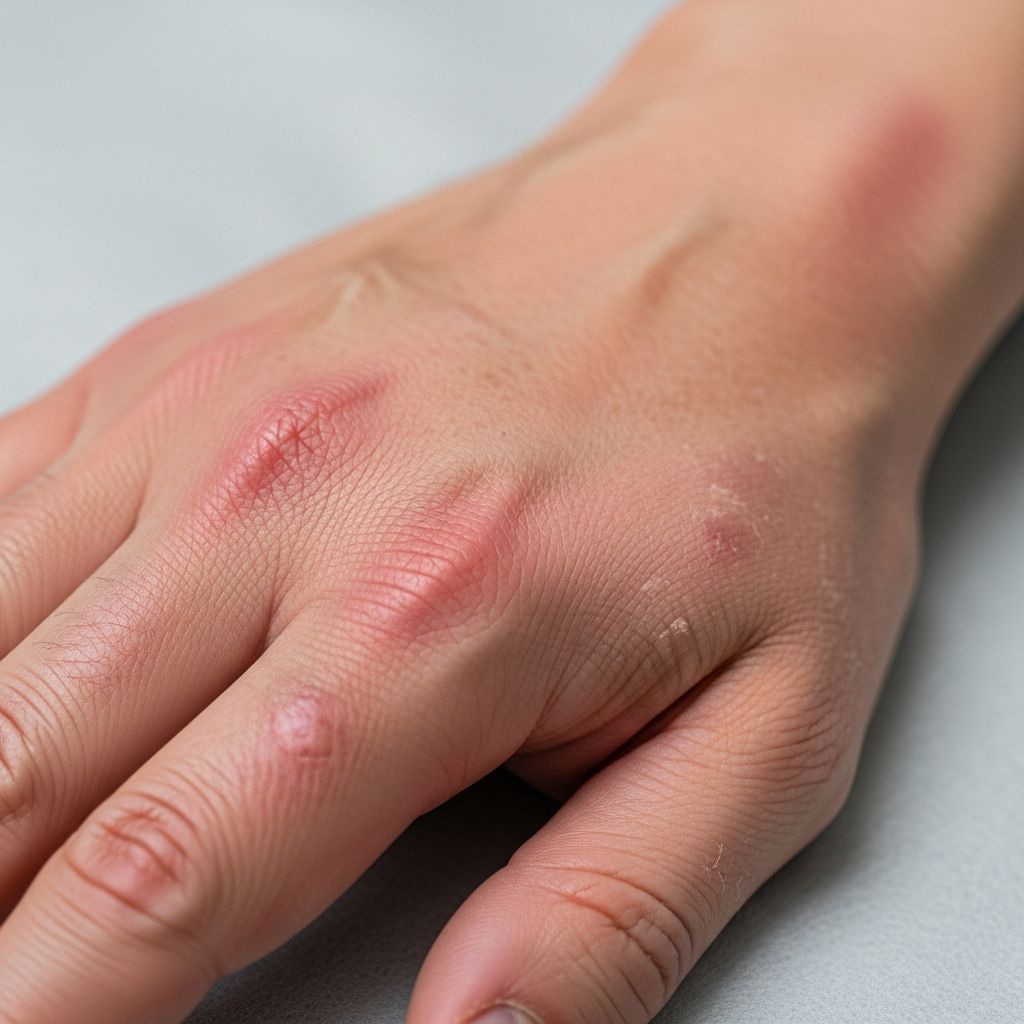
Contact allergic dermatitis of the hand is a common inflammatory skin condition triggered by an immune response to specific allergens upon skin contact. It manifests as eczematous changes primarily on the hands due to frequent exposure to environmental triggers. This article presents a curated collection of clinical images showcasing various presentations, alongside detailed explanations of causes, symptoms, diagnosis, and management. Understanding these visuals aids in accurate identification and timely intervention.
What is contact allergic dermatitis of the hand?
Contact allergic dermatitis (ACD) of the hand arises from a delayed-type hypersensitivity reaction (Type IV) where the immune system recognizes haptens—small molecules that bind to skin proteins—as foreign. Hands are particularly susceptible due to constant contact with potential allergens in daily activities, work, and personal care products. Unlike irritant contact dermatitis, ACD requires prior sensitization, with reactions appearing 24–48 hours after re-exposure. Prevalence is high among occupations involving wet work, chemicals, or metals, affecting up to 20% of dermatology patients.
Clinically, it presents with erythema, edema, vesicles, and scaling, often localized to sites of contact. Chronic cases lead to lichenification, fissuring, and hyperkeratosis. Early recognition through visual patterns is crucial for distinguishing it from other hand dermatoses like atopic eczema or psoriasis.
Who is at risk of contact allergic dermatitis of the hand?
Individuals in high-risk occupations such as healthcare workers, hairdressers, cleaners, mechanics, and food handlers face elevated risks due to repetitive exposure to allergens. Those with a history of atopic dermatitis, prior allergies, or damaged skin barrier are more prone to sensitization. Genetic factors, including filaggrin mutations, impair skin barrier function, increasing susceptibility. Women may have higher rates due to cosmetic use and jewelry. Children and the elderly with thinner skin are also vulnerable.
- Occupational exposure: Healthcare (latex, disinfectants), beauty industry (fragrances, preservatives).
- Consumer products: Nickel in jewelry, fragrances in soaps, rubber accelerators in gloves.
- At-risk groups: atopics, those with dry skin or frequent hand washing.
What causes contact allergic dermatitis of the hand?
Common culprits include metals (nickel, cobalt, chromate), rubber chemicals (thiurams, carbamates), fragrances, preservatives (formaldehyde releasers), and plants (sesquiterpene lactones). Occupational allergens like epoxy resins and biocides in cutting oils are notable. Even low-molecular-weight substances penetrate the stratum corneum, haptenate proteins, and activate T-cells upon re-exposure. Cross-reactivity occurs, e.g., between fragrances or balsam of Peru.
| Allergen Type | Examples | Prevalence |
|---|---|---|
| Metals | Nickel sulfate, cobalt | High (14–20%) |
| Rubber | Thiuram mix, mercaptobenzothiazole | Moderate (5–10%) |
| Fragrances | Fragrance mix I/II, balsam of Peru | Moderate (4–7%) |
| Preservatives | Methylisothiazolinone, formaldehyde | Increasing |
What are the clinical features of contact allergic dermatitis of the hand?
Acute phase: Pruritic erythematous patches with vesicles, bullae, and oozing, often on palms, fingers, or webspaces. Subacute: Scaling, crusting, and fissuring. Chronic: Thickened, hyperkeratotic skin with accentuated markings. Distribution follows allergen exposure—dorsal hands for jewelry, volar for gloves. Secondary infection presents with pustules or honey-crusted erosions.
Images of contact allergic dermatitis of the hand
This gallery illustrates diverse clinical morphologies to facilitate recognition.
- Image 1: Acute vesicular dermatitis on palmar aspect of fingers from nickel in tools; grouped vesicles on erythematous base.
- Image 2: Dorsal hand involvement with rubber glove allergy; edema, erythema, and scaling.
- Image 3: Chronic lichenified patches on thumb from chromate in cement; hyperkeratosis and fissuring.
- Image 4: Webspace dermatitis from fragrance in soap; macerated, weepy skin.
- Image 5: Palmar hyperkeratosis from epoxy resin; dry, cracked plaques.
- Image 6: Secondary bacterial infection; pustules overlaying eczematous base.
Related Stories



How is contact allergic dermatitis of the hand diagnosed?
Diagnosis combines history, examination, and patch testing. History elicits exposure patterns and timing. Examination reveals characteristic morphology and distribution. Patch testing with standardized series (e.g., TRUE Test) and supplemental occupational trays confirms allergens, read at D2 and D4. Positive reactions (≥++) indicate relevance if exposure matches. Differential includes irritant dermatitis (immediate onset, no vesicles), fungal infections (KOH positive), or psoriasis (nail changes, Auspitz sign).
What is the treatment for contact allergic dermatitis of the hand?
Treatment prioritizes allergen avoidance, supported by symptomatic relief and skin barrier repair. Acute cases require potent topical corticosteroids (e.g., clobetasol 0.05%) twice daily for 1–2 weeks, tapered to mild. Emollients (petrolatum-based) applied frequently. Severe widespread disease warrants oral prednisone (0.5–1 mg/kg) for 7–14 days. Antihistamines alleviate itch; wet wraps enhance penetration. Chronic cases may need calcineurin inhibitors or phototherapy. Protective gloves (cotton-lined PVC) prevent re-exposure.
- Avoid triggers: Substitute products, use hypoallergenic alternatives.
- Skincare: Fragrance-free cleansers, frequent moisturizing.
- Topicals: Group I–II steroids for palms; lower potency for thin skin.
- Systemic: For >20% body surface or refractory cases.
Frequently Asked Questions (FAQs)
Q: How long does contact allergic dermatitis of the hand last?
A: With allergen avoidance and treatment, acute cases resolve in 1–3 weeks; chronic may persist months without intervention.
Q: Can contact allergic dermatitis spread?
A: No, it does not spread person-to-person but can autosensitize to id reactions on distant sites.
Q: Is patch testing painful?
A: Mild discomfort from tape; reactions mimic dermatitis but are temporary.
Q: What gloves are safe for hand dermatitis?
A: Cotton liners under PVC or nitrile; avoid latex if allergic.
Q: When to see a doctor for hand rash?
A: If persistent >2 weeks, worsening, infected, or occupational concern.
Prevention strategies
Proactive measures reduce incidence: Use barrier creams, wear protective gloves for wet work, select fragrance-free products, and maintain skin hydration. Workplace education and patch testing for at-risk employees are key. Regular emollient use fortifies the barrier, reducing penetration.
In summary, contact allergic dermatitis of the hand, while challenging, is manageable through identification and avoidance. These images and insights empower better outcomes.
References
- Contact Dermatitis | Symptoms, Treatment & Management — American Academy of Allergy, Asthma & Immunology. 2023-10-15. https://www.aaaai.org/tools-for-the-public/conditions-library/allergies/contact-dermatitis-overview
- Contact dermatitis – NHS — National Health Service. 2024-05-20. https://www.nhs.uk/conditions/contact-dermatitis/
- Allergic Contact Dermatitis | Fact Sheets — Yale Medicine. 2023-08-12. https://www.yalemedicine.org/conditions/dermatitis
- Contact Dermatitis: Symptoms, Causes and Treatment Guide — Indiana University School of Medicine. 2024-02-10. https://dermatrials.medicine.iu.edu/blogs/need-to-know-about-contact-dermatitis
- Diagnosis and Management of Contact Dermatitis — American Academy of Family Physicians. 2010-08-01. https://www.aafp.org/pubs/afp/issues/2010/0801/p249.html
- Allergic Contact Dermatitis – StatPearls — National Center for Biotechnology Information. 2023-07-17. https://www.ncbi.nlm.nih.gov/books/NBK532866/
- Hand eczema — National Eczema Society. 2024-01-05. https://eczema.org/information-and-advice/types-of-eczema/hand-eczema/
Similar Articles








Read full bio of medha deb