Contact Allergy To Benzisothiazolinone: Diagnosis & Management
Understanding BIT contact allergy: causes, symptoms, diagnosis, and management strategies.
Contact Allergy to Benzisothiazolinone
Benzisothiazolinone (BIT) is a biocide and preservative chemical that has become an increasingly recognized cause of allergic contact dermatitis in recent years. BIT is used in various industrial and consumer products, including water-based paints, metalworking fluids, cleaning agents, and household products as a preservative and antimicrobial agent. The rising prevalence of contact allergy to BIT represents a significant shift in preservative-related allergic contact dermatitis patterns, particularly following regulatory restrictions on other isothiazolinone compounds.
What is Contact Allergy?
Contact allergy, also known as allergic contact dermatitis or contact eczema, is an inflammatory skin condition that develops when the immune system reacts to a specific chemical or substance that comes into contact with the skin. Unlike irritant contact dermatitis, which results from direct toxic damage to the skin, allergic contact dermatitis occurs through an immune-mediated mechanism. The condition develops in two phases: the sensitization phase, where the immune system becomes sensitized to a particular allergen after initial exposure, and the elicitation phase, where subsequent exposure to the same allergen triggers an allergic inflammatory response.
Once sensitized to a particular substance, individuals will develop dermatitis upon re-exposure to that allergen. This delayed-type hypersensitivity reaction typically manifests 24 to 72 hours after contact with the offending substance. Contact allergies are persistent and, for most substances, will remain indefinitely, making avoidance the primary management strategy.
Benzisothiazolinone: Background and Uses
Benzisothiazolinone (BIT, CAS no. 2634-33-5) is an organic biocide with broad-spectrum antimicrobial and antifungal properties. It has been utilized in industrial and consumer products since the 1970s. BIT serves as a preservative and antimicrobial agent in numerous applications, with particular importance in water-based formulations where it prevents microbial contamination and extends product shelf life.
The primary uses of benzisothiazolinone include:
- Water-based paints and coatings
- Metalworking fluids
- Household cleaners and disinfectants
- Detergents and laundry products
- Personal care products (more common in certain regions)
- Industrial adhesives and glues
- Textiles and leather treatment
- Cooling systems and hydraulic fluids
BIT has gained increased use in recent years as a replacement for other isothiazolinone preservatives, particularly methylisothiazolinone (MI) and the mixture MCI/MI, which have faced regulatory restrictions in cosmetic and personal care products in Europe and other jurisdictions.
Rising Prevalence of BIT Sensitization
The frequency of contact allergy to benzisothiazolinone has increased substantially over the past decade. Data from large-scale patch testing studies show a significant upward trend in sensitization rates. In 2014, BIT sensitization rates were approximately 0.3% or less among patch-tested populations, but by 2020-2023, sensitization rates had increased to between 5.0% and 6.5% in various European cohorts. This represents an approximately 17-fold increase over less than a decade.
The peak sensitization rates observed in 2020 and the sustained elevation through 2023 indicate that BIT is becoming an increasingly common allergen in clinical dermatology practice. This rise has prompted dermatological organizations to recommend adding BIT to baseline patch test series in many countries, similar to other commonly encountered allergens.
The increase in BIT sensitization appears temporally associated with regulatory restrictions implemented in 2016 on other isothiazolinone preservatives. This pattern suggests that manufacturers may be substituting BIT for previously restricted preservatives, inadvertently creating a new allergen exposure problem in consumer and industrial populations.
Clinical Presentation and Symptoms
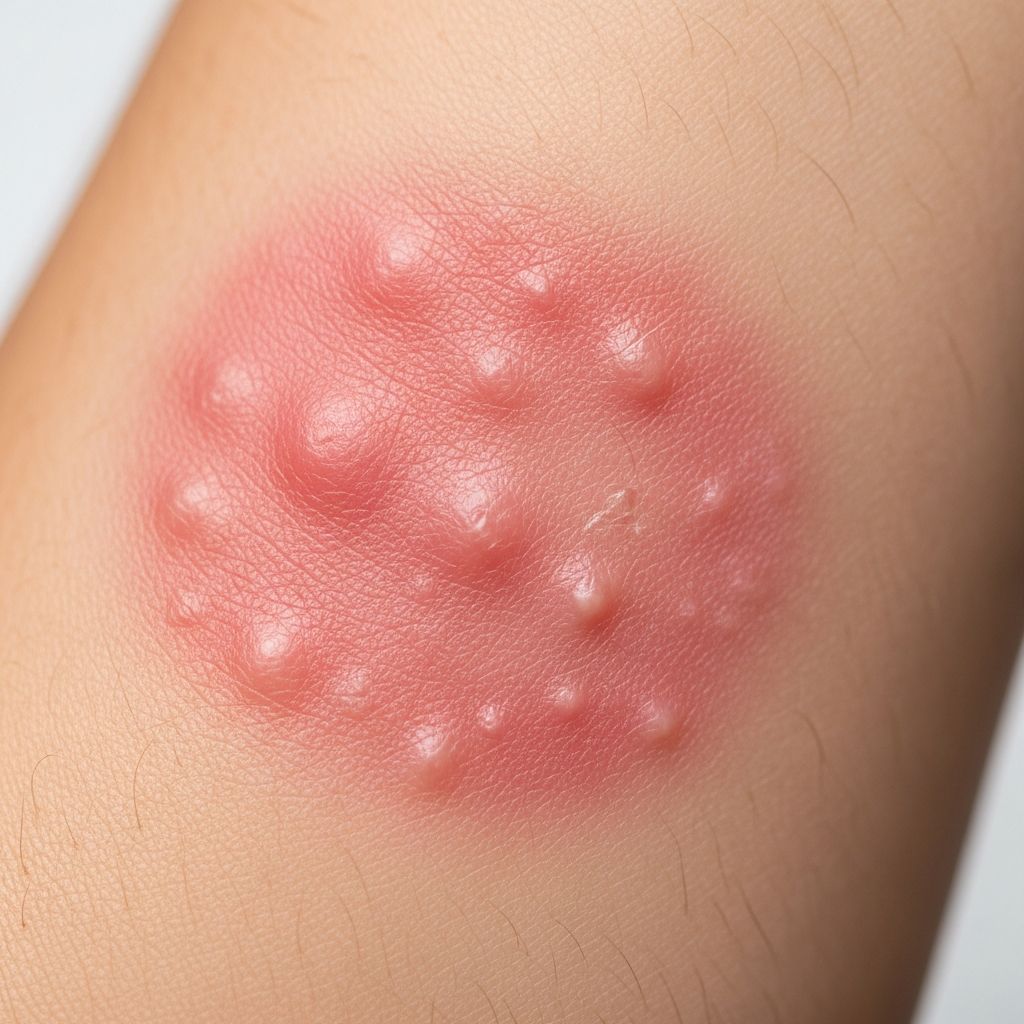
Allergic contact dermatitis caused by benzisothiazolinone typically presents as a localized inflammatory reaction at the site of contact with the offending product. The clinical manifestations include:
Related Stories



- Erythema (redness) of the affected skin
- Pruritus (itching), often intense
- Edema (swelling) in acute cases
- Vesiculation (small fluid-filled blisters) in severe cases
- Scaling and desquamation as the dermatitis progresses
- Lichenification and thickening of skin in chronic cases
The distribution of the rash depends on the exposure source. Hand dermatitis is most common, particularly affecting the palms and dorsal surfaces, especially when exposure occurs through household cleaners, metalworking fluids, or occupational contact. When exposure occurs through liquid soaps or personal care products, the hands, wrists, and arms are typically affected. Facial or neck dermatitis may develop if exposure occurs through contaminated personal care or cosmetic products.
The severity of the allergic reaction can range from mild erythema to severe blistering dermatitis with secondary infection. In some cases, a generalized dermatitis may develop with widespread skin involvement, particularly in individuals with high-level or frequent exposure to BIT-containing products.
Diagnosis: Patch Testing
The diagnosis of allergic contact dermatitis caused by benzisothiazolinone relies on clinical suspicion followed by confirmatory patch testing. Patch testing is the gold standard diagnostic method for identifying contact allergens.
Patch testing involves applying suspected allergens to small aluminum chambers or filter paper patches, which are adhered to the patient’s skin, typically on the upper back. The patches are left in place for 24-48 hours during the sensitization phase. The skin is then examined for reactions at 24-48 hours and again at 72-96 hours post-application during the elicitation phase. Readings are performed using a standardized classification system:
- Negative (−): No reaction
- Doubtful (±): Slight erythema only
- Weak positive (+): Erythema and infiltration
- Strong positive (++): Erythema, infiltration, and vesicles
- Extreme positive (+++): Erythema, infiltration, and coalescing vesicles or bullae
BIT is typically tested as a 0.1% solution in petrolatum. Strong positive reactions (++ or +++) to BIT, particularly when correlated with a compatible clinical history and exposure, confirm benzisothiazolinone contact allergy. Patients may also demonstrate reactions to other allergens simultaneously, which should be documented and discussed.
Importantly, a positive patch test reaction to BIT may indicate previous sensitization without current clinical relevance in all cases. The clinical relevance of patch test reactions should be assessed by correlating the test results with the patient’s exposure history and current dermatitis activity.
Occupational and Consumer Exposure
Benzisothiazolinone exposure occurs in both occupational and consumer settings, with different risk profiles for various populations.
Occupational Exposure
Certain occupational groups face elevated risk of BIT sensitization due to regular exposure in the workplace. These high-risk groups include:
- Painters and construction workers handling BIT-containing paints and coatings
- Metalworkers and machinists using BIT-containing metalworking fluids
- Industrial machine operators and assemblers
- Maintenance workers using industrial cleaners and disinfectants
- Healthcare workers with frequent exposure to hospital disinfectants and cleaning products
Studies have demonstrated that painters and metalworkers handling metalworking fluids have significantly increased risk of BIT sensitization compared to the general population. Occupational dermatitis from BIT exposure typically affects the hands and forearms, particularly in areas with breaks in the skin barrier from prior irritant exposure.
Consumer Exposure
Consumer exposure to benzisothiazolinone occurs through household cleaning products, laundry detergents, personal care products, and other commercial items. Household cleaners and detergents represent the most common sources of BIT exposure among consumers. Hand dermatitis is the predominant manifestation due to repeated contact during product use and handling.
In some regions, BIT may also be present in personal care products such as liquid soaps and hand sanitizers, particularly outside the European Union where regulatory restrictions on BIT in personal care products may not apply. Consumers may be unknowingly exposed to BIT through the regular use of common household items.
Cross-Reactivity with Other Isothiazolinones
The isothiazolinone class of preservatives includes several related compounds: benzisothiazolinone (BIT), methylisothiazolinone (MI), and the mixture methylchloroisothiazolinone with methylisothiazolinone (MCI/MI). Clinically important cross-reactivity patterns differ among these compounds.
Research indicates that BIT does not demonstrate significant immunological cross-reactivity with MI or MCI/MI in most individuals. This means that a patient sensitized to BIT may tolerate MI and MCI/MI without eliciting an allergic response, and vice versa. This lack of cross-reactivity is important for identifying safe alternative products for BIT-sensitized individuals, as MI-containing products may be suitable alternatives if BIT sensitivity is the only isothiazolinone allergy identified on patch testing.
However, individual variation exists, and some patients may demonstrate sensitization to multiple isothiazolinones simultaneously through independent sensitization events rather than cross-reactivity.
Management and Avoidance Strategies
Once benzisothiazolinone contact allergy has been diagnosed, the primary management strategy is strict avoidance of BIT-containing products. This requires patient education and systematic product identification and replacement.
Product Avoidance
Patients with BIT allergy should:
- Carefully read product labels and ingredient lists on all household cleaning products, detergents, and personal care items
- Search for alternative products explicitly labeled as BIT-free or preservative-free where possible
- Contact manufacturers directly to confirm product ingredient composition, as ingredient lists may be incomplete or change without notice
- Pay particular attention to cleaning products, laundry detergents, and any products with antimicrobial claims
- Be cautious with products purchased outside the European Union, where BIT may not be prohibited and labeling may be less complete
- Avoid occupational exposure through proper protective equipment use, including gloves and skin barriers when handling potential BIT sources
Skin Care and Treatment
During acute flares of allergic contact dermatitis, topical corticosteroids are the mainstay of treatment. The potency of the corticosteroid should be selected based on severity and location, with lower potency agents used on thin-skinned areas and higher potency agents for severely affected areas.
General supportive care includes maintaining skin barrier integrity through regular moisturizer use, avoiding irritant exposures, and minimizing scratching. Oral antihistamines may provide symptomatic relief of pruritus. In cases with severe or generalized dermatitis, systemic corticosteroids may be necessary.
Once offending products are removed and contact is avoided, the dermatitis typically resolves over 2-4 weeks, depending on severity and extent of involvement.
Regulatory Status and Geographic Variations
The regulatory status of benzisothiazolinone varies significantly by region. In the European Union, BIT has been banned for use in leave-on cosmetic and personal care products. However, BIT remains permitted in household cleaning products, industrial applications, and rinse-off personal care products in many regions, including the United States, where no specific prohibitive regulations currently exist.
This geographic variation means that products containing BIT may be more readily available in certain markets, and consumers relocating between regions may encounter unexpected BIT exposure in products they purchase in new locations.
Clinical Implications and Future Directions
The rising prevalence of contact allergy to benzisothiazolinone has significant implications for clinical dermatology practice. The increased frequency of sensitization justifies the inclusion of BIT in baseline patch test series in many dermatological centers, similar to other common contact allergens. Earlier identification of BIT allergy through routine patch testing can prevent unnecessary prolonged exposure and dermatitis in sensitized individuals.
Further research is needed to understand the mechanisms driving the rising sensitization rates to BIT, to assess the clinical relevance of positive patch test reactions in asymptomatic individuals, and to identify optimal preventive and regulatory strategies. Ongoing epidemiological monitoring of BIT sensitization patterns will help dermatologists and public health officials track this emerging allergen and implement evidence-based interventions.
Frequently Asked Questions
Q: What is benzisothiazolinone and why is it used?
A: Benzisothiazolinone (BIT) is a biocide and preservative chemical used to prevent microbial contamination in water-based products including paints, metalworking fluids, household cleaners, and detergents. It has antimicrobial and antifungal properties that extend product shelf life and maintain product safety.
Q: How common is contact allergy to BIT?
A: Contact allergy to BIT has increased dramatically in recent years, from approximately 0.3% in 2014 to 5.0-6.5% by 2023 among patch-tested populations. This 17-fold increase has made BIT an increasingly common cause of allergic contact dermatitis in clinical practice.
Q: Which occupations have the highest risk of BIT allergy?
A: Painters, metalworkers handling metalworking fluids, machine operators, and assemblers have significantly elevated risk of benzisothiazolinone sensitization due to regular occupational exposure to BIT-containing products.
Q: Can I be allergic to both BIT and MI?
A: Yes, it is possible to be allergic to both BIT and MI, but this typically represents two separate sensitization events rather than cross-reactivity. Studies show BIT does not demonstrate significant immunological cross-reactivity with MI or MCI/MI in most individuals.
Q: How is BIT contact allergy diagnosed?
A: BIT contact allergy is diagnosed through patch testing, where 0.1% BIT in petrolatum is applied to the skin for 24-48 hours. Reactions are read at 24-48 hours and 72-96 hours. Strong positive reactions that correlate with the patient’s exposure history and dermatitis pattern confirm the diagnosis.
Q: What should I do if I’m diagnosed with BIT allergy?
A: You should systematically avoid all products containing benzisothiazolinone by carefully reading ingredient labels, contacting manufacturers when uncertain, and switching to alternative products labeled as BIT-free. Pay particular attention to household cleaners, detergents, and any products with antimicrobial claims.
Q: How long does it take for BIT dermatitis to resolve?
A: Once contact with BIT-containing products is avoided, allergic contact dermatitis typically resolves within 2-4 weeks, depending on the severity and extent of skin involvement. Topical corticosteroids can accelerate healing and provide symptom relief during this period.
Q: Is BIT banned everywhere?
A: No. BIT is banned for use in leave-on cosmetic and personal care products in the European Union. However, it remains permitted in household cleaning products, industrial applications, and various other products in many regions including the United States.
References
- Contact sensitization to benzisothiazolinone: IVDK-data of the years 2002-2021 — Uter W, et al., Contact Dermatitis. 2023. https://pubmed.ncbi.nlm.nih.gov/36861774/
- Trends in Contact Allergy to Preservatives From 2014 to 2023 — Hedmark E, et al., Contact Dermatitis. 2025. https://onlinelibrary.wiley.com/doi/10.1111/cod.14818
- CD03: Benzisothiazolinone: new kid on the block — Oxford Academic, British Journal of Dermatology. 2019. https://academic.oup.com/bjd/article-abstract/185/S1/94/6599319
- Allergic contact dermatitis caused by benzisothiazolinone in a continuous positive airway pressure mask liquid soap — Felmingham C, et al., Contact Dermatitis. 2019. https://pubmed.ncbi.nlm.nih.gov/31270811/
- Relevant Contact Allergy to Benzisothiazolinone found in a Personal Care Product — Gupta R, Kullberg SA, Warshaw EM. NACDG. 2020. https://www.contactderm.org/UserFiles/Posters%20-%20AM20WEB/Gupta-Benzisothiazolinone.pdf
- Allergy to Benzisothiazolinone (BIT) — Cutaneous Allergy Society. 2019. https://cutaneousallergy.org/pils/benzisothiazolinone-bit/
Similar Articles








Read full bio of Sneha Tete