Contact Allergy To Gold: What You Need To Know
Understanding gold contact allergy: causes, symptoms, diagnosis, and effective management strategies for this common metal hypersensitivity.
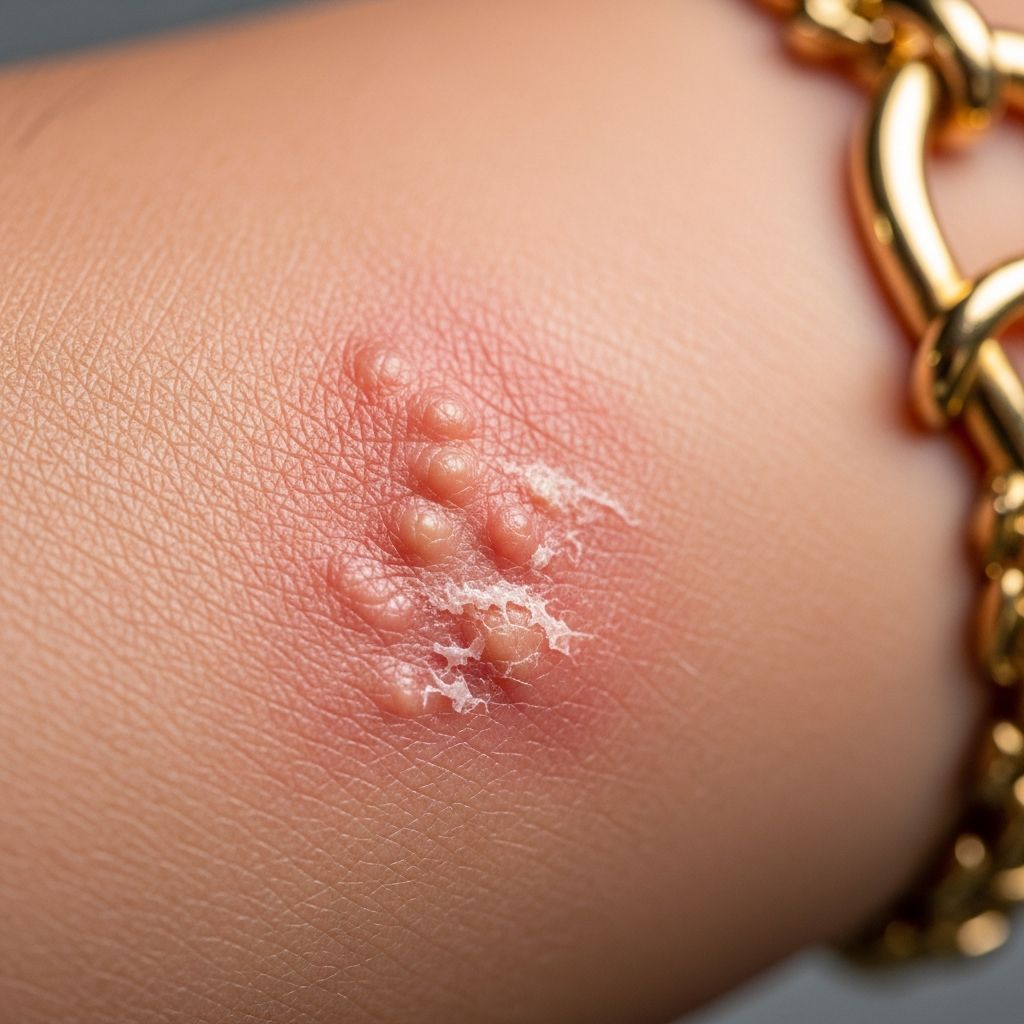
Contact allergy to gold is a delayed type hypersensitivity reaction (type IV) following skin contact with gold or its alloys, typically presenting as
allergic contact dermatitis
. Gold was designated Contact Allergen of the Year in 2001 by the American Contact Dermatitis Society due to its prevalence in clinical settings.Demographics
Gold contact allergy is diagnosed predominantly in women, accounting for approximately 90% of cases. This disparity likely stems from women’s greater use of gold jewelry, including earrings, necklaces, and rings, as well as more frequent ear and body piercings. Studies indicate that out of 4,101 individuals tested, about 9.5% showed positive reactions to gold, with females affected more than males. Individuals allergic to gold are frequently co-sensitized to other metals like
nickel
andcobalt
, which are common alloy components. Nickel remains the most prevalent metal allergen, but gold ranks second in some patch test series.Causes
The development of gold allergy often follows prolonged or repeated skin exposure to gold-containing items. Key triggers include:
- Jewelry: Earrings, rings, necklaces, and watches, especially low-karat gold alloys mixed with nickel, copper, or other metals that facilitate gold ion release.
- Piercings: Immediate wear of gold studs post-piercing allows direct dermal contact, promoting sensitization.
- Dental restorations: Gold crowns, inlays, or bridges leading to intraoral reactions.
- Occupational exposure: Jewelers, dentists, or electronics workers handling gold.
- Other sources: Gold-plated stents, gold sodium thiomalate (used in rheumatoid arthritis treatment), cosmetics, sunscreens (titanium dioxide potentiates gold release), tattoo inks, cellphones, and edible gold in foods.
Gold itself is relatively inert, but corrosion or alloying releases gold ions, triggering an immune response. Factors enhancing release include copper in low-carat gold (<18K) and titanium dioxide in topically applied products. Genetic predisposition, such as family history of metal allergies, increases susceptibility.
Clinical Features
Symptoms typically manifest as localized or widespread
allergic contact dermatitis
days to weeks after exposure, depending on prior sensitization. Common presentations include:- Localized dermatitis: Redness, itching, swelling, papules, or vesicles at contact sites like earlobes (from earrings), fingers (rings), neck (necklaces), or wrists (bracelets).
- Facial/eyelid involvement: Due to transfer from handling jewelry or airborne spread, causing periorbital edema, erythema, or chronic eczema.
- Oral manifestations: From dental gold—cheilitis (lip inflammation), mucosal erosions, contact stomatitis, or lichenoid reactions (white patches resembling lichen planus).
- Widespread reactions: Generalized dermatitis in severe cases, or persistent nodular reactions at piercing sites.
Symptoms mirror other contact allergies: rash, redness, itching, peeling, dark spots (hyperpigmentation), and blistering. Reactions may be mild (pruritus) or severe (blistering, secondary infection). Unlike irritant dermatitis, gold allergy recurs consistently upon re-exposure.
Complications
Untreated or persistent gold contact allergy can lead to:
- Chronic dermatitis: Thickened, lichenified skin from scratching.
- Nodular reactions: Persistent pseudolymphomatous or sarcoidal granulomas at sites like earlobes, requiring biopsy for diagnosis.
- Systemic contact dermatitis: Widespread rash from gold implants, medications (e.g., gold sodium thiomalate), or heavy oral exposure.
- Secondary issues: Infection from excoriations, post-inflammatory hyperpigmentation, or emotional distress from visible lesions.
In dental cases, complications include chronic oral discomfort or altered taste. Occupational exposure may exacerbate hand eczema.
Diagnosis
Diagnosis combines clinical history, rash morphology, and patch testing:
- History and examination: Assess jewelry use, piercing history, dental work, and rash distribution matching gold contact sites (e.g., asymmetric earlobe dermatitis).
- Patch testing: Gold standard using
gold sodium thiosulfate (GST)
(0.5–2% in petrolatum) applied to the back for 48 hours. Reactions read at 48–96 hours, but gold may show delayed (up to 3 weeks) or persistent positivity. Atopic skin may irritate falsely. - Biopsy: For nodules, showing lymphocytic infiltrate or sarcoidal features.
- Relevance assessment: Only 10–15% of positive tests correlate clinically; co-test for nickel/cobalt.
Differential diagnoses include nickel allergy, cosmetic dermatitis, atopic eczema, seborrheic dermatitis, or airborne contact dermatitis. Eyelid/face rashes warrant gold suspicion.
Related Stories



Differential Diagnosis
| Condition | Key Features | Differentiator from Gold Allergy |
|---|---|---|
| Nickel allergy | Similar sites (hands, ears); often coexists | Patch test positive to nickel; history of costume jewelry |
| Atopic dermatitis | Flexural, pruritic; personal/family atopy | No specific contact trigger; negative patch test |
| Irritant contact dermatitis | Immediate burn/sting; dose-dependent | No hypersensitivity; improves with avoidance alone |
| Lichen simplex chronicus | Lichenified plaques from rubbing | No vesicles; biopsy shows hyperkeratosis |
| Airborne dermatitis | Photo-exposed areas | Fragrances/plants; patch test other allergens |
Treatment
Treatment mirrors allergic contact dermatitis management:
- Avoidance: Primary strategy—remove gold jewelry, replace dental gold if symptomatic, use hypoallergenic alternatives (18–24K gold, titanium, stainless steel, plastic). Cover skin with barriers or gloves occupationally. Avoid nickel-cross reactives (coins, tools, eyeglasses).
- Topical therapy: Emollients for hydration; mid-potency corticosteroids (e.g., hydrocortisone 1% OTC, betamethasone prescription) for inflammation. Calcineurin inhibitors (tacrolimus) for facial/periorbital use.
- Severe cases: Oral corticosteroids (prednisone taper), antihistamines for itch, or phototherapy.
- Nodules: Intralesional steroids or surgical excision.
- Dental/medical: Consult specialists; avoid gold injections in RA patients with confirmed allergy.
Reactions may persist post-avoidance (weeks–months); gradual reintroduction possible in mild cases.
Outcome
Prognosis is excellent with strict avoidance, though hypersensitivity persists lifelong. Many tolerate pure high-karat gold intermittently. Persistent cases may scar or hyperpigment. Education on hidden sources (cosmetics, supplements) prevents recurrence. Regular dermatologist follow-up advised for chronic or occupational cases.
Frequently Asked Questions
Q: Can I still wear gold jewelry if allergic?
A: Avoid low-karat gold; opt for 18–24K or hypoallergenic metals like titanium. Test small exposures cautiously.
Q: Is gold allergy curable?
A: No cure, but avoidance and treatment control symptoms effectively.
Q: Does gold allergy affect dental work?
A: Yes, gold restorations can cause oral lichenoid reactions; replacement with alternatives like porcelain may be needed.
Q: How reliable is patch testing for gold?
A: Useful but low clinical relevance (10–15%); delayed readings common.
Q: What daily items contain gold or triggers?
A: Jewelry, phones, cosmetics, stents, edible gold—check labels and use barriers.
References
- Contact allergy to gold — DermNet NZ. 2023-05-15. https://dermnetnz.org/topics/contact-allergy-to-gold
- Allergic to Gold? How to Tell and What You Can Do — Healthline. 2023-08-20. https://www.healthline.com/health/allergic-to-gold
- Contact Dermatitis — American College of Allergy, Asthma & Immunology (ACAAI). 2024-01-10. https://acaai.org/allergies/allergic-conditions/skin-allergy/contact-dermatitis/
- Contact dermatitis – Symptoms and causes — Mayo Clinic. 2024-11-05. https://www.mayoclinic.org/diseases-conditions/contact-dermatitis/symptoms-causes/syc-20352742
- Contact Dermatitis: Symptoms, Causes, Types & Treatments — Cleveland Clinic. 2024-03-12. https://my.clevelandclinic.org/health/diseases/6173-contact-dermatitis
Similar Articles








Read full bio of Sneha Tete