Contact Dermatitis: Symptoms, Causes, Types & Treatments
Understand contact dermatitis: Learn about causes, symptoms, diagnosis, and effective treatment options.
Understanding Contact Dermatitis: A Comprehensive Guide
Contact dermatitis is a common skin condition that develops when your skin comes into contact with something you’re allergic to or something that irritates your skin. The resulting rash can be swollen, itchy, and uncomfortable, significantly affecting your daily life and quality of life. Understanding this condition is essential for proper management and prevention. Contact dermatitis is your skin’s reaction to something in your environment that causes an itchy rash. The medical term “dermatitis” refers to skin irritation or inflammation, which occurs when your skin encounters a substance, organism, object, or chemical that’s irritating to your skin.
What Is Contact Dermatitis?
Contact dermatitis represents one of the most common types of skin reactions encountered in both clinical and community settings. You develop contact dermatitis by coming into direct contact with a substance that your skin finds irritating or allergenic. Unlike some other skin conditions, contact dermatitis is highly preventable through proper identification and avoidance of triggering substances. The condition manifests as localized redness and itching at the site of contact and can range from mild to severe depending on the substance involved and your skin’s sensitivity.
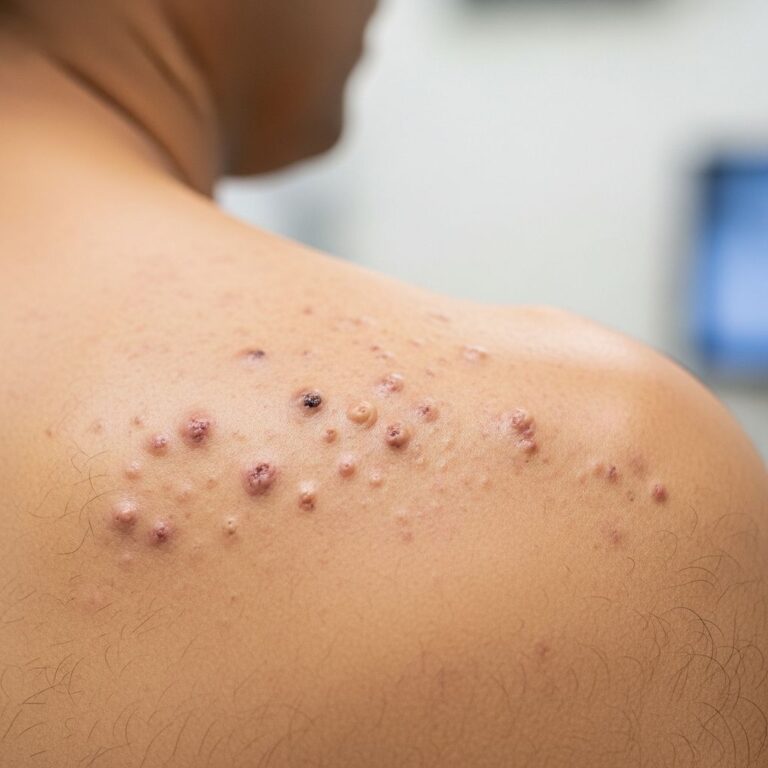
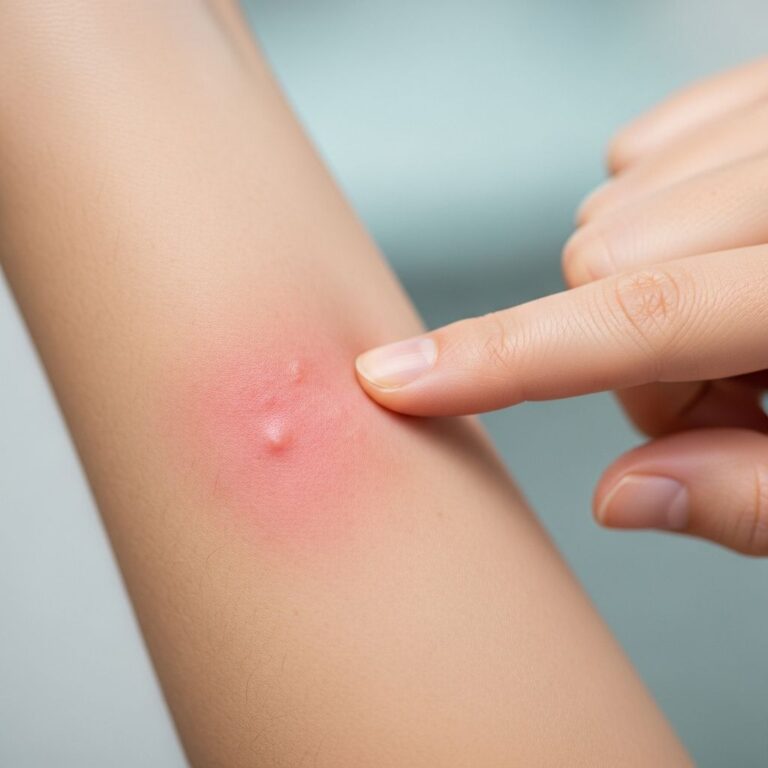
The primary characteristics of contact dermatitis include red, usually very pruritic (itchy) skin lesions that develop after contact with a foreign substance. These lesions can appear within hours or develop over several days, depending on whether the reaction is irritant-based or allergic in nature.
Types of Contact Dermatitis
Contact dermatitis falls into two distinct categories, each with different underlying mechanisms and treatment considerations:
Allergic Contact Dermatitis
Allergic contact dermatitis is a delayed T-cell-mediated hypersensitivity reaction in which an allergen comes into contact with the skin, and dermatitis occurs with re-exposure. This type involves your immune system recognizing a substance as a threat and mounting an allergic response. Once you develop an allergy to a particular substance, you will typically experience a reaction every time you’re exposed to it. This makes identification of the allergen particularly important for long-term management.
Common allergens that trigger allergic contact dermatitis include nickel, poison ivy, poison oak, latex, fragrances, preservatives in cosmetics, and certain metals. The allergic response develops through a process called sensitization, where repeated or prolonged exposure to an allergen causes your immune system to become hypersensitive to that substance.
Irritant Contact Dermatitis
Irritant contact dermatitis occurs when a substance is directly irritating to your skin, causing inflammation without involving an allergic mechanism. This type of reaction can occur in anyone, regardless of prior sensitization, and depends more on the irritant’s strength and concentration than on individual immune responses. Common irritants include soaps, detergents, solvents, acids, and certain plants.
Irritant contact dermatitis symptoms can vary depending on the cause and may include redness, burning sensation, dryness, and scaling. Unlike allergic contact dermatitis, you may not develop a consistent allergic response to irritants, though repeated exposure can cause cumulative damage to your skin barrier.
Symptoms of Contact Dermatitis
The symptoms of contact dermatitis can vary depending on the specific cause, the severity of exposure, and your individual skin sensitivity. The rash typically appears at the site where your skin contacted the triggering substance, though symptoms can sometimes spread beyond the initial contact area.
Common symptoms of contact dermatitis include:
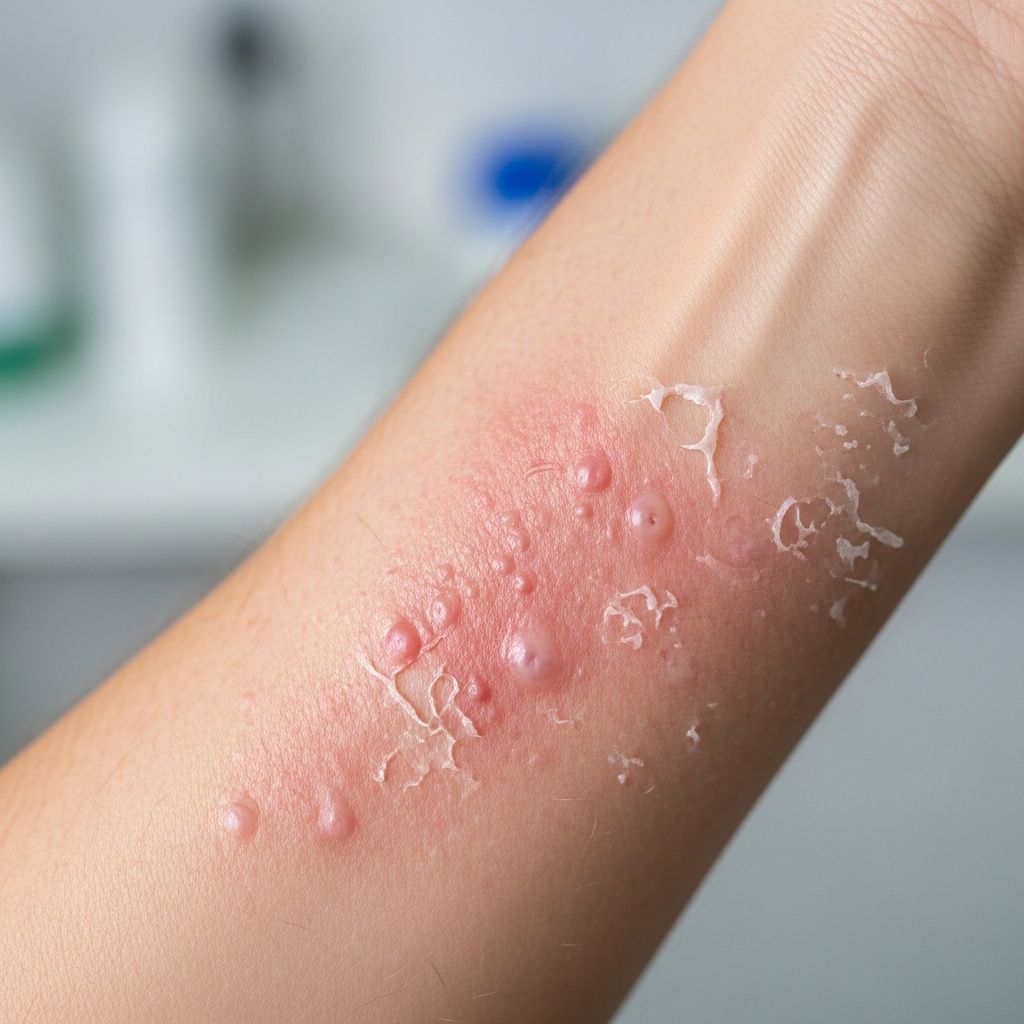
– Itching (often intense)- Redness and inflammation- Swelling and puffiness- Blistering or oozing- Dryness, cracking, or scaling of the skin- Burning sensation- Hives or welts
Related Stories



Allergic contact dermatitis can be very difficult to distinguish from other rashes, particularly in its early stages. The severity of symptoms often depends on the allergen or irritant involved. Some people may experience only mild itching, while others develop severe blistering and significant swelling that may temporarily disable the affected area. For example, reactions to poison ivy or poison oak typically cause more severe symptoms than reactions to mild irritants.
Causes and Common Triggers
Contact dermatitis can occur from exposure to many different compounds found both in the home and at work. Identifying the specific cause is crucial for effective prevention and management.
Workplace Triggers
Many people who have contact dermatitis caused by substances they interact with in their workplace can find ways to reduce exposure. Common workplace triggers include:
– Industrial chemicals and solvents- Latex gloves- Metal tools or equipment- Protective equipment materials- Cleaning products- Cement or construction materials
Home and Personal Care Triggers
Contact dermatitis frequently develops from everyday household and personal care products, including:
– Fragrances and perfumes- Preservatives in cosmetics and skincare products- Nickel in jewelry and accessories- Laundry detergents- Fabric softeners- Plants such as poison ivy, poison oak, or poison sumac- Rubber or latex products- Hair dyes and bleaches
Diagnosis of Contact Dermatitis
Your healthcare provider will diagnose contact dermatitis after taking a complete medical history, performing a physical exam, and reviewing your symptoms. The diagnosis process involves careful evaluation to distinguish contact dermatitis from other skin conditions.
Medical History and Physical Examination
During your appointment, your provider will ask detailed questions about your environment, things you’ve recently come into contact with, and the location and size of your rash. They will examine the affected skin closely and may ask about recent changes in your routine, new products, or occupational exposures.
Patch Testing
For allergic contact dermatitis, your provider may offer testing, including a patch test to confirm a diagnosis. A patch test is a diagnostic test that healthcare providers use to determine whether your skin reacts to certain substances. This test involves placing patches coated in common allergens on your skin, typically on your back, and checking for a reaction over several days.
During patch testing, your provider will place patches that have 10 to 12 substances on them in a gel or ointment form. The patches are taped to your body so the gels press against your skin. After wearing the patches for two days, your provider will remove them and examine the area for reactions. A second evaluation occurs two more days after that to assess delayed hypersensitivity reactions. Test readings should be done 48 hours after the patch is removed, and again at 96 hours post-removal. Repeated tests may also be done occasionally up to 7 days after patch removal when assessing delayed hypersensitivity reactions.
There isn’t a test to identify the cause of irritant contact dermatitis, but your provider will ask detailed questions to narrow down potential causes. The patch test cannot determine irritant contact dermatitis because it does not involve an allergic immune response.
Additional Testing
Although uncommon, your provider might perform a skin culture or biopsy where they take a sample of tissue from your rash and examine it under a microscope. This is typically done only when the diagnosis is unclear or when other conditions need to be ruled out.
Treatment Options for Contact Dermatitis
Treatment for contact dermatitis is the same for both allergic and irritant types. The most effective treatment of contact dermatitis is to avoid the known irritant or allergen altogether. However, when avoidance isn’t feasible or while your skin is healing, several treatment options can help manage symptoms.
Primary Treatment Approach
The cornerstone of contact dermatitis management is avoidance. Once you or your healthcare provider identifies the substance causing your reaction, eliminating contact with that substance is the most effective prevention strategy. There is no cure for contact dermatitis, but if your body reacted to an allergen or irritant, you’ll likely continue to have a similar reaction every time you’re exposed to it. Therefore, consistent avoidance is essential for long-term symptom prevention.
Topical Corticosteroids
Topical corticosteroids (TCS) are generally acknowledged as first-line treatment for both acute and chronic dermatitis. These medications reduce inflammation and itching effectively. If the dermatitis is localized, topical corticosteroids should be an adequate treatment. Your healthcare provider may recommend creams, ointments, or lotions depending on the location and severity of your rash.
When using topical corticosteroids, avoid using potent fluorinated or ointment dosage forms on areas of thin skin, which includes the face, eyelids, a child’s skin, and intertriginous locations (skin folds). It is important to note that the use of steroids should not replace the process of determining an allergen and avoiding it; steroids should be used only for short-term durations. If the dermatitis is more extensive or severe, systemic corticosteroid therapy may be needed.
Other Treatment Modalities
Common treatments for contact dermatitis include:
– Antihistamines (oral medications to reduce itching)- Moisturizing lotions and creams- Oatmeal baths to soothe irritated skin- Cool compresses to reduce inflammation- Oral corticosteroids for severe cases
Sensitization to corticosteroids, the medication vehicle, or excipients should be considered if the dermatitis worsens. In such cases, alternative treatments may be necessary.
Prevention Strategies
Avoiding what caused your rash helps prevent it from returning. Preventing contact dermatitis involves identifying and minimizing exposure to known triggers. To aid in compliance and perhaps improve quality of life, patients should be given a list of possible alternative products to dermatitis precipitants. Several resources can help identify safe alternatives:
– The Contact Allergen Management Program (CAMP) database for the American Contact Dermatitis Society- The SkinSAFE Database created by the Mayo Clinic- Your healthcare provider’s recommendations
For workplace-related contact dermatitis, a healthcare provider can help you navigate your condition and offer recommendations, and your employer can help you safely navigate your working environment to reduce future skin reactions. This may involve using protective equipment, switching to hypoallergenic products, or modifying work processes.
Complications of Contact Dermatitis
Although uncommon, serious complications can happen when you have an allergy to something. Complications of an allergic reaction include severe reactions that may require emergency medical attention. Additionally, prolonged scratching and skin breakdown from contact dermatitis can lead to secondary skin infections, requiring additional treatment with antibiotics.
When to See a Healthcare Provider
If you have a skin rash that won’t go away, visit your health care provider. You should seek medical attention if:
– The rash covers a large area of your body- The rash involves your face or genitals- Symptoms worsen despite home care- You suspect occupational exposure- The rash is severe or blistering- You develop signs of infection
Living with Contact Dermatitis
A healthcare provider can help you find out what caused your skin to react negatively and work with you on ways to avoid contact with the allergen or irritant in your environment. Successfully managing contact dermatitis involves developing awareness of your personal triggers and maintaining vigilance about product ingredients and workplace exposures.
Many people successfully manage contact dermatitis by maintaining a detailed log of their exposures, symptoms, and reactions. This information proves invaluable during medical appointments and helps identify patterns in your reactions. Additionally, reading product labels carefully and choosing hypoallergenic or fragrance-free alternatives can significantly reduce your risk of contact dermatitis.
Frequently Asked Questions
Q: How long does contact dermatitis typically last?
A: The duration depends on the trigger and your skin’s reaction. With avoidance of the irritant or allergen, most cases resolve within 2-4 weeks. However, some severe cases may take longer to completely heal.
Q: Can contact dermatitis spread to other parts of my body?
A: While contact dermatitis typically appears only where the skin contacted the irritant or allergen, scratching can spread the rash to other areas. This is why avoiding scratching is important during treatment.
Q: Is contact dermatitis contagious?
A: No, contact dermatitis is not contagious. It cannot spread from one person to another through contact, though the triggering substance could be shared.
Q: Can I develop contact dermatitis to something I’ve used before without problems?
A: Yes, it’s possible to develop an allergy to substances over time through repeated exposure. Sensitization can occur after months or years of using a product without reaction.
Q: What should I do if I’m exposed to my trigger before I can wash it off?
A: Rinse the affected area thoroughly with water as soon as possible. Remove any contaminated clothing and wash it separately. Apply cool compresses and avoid scratching while waiting to see your healthcare provider if severe.
References
- Contact Dermatitis — Cleveland Clinic Abu Dhabi. 2024. https://www.clevelandclinicabudhabi.ae/en/health-hub/health-resource/diseases-and-conditions/contact-dermatitis
- Contact Dermatitis: Symptoms, Causes, Types & Treatments — Cleveland Clinic. 2024. https://my.clevelandclinic.org/health/diseases/6173-contact-dermatitis
- Contact Dermatitis — Pharmacy Times. 2024. https://www.pharmacytimes.com/view/contact-dermatitis
- Patch Testing for Skin Allergies: Procedure & Results — Cleveland Clinic. 2024. https://my.clevelandclinic.org/health/diagnostics/patch-test
- American Contact Dermatitis Society Contact Allergen Management Program — American Contact Dermatitis Society. https://www.contactderm.org
Similar Articles








Read full bio of medha deb