High Altitude Cooking: Expert Tips For Moist, Flavorful Meals
Master high-altitude cooking with expert tips on adjusting time, temperature, and moisture for safe, flavorful meals above 3,000 feet.
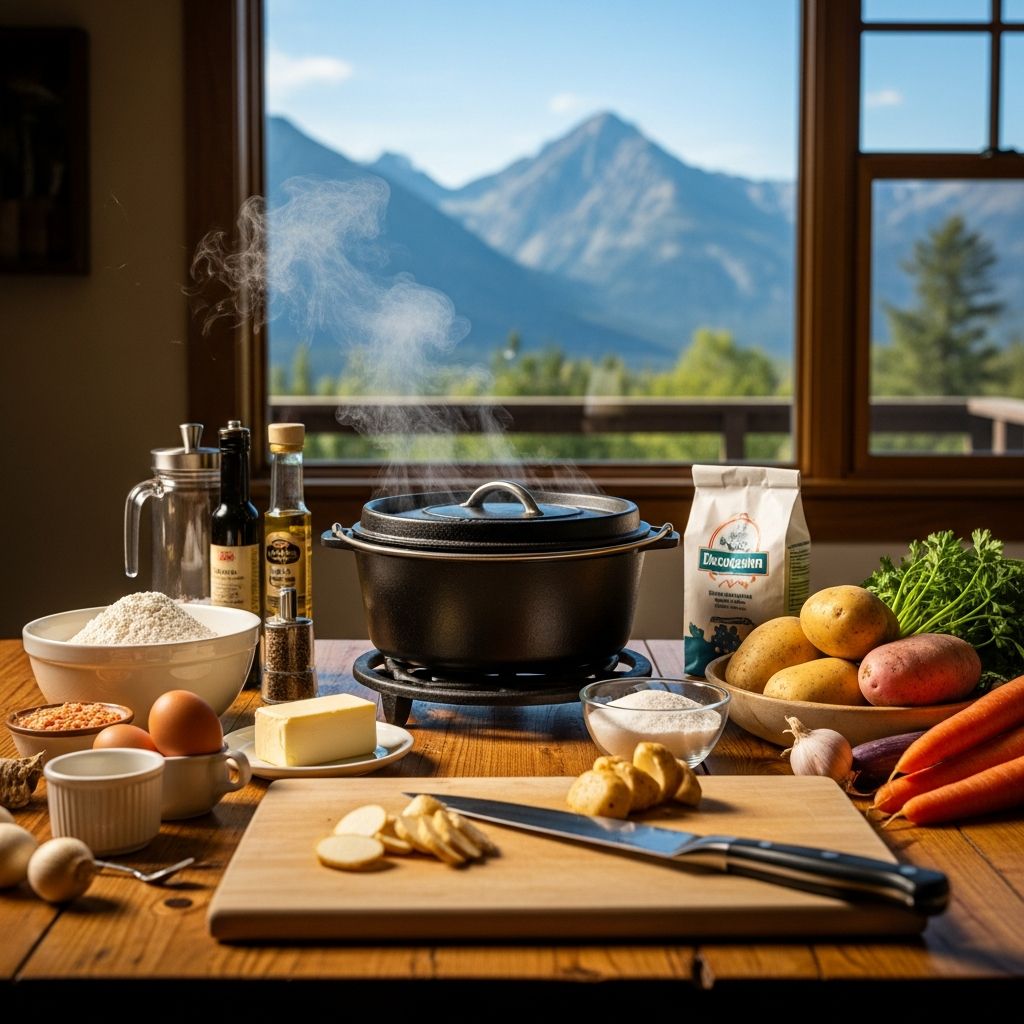
Time and temperature are key factors when cooking at high altitudes. As elevation increases, atmospheric pressure decreases, making the air thinner and drier, which causes liquids to evaporate more rapidly. These changes affect all cooking methods, from boiling and baking to grilling and frying.
High altitude is generally defined as 3,000 feet or more above sea level. Even at 2,000 feet, boiling water drops from 212°F at sea level to about 208°F, significantly impacting cooking processes. Foods take longer to cook because they reach lower temperatures, yet they can dry out faster due to rapid evaporation. This guide provides practical adjustments to ensure your meals are safe, moist, and flavorful.
Why High Altitude Affects Cooking
At sea level, water boils at 212°F (100°C), but every 1,000 feet of elevation reduces the boiling point by about 2°F. At 5,000 feet, water boils at around 202°F, and at 10,000 feet, it’s only 192°F. This lower temperature means bacteria and pathogens take longer to kill, raising food safety concerns.
Drier air accelerates moisture loss, affecting everything from pasta to cakes. Baked goods may rise too quickly and collapse, meats dry out, and sauces reduce too fast. Understanding these principles allows for targeted adjustments without guesswork.
General Tips for Moist Heating Methods
Moist methods like boiling, simmering, and braising meats and poultry require up to
25% longer cooking times
at high altitudes. For instance, a roast simmering at 325°F that takes 2 hours at sea level needs 2.5 hours above 3,000 feet.- Increase cooking liquid: Add 1-4 tablespoons per cup depending on altitude (1-2 tbsp at 3,000 ft, 2-4 at 5,000 ft, 3-4 at 7,000 ft).
- Do not raise heat: Higher heat only evaporates liquid faster without speeding cooking, as boiling point can’t exceed the local temperature.
- Cover tightly: Retain moisture by covering pans during and after cooking.
- Use a food thermometer: Always check internal temperatures: 165°F for poultry, 160°F for ground meats, 145°F for steaks with 3-minute rest.
Safe Cooking Temperatures Table
| Food Type | Safe Internal Temperature |
|---|---|
| Poultry (whole, parts, ground) | 165°F |
| Ground meats | 160°F |
| Steaks, roasts, chops | 145°F (rest 3 min) |
| Egg dishes | 160°F |
| Seafood | 145°F |
This table, adapted from USDA guidelines, is crucial at high altitudes where visual cues like color can mislead.
Cooking Specific Foods at High Altitudes
Meats and Poultry
Braising or simmering roasts, ribs, or stews demands more liquid and time. If dry, add stock or water; cover to trap steam. Pressure cookers excel here, raising boiling points artificially for faster, even cooking.
Pasta, Rice, and Grains
Increase cooking time by 3-5 minutes or until tender; add extra liquid if needed. For rice, use 25% more water and extend simmer time.
Eggs
Hard-boiled eggs need 1-3 extra minutes; place in cold water post-cook for easy peeling. Soft-cooked require similar extensions.
Vegetables
Root vegetables like potatoes take longer; steam or pressure cook for best results. Increase time by 20-30%.
Related Stories



Soups, Stews, and Sauces
Monitor liquid levels closely; add more as needed. Thicken sauces with cornstarch slurry rather than prolonged boiling.
Baking Adjustments
Baking is trickier due to leavening gases expanding faster in low pressure. Cakes may peak and crack; cookies spread or dry out.
- Increase oven temp: By 25°F above 3,500 feet (e.g., 400-425°F).
- Reduce leaveners: Decrease baking powder by ⅛-¼ tsp per tsp; baking soda similarly.
- Boost liquids: Add 1-4 tbsp per cup.
- Decrease sugar/flour: Reduce sugar 1-3 tbsp per cup, flour 1-4 tbsp per cup to prevent gumminess.
Baking Adjustment Table
| Adjustment | 3,000 ft | 5,000 ft | 7,000 ft |
|---|---|---|---|
| Increase liquid (per cup) | 1–2 tbsp | 2–4 tbsp | 3–4 tbsp |
| Reduce baking powder (per tsp) | ⅛ tsp | ⅛–¼ tsp | ¼ tsp |
| Oven temp increase | 15-25°F | 25°F | 25°F |
Grilling and Frying
Grill larger cuts longer, using thermometers. For deep frying, lower oil temp by 3°F per 1,000 ft (e.g., doughnuts at 5,000 ft: 370°F to 355°F) to avoid over-browning. Microwaving may need 10-25% more time.
Pressure and Slow Cookers
Pressure cookers counteract low pressure by building internal steam pressure, cooking beans, meats, and grains 30-70% faster. Follow altitude-specific dial gauge adjustments. Slow cookers benefit from extra liquid and longer times; avoid lid removal.
Candy Making and Canning
Candy stages shift due to lower boiling points; subtract local water boil point from sea-level recipe temps. Canning requires pressure canners above 1,000 ft for safety.
Frequently Asked Questions (FAQs)
At what elevation does high-altitude cooking begin?
Adjustments start at 3,000 feet, with noticeable effects above 2,000 feet.
Why don’t higher temperatures cook food faster at altitude?
The liquid can’t exceed its boiling point, so extra heat just evaporates moisture.
Can I use sea-level recipes without changes?
Try first; many need minimal tweaks, but test iteratively.
Is a food thermometer necessary?
Yes, especially at altitude where doneness is harder to judge visually.
What about store-bought mixes?
Many include high-altitude instructions; follow them.
Food Safety Essentials
Beyond adjustments, maintain hygiene: separate raw/cooked foods, chill promptly. High-altitude dryness heightens dehydration risks for leftovers. Consult USDA for method-specific guides.
Experimentation is key—start small, note changes. Local groups offer recipe tweaks. With practice, high-altitude cooking yields delicious, safe results.
References
- Cooking Guide for High Altitudes — Academy of Nutrition and Dietetics. 2023-10-15. https://www.eatright.org/food/home-food-safety/safe-cooking-and-prep/cooking-guide-for-high-altitudes
- What Adjustments are Needed when Cooking & Baking at High Altitudes? — Visual Veggies. 2022-05-20. https://www.visualveggies.com/cooking-and-baking-at-high-altitudes/
- Cooking and Baking it Up! Altitude Adjusters — University of Wyoming Extension. 2021-08-01. https://wyoextension.org/publications/html/B1310/
- High-Altitude Baking and Cooking — Aspen Valley Health. 2023-03-10. https://aspenvalleyhealth.org/healthy-journey/high-altitude-baking-and-cooking/
- Safe Cooking and Prep — Academy of Nutrition and Dietetics. 2024-01-12. https://www.eatright.org/food/home-food-safety/safe-cooking-and-prep
Similar Articles








Read full bio of Sneha Tete