Copper Benefits: Health Advantages and Daily Intake Guide
Discover how essential copper supports heart health, brain function, immunity, and skin vitality.
Understanding Copper: An Essential Trace Mineral
Copper is an essential trace mineral that plays a vital role in numerous bodily functions, from energy production to immune system support. Found naturally in soil, water, and rocks, copper is absorbed in the small intestine and stored primarily in bones and muscle tissue. Unlike some minerals that the body cannot produce, copper must be obtained through diet or supplements.
The human body requires only small amounts of copper—typically measured in milligrams—yet these quantities are critical for maintaining optimal health. This essential nutrient works as a cofactor for various enzymes, enabling them to perform their crucial functions throughout the body. Understanding copper’s role can help you make informed dietary choices and recognize signs of deficiency or excess.
Key Health Benefits of Copper
Cardiovascular Health Support
One of copper’s most significant contributions is supporting heart health and circulatory function. Recent research demonstrates that higher dietary copper intake is associated with fewer heart-related health problems, particularly in individuals with high blood pressure. A 2025 longitudinal study found that people consuming adequate copper had better overall cardiovascular health outcomes.
Copper supports cardiovascular health through several mechanisms. It plays an essential role in the synthesis of red blood cells and hemoglobin, which carries oxygen throughout the body. Additionally, copper’s antioxidant properties help reduce oxidative stress, a key factor in heart disease development. Studies show that copper supplementation can decrease plasminogen activator inhibitor type 1 (PAI-1) levels by up to 30%, reducing atherosclerotic risk.
Research also indicates that higher dietary copper intake is associated with lower blood pressure and reduced LDL cholesterol levels. However, it’s important to note that mixed findings exist regarding copper’s cardiovascular effects, with some studies showing increased cardiovascular risk at higher blood copper levels. More research is needed to fully understand the optimal copper intake for cardiovascular protection.
Cognitive Function and Brain Health
Copper plays a crucial role in brain development and cognitive function, acting as a component of enzymes that synthesize neurotransmitters. Neurotransmitters are chemical messengers that transmit signals between nerve cells, essential for memory, concentration, and overall mental performance.
A 2025 cross-sectional study found that older adults with higher dietary copper intake achieved significantly higher scores on cognitive function tests measuring thinking and memory skills. In school-aged children, adequate copper levels correlate with better memory, concentration, and overall cognitive abilities. Copper also plays an important role in mitochondrial synthesis and bioenergetics, which influences cellular metabolism and brain function.
Beyond supporting normal cognitive processes, copper has neuroprotective effects. As a component of superoxide dismutase, an antioxidant enzyme, copper helps eliminate harmful oxygen free radicals that can damage brain cells. Research suggests that copper may reduce beta-amyloid levels in cerebrospinal fluid, an abnormal protein linked to Alzheimer’s disease. However, excessive copper can be harmful to brain cells, emphasizing the importance of balanced intake.
Related Stories



Immune System Function
Copper is essential for maintaining a healthy immune system and white blood cell function. Insufficient copper leads to neutropenia, a deficiency of white blood cells (neutrophils) that fight infections. Individuals with low neutrophil levels are more susceptible to infections, making adequate copper intake particularly important for infection prevention.
Copper supports immune function by activating immune system components and serving as a cofactor for various antioxidant enzymes. These antioxidant enzymes help protect immune cells from oxidative damage, allowing them to function optimally. Additionally, copper’s broad-spectrum antiviral properties show promise against various pathogens, including bronchitis virus, influenza, herpes virus, HIV, and even SARS-CoV-2.
Skin Health and Wound Healing
Copper offers multiple benefits for skin health and appearance. This mineral supports collagen and melanin production, which are essential for skin strength, elasticity, and pigmentation. Copper peptides help repair damaged skin and reduce oxidative stress that contributes to aging.
One of copper’s remarkable skin benefits is its ability to protect against UV damage. Furthermore, copper stimulates the growth of new blood vessels, enhancing circulation to the skin and accelerating wound healing. Studies show that copper reduces fine lines and wrinkles while improving overall skin texture and self-perception. Its wound-healing properties make it valuable for skin repair and regeneration processes.
Bone Health and Development
Copper plays a significant role in bone metabolism and strength. Research shows that copper supplementation slows mineral loss from bone and reduces resorption rates, helping maintain bone density. A 2015 study found that post-menopausal women with low bone density had very low copper levels, suggesting copper supplementation as a potential treatment to improve bone density.
Copper influences bone health through multiple pathways. It stimulates cells that regulate bone metabolism and promotes the differentiation of stem cells toward bone-forming cells. Low concentrations of copper improve osteoblast (bone-building cell) viability and growth, while higher concentrations may be harmful. Additionally, copper is essential for maintaining the elastin and collagen networks that provide bone strength and flexibility; deficiency impairs the mechanical properties of bones.
Energy Production and Iron Metabolism
At the cellular level, copper is essential for energy metabolism, helping the body convert nutrients into usable energy. It acts as a cofactor for enzymes involved in this critical process. Copper also plays a vital role in iron metabolism by triggering iron release to make hemoglobin, the protein that carries oxygen throughout the body.
This function is particularly important because copper deficiency can lead to iron deficiency anemia, the most common form of anemia. By facilitating proper iron absorption and utilization, copper helps prevent anemia and supports overall oxygen transport throughout the body.
Copper’s Role in Connective Tissue and Collagen
Copper is essential for building and maintaining connective tissue, including collagen, elastin, and other structural proteins. These proteins provide strength, elasticity, and integrity to skin, tendons, ligaments, and blood vessels. Without adequate copper, the body cannot properly synthesize these crucial structural components, which can affect overall tissue health and integrity.
Recommended Daily Intake
The recommended dietary allowance (RDA) for copper varies by age and life stage. Most healthy adults should aim for adequate copper intake through balanced diets, as most people obtain sufficient copper from food sources. Copper supplements are typically beneficial only for individuals with documented copper deficiency or specific medical conditions.
Conditions that increase copper deficiency risk include Crohn’s disease and gastric bypass surgery, which impair copper absorption. If you suspect a copper deficiency or toxicity, consulting with your healthcare provider is essential for proper assessment and treatment recommendations.
Copper-Rich Food Sources
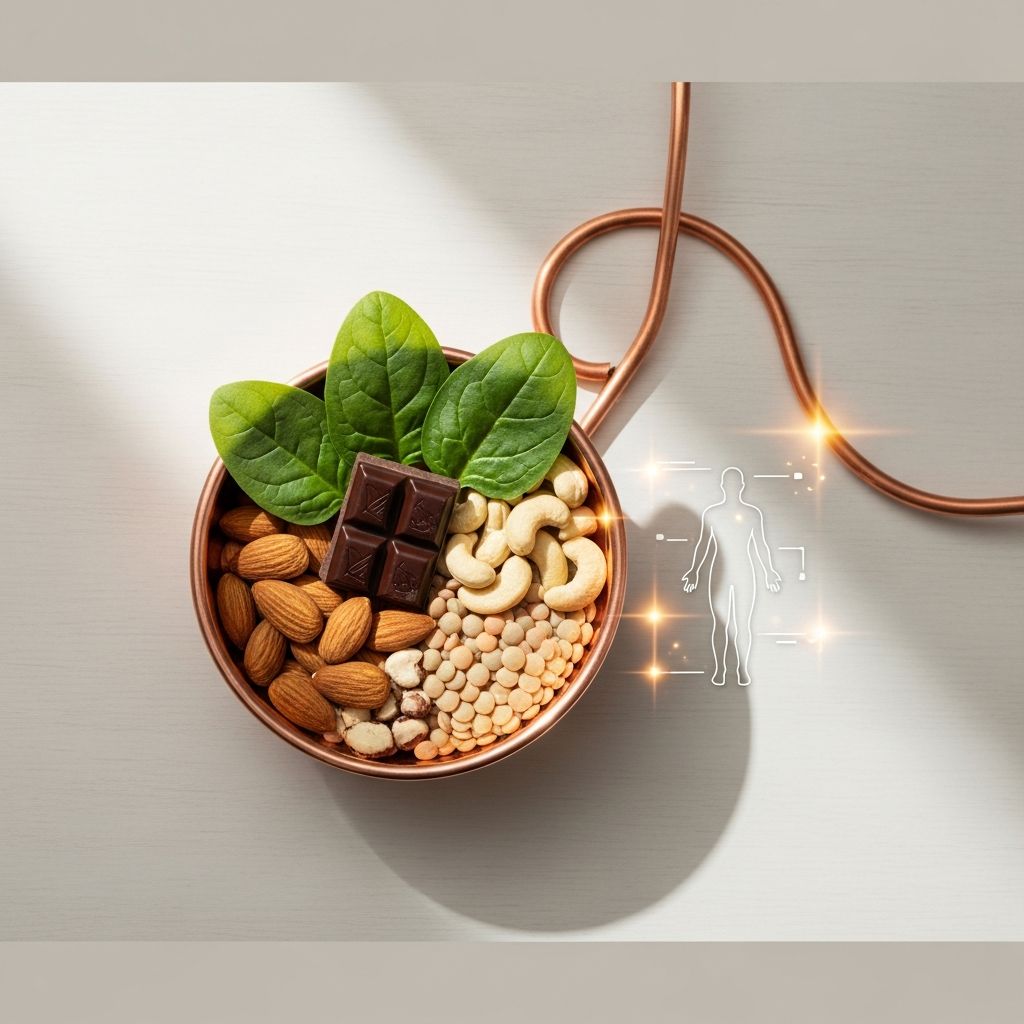
Rather than relying on supplements, most people can meet their copper needs through dietary sources. Common copper-rich foods include:
- Shellfish (oysters, crab, lobster)
- Legumes (chickpeas, lentils, beans)
- Nuts and seeds (almonds, cashews, sunflower seeds)
- Whole grains
- Dark leafy greens
- Organ meats (liver)
- Chocolate and cocoa
- Mushrooms
Including a variety of these foods in your diet helps ensure adequate copper intake without supplementation.
Copper Toxicity: Understanding the Risks
While copper deficiency is more common than excess, copper toxicity can cause serious health problems. Excessive copper accumulation in the body can result in liver damage, heart failure, and kidney failure. Additionally, too much copper can damage brain cells, affecting cognitive function.
Copper toxicity can develop through excessive supplementation or environmental exposure to copper compounds. Symptoms of copper toxicity may include gastrointestinal distress, neurological problems, and organ damage. This emphasizes the importance of obtaining the right amount of copper—neither too little nor too much.
The Balance: Optimal Copper Intake
The key to copper health is balance. Copper functions as an antioxidant at optimal doses, providing protective effects, while deficiency reduces your body’s ability to cope with oxidative stress. Most people achieve optimal copper levels through a healthy, varied diet containing copper-rich foods.
Before considering copper supplements, consult with your healthcare provider. They can assess your individual copper status and recommend appropriate dietary adjustments or supplementation if needed. This personalized approach ensures you receive copper’s health benefits while avoiding potential toxicity risks.
Frequently Asked Questions About Copper
Q: How much copper do I need daily?
A: Copper requirements vary by age and sex. Most healthy adults should obtain adequate copper through a balanced diet. The specific RDA depends on individual factors, so consult your healthcare provider for personalized recommendations.
Q: Can I get enough copper from food alone?
A: Yes, most people get sufficient copper by eating a healthy, varied diet containing foods like shellfish, legumes, nuts, and whole grains. Supplements are typically only necessary for those with documented deficiency or certain medical conditions.
Q: What are signs of copper deficiency?
A: Copper deficiency can cause neutropenia (low white blood cells), anemia, bone weakness, and cognitive issues. If you suspect deficiency, consult your healthcare provider for testing and diagnosis.
Q: Can copper supplements improve my health?
A: Copper supplements may improve specific health conditions associated with copper deficiency, such as low bone density in post-menopausal women. However, supplements are not beneficial for people with adequate copper intake. Always consult your doctor before starting supplementation.
Q: Is copper toxic in high amounts?
A: Yes, excessive copper can cause liver damage, heart failure, kidney failure, and brain cell damage. This is why obtaining the right amount—through diet rather than unnecessary supplementation—is crucial for long-term health.
Q: Does copper help with aging and skin?
A: Yes, copper supports collagen production, protects against UV damage, and accelerates wound healing, helping reduce fine lines and wrinkles while improving overall skin health.
References
- Copper: Health benefits, recommended intake, sources, and risks — Medical News Today. 2025-01-13. https://www.medicalnewstoday.com/articles/288165
- Copper and Nutrition: Why It’s Good For You — Healthline. https://www.healthline.com/health/heavy-metal-good-for-you-copper
- Is Copper Still Safe for Us? What Do We Know and What Are the Implications? — National Center for Biotechnology Information (NCBI/PMC). https://pmc.ncbi.nlm.nih.gov/articles/PMC11352522/
- Copper — The Nutrition Source — Harvard T.H. Chan School of Public Health. https://nutritionsource.hsph.harvard.edu/copper/
- Copper — Health Professional Fact Sheet — National Institutes of Health (NIH), Office of Dietary Supplements. https://ods.od.nih.gov/factsheets/Copper-HealthProfessional/
- Copper: Benefits, Levels, and Sources — Ada Health. https://ada.com/micronutrients/copper/
Similar Articles








Read full bio of Sneha Tete