Corn vs. Flour Tortillas: Which Is Healthier?
Discover the nutritional differences between corn and flour tortillas to make the healthiest choice for your tacos, burritos, and more.
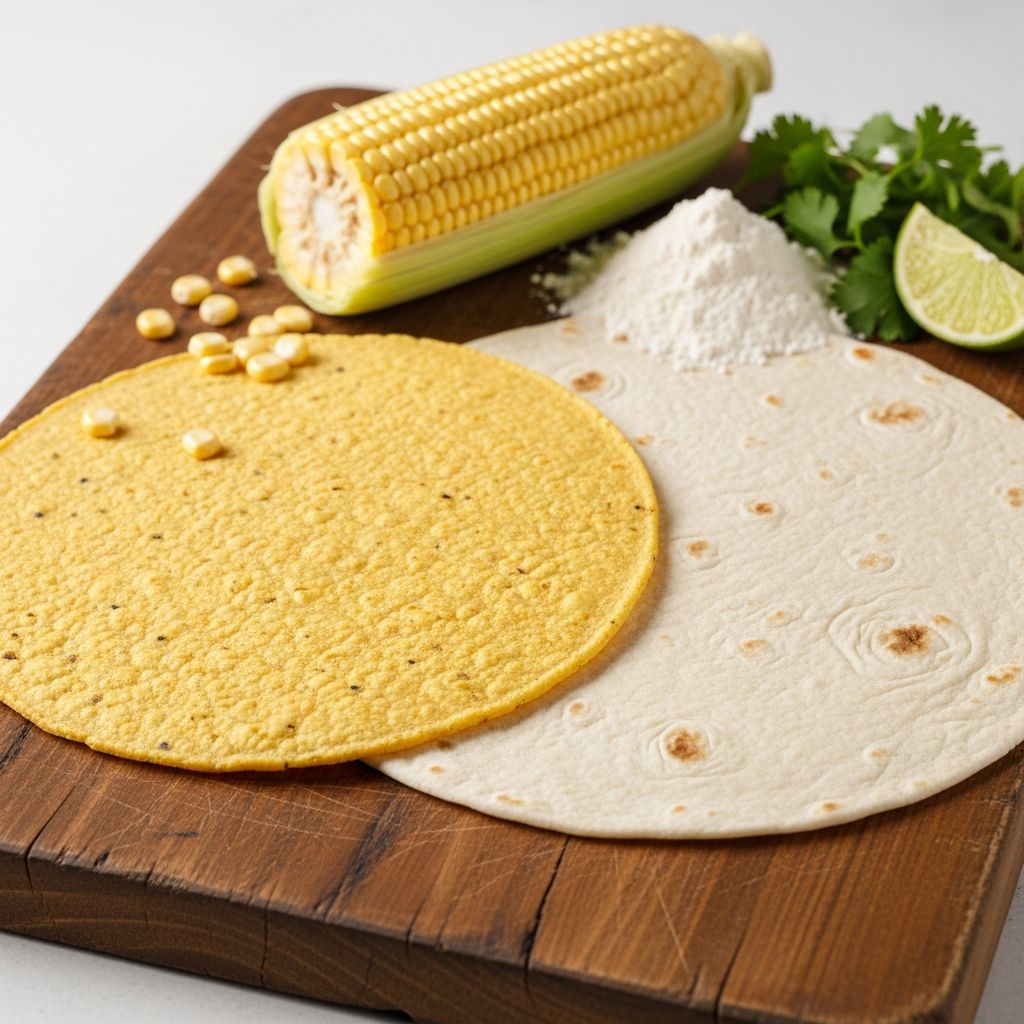
Corn tortillas edge out flour tortillas as the healthier option in most cases due to higher fiber, resistant starch, and whole grain status, though flour varieties offer fortified nutrients like iron and folate.
Tortillas form the foundation of countless Mexican-inspired dishes, from tacos and enchiladas to quesadillas and burritos. But when choosing between
corn tortillas
andflour tortillas
, which one supports better health outcomes? This comparison draws from nutritional data and expert insights to break down calories, macros, vitamins, and more.What Are Corn Tortillas?
Corn tortillas trace their roots to ancient Mesoamerican civilizations, where they were made from nixtamalized corn—a process of soaking corn kernels in an alkaline solution of water and slaked lime (calcium hydroxide). This traditional method, called nixtamalization, not only enhances flavor and texture but also boosts nutrient bioavailability.
Modern corn tortillas are typically crafted from masa harina (nixtamalized corn flour), water, and sometimes salt. They are naturally
gluten-free
, smaller in size (about 6 inches in diameter), and have a chewy yet brittle texture that shines in street-style tacos. A standard serving is two 6-inch corn tortillas, providing a modest carbohydrate base for meals.- Key ingredients: Masa harina, water, lime (for nixtamalization).
- Texture: Firm, slightly grainy, prone to cracking if overfilled.
- Cultural note: Staple in central and southern Mexico.
What Are Flour Tortillas?
Flour tortillas originated in northern Mexico and the southwestern U.S., influenced by Spanish wheat introduction. They are made from wheat flour, water, fat (often lard or vegetable shortening), salt, and baking powder for leavening. This results in a soft, pliable texture ideal for wrapping burritos or folding into quesadillas.
Flour tortillas are larger (8-12 inches) and more elastic thanks to gluten in wheat, but this makes them unsuitable for gluten-intolerant individuals. A typical serving is one 8-inch tortilla.
- Key ingredients: Refined wheat flour, fat, salt, baking powder.
- Texture: Soft, stretchy, holds heavy fillings well.
- Cultural note: Popular in Tex-Mex and northern Mexican cuisine.
Nutrition Comparison: Corn vs. Flour Tortillas
Nutritional profiles vary by brand, size, and preparation, but general patterns emerge from store-bought and homemade versions. Corn tortillas typically offer fewer calories and carbs per serving, while flour ones provide more fortified micronutrients. Below is a side-by-side comparison for a standard serving (2 corn tortillas ~50g vs. 1 flour tortilla ~45g), based on USDA data and popular brands.
| Nutrient | Corn (2 tortillas) | Flour (1 tortilla) | % Daily Value Difference |
|---|---|---|---|
| Calories | 100-120 | 140-170 | Corn: 20-30% fewer |
| Carbohydrates | 20-25g | 25-30g | Corn: Slightly lower |
| Fiber | 3-4g | 1-2g | Corn: 2x more |
| Protein | 2-3g | 4-5g | Flour: Higher |
| Fat | 1-2g | 3-5g (often saturated from lard) | Corn: Lower |
| Sodium | 10-50mg | 300-500mg | Corn: 5-10x lower |
| Iron | 0.5mg (3% DV) | 2mg (11% DV) | Flour: Fortified, higher |
| Folate | 5mcg (1% DV) | 80mcg (20% DV) | Flour: Fortified, much higher |
Related Stories



Note: Values approximate; check labels for specifics. Whole-wheat flour tortillas boost fiber to 4-5g per serving.
Health Benefits of Corn Tortillas
**Corn tortillas** stand out for their whole-grain composition, recognized by organizations like the American Heart Association. Key advantages include:
- Higher fiber: 3-4g per serving supports digestion, satiety, and blood sugar control. Fiber reduces heart disease risk by 15-30% with consistent intake.
- Resistant starch from nixtamalization: Acts as a prebiotic, feeding gut bacteria and improving insulin sensitivity.
- Antioxidants: Yellow corn provides lutein for eye health; blue corn offers anthocyanins combating inflammation.
- Gluten-free and low-sodium: Ideal for celiac disease, gluten sensitivity, or hypertension management.
- Lower calories/carbs: Better for weight management and diabetes, with a moderate glycemic index.
Nixtamalization also enhances niacin (B3) and calcium absorption, addressing historical pellagra risks in corn-dependent diets.
Health Benefits of Flour Tortillas
While refined, flour tortillas shine in fortification:
- Fortified with iron and folate: Iron combats anemia; folic acid cuts neural tube defects by ~30% since mandatory enrichment.
- Higher protein: From wheat, aids muscle repair.
- Versatile texture: Supports nutrient-dense fillings without breaking.
Opt for whole-wheat or low-fat versions to amplify benefits.
Health Drawbacks of Corn Tortillas
- Lower in some micronutrients: Less iron/folate unless fortified (emerging in California via AB 1910 for masa harina).
- Fragility: May crack, limiting filling options.
- Potential allergies: Rare corn sensitivity.
Health Drawbacks of Flour Tortillas
- Low fiber: From refined flour, linked to poorer gut health and quicker blood sugar spikes.
- Higher fat/sodium: Lard adds saturated fat; sodium risks hypertension.
- Gluten content: Problematic for 1-6% of population with celiac or sensitivity.
Which Is Healthier Overall?
**Corn tortillas win for most people** thanks to fiber, whole grains, and lower calories/sodium. They promote fullness, gut health, and stable blood sugar—crucial for diabetes (both low-GI, but corn’s fiber edges it). Flour tortillas excel if you need iron/folate or prefer softness, but pair with veggies for balance.
Context matters: Athletes may favor flour’s carbs; gluten-free diets demand corn. Portion control is key—3 corn equals 1 large flour for balanced carbs.
Best Tortilla for Weight Loss
Corn tortillas support weight loss with fewer calories (100 vs. 150) and more fiber for satiety. Studies link high-fiber diets to 1-2kg greater loss over 12 weeks. Swap freely in tacos.
Best Tortilla for Diabetes
Both low-GI (<55), but corn’s resistant starch and fiber blunt spikes better. Houston Methodist notes minimal carb difference, but fiber tips scales. Monitor portions.
Tips for Healthier Tortillas
- Choose stone-ground corn or whole-wheat flour.
- DIY: Bake instead of fry; use avocado oil over lard.
- Fortified corn masa coming soon in some states.
- Load with veggies, lean proteins, beans for nutrition boost.
- Heat properly: Steam corn to prevent cracking; warm flour to avoid chewiness.
Recipe Ideas
- Corn: Fish tacos with cabbage slaw, lime crema.
- Flour: Breakfast burritos with eggs, spinach, salsa.
Frequently Asked Questions (FAQs)
Are corn tortillas healthier than flour?
Yes, generally—higher fiber, lower calories/sodium, gluten-free. Flour offers more iron/folate.
Do corn tortillas have less carbs?
Slightly: 20-25g vs. 25-30g per serving, but fiber makes corn more blood-sugar friendly.
Can flour tortillas be healthy?
Yes, especially whole-wheat, low-sodium versions with nutrient-rich fillings.
Are corn tortillas gluten-free?
Yes, naturally—perfect for celiac or sensitivity.
Which holds up better for burritos?
Flour, due to gluten elasticity.
References
- Nutrition con Sabor: Corn vs Flour Tortillas — Nutrition con Sabor. 2023. https://nutritionconsabor.com/corn-vs-flour-tortillas/
- Houston Methodist: Corn Vs. Flour Tortilla — Houston Methodist Hospital. 2022-04-01. https://www.houstonmethodist.org/blog/articles/2022/apr/corn-vs-flour-tortilla-which-is-the-healthier-choice-for-your-tacos/
- Your Latina Nutritionist: Corn vs Flour Tortillas — Your Latina Nutritionist. 2023. https://yourlatinanutritionist.com/blog/corn-vs-flour-tortillas
- WebMD: Differences Between Corn vs. Flour Tortillas — WebMD. 2023. https://www.webmd.com/diet/differences-between-corn-flour-tortillas
- CDC: Fiber and Blood Sugar Management — Centers for Disease Control and Prevention. 2024. https://www.cdc.gov/diabetes/healthy-eating/fiber-helps-diabetes.html
- American Heart Association: Whole Grains — American Heart Association. 2023-10-15. https://www.heart.org/en/healthy-living/healthy-eating/eat-smart/nutrition-basics/whole-grains-refined-grains-and-dietary-fiber
Similar Articles








Read full bio of medha deb