Corneal Inlays: Ditch Reading Glasses Forever
Discover how tiny corneal implants can restore your near vision and free you from reading glasses without compromising distance sight.
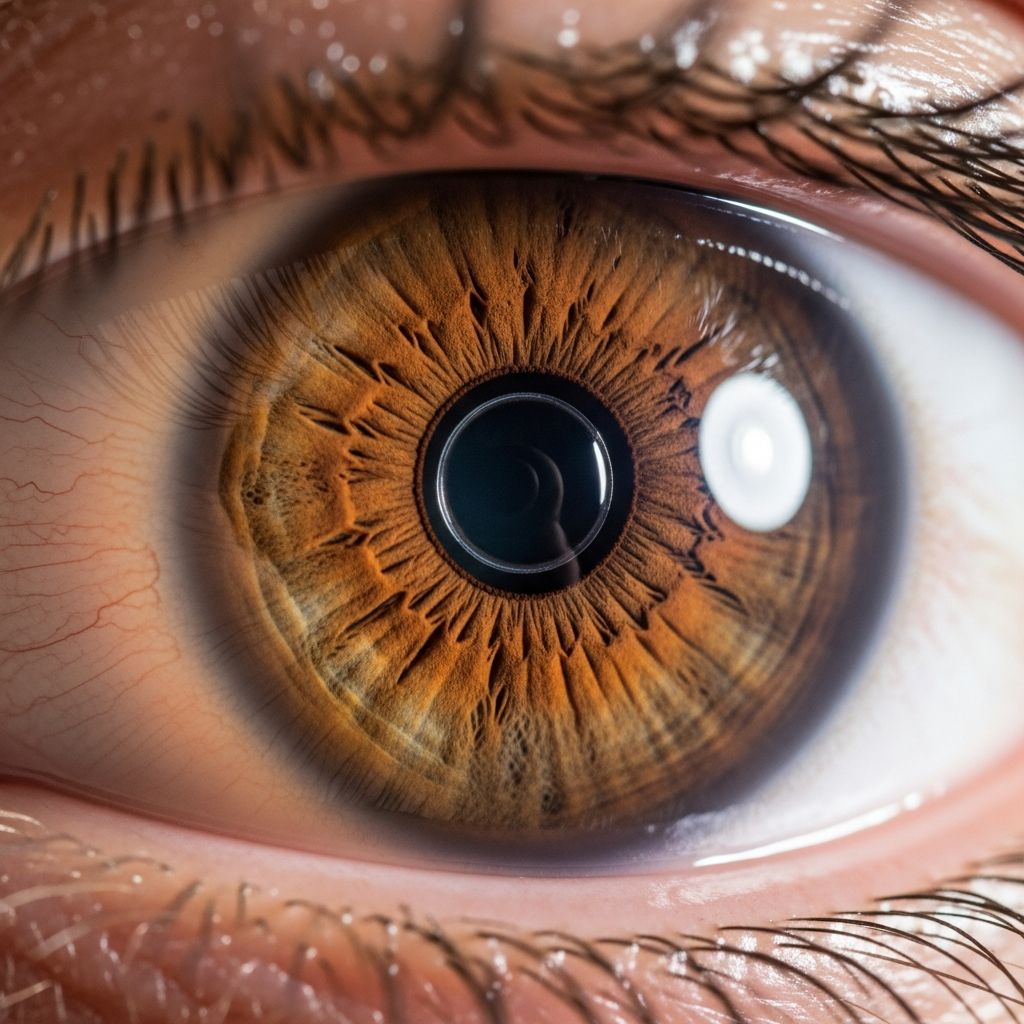
As we age, the eyes lose flexibility, making it hard to focus on nearby objects—a condition called presbyopia that forces many to rely on reading glasses. Corneal inlays provide a promising, long-term fix by embedding minuscule devices into the cornea to sharpen near and intermediate vision without sacrificing distance clarity.
Understanding Presbyopia and Why Glasses Fall Short
Presbyopia emerges around age 40 when the eye’s natural lens stiffens, reducing its ability to adjust for close tasks like reading or using a smartphone. This leads to eye strain, headaches, and constant fumbling for glasses or contacts.
- Common symptoms include blurred near vision, especially in dim light.
- Traditional solutions like bifocals or progressive lenses offer relief but remain cumbersome.
- Many seek permanent options to reclaim spectacle-free living.
Unlike nearsightedness or farsightedness, which stem from corneal shape, presbyopia demands innovative approaches targeting focus depth.
What Are Corneal Inlays Exactly?
Corneal inlays are ultra-thin, biocompatible implants—often smaller than a grain of salt—surgically placed in the cornea’s stroma. Devices like the KAMRA inlay feature a central pinhole aperture that mimics a camera’s depth-of-field effect, filtering unfocused light to enhance sharpness across distances.
| Inlay Type | Key Feature | Target Benefit |
|---|---|---|
| KAMRA | Tiny 1.6mm pinhole with 8,400 micro-holes | Improved near vision (down to 1mm print) |
| Raindrop | Hydrogel disc shape | Shifts focus for intermediate tasks |
These implants nourish via perforations, ensuring corneal health without rejection risks common in larger lenses.
How the Procedure Unfolds Step by Step
The outpatient surgery lasts under 20 minutes per eye, using topical anesthesia for comfort.
- Pre-op evaluation determines dominant eye (for distance) and non-dominant (for inlay).
- A femtosecond laser creates a precise corneal pocket or flap (no tissue removal).
- The inlay is centered over the pupil using imaging tech.
- The site self-heals; no stitches needed.
Patients often drive home shortly after, resuming work in days. Full adaptation takes 1-3 months as the brain neuroadapts.
Proven Improvements in Vision Performance
Clinical data shows remarkable gains. In a study of 24 presbyopic patients, KAMRA implantation in the non-dominant eye yielded:
- Reading distance reduced from 46.7cm to 39.5cm.
- Acuity improved from 0.33 to 0.22 logRAD.
- Smallest readable print shrank from 1.5mm to 1.0mm—better in bright light.
These outperform full monovision in preserving binocular distance vision.
Key Advantages Over Traditional Options
Corneal inlays shine for active lifestyles weary of eyewear hassles.
- Reversibility: Easily removable or replaceable, unlike lens implants.
- Minimal invasiveness: No natural lens alteration; preserves future cataract options.
- Quick recovery: Most see gains in 24-48 hours.
- Natural feel: No sensation of the implant due to its featherweight design.
Compared to contacts, they eliminate daily maintenance and infection risks.
Comparing Corneal Inlays to LASIK Monovision
Related Stories



| Aspect | Corneal Inlay | Blended Monovision LASIK |
|---|---|---|
| Distance Vision Impact | Minimal; both eyes contribute | Non-dominant eye tuned for mid-range |
| Near Vision Gain | Strong (pinhole effect) | Good but brain-dependent synthesis |
| Reversibility | Yes, extractable | No, permanent reshaping |
| Procedure Time | <20 min | 10-15 min per eye |
Inlays edge out for patients prioritizing distance quality, though monovision suits some.
Candidacy: Who Qualifies Best?
Ideal candidates are 45-65, emmetropic (no major refractive errors), with mild-moderate presbyopia.
- Good overall eye health; no dry eye or thin corneas.
- Motivated to adapt; realistic expectations.
- Non-dominant eye suitable for implant.
Consultations include topography scans and neuroadaptation trials.
Potential Risks and Side Effects
While safe, complications occur in <5%:
- Temporary haze or halos (resolve with drops).
- Rare decentration needing repositioning.
- Under- or over-correction (adjustable).
Long-term studies confirm stability up to 2+ years; FDA trials underscore safety.
Post-Procedure Care and Lifestyle Tips
Success hinges on adherence:
- Use prescribed steroid/antibiotic drops for weeks.
- Avoid rubbing eyes; wear shields at night initially.
- Gradually reduce glasses use to aid brain adjustment.
- Follow-ups at 1 day, 1 week, 1 month.
Most enjoy 20/20 distance and J2 near vision.
Real Patient Outcomes and Satisfaction
Studies report 90%+ ditching glasses entirely. One cohort maintained gains at 2-year follow-up, with enhanced reading speeds in optimal light. Patients praise the freedom for sports, driving, and daily tasks.
Future of Inlay Technology
Ongoing refinements include shape-optimizing inlays and combo therapies with mild LASIK. As trials progress, accessibility grows via skilled refractive surgeons.
Frequently Asked Questions (FAQs)
Is the KAMRA inlay FDA-approved?
Yes, following extensive trials for presbyopia correction.
How long do results last?
Indefinitely for many; removable if needs change.
Does insurance cover it?
Often elective; costs $4,000-$6,000 per eye.
Can I get it if I had LASIK before?
Possible if cornea thickness allows; case-by-case.
What if I’m unhappy?
Removal restores pre-op vision in most cases.
Corneal inlays represent a leap in presbyopia management, blending precision engineering with eye anatomy for seamless vision restoration.
References
- Study Shows Kamra (Acufocus) Corneal Inlay Improves Reading Performance — Shapiro Laser. Accessed 2026. https://shapirolaser.com/study-shows-kamra-acufocus-corneal-inlay-improves-reading-performance-in-patients-with-presbyopia-need-for-reading-glasses/
- Optimizing Results With Corneal Inlays — CRSToday. 2017-03. https://crstoday.com/articles/2017-mar/optimizing-results-with-corneal-inlays
- Corneal Inlay vs. Contacts: What’s Best? — Center For Sight. Accessed 2026. https://centerforsightlv.com/patient-resources/blog/corneal-inlay-vs-contacts-whats-best/
- Corneal Inlays | Risks, Candidacy Requirements and Cost — Better Vision Guide. Accessed 2026. https://www.bettervisionguide.com/corneal-inlays/
- Blurry Reading Vision? The KAMRA Inlay May Help — MN Eye. Accessed 2026. https://www.mneye.com/blurry-reading-vision-kamra-inlay-may-help/
- KAMRA Inlay: Pros, Cons, Costs & More — NVISION Centers. Accessed 2026. https://www.nvisioncenters.com/eye-surgery/kamra-inlay/
Similar Articles








Read full bio of Sneha Tete