Coronary Arteries: The 2 Main Vessels, Anatomy & Function
Understanding the vital blood vessels that supply oxygen to your heart muscle.
Understanding the Coronary Arteries: Anatomy and Function
The coronary arteries are specialized blood vessels that play a vital role in maintaining the health and function of your heart. These arteries form a network around the heart muscle, delivering oxygen-rich blood that the heart requires to contract effectively and pump blood throughout your body. Understanding the anatomy and function of coronary arteries is essential for recognizing how cardiovascular disease develops and why maintaining heart health is so important.
What Are the Coronary Arteries?
The coronary arteries are the arterial blood vessels of coronary circulation, which transport oxygenated blood directly to the heart muscle, or myocardium. Unlike other organs that receive blood after the heart has pumped it throughout the body, the heart requires its own dedicated blood supply system. The heart is an exceptionally hardworking organ that beats continuously throughout your lifetime, contracting and relaxing hundreds of thousands of times each day. This constant activity demands a continuous and reliable supply of oxygen and nutrients. When coronary artery function is compromised, the heart muscle does not receive adequate oxygen, which can lead to serious complications including chest pain, heart attacks, and heart failure.
The Two Main Coronary Arteries
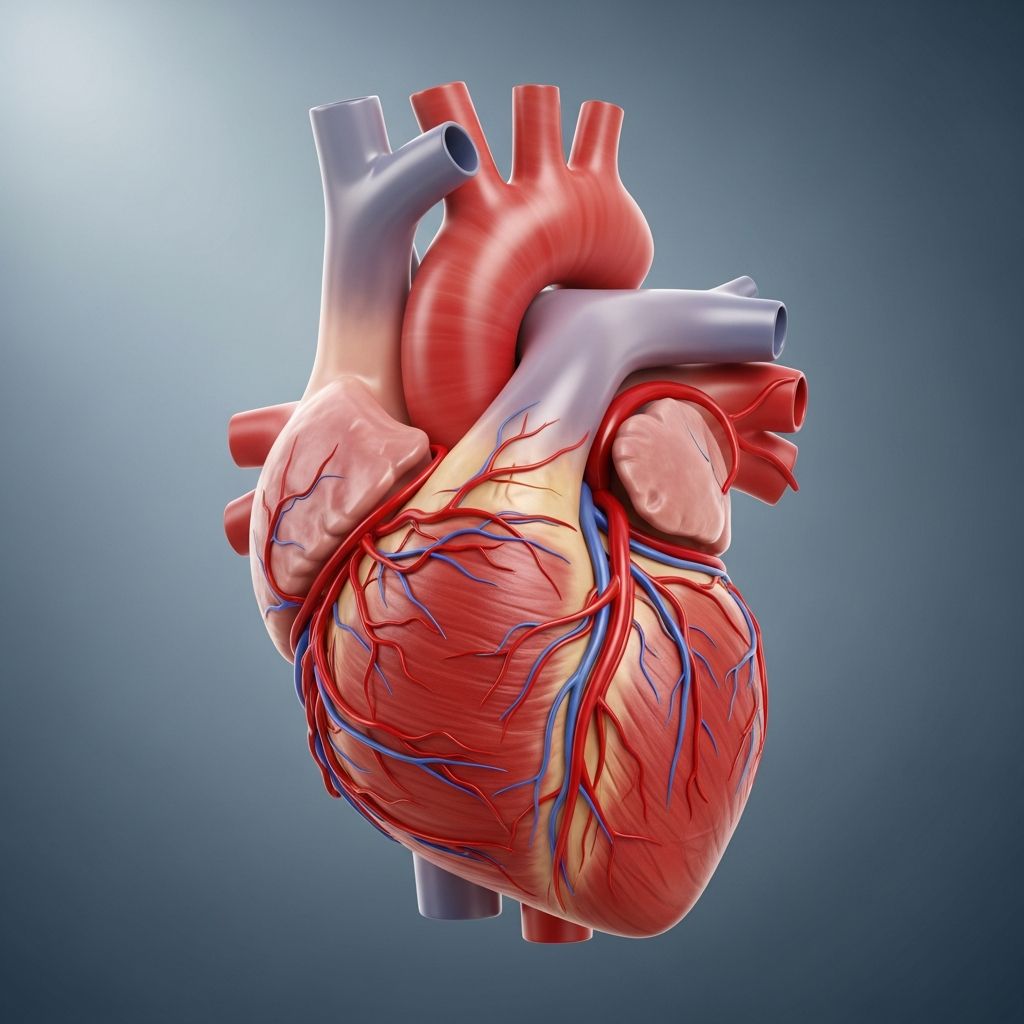
The coronary circulatory system begins with two primary coronary arteries that originate from the root of the aorta, the body’s main artery. These two main arteries are the right coronary artery (RCA) and the left main coronary artery (LMCA). Each of these major vessels gives rise to several branches that distribute blood to different regions of the heart muscle.
Anatomy of the Coronary Artery System
The Right Coronary Artery (RCA)
The right coronary artery emerges from the anterior ascending aorta and travels along the right side of the heart. The RCA supplies blood primarily to the right atrium and right ventricle, which are the chambers responsible for receiving blood from the body and pumping it to the lungs. The RCA also provides branches that supply critical structures within the heart:
- Sinoatrial Nodal Artery: This branch supplies the SA node, which functions as the heart’s natural pacemaker, initiating the electrical signals that coordinate the heartbeat.
- Atrioventricular Nodal Artery: This branch supplies the AV node, which relays electrical impulses from the atria to the ventricles. In approximately 90% of people, this artery originates from a septal perforating branch of the RCA.
- Posterior Descending Artery (PDA): This important branch supplies the posterior one-third of the interventricular septum, the wall that divides the two ventricles.
- Acute Marginal Artery: This branch supplies portions of the right ventricle.
The Left Main Coronary Artery (LMCA)
The left main coronary artery arises from the aorta within the left cusp of the aortic valve and supplies blood to the left side of the heart, which performs the more demanding function of pumping oxygenated blood to the entire body. The LMCA divides into two primary branches:
- Left Anterior Descending Artery (LAD): The LAD supplies blood to the anterior (front) portion of the left ventricle and the anterior portion of the interventricular septum. This artery is sometimes called the anterior interventricular artery and gives off smaller diagonal branches that supply portions of the left ventricular wall.
- Left Circumflex Artery (LCx): The circumflex artery travels around the left side of the heart and supplies the left atrium and the posterior-lateral (back and side) aspects of the left ventricle. In approximately 33% of individuals, the left circumflex gives rise to the posterior descending artery.
Related Stories



Additional Coronary Branches
Beyond the primary branches, several smaller arteries contribute to the comprehensive blood supply of the heart:
- Obtuse Marginal Artery (OMA): These branches arise from the left circumflex and supply the lateral wall of the left ventricle.
- Diagonal Arteries: These branches come off the left anterior descending artery and supply the anterior and lateral walls of the left ventricle.
- Septal Perforators (SP): These small arteries penetrate the interventricular septum and supply this dividing wall.
- Ramus or Intermediate Artery: In some individuals, a third branch forms at the junction between the LAD and circumflex, providing additional blood supply to the left ventricle.
Blood Supply Distribution and Function
The coronary artery system is designed to ensure that every region of the heart muscle receives adequate blood supply. The distribution of blood from the coronary arteries follows a logical pattern based on the anatomy of the heart chambers and the workload each region must support.
The right coronary artery supplies the entire right side of the heart, including the right atrium and right ventricle. Because the right ventricle has the relatively less demanding job of pumping blood only to the nearby lungs, this region typically has lower oxygen demand. However, the electrical conduction system of the heart, including the SA node and AV node, requires constant blood supply, and the RCA provides this critical function through its nodal branches.
The left coronary artery system supplies the left side of the heart, which bears the primary responsibility for pumping blood to the entire body. The left ventricle is considerably thicker and more muscular than the right ventricle because it must generate the force necessary to distribute blood throughout the systemic circulation. Therefore, the left coronary artery branches are generally larger and deliver more blood than the right coronary artery branches. The LAD supplies the anterior and septal regions, while the circumflex supplies the lateral and posterior regions, ensuring complete coverage of this hardworking chamber.
Physiological Variations in Coronary Anatomy
While the basic pattern of coronary artery distribution is similar in most people, significant variations exist among individuals. These variations are considered normal physiological differences and are important for understanding individual differences in heart disease risk and treatment planning.
Coronary Dominance
Coronary dominance refers to which coronary artery supplies the posterior descending artery (PDA) and the inferior wall of the heart. In approximately 70% of the population, the right coronary artery supplies the posterior descending artery, a pattern called right dominance. In about 10% of individuals, a branch from the left circumflex supplies the inferior segment, known as left dominance. In approximately 20% of the population, both the right coronary artery and left circumflex provide branches to this region, a pattern called codominance or balanced dominance.
Coronary dominance has clinical significance because narrowing of the coronary arteries is more frequent in individuals with left dominance compared to those with right dominance or codominance. This difference may relate to variations in blood flow patterns and shear stress on the vessel walls in different anatomical arrangements.
Additional Anatomical Variations
Beyond dominance patterns, several other normal variations occur in coronary anatomy. In some cases, the sinoatrial nodal artery originates from the proximal right coronary artery in 60% of individuals, but variants can occur with blood supply from the proximal left circumflex. The atrioventricular nodal artery supplies the AV node via a septal perforating branch from the RCA in 90% of patients and from the left coronary artery in the remaining 10%.
Sometimes the posterior descending artery may be small or relatively redundant. In these cases, the right coronary artery, left circumflex, and obtuse marginal branches directly supply the inferior wall. These variations are usually clinically insignificant in healthy individuals but can become important during cardiac procedures such as percutaneous coronary intervention, where detailed knowledge of individual anatomy is essential for safe and effective treatment.
Embryological Development
Understanding how coronary arteries develop during fetal life provides insight into their final anatomical configuration. Current understanding of coronary artery embryology indicates that the coronary arteries originate from tissue in the epicardial atrioventricular and interventricular grooves, specialized regions on the surface of the developing heart. During fetal development, these vascular structures gradually establish connections with the aortic valve sinuses, the small pouches within the aorta from which the coronary arteries ultimately originate.
The proximal section of the coronary arteries merges into the aortic valve sinuses, positioning the coronary ostia (openings) perfectly to receive oxygenated blood directly from the aorta. This specific connection only occurs after the aortopulmonary rotation has been completed during cardiac development. The anatomical proximity of the vascular connection from the atrioventricular and interventricular grooves to the aortic root reflects the principle that coronary arteries pierce through a sinus wall late in cardiac development via the shortest route possible. This developmental understanding explains why anomalous coronary artery origins, though rare, represent a disruption of normal embryological events.
Lymphatic Drainage of the Coronary System
While the coronary arteries deliver blood to the heart, the heart also requires a system to drain excess fluid and cellular waste products. Two main collecting lymphatic vessels play this crucial role. The first lymphatic vessel runs along with the conal vein, then travels toward the left pulmonary trunk as it approaches the mediastinum (the central chest cavity), ultimately draining into the left and right ventricles. The second main collecting lymphatic vessel travels along the left marginal vein, the coronary sinus, and the left atrium up to the mediastinum, where it eventually connects with the thoracic lymphatic system. This lymphatic network is essential for maintaining the proper fluid balance within the heart tissue and supporting immune function.
Clinical Significance of Coronary Artery Function
The Impact of Coronary Artery Disease
The critical importance of coronary arteries becomes apparent when disease develops. Reduced function of the coronary arteries leads to decreased flow of oxygen and nutrients to the heart muscle. This diminished oxygen supply affects not only the heart muscle itself but also the heart’s ability to pump blood effectively throughout the body. Any disorder or disease of the coronary arteries can have serious health consequences.
Narrowing of the coronary arteries, a condition called coronary artery disease (CAD) or ischemic heart disease, is most commonly caused by atherosclerosis, a process in which plaques composed of cholesterol and other substances gradually accumulate in the arterial walls. Other less common causes of arterial narrowing include arteriosclerosis (hardening of the arteries) and arteriolosclerosis (disease of small arteries).
Consequences of Coronary Artery Obstruction
When coronary arteries become significantly narrowed, several serious conditions can develop. Angina, or chest pain, occurs when the narrowed arteries cannot supply enough oxygen to meet the heart’s demand, particularly during exertion or emotional stress. A heart attack results from a sudden plaque rupture and formation of a blood clot (thrombus) that completely blocks blood flow to a portion of the heart, leading to tissue death (myocardial infarction). Chronic oxygen deprivation from reduced coronary blood flow can weaken the heart muscle over time, resulting in heart failure, where the heart cannot pump blood effectively. Additionally, inadequate blood supply to the heart can interfere with the heart’s electrical impulses, causing arrhythmias or irregular heartbeats.
Other Coronary Artery Conditions
Beyond atherosclerotic disease, coronary arteries can be affected by other conditions. Coronary arteries can constrict as a response to various chemical stimuli, a phenomenon known as a coronary reflex. A rare but serious condition called spontaneous coronary artery dissection involves a tear in the coronary artery wall, causing severe pain. Unlike coronary artery disease, spontaneous coronary artery dissection is not caused by plaque buildup and tends to occur in younger individuals, including women who have recently given birth and men who engage in intense exercise.
Frequently Asked Questions About Coronary Arteries
Q: Why do coronary arteries originate from the aorta?
A: Coronary arteries originate from the aorta to receive oxygenated blood directly from the left ventricle. This ensures that the heart muscle receives blood with the highest oxygen content, as the aorta carries freshly oxygenated blood that has just been pumped from the left ventricle before it circulates to the rest of the body.
Q: What does coronary dominance mean, and why is it important?
A: Coronary dominance describes which coronary artery supplies the posterior descending artery and inferior wall of the heart. It is important because it affects blood flow distribution and may influence cardiovascular disease risk. Studies show that left dominance is associated with higher frequency of coronary artery narrowing compared to right dominance or codominance patterns.
Q: How do coronary arteries differ from other blood vessels in the body?
A: Coronary arteries are specialized to supply blood directly to the heart muscle itself. Unlike blood vessels that carry blood away from the heart after it has been pumped out, coronary arteries deliver oxygenated blood back into the heart muscle. This dual system ensures the heart receives continuous oxygen despite its constant pumping activity.
Q: What percentage of people have anatomical variations in coronary arteries?
A: Significant anatomical variations are quite common. Approximately 70% have right dominance, 10% have left dominance, and 20% have codominance. Additional variations exist in the origin of nodal arteries and other branches. These variations are usually normal and clinically insignificant unless they coincide with coronary disease or during cardiac procedures.
Q: Can coronary artery problems be detected early?
A: Yes, modern diagnostic methods including electrocardiography (EKG), stress testing, coronary angiography, and computed tomography coronary angiography (CTCA) can detect coronary artery disease. Early detection depends on recognizing symptoms such as chest discomfort, shortness of breath, or fatigue, particularly during exertion, and seeking medical evaluation promptly.
References
- Anatomy, Thorax, Heart Coronary Arteries — National Center for Biotechnology Information (NCBI), U.S. National Library of Medicine. 2024. https://www.ncbi.nlm.nih.gov/books/NBK534790/
- Coronary Arteries: Blood Supply System and Function — American Heart Association. 2024. https://www.heart.org
- Understanding Coronary Artery Disease — Mayo Clinic. 2024. https://www.mayoclinic.org
- Cardiovascular Physiology and Coronary Blood Flow — Cleveland Clinic. 2024. https://my.clevelandclinic.org
Similar Articles








Read full bio of medha deb