Coronary Arteries: Structure, Function and Health
Understand how coronary arteries deliver oxygen-rich blood to keep your heart healthy and beating strong.
Understanding Coronary Arteries: Your Heart’s Lifeline
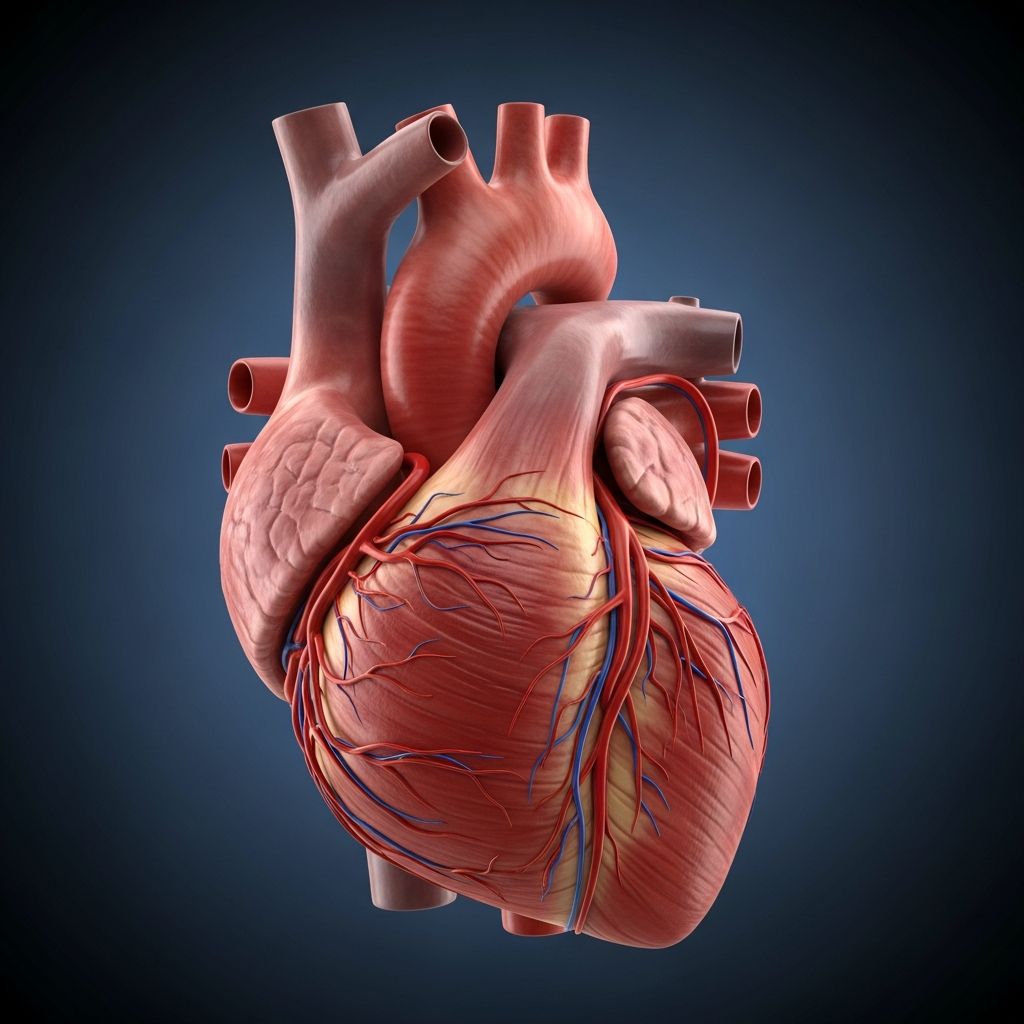
The coronary arteries are essential blood vessels that wrap around the outside of your heart, delivering oxygen-rich blood to the heart muscle itself. Just like every other organ in your body, your heart requires a constant supply of oxygenated blood to function properly and maintain the rhythmic beating that keeps you alive. Without healthy coronary arteries, your heart cannot receive the nutrients and oxygen it needs to pump blood throughout your entire body. Understanding these vital vessels is crucial for recognizing the importance of cardiovascular health and preventing serious heart conditions.
What Are Coronary Arteries?
Coronary arteries are specialized blood vessels that supply blood directly to the heart muscle, or myocardium. The term “coronary” comes from the Latin word “corona,” meaning crown, because these arteries form a crown-like pattern around the heart as they wrap along the coronary sulcus of the myocardium. Unlike other arteries that deliver blood to distant organs, coronary arteries have the critical function of nourishing the heart itself—the very organ responsible for pumping blood throughout your body. This creates a unique dependency: the heart must maintain its own blood supply to continue functioning.
The primary function of coronary arteries is to transport oxygen-rich blood from the aorta into the heart muscle tissues. All tissues in the body require oxygen to survive and function properly, and the heart muscle is no exception. In fact, the heart has one of the highest metabolic demands of any organ, meaning it requires a particularly rich blood supply to meet its energy needs. When coronary arteries become narrowed or blocked, the heart muscle may not receive sufficient oxygen, leading to chest pain (angina) or a heart attack (myocardial infarction).
Anatomy of the Coronary Arteries
The Two Main Coronary Arteries
Your heart has two primary coronary arteries that originate from the root of the aorta: the right coronary artery (RCA) and the left main coronary artery (LMCA). These two vessels branch into numerous smaller arteries that collectively distribute blood throughout the entire heart. Understanding the distinction between these main arteries and their branches is essential for recognizing how different areas of the heart receive blood supply.
The Right Coronary Artery (RCA)
The right coronary artery emerges from the anterior ascending aorta and supplies blood primarily to the right atrium and right ventricle. The RCA descends into smaller branches, including the right posterior descending artery (PDA) and the acute marginal artery. The sinoatrial nodal artery, which is a branch of the RCA, supplies the SA node—a critical structure that controls your heart’s natural rhythm. Additionally, the RCA supplies the AV node via a septal perforating branch in 90% of people, making it essential for proper heart rhythm coordination.
The right marginal arteries, which branch from the RCA, perfuse the right ventricle, while the posterior descending artery supplies blood to the posterior one-third of the interventricular septum and the inferior wall of the heart. In approximately 67% of individuals, the RCA gives rise to the posterior descending artery, a characteristic known as right heart dominance.
The Left Coronary Artery System
The left main coronary artery (LMCA) divides into two major branches: the left anterior descending artery (LAD) and the left circumflex (LCx) coronary artery. Together, these branches supply blood to the left atrium and left ventricle, which are the heart’s most muscular and powerful chambers.
Related Stories



Left Anterior Descending Artery (LAD): The LAD supplies the anterior two-thirds of the interventricular septum and the anterior portion of the left ventricle. This artery typically branches off diagonal branches that provide additional blood flow to the front and sides of the left ventricle. The LAD is sometimes called the “widow maker” because occlusion of this artery can result in an anterior wall myocardial infarction, which is often the most damaging type of heart attack.
Left Circumflex Artery (LCx): The circumflex artery is responsible for blood supply to the left atrium and the posterior-lateral aspect of the left ventricle. This artery wraps around the back of the heart muscle and may give rise to obtuse marginal branches that provide additional perfusion to the lateral walls of the left ventricle. In some individuals with left heart dominance, the circumflex artery may also supply the posterior descending artery.
Smaller Branches and Variations
Beyond the main coronary arteries and their primary branches, there are numerous smaller branches including obtuse marginal arteries (OMA), diagonal branches, and septal perforators (SP). These smaller vessels work together with the main arteries to ensure complete perfusion of all heart tissues. The variation in these smaller branches contributes to the significant anatomical differences among individuals, meaning no two people have exactly identical coronary artery patterns.
How Coronary Arteries Distribute Blood
| Coronary Artery | Primary Branches | Blood Supply Areas |
|---|---|---|
| Right Coronary Artery (RCA) | Sinoatrial nodal artery, Posterior descending artery, Marginal branches | Right atrium, right ventricle, SA node, AV node, inferior wall |
| Left Anterior Descending (LAD) | Diagonal branches, Septal perforators | Anterior two-thirds of septum, anterior left ventricle |
| Left Circumflex (LCx) | Obtuse marginal branches, posterolateral branches | Left atrium, posterior-lateral left ventricle |
Embryological Development
The development of coronary arteries during fetal development is a fascinating process that explains their unique anatomical positioning. The current understanding of coronary artery embryology posits that coronary arteries stem from the epicardial atrioventricular and interventricular grooves, with their proximal sections merging into the aortic valve sinuses during fetal development. The vascular connections that give rise to the right coronary artery and the left main coronary artery only occur after the aortopulmonary rotation has been completed.
This phenomenon explains why coronary arteries originate so close to the aortic root. During fetal development, the coronary arteries must pierce through a sinus wall late in cardiac development, and they do so via the shortest route possible. Understanding this embryological basis helps explain certain congenital variations and anomalies that can occur in coronary artery positioning.
Individual Variations in Coronary Anatomy
One of the most important concepts in understanding coronary arteries is recognizing that the arrangement of coronary arteries varies significantly among individuals. While the basic pattern of two main arteries branching into smaller vessels remains consistent, the specific distribution of blood flow, the size of individual arteries, and the presence of certain branches can differ substantially from person to person.
Coronary Artery Dominance
Coronary artery dominance describes which coronary artery supplies the posterior descending artery and provides blood to the inferior wall of the heart. In 80 to 85% of the population, the right coronary artery supplies the posterior descending artery, making these individuals right heart dominant. However, in 7 to 13% of the population, the left coronary artery supplies the posterior descending artery, making them left heart dominant. A small percentage of the population exhibits co-dominance, where both the right and left coronary arteries contribute to blood supply of the inferior wall.
Other Notable Variations
The sinoatrial nodal blood supply exhibits significant variation. In 60% of cases, blood supply to the SA node comes from the proximal right coronary artery, but variants can be seen with blood supply from the proximal left circumflex. Similarly, there is variation in blood supply to the atrioventricular node. The septal perforating branch supplying the AV node originates from the RCA in 90% of patients and from the left coronary artery in the remaining 10%.
In some cases, the posterior descending artery may be small and relatively redundant. In such situations, the RCA, LCx, and obtuse marginal branches supply the inferior wall directly. These anatomical variations are usually clinically insignificant during normal heart function but can become important during cardiac procedures or when coronary artery disease develops.
Clinical Significance and Disease
Coronary Artery Disease
Coronary artery disease (CAD) occurs when plaque deposits accumulate inside the coronary arteries, narrowing the vessel and reducing blood flow to the heart muscle. Many plaques are soft on the inside with a hard, fibrous cap covering the outside. When the hard surface cracks or tears, the soft, fatty inside becomes exposed, triggering the formation of blood clots around the plaque. This can cause the artery to narrow even further, potentially blocking blood flow entirely.
Myocardial Infarction Patterns
The specific location of a coronary artery blockage determines which area of the heart muscle is affected and the pattern of damage that occurs. Understanding these patterns helps cardiologists diagnose heart attacks using electrocardiogram (ECG) readings:
- Left Anterior Descending Artery Occlusion: Occlusion of the LAD results in an anterior wall myocardial infarction, which appears as ST elevations in the precordial leads (V1-V4). This is often the most serious type of heart attack due to the large amount of heart muscle supplied by this vessel.
- Left Circumflex Artery Occlusion: Occlusion of the LCx results in a lateral wall myocardial infarction, which appears as ST elevations in leads I, aVL, and V5-6. This typically affects the side wall of the left ventricle.
- Posterior Descending Artery Occlusion: Blockage of the PDA results in an inferior infarction, which would appear in leads II, III, and aVF. This affects the bottom surface of the heart.
Other Cardiac Complications
Beyond heart attacks, coronary artery disease can result in heart failure or arrhythmias. Heart failure is caused by chronic oxygen deprivation due to reduced blood flow, which gradually weakens the heart muscle over time. Arrhythmias (irregular heartbeats) can result from inadequate blood supply to the heart that interferes with the heart’s electrical impulse system, disrupting the precise coordination needed for effective pumping.
Maintaining Healthy Coronary Arteries
While you cannot change your coronary artery anatomy, you can take steps to protect these vital vessels from disease. Maintaining a healthy lifestyle includes regular exercise, which improves arterial function and strengthens the heart. A heart-healthy diet low in saturated fats and cholesterol helps prevent plaque buildup. Managing stress, maintaining a healthy weight, avoiding smoking, and controlling conditions like high blood pressure and diabetes are all essential for coronary artery health.
Frequently Asked Questions About Coronary Arteries
Q: What is the main function of coronary arteries?
A: The primary function of coronary arteries is to supply oxygen-rich blood directly to the heart muscle. This blood delivery is essential for the heart to maintain its contractions and pump blood throughout the body effectively.
Q: How many coronary arteries does the heart have?
A: The heart has two main coronary arteries—the right coronary artery (RCA) and the left main coronary artery (LMCA). These branch into numerous smaller arteries that collectively supply blood to all areas of the heart.
Q: What happens if a coronary artery becomes blocked?
A: If a coronary artery becomes completely blocked, the heart muscle supplied by that artery becomes starved of oxygen. This can cause a heart attack (myocardial infarction), which results in tissue death. The severity depends on which artery is blocked and how quickly blood flow is restored.
Q: Why do coronary arteries vary among individuals?
A: Coronary artery arrangement varies significantly among people due to differences in embryological development, genetic factors, and individual anatomical variation. These differences affect how blood is distributed to different areas of the heart, which can influence the severity and pattern of damage from coronary artery disease.
Q: What is coronary artery dominance?
A: Coronary artery dominance refers to which coronary artery supplies the posterior descending artery and the inferior wall of the heart. Most people (80-85%) are right dominant, meaning their right coronary artery provides this blood supply, while a smaller percentage are left dominant or co-dominant.
Q: Can coronary arteries be treated if they become diseased?
A: Yes, coronary artery disease can be treated through various interventions including medications to reduce plaque formation and improve blood flow, angioplasty to open blocked arteries, and coronary artery bypass surgery to create alternative routes for blood flow around blockages.
References
- Anatomy, Thorax, Heart Coronary Arteries — National Center for Biotechnology Information (NCBI), StatPearls. Updated 2024. https://www.ncbi.nlm.nih.gov/books/NBK534790/
- Coronary Arteries — Wikipedia Medical Reference. https://en.wikipedia.org/wiki/Coronary_arteries
- Anatomy and Function of the Coronary Arteries — CoxHealth Medical Center. https://www.coxhealth.com/condition/anatomy-and-function-of-the-coronary-arteries/
- Heart: Anatomy & Function — Cleveland Clinic. https://my.clevelandclinic.org/health/body/21704-heart
- Coronary Artery Disease — Cleveland Clinic Abu Dhabi. https://www.clevelandclinicabudhabi.ae/en/health-hub/health-resource/diseases-and-conditions/coronary-artery-disease
Similar Articles








Read full bio of medha deb