Coronary Artery Bypass Graft Surgery: Restoring Blood Flow
Restore heart blood flow with coronary artery bypass graft surgery at Cleveland Clinic.
What Is Coronary Artery Bypass Graft Surgery?
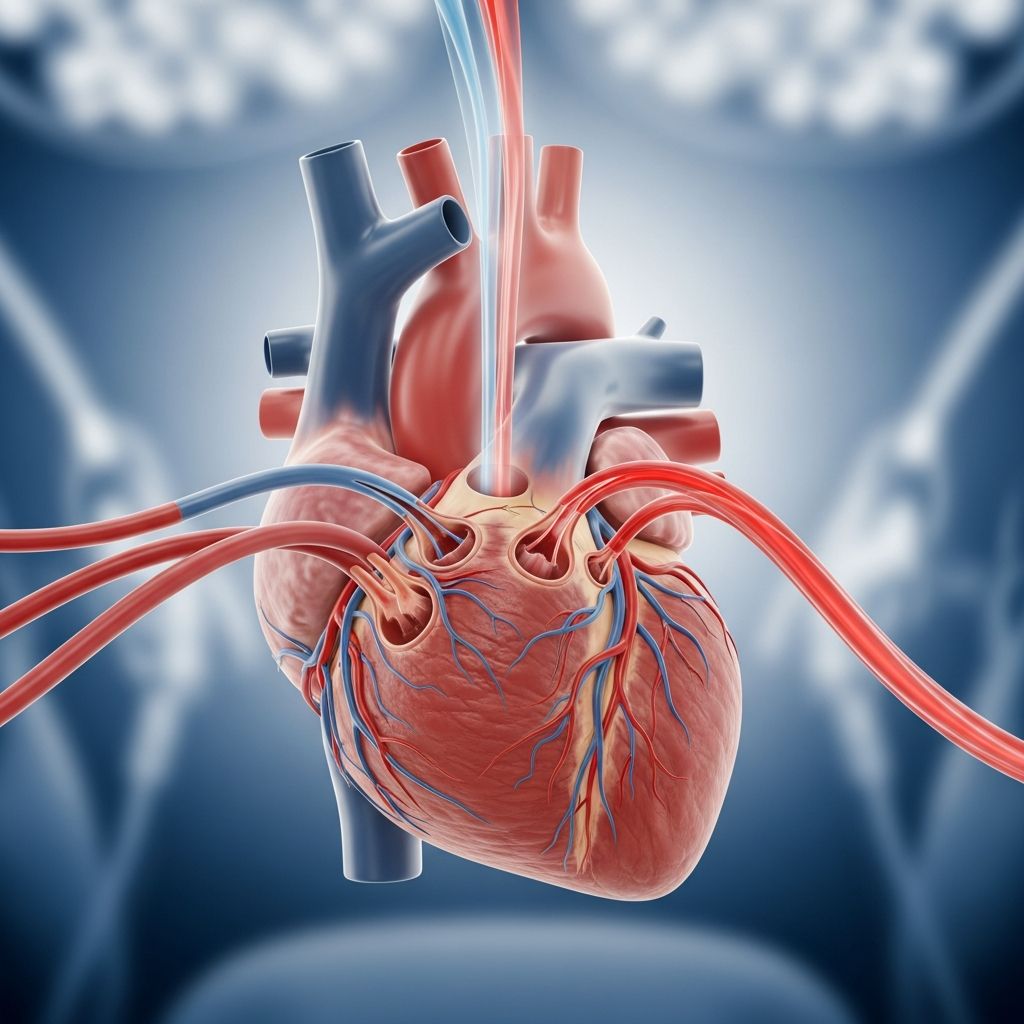
Coronary artery bypass grafting (CABG), also known as heart bypass surgery, is a surgical procedure designed to restore blood flow to areas of your heart that are not receiving adequate blood supply. The heart is a muscular organ that requires its own continuous blood supply to function properly. This blood is delivered through a network of arteries that wrap around the heart’s surface. When blockages develop in these coronary arteries due to plaque accumulation, blood flow becomes restricted, depriving the heart muscle of oxygen-rich blood.
When artery blockages cut off blood flow to the heart, the consequences can be severe. Heart muscle cells begin to die due to lack of oxygen, which can cause heart attacks or heart attack-like symptoms. CABG surgery prevents this by creating a detour, or bypass, around the blocked section of the artery. The procedure uses blood vessels harvested from other parts of your body—typically the legs, chest, or arms—to reroute blood around the blockage and restore normal circulation to the heart muscle.
Why You Might Need Bypass Surgery
Bypass surgery is recommended for patients with coronary artery disease (CAD) who have significant blockages in one or more coronary arteries. Your cardiologist may recommend CABG if you have experienced a heart attack, are at high risk for one, or are experiencing symptoms of restricted blood flow to the heart.
Specific conditions that may warrant bypass surgery include:
- Severe chest pain (angina) that cannot be managed with medications
- Silent myocardial ischemia, a condition where blood flow to the heart is reduced without noticeable symptoms
- Previous heart attack with ongoing complications
- Multiple blocked coronary arteries
- Blockages in critical arteries that supply large portions of the heart muscle
- Failed previous interventions such as angioplasty or stent placement
Understanding the Heart and Coronary Arteries
The heart is the body’s central pumping organ, responsible for circulating blood throughout the entire body. To perform this vital function effectively, the heart itself requires a constant supply of oxygenated blood. A network of coronary arteries encircles the heart and delivers this necessary blood supply to the heart muscle, known as the myocardium.
When coronary arteries become narrowed or blocked by atherosclerotic plaque—a buildup of fat, cholesterol, and other substances—blood flow is compromised. This condition is called coronary artery disease. A condition called ischemia develops when heart tissues don’t receive enough blood and oxygen. If blood flow is severely restricted or completely blocked, the heart muscle supplied by that artery can die, resulting in a myocardial infarction (heart attack).
How Coronary Artery Bypass Surgery Works
Traditional Open Bypass Surgery
Traditional coronary artery bypass surgery is a complex open-heart procedure that typically takes three to six hours to complete, depending on the number of bypasses needed and the complexity of your specific situation. The procedure is performed under general anesthesia, and you will be placed on several types of life support equipment during the operation.
During the procedure, a cardiothoracic surgeon makes a large incision down the middle of your chest and carefully splits the sternum (breastbone) to gain access to the heart. Your rib cage is then lifted to provide direct visualization of the heart and coronary arteries. Before work begins on the heart itself, a healthy blood vessel is harvested from another part of your body. Common graft sources include the saphenous vein from the leg, the internal mammary artery from the chest wall, or the radial artery from the arm.
Related Stories



Once the graft vessel is obtained, the surgeon attaches one end of the graft to the aorta (the main artery leaving the heart) and the other end to the blocked coronary artery just beyond the blockage. This creates a new pathway for blood to bypass the obstruction. If you require multiple bypasses—double, triple, or quadruple bypasses—additional grafts are placed to restore blood flow to other blocked arteries. After all necessary grafts are in place, your heart is restarted if it was temporarily stopped during the procedure. The rib cage is repositioned and secured with wires, and the incision is closed with staples and stitches.
Minimally Invasive Bypass Options
Cleveland Clinic offers advanced minimally invasive alternatives to traditional open-heart surgery for eligible patients. These techniques involve smaller incisions and reduced trauma to the chest wall, resulting in faster recovery times, shorter hospital stays, and fewer complications.
Off-Pump Bypass Surgery: Also called “beating heart” surgery, off-pump CABG is performed without using a heart-lung bypass machine. The heart continues beating normally during the procedure, which may reduce complications associated with the bypass machine and is ideal for patients at higher risk.
Minimally Invasive Direct Coronary Artery Bypass (MIDCAB): In this procedure, the surgeon makes very small incisions between the ribs rather than splitting the breastbone. These tiny incisions between the rib spaces allow access to the heart with minimal trauma. The procedure is often performed using the off-pump technique, eliminating the need for a heart-lung bypass machine entirely.
Robotic-Assisted Bypass Surgery: Cleveland Clinic offers two robotic approaches to bypass surgery. Robotically assisted LIMA-LAD (left internal mammary artery to left anterior descending artery) is suitable for patients requiring only a single bypass to the LAD. A hybrid robotic procedure is also available for patients with multivessel disease requiring multiple bypasses.
Preparation Before Surgery
Proper preparation is essential for a successful bypass surgery and smooth recovery. Your surgical team will provide detailed instructions to help you prepare physically and mentally for the procedure.
Your healthcare providers will review all medications you are currently taking and provide specific guidance about which medications to continue and which to discontinue before surgery. Some medications, such as blood thinners, may need to be stopped several days before the procedure to reduce bleeding risk. Your surgical team will discuss your complete medical history, current symptoms, and any previous surgeries or medical conditions.
Pre-operative testing typically includes blood work, an electrocardiogram (EKG), chest X-rays, and often cardiac catheterization to precisely map the location and severity of your blockages. Your surgeon will discuss the procedure in detail, explaining what to expect before, during, and after surgery, including information about hospital stay duration, activity restrictions, and necessary lifestyle modifications.
You will receive instructions about fasting before surgery, typically requiring no food or drink after midnight the night before your operation. Arrangements should be made for someone to drive you home, as you will not be able to drive for several weeks following surgery.
What to Expect During Surgery
On the day of your surgery, you will be admitted to the hospital and taken to the pre-operative area where final preparations occur. An intravenous (IV) line will be inserted into a vein to deliver fluids and medications throughout the procedure. A urinary catheter will be placed to allow urine to drain into a collection bag while you are under anesthesia and unable to use the bathroom. You will receive general anesthesia, and an endotracheal tube will be inserted into your windpipe and connected to a ventilator, which will breathe for you during and immediately after the surgery.
Once you are fully asleep and your airway is secured, the surgical team will position you on the operating table and begin the bypass grafting procedure. Monitoring equipment will continuously track your heart rate, blood pressure, oxygen levels, and other vital signs throughout the operation.
Benefits of Coronary Artery Bypass Surgery
Coronary artery bypass surgery offers several important benefits for patients with significant coronary artery disease:
- Restored Blood Flow: Bypass grafts effectively restore blood flow to heart muscle that was previously deprived of oxygen
- Symptom Relief: Many patients experience significant reduction or complete elimination of chest pain and other angina symptoms
- Improved Heart Function: By restoring adequate blood supply, the surgery allows the heart to function more effectively
- Reduced Heart Attack Risk: Restoring coronary blood flow substantially reduces the risk of future heart attacks
- Improved Quality of Life: Patients often report increased exercise capacity and improved overall quality of life following successful surgery
- Enhanced Survival: For patients with significant multivessel disease, bypass surgery has been shown to improve long-term survival compared to medical management alone
Risks and Complications
While coronary artery bypass surgery is generally safe, especially at high-volume centers like Cleveland Clinic, it is major surgery and does carry potential risks. Most complications are uncommon and either avoidable or treatable with appropriate medical care. Understanding these risks helps you make an informed decision in consultation with your surgical team.
Potential risks include:
- Bleeding during or after surgery
- Infection of the surgical incision or deeper chest tissues
- Arrhythmias (irregular heartbeat)
- Stroke or transient ischemic attack
- Kidney dysfunction
- Cognitive changes or memory problems
- Graft failure or closure
- Heart attack during or after surgery
- Blood clots
- Pneumonia or respiratory complications
- Pain or numbness at graft harvest sites
The risk of complications varies based on individual factors including age, overall health status, left ventricular function, kidney function, and the complexity of the surgery. Your surgical team will discuss your specific risk profile before the procedure.
Recovery After Bypass Surgery
Recovery from coronary artery bypass surgery is a gradual process that typically progresses in stages. Immediately after surgery, you will remain in the intensive care unit (ICU) for close monitoring. Most patients spend one to three days in the ICU before being transferred to a regular hospital room.
During your hospital stay, your healthcare team will gradually remove monitoring equipment as you stabilize. The breathing tube is typically removed within hours after surgery once you are awake and breathing adequately on your own. IV lines and urinary catheters are removed as soon as they are no longer needed. Pain management is an important part of early recovery, and your team will provide medications to keep you comfortable.
Most patients can go home within four to six days after surgery, though this varies based on individual circumstances. Full recovery typically takes six to twelve weeks, with gradual return to normal activities over this period. Your surgical team will provide detailed discharge instructions and will likely recommend a supervised cardiac rehabilitation program to help you regain strength and confidence in your recovery.
Comprehensive Surgical Specialization at Cleveland Clinic
Cleveland Clinic’s Coronary Artery Bypass Surgery Center provides comprehensive surgical expertise for a wide range of patient populations and complex situations. The center treats patients of all ages, from young patients with premature coronary artery disease to elderly patients with multiple medical conditions. The surgical team has specialized experience managing complex cases, high-risk patients, and reoperations where patients are undergoing repeat bypass surgery after previous coronary interventions.
Cleveland Clinic surgeons utilize multi-arterial CABG techniques more frequently than other centers, using multiple arterial grafts rather than venous grafts when possible, as research has shown this approach improves long-term outcomes. The institution also maintains exceptional outcomes data, with isolated CABG surgery in-hospital mortality rates significantly lower than expected national averages.
Multiple Bypass Procedures
When coronary artery disease affects multiple vessels, your surgeon may need to perform double, triple, or quadruple bypasses to restore blood flow to all significantly blocked arteries. Double bypass surgery involves placing two grafts, triple bypass involves three grafts, and quadruple bypass involves four grafts. The type of bypass procedure you need depends on the number and location of significant blockages in your coronary arteries as determined by cardiac catheterization or other imaging studies.
Frequently Asked Questions
Q: How long does coronary artery bypass surgery take?
A: Traditional bypass surgery typically takes three to six hours, depending on the number of bypasses needed and the complexity of your case. Minimally invasive procedures may take similar or slightly longer times due to the technical precision required with smaller incisions.
Q: Will I need to take medications after bypass surgery?
A: Yes. After bypass surgery, you will typically take several medications long-term, including antiplatelet agents (like aspirin), beta-blockers, ACE inhibitors, and statins. These medications help protect your grafts and reduce your risk of future coronary problems.
Q: Can I return to normal activities after bypass surgery?
A: Yes, most patients gradually return to normal activities over six to twelve weeks. You will need to follow activity restrictions during recovery, gradually increasing your activity level with guidance from your surgical team and cardiac rehabilitation specialists.
Q: What is the difference between on-pump and off-pump bypass surgery?
A: On-pump surgery uses a heart-lung bypass machine to maintain blood circulation while the heart is stopped. Off-pump, or “beating heart,” surgery is performed while your heart continues to beat, potentially reducing complications associated with the bypass machine.
Q: How long do bypass grafts last?
A: Arterial grafts (like the internal mammary artery) typically last much longer than venous grafts, often functioning for 20+ years or more. Venous grafts may begin to show signs of narrowing after 5-10 years. Your surgeon will use the most appropriate graft type for your situation.
Q: What happens if a bypass graft fails?
A: If a bypass graft fails or narrows, you may experience recurring symptoms. Your cardiologist can perform diagnostic testing to determine if re-intervention is needed, which might include repeat catheterization, stent placement, or rarely, repeat bypass surgery.
References
- Coronary Artery Bypass Surgery — Cleveland Clinic Abu Dhabi. Accessed December 2025. https://www.clevelandclinicabudhabi.ae/en/health-hub/health-resource/treatments-and-procedures/coronary-artery-bypass-surgery
- Coronary Artery Bypass Surgery Center — Cleveland Clinic. Accessed December 2025. https://my.clevelandclinic.org/departments/heart/depts/coronary-artery-bypass-surgery-center
- Coronary Artery Bypass Graft (CABG) Surgery — Cleveland Clinic. Accessed December 2025. https://my.clevelandclinic.org/health/treatments/16897-coronary-artery-bypass-surgery
- Coronary artery bypass grafting: Practice trends and projections — Cleveland Clinic Journal of Medicine, Vol. 92, No. 3. 2025. https://www.ccjm.org/content/92/3/181
- Isolated Coronary Artery Bypass Graft Surgery — Cleveland Clinic. Outcomes Data 2023. https://my.clevelandclinic.org/departments/heart/outcomes/325-isolated-coronary-artery-bypass-graft-surgery
- What Is a Triple Heart Bypass? — Cleveland Clinic. Accessed December 2025. https://my.clevelandclinic.org/health/treatments/24591-triple-bypass-surgery
Similar Articles








Read full bio of Sneha Tete