Corpus Luteum Cyst: Causes, Symptoms & Treatment
Understanding corpus luteum cysts: harmless ovarian growths that typically resolve without treatment.
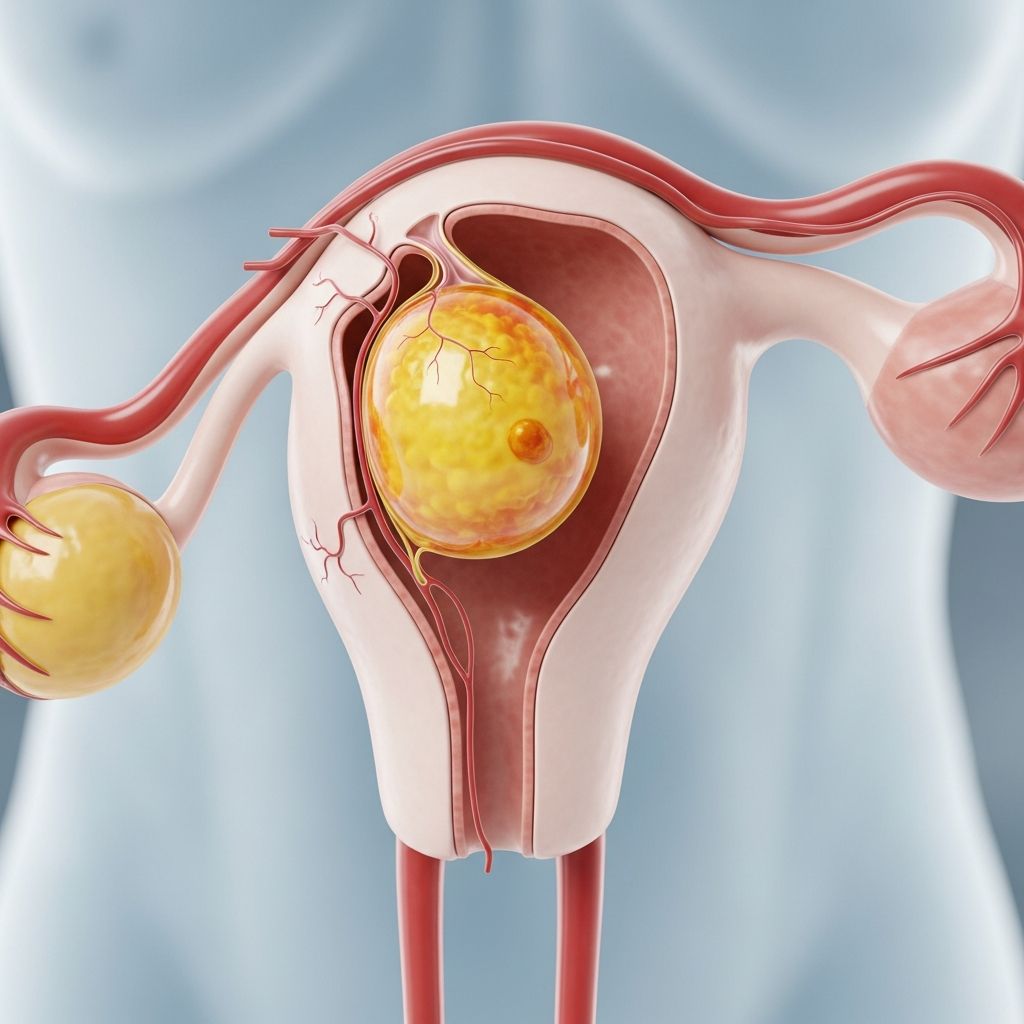
Understanding Corpus Luteum Cysts
A corpus luteum cyst is a harmless, painless mass that sometimes forms on the corpus luteum, a structure in your ovaries responsible for producing important pregnancy hormones. These cysts are one of the most common types of cell growths that doctors observe during the first trimester of pregnancy, and they typically require no medical intervention. If your healthcare provider identifies one during an imaging procedure, there is no need for concern—these cysts are benign and usually disappear on their own without any treatment.
What Is the Corpus Luteum?
To understand corpus luteum cysts, it helps to first understand what the corpus luteum is and its role in your reproductive system. The corpus luteum is a temporary glandular structure that forms in your ovaries after ovulation occurs. Each month during your menstrual cycle, a sac in one of your ovaries called a follicle creates and releases an egg. Soon after the egg is released, the corpus luteum forms at the site where the follicle ruptured.
The corpus luteum is composed of two types of follicular cells: granulosa cells and theca cells. It is typically yellow in color, ranging in size from almost one inch to almost two inches across. This yellow coloration comes from lutein and lipids that influence the follicle. The primary function of the corpus luteum is to produce progesterone, a crucial hormone for reproductive health.
The Role of Progesterone
Progesterone is the hormone that your uterus needs to house a developing fetus. When an egg is fertilized, your corpus luteum continues to produce progesterone, which thickens the lining of your uterus and creates a healthy environment where a fertilized egg can implant and develop into a fetus. If the egg is not fertilized, the corpus luteum naturally breaks down, and progesterone levels decrease, triggering menstruation. However, if the corpus luteum does not break down as expected, it may fill with fluid and form a cyst.
How Do Corpus Luteum Cysts Form?
A corpus luteum cyst forms when the corpus luteum continues to grow instead of breaking down. This typically occurs when the corpus luteum fills with fluid and expands. While the exact reason why this happens is not always clear, it is known that these cysts are more commonly identified during pregnancy because they tend to persist longer to continue supporting the pregnancy.
You get a corpus luteum cyst when the corpus luteum seals off and becomes filled with fluid, causing it to enlarge. Generally, the cyst will self-resolve by reabsorbing the fluid, though this process takes time. The cyst formation is a natural response in your body and is not indicative of any disease or serious condition.
Who Can Develop a Corpus Luteum Cyst?
Anyone who menstruates can develop a corpus luteum cyst. However, your healthcare provider is more likely to find one if you are pregnant, as these cysts tend to last longer during pregnancy to support the developing fetus. These cysts are typically painless, so most people don’t even know they have one unless it is discovered during routine imaging. They often show up as part of regular ultrasound procedures performed during early pregnancy.
Symptoms of Corpus Luteum Cysts
In most cases, corpus luteum cysts cause no symptoms at all. Because they are usually painless, many people are unaware they have a cyst until it appears on an imaging procedure such as an ultrasound. However, complications can arise in rare cases, and understanding the potential warning signs is important.
Related Stories



Small cysts generally do not cause symptoms unless they rupture, become hemorrhagic (bleed), or undergo torsion (twisting). If any of these complications occur, you may experience:
- Severe pelvic pain
- Severe nausea and vomiting
- Lightheadedness or weakness
If you experience any of these severe symptoms, you should seek urgent medical evaluation immediately. These warning signs could indicate a complication that requires prompt medical attention.
Diagnosis of Corpus Luteum Cysts
Corpus luteum cysts are often identified during imaging procedures performed in early pregnancy. Your healthcare provider may use several diagnostic methods to identify and assess a corpus luteum cyst:
- Transvaginal ultrasound—the most common and reliable imaging method
- Transabdominal ultrasound—an alternative ultrasound approach
- Magnetic resonance imaging (MRI)—used in specific situations
- Physical examination and medical history review
Ultrasonography is the imaging test of choice for assessing ovarian cysts and masses. On ultrasound, a corpus luteum cyst typically appears as a mass with a diffusely thick wall, and it may have a fringed or scalloped edge. Hemorrhagic corpus luteum cysts may appear more complex with an internal reticular pattern due to organizing clots and fibrin strands, and they often display a characteristic “ring of fire” vascular pattern around the cyst.
Does a Corpus Luteum Cyst Indicate Pregnancy?
Having a corpus luteum cyst does not necessarily mean you are pregnant. While your doctor is more likely to find one if you are pregnant because these cysts commonly show up during imaging procedures associated with pregnancy monitoring, they can also occur in non-pregnant individuals. The presence of a corpus luteum cyst alone is not a reliable indicator of pregnancy, and a positive pregnancy test or other clinical findings would be needed to confirm pregnancy.
Treatment of Corpus Luteum Cysts
Chances are you won’t need any treatment for a corpus luteum cyst. Most of these cysts resolve on their own without any medical intervention. If you’re pregnant, your cyst will probably disappear on its own during your second trimester. If you’re not pregnant, your cyst may go away within a few weeks to a few months. Usually, by the time you have your third menstrual cycle, the cyst will be gone completely.
If your cyst is causing discomfort or if symptoms are present, your healthcare provider can offer treatments to help you manage those symptoms while the cyst resolves naturally. Recommended management options may include:
- Over-the-counter pain relievers for mild discomfort
- Hormonal birth control to help regulate your cycle and reduce cyst formation
- Heat therapy or warm compresses for pain management
- Rest and activity modification
In extremely rare cases where a cyst grows so large that it could harm your ovaries or pose risks to your pregnancy, your healthcare provider may remove the cyst surgically. If this occurs, you will receive exogenous progesterone to replace the progesterone that was being produced by the corpus luteum.
Impact on Pregnancy and Fertility
Unless something goes wrong with your corpus luteum cyst, it should not affect your body. If you’re pregnant, it will not affect the fetus either. The presence of a corpus luteum cyst is a normal finding in many pregnancies and is not associated with increased risk of miscarriage or other adverse pregnancy outcomes. In fact, the corpus luteum is essential for maintaining pregnancy during the first trimester, so the cyst itself represents the cyst formation around a structure that is supporting your pregnancy.
When to Seek Emergency Care
While corpus luteum cysts are mostly uneventful masses that grow and disappear without any issues, complications can occasionally occur. You should seek immediate medical care if your cyst ruptures and causes severe pain, or if it grows so large that it twists your ovary, a condition known as ovarian torsion. Signs that require emergency evaluation include:
- Sudden, severe pelvic pain
- Severe nausea and vomiting accompanied by pain
- Lightheadedness, dizziness, or fainting
- Signs of internal bleeding or shock
Complications: Rare but Important to Recognize
Complications with corpus luteum cysts can happen, but they are rare. The main complications include cyst rupture, hemorrhage, and ovarian torsion. A ruptured corpus luteum cyst may cause sudden severe pain and potentially internal bleeding. Hemorrhagic corpus luteum cysts, which bleed internally, can be complex and may cause pain or signs of peritonitis, particularly when they rupture. Ovarian torsion occurs when the cyst becomes so enlarged that it causes the ovary to twist, cutting off its blood supply and causing severe pain. These complications require prompt medical attention and may require surgical intervention.
Long-Term Outlook and Prognosis
The long-term outlook for people with corpus luteum cysts is excellent. You shouldn’t expect a corpus luteum cyst to impact your life at all in most cases. Corpus luteum cysts usually go away without any treatment. If you’re pregnant, your corpus luteum cyst will probably go away on its own during your second trimester. If you’re not pregnant, your cyst will most likely break down a few weeks after ovulation. The presence of a corpus luteum cyst does not increase your risk of developing other ovarian conditions or affect your ability to become pregnant in future cycles.
Frequently Asked Questions
Q: What is the difference between a corpus luteum cyst and other types of ovarian cysts?
A: Corpus luteum cysts are functional cysts that form from the corpus luteum after ovulation. Other types of ovarian cysts include follicular cysts (which form when a follicle doesn’t release an egg), dermoid cysts (which develop from egg cells), and cystadenomas (which are benign tumors). Corpus luteum cysts are distinguished by their formation from the corpus luteum and their role in producing progesterone.
Q: Will a corpus luteum cyst affect my ability to get pregnant?
A: No, a corpus luteum cyst should not affect your ability to get pregnant. These cysts are benign and resolve on their own. In fact, if you already are pregnant, the corpus luteum cyst supports your pregnancy by producing progesterone. Even after the cyst resolves, your future fertility should not be impacted.
Q: How long does it take for a corpus luteum cyst to go away?
A: If you’re not pregnant, a corpus luteum cyst typically goes away within a few weeks to a few months after ovulation. If you’re pregnant, it will usually resolve during your second trimester. By your third menstrual cycle if not pregnant, the cyst will generally be completely gone.
Q: Can a corpus luteum cyst recur?
A: While corpus luteum cysts themselves don’t recur from the same ovulation cycle, new cysts can potentially form in subsequent cycles if the corpus luteum fills with fluid again. However, this is not a cause for concern, as these cysts are benign and will resolve naturally.
Q: What should I do if I’ve been diagnosed with a corpus luteum cyst?
A: If you’ve been diagnosed with a corpus luteum cyst, there is no need to worry. Most cysts require no treatment and will resolve on their own. Simply follow up with your healthcare provider as recommended and report any severe symptoms. If you experience sudden severe pelvic pain, severe nausea, or other warning signs, seek medical attention immediately.
Q: Is a corpus luteum cyst the same as being pregnant?
A: No, having a corpus luteum cyst does not mean you are pregnant. While these cysts are more commonly found during pregnancy, they can also occur in non-pregnant individuals. A corpus luteum cyst is simply a fluid-filled sac that forms around the corpus luteum and has no bearing on your pregnancy status.
References
- Corpus Luteum Cyst: Causes, Symptoms & Treatment — Cleveland Clinic. 2022-01-31. https://my.clevelandclinic.org/health/diseases/22340-corpus-luteum-cyst
- Ovarian Cysts: Causes, Symptoms, Diagnosis & Treatment — Cleveland Clinic. https://my.clevelandclinic.org/health/diseases/9133-ovarian-cysts
- Incidental Ovarian Cysts — Cleveland Clinic Journal of Medicine, Vol. 80, No. 8. 2013. https://www.ccjm.org/content/ccjom/80/8/503.full.pdf
- Benign Adnexal Masses — Merck Manuals Professional Edition. https://www.merckmanuals.com/professional/gynecology-and-obstetrics/miscellaneous-gynecologic-disorders/benign-adnexal-masses
Similar Articles








Read full bio of Sneha Tete