Costochondritis: Symptoms, Causes, And Treatment Guide
Understand costochondritis: chest pain from rib cartilage inflammation, symptoms, causes, diagnosis, and effective treatments.
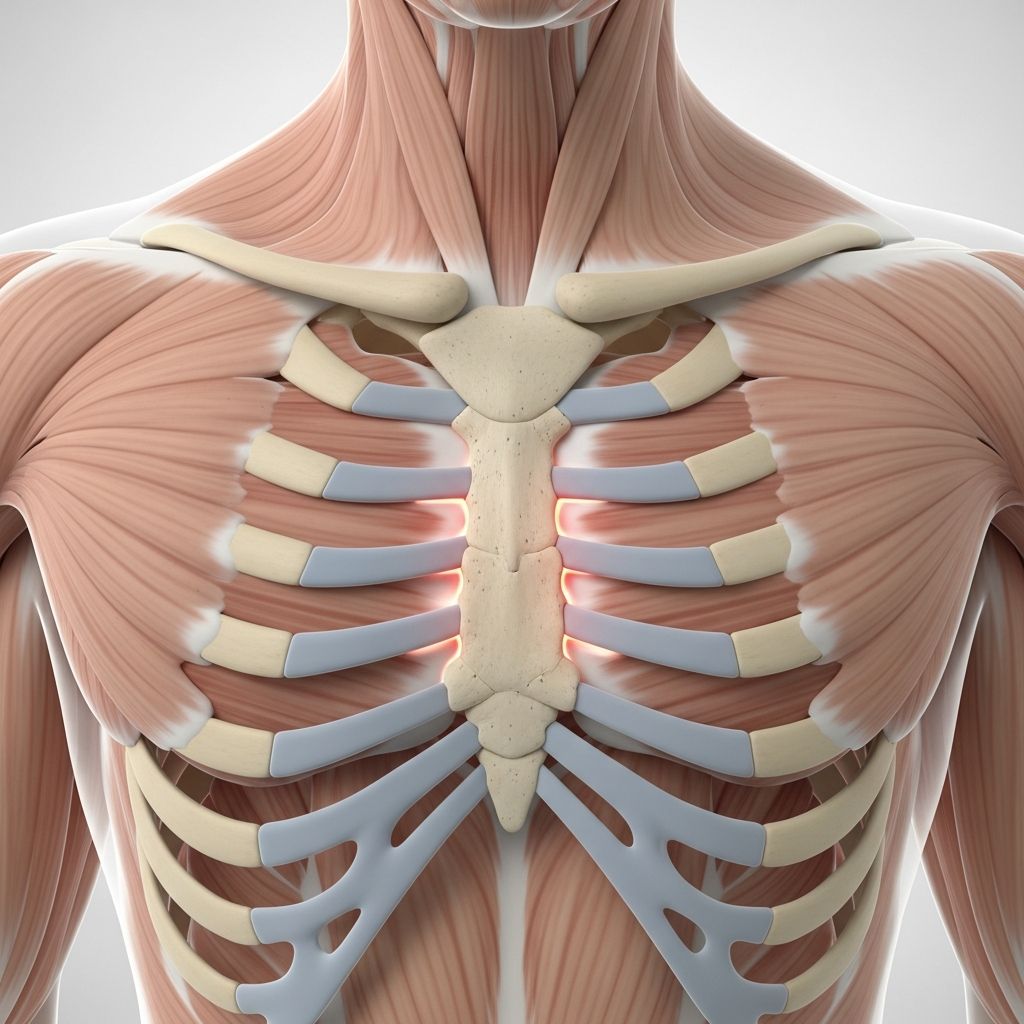
Costochondritis is inflammation of the cartilage that connects your ribs to your breastbone (sternum), causing sharp, aching chest pain often mistaken for a heart attack. This benign, self-limiting musculoskeletal condition typically affects the second to fifth costochondral junctions and resolves within weeks with conservative treatment.
What Is Costochondritis?
Costochondritis, also known as costosternal syndrome or anterior chest wall syndrome, involves inflammation of the costal cartilage where ribs attach to the sternum. Unlike Tietze syndrome, it lacks swelling or skin changes and shows no imaging abnormalities or elevated inflammatory markers. The pain is reproducible on palpation, worsened by movement, deep breathing, or coughing, distinguishing it from cardiac issues. It most commonly affects adults aged 40-50, with a slight female predominance. Over 90% of cases resolve in 3-4 weeks, though some may recur or persist.
Symptoms of Costochondritis
The hallmark symptom is localized chest wall pain, often sharp, stabbing, burning, or aching, primarily at the upper chest near the sternum. Pain typically involves ribs 2-5 unilaterally but can affect both sides or other junctions.
- Chest pain exacerbated by deep inspiration, coughing, sneezing, or upper body movements like reaching overhead or twisting.
- Tenderness on palpation of costochondral junctions, a key diagnostic sign.
- Pain radiating to the back, abdomen, or arms, mimicking heart-related issues.
- Worsening with lying on the affected side or physical activity.
Symptoms are insidious in onset without fever, shortness of breath, or systemic signs unless associated with underlying conditions. Persistent cases beyond one month may limit chest expansion and cause shortness of breath.
Costochondritis vs. Tietze Syndrome
| Feature | Costochondritis | Tietze Syndrome |
|---|---|---|
| Swelling | Absent | Present (localized) |
| Pain Location | Costochondral junctions, often multiple | Usually single junction |
| Imaging/Inflammatory Markers | Normal | May show inflammation |
| Duration | Self-limiting, 3-4 weeks | Similar, but with visible swelling |
Costochondritis lacks the characteristic swelling of Tietze syndrome, making it a clinical diagnosis based on tenderness without objective inflammation.
Causes and Risk Factors
The exact cause is often idiopathic, but precipitating factors include:
- Microtrauma from vigorous upper extremity activity, heavy lifting, or repetitive motions.
- Prolonged coughing from respiratory infections or other causes.
- Chest wall injury or blunt trauma.
- Associated conditions like fibromyalgia, ankylosing spondylitis, rheumatoid arthritis, or infections.
Risk factors encompass female sex, age over 40, IV drug use, sternotomy infections, and activities causing chest strain. It may relate to inflammatory musculoskeletal disorders, though pathophysiology remains unclear.
Diagnosis
Diagnosis is clinical, relying on history and physical exam showing reproducible chest wall tenderness without alarming features. No routine imaging or labs are needed unless ruling out differentials.
- Physical Exam: Palpate costochondral junctions; pain at 60sites confirms.
- Rule-Outs: ECG, troponin for cardiac; chest X-ray for pneumonia/fracture; D-dimer if PE suspected.
Over 13-36% of emergency chest pain visits are costochondritis. Interprofessional input aids differentiation from mimics like MI, pneumonia, or herpes zoster.
Treatment
Management is conservative and symptomatic, as it’s self-limiting.
Medications
- NSAIDs: First-line (ibuprofen 400-800mg TID) for pain and inflammation; use 7-10 days.
- Acetaminophen: For mild pain or NSAID intolerance.
- Others: Rarely, muscle relaxants, narcotics short-term, or corticosteroid injections for refractory cases.
Physical Therapy
PT for persistent symptoms: manual therapy, stretching, postural correction, thoracic spine/rib exercises improve pain and function.
Related Stories



Home Remedies and Self-Care
- Rest and avoid aggravating activities.
- Heat/ice packs 15-20 min several times daily.
- Topical NSAIDs or analgesics.
- Breathing exercises to maintain mobility.
Prognosis and Complications
Excellent; 90% resolve in 3-4 weeks. Recurrence ~4% at 2 years; refractory cases (rare) need rheumatology eval for autoimmune links or injections. Complications are minimal but include deconditioning from pain avoidance.
When to See a Doctor
Seek immediate care if:
- Pain with shortness of breath, dizziness, irregular heartbeat.
- Fever >100.4F, bloody sputum.
- Pain unrelieved by rest/OTC meds or worsening.
- Age >50, risk factors for heart disease.
Primary care or ER for initial eval.
Prevention
No guaranteed prevention, but:
- Maintain good posture, ergonomics during repetitive tasks.
- Strengthen chest/shoulder muscles gradually.
- Promptly treat respiratory infections to avoid coughing bouts.
- Use protective gear in contact sports.
Frequently Asked Questions (FAQs)
How long does costochondritis last?
Typically 3-4 weeks; most improve in days with treatment, but persistent cases may last months.
Is costochondritis serious?
No, it’s benign and self-limiting, but requires ruling out cardiac issues.
Can costochondritis cause shortness of breath?
Rarely in prolonged cases due to pain-limited movement, but seek eval if present.
Does costochondritis show on X-ray?
No, imaging is normal; used to exclude other causes.
Can exercise help costochondritis?
Yes, targeted PT after acute phase aids recovery.
References
- Costochondritis – Symptoms, diagnosis and treatment 1mdash; BMJ Best Practice. 2023. https://bestpractice.bmj.com/topics/en-us/300
- Costochondritis 1mdash; American Academy of Physical Medicine and Rehabilitation (AAPMR). 2023. https://now.aapmr.org/costochondritis/
- Costochondritis – StatPearls 1mdash; NCBI Bookshelf, NIH. 2023-10-05. https://www.ncbi.nlm.nih.gov/books/NBK532931/
- Costochondritis: Causes, symptoms, and treatment 1mdash; Medical News Today. 2023. https://www.medicalnewstoday.com/articles/318797
- Costochondritis: Symptoms, Causes, Treatments 1mdash; Hinge Health. 2023. https://www.hingehealth.com/resources/articles/costochondritis-symptoms/
Similar Articles








Read full bio of Sneha Tete