Cow Parsnip Vs Giant Hogweed: 5 Key Differences
Understanding the phototoxic risks of cow parsnip and hogweed: identification, dermatitis effects, and prevention strategies.
What is cow parsnip / hogweed?
Cow parsnip, also known as hogweed and scientifically as Heracleum spondylium, is a robust perennial plant belonging to the Apiaceae family, formerly called Umbelliferae. This family encompasses over 2,500 species across 275 genera, including everyday culinary herbs like anise, carrot, celery, coriander, dill, fennel, parsley, and parsnip, as well as the notoriously toxic hemlocks. Native primarily to North America and parts of Europe, cow parsnip thrives in damp environments such as moist meadows, field edges, and ditch banks.
The plant’s name “Heracleum” derives from the Latin Herâclêus, meaning “of or belonging to Hercules,” reflecting its imposing stature reminiscent of the mythical hero’s strength. Its common names stem from its superficial resemblance to parsnips and its attractiveness to cattle as forage. While not as aggressively invasive or dangerously potent as its relative giant hogweed (Heracleum mantegazzianum), cow parsnip shares similar morphological features and phototoxic properties that pose significant dermatological risks.
Botanical characteristics
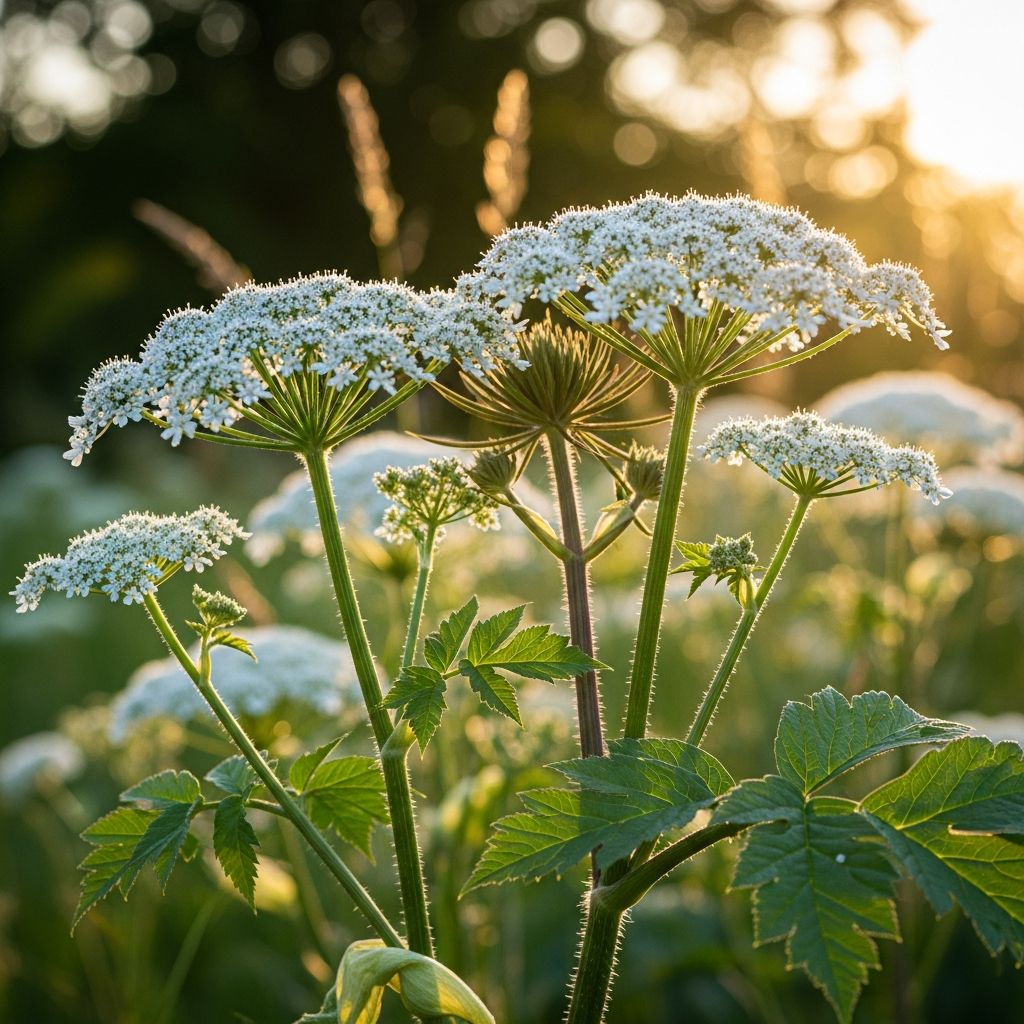
Members of the Apiaceae family, including cow parsnip, exhibit distinctive botanical traits. Leaves are alternate, broadening at the base into a sheath that clasps the erect stem. Stems are typically furrowed or grooved, supporting compound flowers arranged in flat-topped umbels—umbrella-like clusters characteristic of the family. Each flower boasts five uneven petals and five stamens, with seeds and fruits developing beneath the petal-stamen junction.
Cow parsnip plants can reach heights of 4–8 feet (1.2–2.4 meters), with large, coarsely toothed leaves up to 2 feet (60 cm) wide and stems 2–4 inches (5–10 cm) thick. Unlike giant hogweed, which grows taller (up to 15 feet or 4.5 meters) with broader leaves (3–4 feet wide) and purple-spotted stems, cow parsnip stems are generally green and less blotchy. Flowers form large white umbels, 6–12 inches (15–30 cm) across, blooming from late spring to early summer. All aboveground parts—leaves, stems, flowers, and fruits—contain furanocoumarins, the phototoxic compounds responsible for skin reactions.
| Feature | Cow Parsnip (Heracleum maximum/spondylium) | Giant Hogweed (Heracleum mantegazzianum) |
|---|---|---|
| Height | 4–8 ft (1.2–2.4 m) | 10–15 ft (3–4.5 m) |
| Stem | Green, furrowed, woolly-haired | Purple-red spots/blotches, smooth |
| Leaf width | Up to 2 ft (60 cm) | 3–5 ft (1–1.5 m) |
| Flower umbel | 6–12 in (15–30 cm) | Up to 2.5 ft (75 cm) |
| Phototoxicity severity | Moderate (blistering rash) | Severe (deep burns, scars, blindness risk) |
This table highlights key identification differences, crucial for distinguishing the native cow parsnip from the invasive giant hogweed, which is more hazardous due to higher concentrations of potent psoralens.
Historical and traditional uses
Indigenous peoples of North America have long utilized cow parsnip for food and practical purposes. Young leaf stalks and stems were peeled and eaten raw or cooked, tasting similar to stewed celery. Leaves were dried, burned, and their ashes employed as a salt substitute. Blossoms steeped in oil served as an insect repellent, rubbed on skin to deter flies and mosquitoes.
Ecologically, cow parsnip supports pollinators; its accessible pollen and nectar attract bees, wasps, and flies. However, its phototoxic sap necessitates caution, even in traditional handling—wear protective clothing to avoid skin contact followed by sun exposure.
Furanocoumarins: The phototoxic agents
The primary allergens in cow parsnip are furanocoumarins (psoralens), including bergapten (5-methoxypsoralen), isobergapten, sphondin, isopimpinellin, and pimpinellin. These linear and angular furocoumarins are present throughout the plant but concentrate in sap from stems, leaves, and flowers.
Unlike allergens causing immediate reactions, furanocoumarins induce phytophotodermatitis, a non-immunologic phototoxic response. Sap penetrates skin, binding to DNA/RNA under UVA radiation (320–400 nm), killing epidermal cells and triggering inflammation. Symptoms delay 12–48 hours post-exposure, mimicking burns.
Related Stories



- Bergapten: Common to both cow parsnip and giant hogweed; causes moderate photosensitivity.
- Psoralen and methoxsalen: More abundant in giant hogweed, amplifying severity.
- Exposure mechanism: Sap contact + sunlight → cell death, edema, blisters.
Clinical features of cow parsnip dermatitis
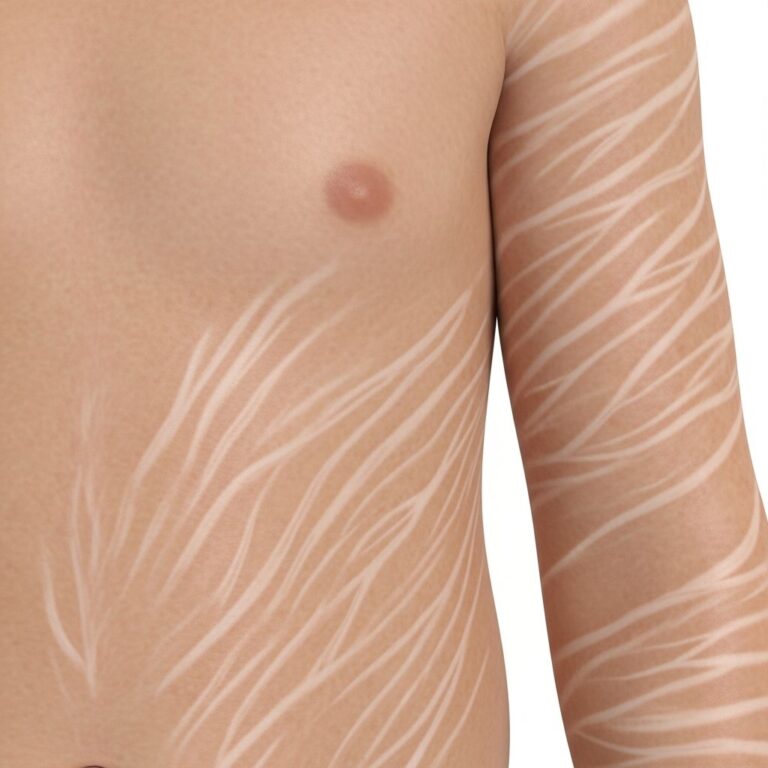
The hallmark reaction is strimmer’s or weed eater’s dermatitis, prevalent among gardeners and landscapers using string trimmers. Mulched plant debris scatters sap onto exposed skin, especially legs and arms. Sunlight exposure then provokes a linear, streak-like rash mirroring debris patterns.
Timeline:
- Day 1–2: Redness, intense itching.
- Day 2–3: Burn-like lesions, large fluid-filled blisters.
- Weeks–months: Hyperpigmentation (brown/purple blotches), scarring; recurrent sensitivity to sun.
Severity is milder than giant hogweed but can ulcerate, cause pain, and persist. Animals (pets, livestock) suffer similarly: redness, blisters, photosensitization; eye sap risks blindness. Vulnerable groups include fair-skinned individuals, children, and recently shorn sheep.

Differential diagnosis
Phytophotodermatitis from cow parsnip mimics:
- Wild parsnip (Pastinaca sativa): Similar furanocoumarins, identical rash.
- Giant hogweed: More severe, larger plant.
- Celery/mango phytophotodermatitis: Same family allergens.
- Thermal/chemical burns: Lack streaking, photosensitivity history.
- Poison ivy/oak: Vesicles, no delay; immunologic.
Prevention strategies
- Wear long sleeves, pants, gloves, face shields during handling/mowing.
- Avoid sunlight 24–48 hours post-exposure; wash sap with soap/water immediately.
- Use barriers: Sunscreen (UVA-blocking), cold water soaks.
- For pets/livestock: Prevent access; supervise shearing.
- Eradicate invasives like giant hogweed via official programs.
Treatment approaches
No antidote exists; management is supportive:
- Cool compresses, emollients: Soothe acute phase.
- Topical corticosteroids: Reduce inflammation (e.g., hydrocortisone).
- Oral steroids (prednisone): For severe blisters.
- Antibiotics: If secondary infection.
- Photoprotection: Cover scars; monitor recurrence.
Seek medical attention for extensive blisters or eye involvement.
Frequently Asked Questions (FAQs)
Q: How do I identify cow parsnip safely?
A: Look for 4–8 ft height, large umbrella flowers, green furrowed stems. Avoid touching; use photos for ID.
Q: Is cow parsnip as dangerous as giant hogweed?
A: No, milder effects, but still causes painful blisters and long-term sensitivity.
Q: What if sap gets on my skin?
A: Wash immediately, avoid sun for 48 hours. Monitor for rash.
Q: Can animals get affected?
A: Yes, pets/livestock show redness, blisters, possible blindness.
Q: How long do scars last?
A: Hyperpigmentation/scars may persist months to years; sun protection helps.
References
- Cow Parsnip | Cornell Weed Identification — Cornell University. 2023. https://blogs.cornell.edu/weedid/cow-parsnip/
- Giant Hogweed – Orchard House Vets — Orchard House Vets. 2024. https://www.orchardhousevets.com/advice/giant-hogweed/
- Cow Parsnip (Heracleum maximum) Plant Guide — USDA NRCS. 2006 (authoritative plant guide). https://plants.usda.gov/DocumentLibrary/plantguide/pdf/pg_HEMA80.pdf
- Giant Hogweed Factsheet — NYIS. 2024. https://nyis.info/wp-content/uploads/2024/08/GiantHogweedFactsheet.pdf
- Giant Hogweed – Cornell Cooperative Extension — Cornell Cooperative Extension Dutchess County. 2024. https://ccedutchess.org/gardening/invasive-plants/giant-hogweed
- Hot Topics – Environmental Health — Virginia Department of Health. 2025. https://www.vdh.virginia.gov/environmental-health/public-health-toxicology/hot-topics/
- Cow parsnip or hogweed – DermNet — DermNet NZ. 2024. https://dermnetnz.org/topics/cow-parsnip-hogweed
Similar Articles








Read full bio of Sneha Tete