Cradle Cap: Essential Guide To Symptoms, Causes & Treatments
Common infant scalp condition with greasy yellow scales; harmless, self-resolving, and easily managed at home.
Authoritative facts about infantile seborrhoeic dermatitis (cradle cap): what it is, symptoms, causes and treatment options.
What is cradle cap?
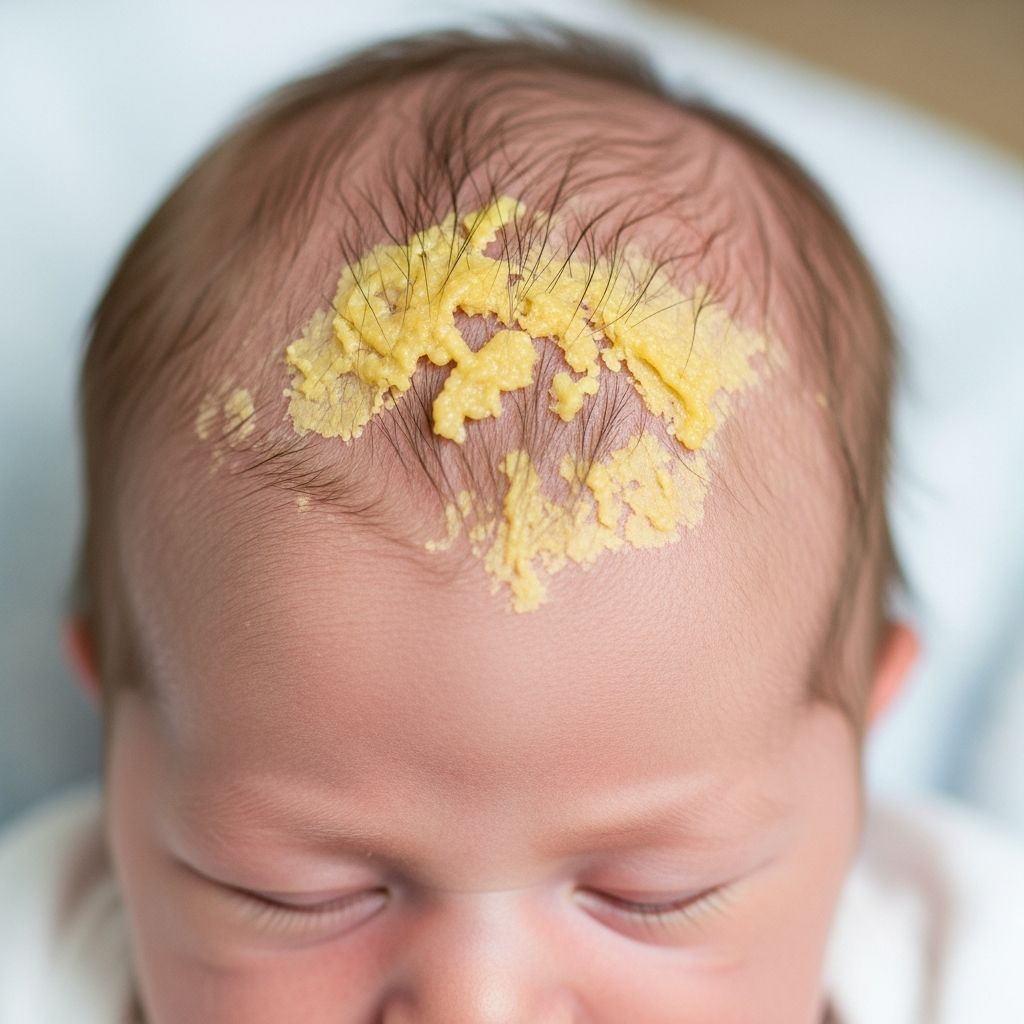
Cradle cap, medically known as infantile seborrhoeic dermatitis, is a common, self-limiting skin condition that primarily affects the scalps of infants in their first few months of life. It manifests as greasy, yellow or white crusty scales or patches on the scalp, often accompanied by mild redness or inflammation. This condition is not caused by poor hygiene, allergies, or infection in most cases, and it does not cause pain or significant itching to the baby. Cradle cap typically appears between 2 weeks and 12 months of age, peaking around 1 to 3 months, and resolves spontaneously by the first birthday in the majority of cases, though it can persist longer in some infants.
The term ‘cradle cap’ specifically refers to seborrhoeic dermatitis on the scalp, but the condition can extend to other seborrhoeic areas such as the face (eyebrows, eyelids, nose), ears, neck folds, armpits, groin, and nappy area. In these regions, it presents as flaky, inflamed skin rather than thick crusts. On darker skin tones, the scaling may appear more patchy with less noticeable redness, showing as darker patches or greyish-white scales.
Prevalence is high, affecting up to 70% of three-month-old infants, making it one of the most frequent skin issues in newborns. It is equally common in both genders and all ethnicities, though it may look different on Black or brown skin due to pigmentation variations.
Who gets cradle cap?
Cradle cap predominantly affects healthy, full-term newborns, with onset typically within the first 2 to 6 weeks of life. It is rare after 12 months but can occasionally develop or persist into the second year. Premature infants may experience it as well, sometimes in a more widespread form known as seborrhoeic dermatitis. There is no strong predisposition based on family history of atopy or seborrhoea, though infants with a family history of eczema may be monitored for confusion with other conditions.
- Age group: Primarily 0–12 months, peak at 1–3 months.
- Prevalence: Up to 70% of infants by 3 months.
- Risk factors: Maternal hormones, overactive sebaceous glands; not linked to hygiene or diet.
Symptoms of cradle cap
The hallmark symptom of cradle cap is the presence of adherent, yellowish, greasy scales or crusts on the scalp, which may flake off as dry skin particles. The scalp may appear patchy with thick crusts, oily or dry flaky skin, and mild erythema (redness). Unlike adult dandruff or atopic dermatitis, it is rarely itchy or painful for the infant.
Symptoms can vary by skin type:
- On light skin: Yellow-white greasy scales, red inflamed base.
- On darker skin: Patchy scaling, thick crusts, greasy flaky skin without prominent redness.
Beyond the scalp, similar flaky scales may appear on:
- Eyelids and eyebrows (blepharitis-like).
- Behind the ears and post-auricular folds.
- Nose creases and forehead.
- Nappy area (flaky, shiny red or darkened patches in skin folds).
- Axillae (armpits) and groin in severe cases.
If scales become infected, signs include increased redness, small blisters, weeping, or pus, indicating secondary bacterial infection like impetigo, which requires medical attention.
Diagnosis
Cradle cap is diagnosed clinically based on its characteristic appearance—no biopsy or tests are needed. Differential diagnoses include:
| Condition | Key Differences from Cradle Cap |
|---|---|
| Atopic dermatitis (eczema) | Very itchy, widespread, dry non-greasy scales; often family history. |
| Tinea capitis (ringworm) | Patchy hair loss, scaly with broken hairs; fungal culture confirms. |
| Psoriasis | Thicker silvery scales, may affect nails; family history. |
| Impetigo | Weeping, honey-crusted; contagious bacterial infection. |
Related Stories



Consult a dermatologist or paediatrician if scales are widespread, persistent beyond 12 months, or accompanied by hair loss, significant inflammation, or systemic symptoms.
Causes
The exact cause remains unclear, but several factors contribute:
- Maternal hormones: Androgens crossing the placenta stimulate sebaceous glands, leading to seborrhoea (excess sebum) for weeks post-birth.
- Malassezia yeast: Overgrowth of Malassezia furfur in sebum irritates the skin; antifungals like ketoconazole support this role.
- Immature skin barrier: Dead skin cells stick due to excess oil, forming crusts.
- Genetics/immune factors: Possible mild immune response to sebum components.
Not contagious, not due to hygiene, diet, or parenting. Rarely linked to nutritional deficiencies.
Treatment of cradle cap
Most cases resolve without intervention. Gentle daily care is key:
Home management
- Wash scalp daily with mild baby shampoo (e.g., pH-neutral, fragrance-free).
- Apply warm olive, almond, or mineral oil; leave 1–3 hours or overnight under a cap.
- Gently loosen scales with a soft brush or comb post-emollient.
- Avoid picking to prevent infection.
For stubborn cases:
- Emollients: 2%–4% salicylic acid or urea lotions to soften scales.
- Topicals: Low-potency steroids (hydrocortisone 1%) for inflammation; ketoconazole or ciclopirox shampoo for yeast.
Medical treatments
If home care fails after 4 weeks or infection suspected:
- Antifungal shampoos (ketoconazole 2%, weekly).
- Topical antifungals (miconazole cream).
- Antibiotics for secondary impetigo.
- Severe/persistent: Oral antifungals or referral to dermatology.
Avoid coal tar, high-strength steroids, or scraping in infants.
Prevention of cradle cap
No guaranteed prevention, but regular gentle washing from birth reduces sebum buildup. Maintain skin hydration and avoid occlusive hats. Breastfeeding may offer minor protective effects via immune factors, though evidence is anecdotal.
Outlook
Excellent prognosis: 90% resolve by 12 months without scarring or hair loss. Persistent cases into adulthood are rare and may indicate adult seborrhoeic dermatitis. No long-term complications.
Images
(Description: Typical cradle cap shows yellow greasy crusts on infant scalp; on darker skin, flaky patches with minimal redness. Images depict mild to moderate cases pre- and post-treatment.)
Frequently Asked Questions (FAQs)
Is cradle cap harmful to my baby?
No, it is harmless, non-painful, and does not affect growth or development.
Can I use olive oil on cradle cap?
Yes, it safely softens scales; apply gently and rinse with shampoo.
When should I see a doctor for cradle cap?
If persistent >12 months, bleeding, pus, fever, or spreading widely.
Is cradle cap contagious?
No, it is not infectious unless secondarily impetiginized.
Does cradle cap cause hair loss?
Temporary mild shedding possible, but hair regrows fully.
References
- Cradle cap — Better Health Channel, Victoria Government. 2023. https://www.betterhealth.vic.gov.au/health/healthyliving/cradle-cap
- Cradle cap – Symptoms and causes — Mayo Clinic. 2024-05-17. https://www.mayoclinic.org/diseases-conditions/cradle-cap/symptoms-causes/syc-20350396
- Cradle Cap (Seborrheic Dermatitis) in Infants — Rady Children’s Health. 2023. https://www.rchsd.org/health-article/cradle-cap-seborrheic-dermatitis-in-infants/
- Seborrhoeic dermatitis & cradle cap in infants — National Eczema Society. 2024. https://eczema.org/information-and-advice/types-of-eczema/seborrhoeic-dermatitis-cradle-cap-in-infants/
- Cradle Cap Causes & Treatment — Cleveland Clinic. 2024-01-12. https://my.clevelandclinic.org/health/diseases/15786-cradle-cap-seborrheic-dermatitis-in-infants
Similar Articles








Read full bio of medha deb